
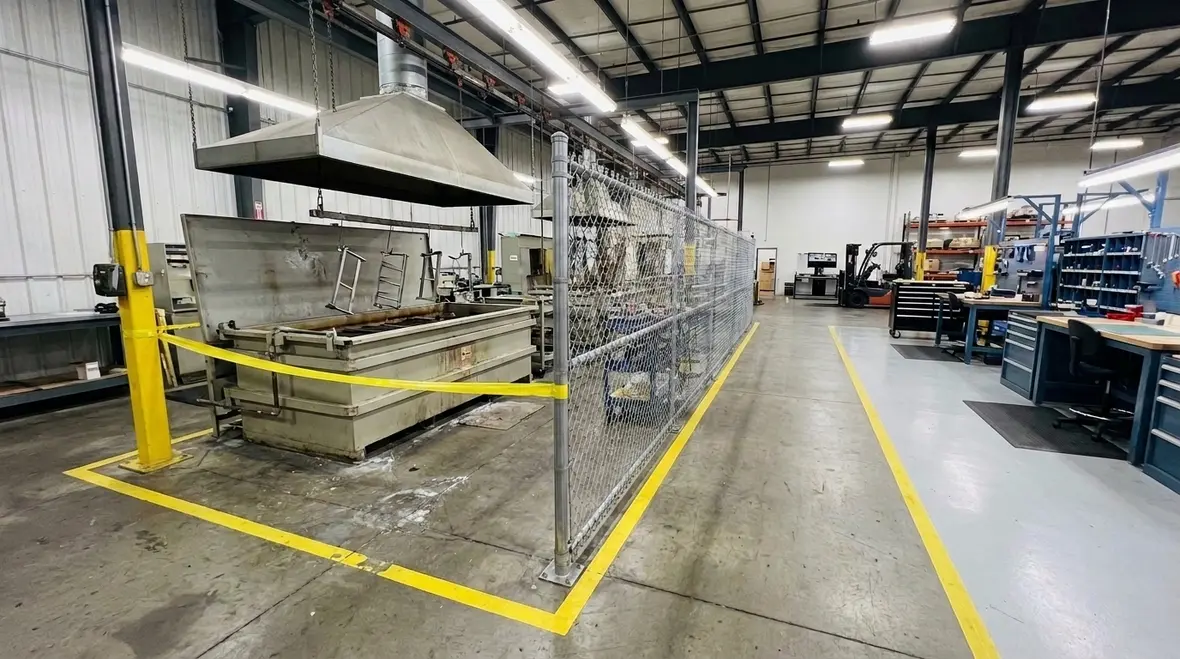
NFPA 34 Section 4.2: Separating Coating and Dipping Processes From Other Work
Quick Answer
NFPA 34 Section 4.2 requires facilities to physically and operationally separate coating and dipping processes from other work that can create ignition hazards. The intent is to prevent flammable vapor, residue, and hot surfaces from becoming a shared risk. Proper separation also supports inspection, maintenance, and ongoing compliance.
For broader inspection, maintenance, and long-term readiness support, full lifecycle fire protection servicing helps connect process-area compliance decisions with the inspection and testing programs that keep them working in the real world.
Why NFPA 34 separation requirements matter in coating and dipping operations
Coating and dipping processes often generate flammable vapors, combustible deposits, and contaminated surfaces that can rapidly spread risk across a facility if work areas are not isolated. NFPA 34 separation requirements dipping coating processes are designed to keep ignition sources away from vapor producing equipment, draining areas, drying zones, and waste handling points.
In commercial, industrial, and retail settings, noncompliance commonly shows up during remodeling, process additions, and housekeeping drift. When work scopes expand, shared corridors, adjacent storage, or relocated hot work can quietly undermine engineered separation. Kord Fire Protection supports ongoing compliance by validating that the facility’s physical layout, operating controls, and inspection practices continue to match NFPA 34 expectations over time.
What Section 4.2 is trying to prevent
Section 4.2 focuses on separating coating and dipping processes from other work that can introduce ignition energy. Typical “other work” includes tasks that generate sparks, open flames, high surface temperatures, or mechanical friction. Even when a facility believes separation is “good enough,” ignition risk can still occur through pathways such as:
- Flammable vapor migration through shared ventilation systems or air currents
- Radiant heat and hot surfaces from heaters, exhaust ducts, or curing equipment
- Transfer of residues from dripping, draining, and conveyor movement
- Uncontrolled access to contaminated floors, trench drains, or collection sumps
- Improper storage placement for rags, filters, and solvent contaminated materials
The code intent is not only physical separation by distance. It also relies on controlling how people, materials, and air move between the coating area and other facility functions.
How to implement separation in real facilities (layout, access, and controls)
Facilities typically implement Section 4.2 separation using a combination of engineering controls and administrative controls. The goal is to ensure that ignition sources do not operate within the same hazard context as vapor producing coating or dipping activities.
1) Physical separation and zoning
Use clear boundaries between the coating and dipping process areas and adjacent work areas. Common approaches include fixed partitions, controlled openings, and dedicated lanes for material movement. Separation boundaries should also address draining and drying, not only the dipping tank itself.
Practical compliance challenge: remodels often relocate “temporary” storage next to the process boundary. Over time, containers of coatings, thinners, or cleaning agents accumulate, and non process tasks start sharing the same footprint.
2) Controlled access and traffic flow
Access control matters because dipping and coating areas require routine tasks that create ignition potential. For compliance, access should limit nonessential activities and prevent ignition source work from occurring inside or immediately adjacent to vapor producing zones.
- Use signage and controlled entry where required by facility policy and hazard assessment
- Establish dedicated routes for parts and racks to reduce uncontrolled movement of contaminated items
- Prevent “shortcut” movement through process space
Maintenance teams also need defined rules for what work can occur near the coating zone, especially during downtime when employees may perform general troubleshooting.
3) Ventilation and air movement control
Separating the process from other work includes controlling airflow patterns that transport vapors. Ventilation strategies should keep vapor laden air within the intended capture and exhaust system boundaries.
Common failure point: changing ceiling fans, make up air locations, or dock doors without revalidating vapor migration. Even small airflow changes can shift vapors toward adjacent work areas, making separation ineffective.
4) Ignition source management during other work
Section 4.2 separation requirements dipping coating processes are often undermined by routine hot work and maintenance activities. Facilities need formal controls that specify when and where hot work can occur, including:
- Permit and supervision requirements
- Verification of vapor conditions and solvent presence
- Safe staging of welding, grinding, and cutting equipment
- Fire watch and monitoring requirements during and after work
Commercial facilities typically already have hot work programs, but the gap is failing to align the program boundaries with actual coating and dipping zones, including draining and drying areas.
Inspection and maintenance: how separation breaks down over time
NFPA 34 compliance is operational, not static. Separation measures degrade due to facility changes, housekeeping variations, and equipment wear. Fire safety inspections should verify both the engineered separation features and the day to day practices that maintain them.
Where inspectors focus during walkthroughs
- Condition and integrity of partitions, doors, and closures that define process boundaries
- Presence of ignition sources inside or near the separation boundary
- Housekeeping status in draining and drip areas, including residue buildup and waste accumulation
- Waste handling compliance for solvent contaminated rags, filters, and debris
- Ventilation performance, including evidence of vapor escape and duct contamination
- Access control effectiveness and signage that matches current facility practices
Maintenance that supports separation
Maintenance programs should specifically support separation by maintaining the equipment and housekeeping that prevent vapor and residue migration. Typical maintenance includes cleaning schedules for drip pans, checking ductwork and exhaust interfaces, and ensuring that collection systems function as designed.
Kord Fire Protection helps commercial owners and facility managers coordinate ongoing fire protection inspections and testing to confirm that protective systems, maintenance practices, and process controls remain aligned with NFPA 34 compliance goals. For facility teams that want a partner approach, Kord Fire Protection can also support documentation and inspection readiness.
Common compliance risks to avoid in dipping and coating areas
Many separation deficiencies appear repeatedly across commercial and industrial sites. The most frequent risks include:
- Shared storage: storing solvents, cleaning chemicals, rags, or combustibles in areas that should remain separated from coating and dipping processes.
- Improper drain design and routing: connecting draining areas to spaces or systems where vapors can migrate to non process work zones.
- Uncontrolled access during shift changes: allowing non process contractors to walk through coating zones without training or escorts.
- Housekeeping drift: residue buildup around tanks, conveyor discharge points, and drying areas that increases ignition likelihood.
- Ventilation modifications: changes to air handling equipment that invalidate original vapor capture assumptions.
- Hot work overlap: welding or grinding adjacent to the separation boundary without verifying vapor conditions.
Operational discipline and maintenance alignment matter as much as the initial layout. A facility that adds production lines, expands storage, or changes equipment should reassess separation under NFPA 34 separation requirements dipping coating processes.
How to document compliance and support inspection readiness
Documentation helps facilities prove they manage ignition risk and separation consistently. At minimum, facilities should be able to show evidence of:
- Current site layout diagrams showing process boundaries and separation zones
- Written procedures covering access control, maintenance work, and hot work controls
- Ventilation operating criteria and maintenance records relevant to vapor capture
- Housekeeping schedules and inspection checklists for drip and draining areas
- Training records for operators and contractors working near coating and dipping processes
For internal alignment, fire safety documentation should be integrated with production and maintenance planning so changes do not proceed without an updated safety review. Kord Fire Protection can assist commercial organizations with structured compliance support, inspection planning, and maintenance verification to reduce last minute corrective actions.
Frequently Asked Questions
Next steps with Kord Fire Protection
Review your current coating and dipping layout, access controls, housekeeping practices, and ventilation assumptions against NFPA 34 separation requirements dipping coating processes. Then schedule a professional compliance assessment to verify that separation remains effective during maintenance and other non process work. Kord Fire Protection helps commercial facilities maintain inspection readiness through structured documentation support, testing coordination, and ongoing maintenance verification. Contact Kord Fire Protection to plan your next on site visit and close separation gaps before they become citation risks.

Join Our Newsletter!
Get the latest fire safety tips delivered straight to your inbox From our Newsletter.



