
NFPA 34 Section 3.3: Key Dipping, Coating, and Printing Terms Defined
Quick Answer
NFPA 34 Section 3.3 defines the core dipping, coating, and printing terms used throughout the standard so facilities can interpret requirements consistently. This matters for hazard controls, equipment operation, inspection scope, and documentation in commercial and industrial settings.
Why these definitions matter for real fire safety compliance
Fire safety performance in dipping, coating, and printing operations depends on clear terminology. NFPA 34 general definitions dipping coating terminology helps operators, safety managers, and contractors align on what equipment parts are, how processes run, and which hazards apply. When teams use undefined or inconsistent terms, they often miss the intent behind storage limits, ventilation expectations, ignition source controls, and maintenance requirements.
Commercial facilities, industrial plants, and retail back-of-house operations that use coatings and inks frequently encounter the same practical compliance challenges: mixed processes in shared spaces, unclear boundaries between “dip” versus “spray” operations, and incomplete records showing what was inspected, repaired, or tested. A disciplined approach to NFPA 34 definitions reduces these gaps.
If you are evaluating where these definitions sit in the broader standard, start with NFPA 34 Section 1.1 scope for dipping, coating, and printing processes to connect the vocabulary to which operations the standard actually covers.
What Section 3.3 covers: the vocabulary that drives the requirements
NFPA 34 Section 3.3 establishes the key terms that the remainder of the standard references. These definitions are not academic. They drive how teams apply controls for flammable liquids, combustible residues, ignition control strategies, and process equipment interfaces.
In practice, the most difficult audits do not fail on “big” concepts. They fail on boundary issues, such as whether a unit counts as part of a dipping line, whether a coating step qualifies as a printing process under the standard, and whether a “drying” condition creates a different hazard profile than an idle condition.
How to interpret dipping terminology in the field
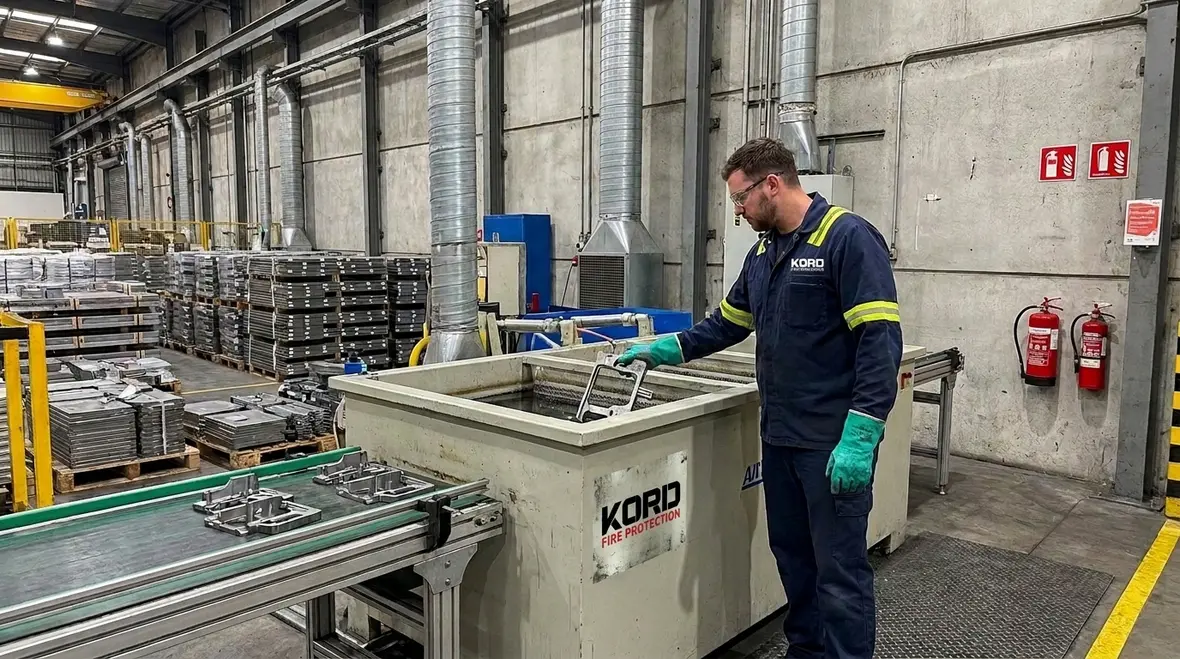
Dipping operations typically involve transferring a substrate into a liquid bath and then removing it to drain, dry, or cure. While the facility might view the process as one continuous step, NFPA 34 general definitions dipping coating terminology supports treating distinct phases as distinct hazard moments.
Bath, dip zone, and drainage phases
Definitions related to the bath and the dipping area support consistent hazard classification. Teams should validate that the physical “dip zone” matches the documented process flow, including splash boundaries, freeboard requirements, and capture systems. Common failure points include underestimated drain time, blocked drainage channels, and residues accumulating on grating, conveyor frames, or splash guards.
Loading and removal activities
Loading and removal steps often create the highest vapor release risk because the bath surface can experience agitation and the substrate enters and exits quickly. Facilities should confirm that operating procedures address agitation level, dwell time, and how workers handle racking, immersion rates, and drip management. Documentation should show alignment between the defined process phases and the facility’s written work instructions.
Work-in-process definition alignment
Undefined or informal “work-in-process” definitions can cause inspection gaps. If a facility treats partially processed parts as “not in the system yet,” it can incorrectly narrow the inspection scope for residues, drains, and collection devices. Strong compliance starts with a shared vocabulary and clearly labeled staging areas.
Coating and printing terms that affect ignition and residue hazards
Coating and printing operations introduce additional hazard contributors: overspray or mist, tacky surfaces, and combustible film formation. Section 3.3 terms help teams apply the correct controls to the correct process stage, especially when equipment is combined in one room.
Coating application steps and hazard transitions
When NFPA 34 terms distinguish between application, flash-off, drying, and curing, facilities can avoid treating all stages as equivalent. For example, surfaces that still release vapors may present ignition risks even after visible wet coating appears to have “set.” Maintenance teams also benefit because the defined stage determines what needs inspection and cleaning, such as ducting, filters, collection trays, and drain lines.
Printing processes and ink handling
Printing terminology impacts how facilities manage ink storage, controlled application, and cleanup. Common issues include incompatible cleaning solvents, improper disposal of rags and wipes, and missed inspection of ink return lines or recirculation components. Clear NFPA 34 general definitions dipping coating terminology supports consistent labeling, training, and audit checklists.
Residue and combustible film considerations
Definitions around “residue” and related terms influence how maintenance schedules get written. Residues can form in locations that are not directly in the coating path, such as on ductwork exterior surfaces, on fan housings, around airflow transitions, and on structural members. Inspection programs should track where residues accumulate over time and verify that cleaning and waste handling procedures match the process definitions.
Where facilities usually struggle: documentation, inspection scope, and equipment condition
Even when a facility has competent operators, compliance can drift due to documentation gaps and maintenance variability. The definitions in Section 3.3 create the framework for consistent hazard assessment, but the operational system must support it.
1) Mixed-use rooms and unclear boundaries
Many commercial and industrial spaces combine dipping, coating, and printing equipment. If floor layout, ventilation zoning, or process boundaries do not match the terminology used in procedures, the facility can apply the wrong control assumptions. Fire safety programs should require a site walkdown using the same process terms referenced in compliance documents.
2) Inspection and test checklists that do not map to terminology
Inspections often focus on the obvious: tanks, spray booths, and visible ducting. However, Section 3.3 terms drive attention toward process-adjacent zones, collection components, drains, and cleanup interfaces. Facilities should confirm that inspection checklists reference the correct process stages rather than generic “system” wording.
3) Equipment mechanisms that collect fuel for fire growth
Defining what “dip,” “coating,” and “printing” steps mean helps maintenance teams find likely failure points: clogged drains, degraded seals, malfunctioning covers, damaged collection trays, and worn electrical enclosures near vapor areas. These issues can transform normal operations into ignition and propagation risks if left unchecked.
Make definitions actionable with Kord Fire Protection
Turning NFPA 34 general definitions dipping coating terminology into sustained compliance requires recurring verification, not one-time training. Kord Fire Protection supports commercial, industrial, and retail facilities with practical fire protection service aligned to real operational workflows, including inspection coordination, documentation support, and maintenance guidance that reflects how equipment functions on site.
For facilities that need broader support beyond terminology alignment, fire protection services in Southern California can help tie inspections, repairs, testing, and documentation into one cleaner compliance path. Use the definitions in Section 3.3 to standardize your checklists, then use ongoing service visits to confirm the equipment condition matches the documented process.
Frequently Asked Questions
Next step
Standardize your dipping, coating, and printing documentation around NFPA 34 Section 3.3 definitions, then verify the facility’s equipment condition and inspection scope match those terms. If you need a compliance partner to help translate definitions into ongoing, audit-ready practices, contact Kord Fire Protection today to schedule a service review and align your fire safety maintenance program with how your process actually runs.

Join Our Newsletter!
Get the latest fire safety tips delivered straight to your inbox From our Newsletter.



