
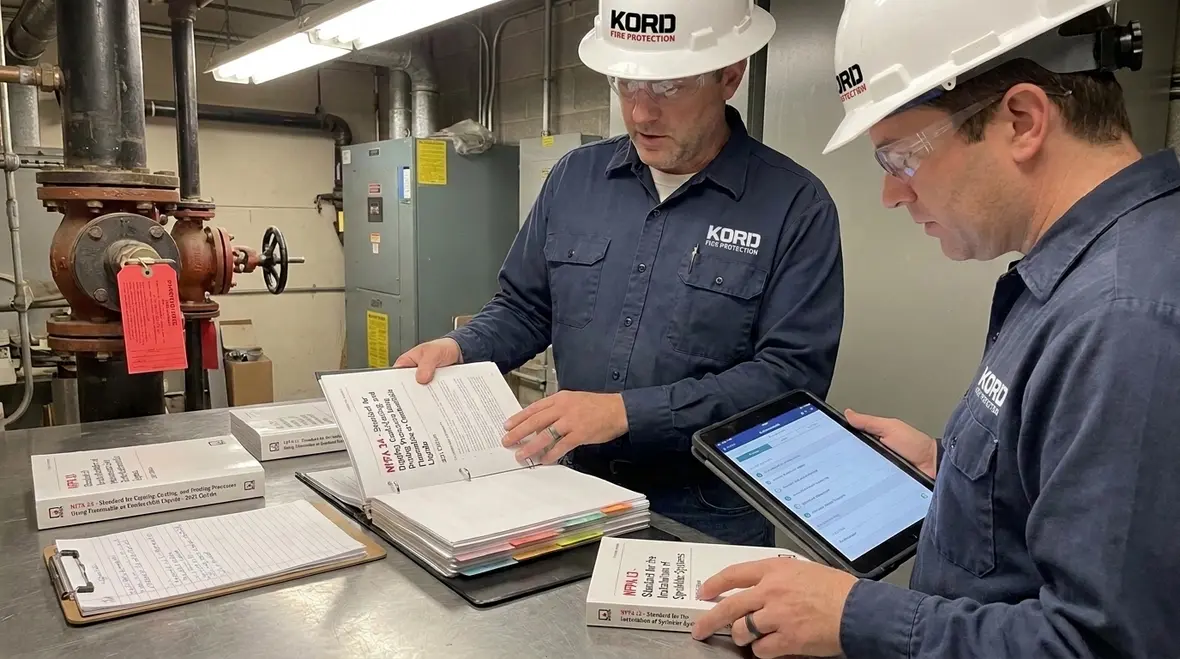
NFPA 34 Section 2.1 General: How Referenced Publication Editions Apply
Quick Answer: NFPA 34 Section 2.1 sets the edition and referencing rules for other standards cited within the document. In practice, facilities must apply the specific edition named by NFPA 34, and when editions change, they must follow the rules for updates, compliance gaps, and document control during inspections and maintenance.
For teams tightening inspection records and service workflows, it also helps to review a broader inspection, testing, and maintenance approach so edition control does not get separated from the actual field work.
What NFPA 34 Section 2.1 is trying to prevent
NFPA 34 is frequently enforced through inspection, plan review, and insurance or AHJ expectations. Section 2.1 General addresses a recurring compliance problem: the referenced publications within NFPA standards evolve over time. Without clear edition rules, a facility could unintentionally adopt a newer or older version than what the standard intends, creating inconsistent test criteria, equipment acceptance thresholds, and documentation requirements.
When an AHJ or insurer reviews your compliance package, NFPA 34 referenced publications edition rules help determine whether your procedures, test methods, and installation criteria align with the edition NFPA 34 expects. This matters most in commercial, industrial, and retail occupancies where systems are maintained by multiple contractors over the lifecycle of the facility.
How referenced publication editions apply during compliance
NFPA 34 Section 2.1 provides the general framework for applying editions of documents cited elsewhere in the standard. The practical takeaway for facilities is straightforward: the edition matters because referenced publications often define technical acceptance criteria, test frequencies, inspection methods, and component performance requirements.
Step 1: Identify every referenced publication in the relevant NFPA 34 section
Facilities often focus on the headline NFPA 34 requirements but miss the supporting references. For example, procedures for inspection, testing, and maintenance may cite separate documents for compressor protection, electrical classifications, or process safety-related requirements. Compliance teams should maintain an edition crosswalk that lists each referenced publication and the edition required by NFPA 34.
Step 2: Apply the specific edition cited by NFPA 34
Where NFPA 34 calls out a particular edition, the facility should use that edition as the compliance baseline. This affects:
Inspection and test acceptance criteria (for example, how results are interpreted and what constitutes failure).
Required test intervals and documentation formats.
Installation details for components addressed by the referenced standard.
Calibration and maintenance expectations when referenced publications define them.
Step 3: Control document updates to avoid accidental noncompliance
Even when the facility adopts a newer edition for internal best practices, NFPA 34 referenced publications edition rules may require that the required edition remains the basis for compliance documentation. Document control becomes critical when:
Maintenance contractors update their test checklists to match a newer referenced standard.
Purchasing replaces components based on updated manufacturer documentation that references a different edition.
Training materials are revised without aligning to the edition that NFPA 34 requires.
Common commercial facility failure points during audits
In real-world inspections, the issue is rarely the intent of the standard. The issue is implementation. Edition mismatches can surface as documentation quality problems, but they often translate into actual gaps in testing or installation criteria.
Failure point: Checklists and forms do not match the referenced edition
Technicians may perform the right tests but record them using a form that reflects a different edition. NFPA 34 inspectors and AHJs can treat that as nonconforming because the facility cannot demonstrate that it used the required acceptance criteria.
Operational control to use: Require that each inspection plan references the edition for every cited publication and store it with the test records.
Failure point: Training uses the latest edition, but the compliance basis is older
Contractors and in-house teams often refresh training annually. If training materials update to newer referenced publications, it can unintentionally change how technicians interpret pass or fail, how they handle out-of-tolerance readings, or how they document corrective actions.
Operational control to use: Maintain a training matrix that maps each task to the applicable referenced edition under NFPA 34.
Failure point: Component replacement pulls in a newer standard without review
Facilities may replace valves, detectors, wiring methods, or protective devices using updated technical documentation. If the updated documentation cites a different edition of a referenced publication than NFPA 34 requires, the installation could drift out of compliance.
Operational control to use: Implement a replacement compliance review step so engineering, fire safety, or a qualified service provider verifies edition alignment before acceptance.
What facilities should implement for ongoing maintenance and verification
Edition rules under NFPA 34 Section 2.1 are not a one-time plan review issue. Facilities should treat referenced publication editions as part of their ongoing management system.
Build an edition register and crosswalk
For each NFPA 34-related system area, maintain an internal register that includes:
NFPA 34 section or requirement that triggers the reference.
Referenced publication title and the edition required by NFPA 34.
Facility procedure documents tied to that edition.
Inspection and test forms that correspond to the procedure edition.
Lock inspection methods to the compliance edition
When writing work instructions for commercial and industrial facilities, technicians should follow the documented method tied to the edition required by NFPA 34 referenced publications edition rules. This includes:
Acceptance thresholds and pass fail logic.
Test setup conditions and tolerances.
Corrective action triggers and documentation requirements.
Any required ancillary checks such as visual verification and labeling reviews.
Use contractor onboarding that includes edition validation
Commercial facilities often rely on multiple service providers. Contractor onboarding should include a review of the referenced edition basis for inspection and maintenance procedures, plus an agreement on document control and record retention.
If you are also refining broader documentation and audit habits, Kord’s commercial fire safety audit process offers a useful companion read for organizing records before inspectors start asking the fun questions.
How Kord Fire Protection helps teams stay aligned with NFPA 34
Edition control and inspection readiness require more than doing the test. It requires a repeatable compliance workflow that ties each inspection activity to the correct referenced publication edition. Kord Fire Protection supports commercial facilities with practical, documentation-focused service that helps maintain alignment during audits, insurance reviews, and AHJ inspections.
To strengthen your internal compliance posture, Kord Fire Protection can assist with ongoing inspection and maintenance programs, record verification, and corrective action tracking.
Learn more about Kord’s fire protection services and maintenance support for commercial properties that need cleaner records and steadier inspection readiness.
Frequently Asked Questions
Next step: confirm your referenced editions before the next inspection
Review NFPA 34 Section 2.1 edition requirements and build an internal edition crosswalk for every referenced publication tied to your systems. Then verify that your inspection procedures, forms, and contractor instructions match the required editions. If your facility needs support tightening document control and record accuracy, contact Kord Fire Protection to validate your compliance approach and keep inspection readiness consistent across contractors and years.

Join Our Newsletter!
Get the latest fire safety tips delivered straight to your inbox From our Newsletter.



