
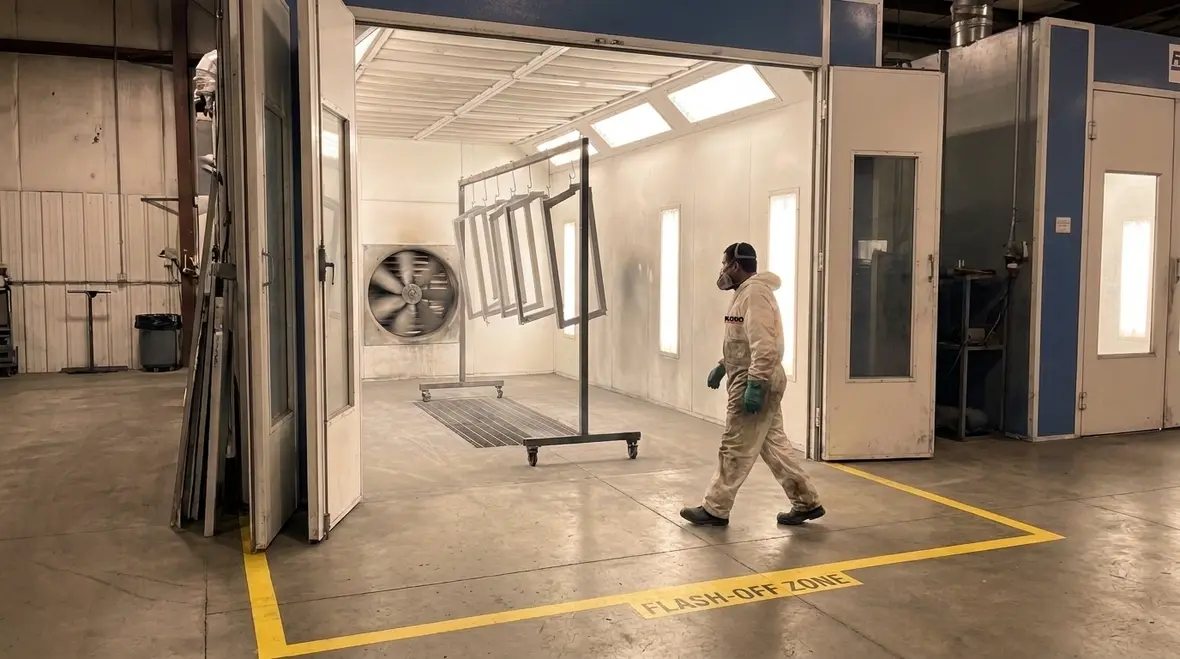
NFPA 33 Section 13.6: Flash-Off Areas After Spray Application
Quick Answer
NFPA 33 Section 13.6 requires flash off areas to be controlled to limit ignition sources, manage flammable vapor buildup, and protect personnel and property after spray application. The rules focus on ventilation, enclosure practices, electrical classification, and continuous compliance verification during operations.
Facilities reviewing flash off hazards often also benefit from stronger spray booth fire suppression planning, especially where ventilation, suppression, and procedural controls need to work together naturally. For broader system support, Kord Fire also provides commercial fire suppression systems and services for code-focused facilities that need inspection, testing, repair, and maintenance support. ([kordfire.com](https://kordfire.com/spray-booth-fire-suppression-for-safer-paint-operations/?utm_source=openai))
Why NFPA 33 flash-off areas matter after spray operations
When a coating or solvent is sprayed, a large portion does not remain on the surface. Instead, it evaporates into the air. That evaporation creates a temporary mixture of flammable vapors and air. NFPA 33 flash-off area requirements spray operations are designed to keep those vapor concentrations from reaching unsafe ignition conditions, even after the spray stops.
In real facilities, flash off control often breaks down for three reasons: air movement changes when spray equipment shuts down, workers reenter zones too soon, and ventilation systems or monitoring methods do not match the process duration and solvent load. Facilities that handle commercial, industrial, and retail coatings need operational discipline that matches the hazards created by the spray pattern, the solvent formulation, and the room ventilation design.
What Section 13.6 covers in practical terms
NFPA 33 Section 13.6 addresses the period after spray application where vapors continue to be released and persist in the work area. The section links flash off safety to how the facility controls the environment and ignition potential during and after spraying.
Key compliance outcomes the section expects
- Controlled ventilation to remove vapors effectively during the flash off period.
- Limitation of ignition sources in and around the flash off area, consistent with hazardous location risk.
- Clear boundaries and operational controls that prevent bypass of safeguards when employees reset, load materials, or perform cleanup.
- Equipment and system integrity so controls continue to function as designed throughout the spray cycle.
How flash off vapor hazard conditions are managed on site
NFPA 33 treats flash off as an extension of the spray process hazard profile. That drives how facilities engineer airflow, define “areas,” and manage operator behavior. Typical compliance success comes from treating flash off as a controlled phase with defined start, end, and verification methods.
Ventilation and airflow strategy during flash off
Facilities typically rely on mechanical ventilation that continues through the flash off duration. The operational challenge is that many systems are interlocked to spray activation only. If ventilation stops immediately when the spray gun is de-energized, vapor concentrations can spike in the residual period.
Practical control measures include:
- Run time coordination so exhaust continues until vapor levels have returned to safe conditions, as supported by design data and documented operating procedures.
- Airflow balance that maintains containment and avoids short circuiting from supply to exhaust.
- Monitoring and verification using appropriate methods, including planned checks during commissioning and periodic confirmatory testing.
Enclosure practices and area definition
Section 13.6 compliance depends on defining the flash off area reliably. If the boundaries are unclear, employees can treat the space as “safe” immediately after spraying. That can create unnecessary exposure and also increase the likelihood of ignition sources entering the zone.
Facilities typically address this through:
- Physical barriers or controlled access to keep ignition sources out of the flash off area.
- Marking and procedures that identify the flash off period and entry rules.
- Interlocks that prevent actions incompatible with vapor conditions.
Where inspections and maintenance commonly fail
Section 13.6 requirements are not only “design time” requirements. They require operational readiness, system upkeep, and ongoing verification. Many compliance gaps appear during routine inspection because the facility assumes the flash off hazard behaves the same way every day.
Ventilation performance drift
Exhaust fans, ductwork, filters, and baffles change performance over time. Oversight often focuses on the initial commissioning report, then skips confirmatory checks. This is a major issue for NFPA 33 flash-off area requirements spray operations, since vapor removal effectiveness is what keeps concentrations below ignition thresholds.
Common failure points include:
- Dirty filters and restricted plenums that reduce exhaust effectiveness.
- Duct leaks that pull air from unintended pathways.
- Damper mispositioning from maintenance activities.
- Fan wear that changes airflow characteristics.
Operational control breakdowns
Another common failure point is procedural inconsistency. Flash off time may vary with temperature, air movement, film thickness, and solvent selection. If the facility uses a fixed “spray then leave” rule without confirming that ventilation and entry controls still match conditions, the flash off period becomes a compliance risk.
Ignition source controls that are not sustained
During spray application and flash off, ignition controls must remain in effect. Failures often appear when maintenance, cleaning, or equipment changes occur. Even a compliant electrical setup can become unsafe if later modifications introduce inappropriate devices, temporary lighting, or tools into the flash off area.
To support ongoing readiness, Kord Fire Protection helps commercial and industrial facilities align inspection schedules, documentation, and field verification with real operational use, not just initial installation assumptions. Kord Fire describes its broader service model as practical and compliance-focused, with scheduled inspections, testing, preventive maintenance, and specialty support for fire protection systems. ([kordfire.com](https://kordfire.com/?utm_source=openai))
Building an NFPA 33 compliant flash off program
A strong compliance program for flash off areas typically integrates engineering controls, written procedures, and verification. The goal is to ensure that the flash off area requirements stay effective as workflows and production demands change.
Recommended elements of a compliant program
- Documented flash off duration criteria tied to ventilation capability, solvent load, and operational conditions.
- Clear access control rules for employees, contractors, and service technicians during the flash off period.
- Training and signage that communicate hazard status and required actions after spraying.
- Scheduled inspection and maintenance of exhaust systems, controls, and barriers that define the flash off area.
- Recordkeeping that supports audit readiness, including maintenance logs and performance checks.
For facility teams updating their compliance posture, Kord Fire Protection can serve as a continuity partner for testing, maintenance coordination, and documentation support across commercial, industrial, and retail spray environments.
Frequently Asked Questions
Call to action
Confirm that your flash off areas follow NFPA 33 Section 13.6 in both design and day to day operation. Engage Kord Fire Protection to review ventilation control logic, verify inspection and maintenance readiness, and strengthen documentation so your team can demonstrate sustained compliance for NFPA 33 flash-off area requirements spray operations. Request a consultation today.

Join Our Newsletter!
Get the latest fire safety tips delivered straight to your inbox From our Newsletter.



