
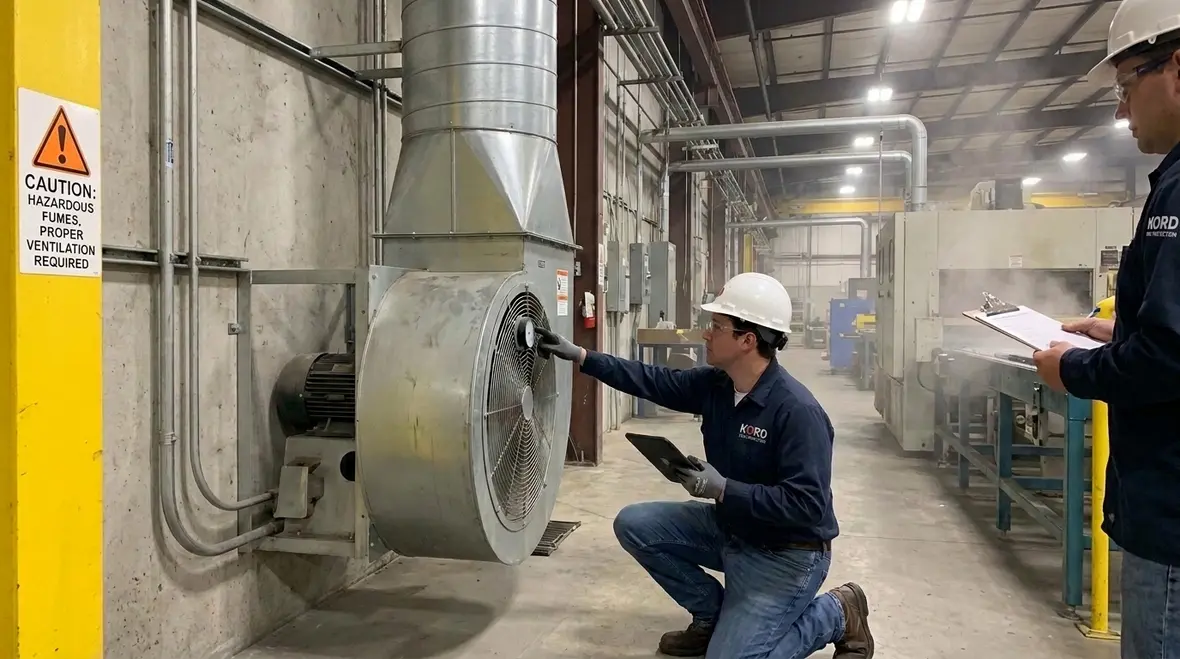
NFPA 34 Section 7.2: General Ventilation Requirements for the Processes
Quick Answer
NFPA 34 Section 7.2 sets performance focused expectations for ventilation serving specific processes that create hazardous vapors, fumes, or particulates. It emphasizes engineering design, correct air movement, and dependable operation, supported by inspection and maintenance to keep controls effective.
Facilities tightening their long term inspection rhythm can also benefit from a broader look at the full lifecycle of fire protection servicing, especially when ventilation reliability, documentation, and recurring maintenance all need to stay aligned instead of drifting apart like coworkers avoiding eye contact after a bad shutdown.
Why NFPA 34 Section 7.2 matters for real facilities
Commercial and industrial sites that handle flammable liquids, combustible dusts, corrosive gases, or heat producing operations rely on ventilation to control hazardous atmospheres. In practice, “general ventilation” is not a blanket requirement. It must match the process hazard, maintain safe dilution or capture conditions, and remain reliable over time.
For facilities aligning with NFPA 34 general ventilation requirements processes, the compliance challenge often shows up long after commissioning. Duct dampers drift, exhaust fans degrade, makeup air stops matching, filters load up, and building management systems override safe setpoints. Section 7.2 addresses these realities by requiring that ventilation systems function as intended and that impairment controls remain effective.
What Section 7.2 expects: system intent, performance, and coverage
NFPA 34 Section 7.2 focuses on general ventilation applied to process areas. The intent is to ensure that air movement reduces hazardous concentrations and removes contaminants in a predictable way. In operational terms, compliance usually hinges on four elements.
- Defined process coverage. Ventilation must correspond to where the hazardous material is generated, handled, or released.
- Appropriate air distribution. Air must move through the space in a way that supports dilution and minimizes accumulation zones.
- Control of air imbalance. Exhaust and makeup air must work together to prevent backflow, leakage into protected areas, or ineffective dilution.
- Maintained ventilation effectiveness. Fans, louvers, ductwork, and airflow control devices must continue operating within design intent.
Engineering and installation checks that drive compliance
Audits and inspections typically fail on details that affect airflow mechanics. Section 7.2 compliance depends on the installation and operating configuration matching the hazards. The most common commercial facility failure points include:
1) Airflow design and balance
General ventilation must provide the expected dilution or removal capability. When fans are oversized, oversized makeup air can short circuit the intended flow path. When fans are undersized or partially blocked, contaminant concentrations can build in stagnant corners, service corridors, or near process openings.
Practical compliance approach: verify airflow rates, ensure damper positions match the design sequence, and confirm makeup air induction patterns. Many facilities confirm only that fans run, not that they deliver design airflow under actual conditions.
2) Duct routing, penetration control, and obstruction prevention
Ventilation systems serve their purpose only if air reaches the intended zone. Obstructions from storage racks, temporary construction, or maintenance debris can reduce effective cross sectional flow. Similarly, duct leaks can discharge contaminants into areas that were not intended to receive them.
Operational failure point: duct sections that are “technically connected” but misaligned or poorly sealed. Over time, vibration and thermal cycles open gaps and reduce airflow to the process area.
3) Damper operation and control logic
Many commercial and retail environments use building automation to coordinate ventilation. Section 7.2 requires that the ventilation system continue to perform as intended during process operation. That means dampers should not default to the wrong position due to control resets, occupancy schedules, or alarm logic.
Common failure point: an occupancy schedule turns down general ventilation to save energy, while process operations continue. Another frequent issue involves interlocks that are bypassed during troubleshooting and never returned to the safe configuration.
Inspection, testing, and maintenance: where compliance is won or lost
Ventilation compliance is not a one time acceptance event. Section 7.2 depends on ongoing readiness. In practice, maintenance quality determines whether “design intent” survives day to day operations.
Routine checks that prevent drift
- Fan performance monitoring. Bearings wear, belts slip, and impellers collect deposits. Performance loss reduces airflow and undermines dilution targets.
- Filters and strainers. Loaded filtration increases resistance and decreases airflow. Facilities must track replacement intervals based on operating conditions.
- Dampers, actuators, and linkages. Linkages bend, actuators seize, and blades stick. Operators may not notice until airflow is already compromised.
- Louvers and intakes. Weather and debris block intakes, especially for outdoor air units. Blocked intakes often cause makeup air shortfalls and destabilize pressure control.
Commercial facility documentation that inspectors look for
During safety reviews, teams typically ask for evidence that systems operate as designed and remain in serviceable condition. Maintain clear records for:
- As built drawings and current airflow settings
- Test reports showing airflow or equivalent performance verification
- Maintenance logs for fans, dampers, filters, and control components
- Corrective action history when airflow performance falls outside acceptable tolerances
For organizations managing multiple floors or mixed occupancy, the documentation burden increases. A coordinated compliance program helps ensure each process area maintains ventilation effectiveness, not just “some ventilation” within the building.
Common compliance pitfalls by occupancy type
Ventilation requirements often intersect with operational realities that vary by use case. The following patterns repeatedly appear in compliance gaps.
Industrial manufacturing and chemical processing
Challenges include process variability, frequent maintenance in ductwork, and changes in production schedules that alter ventilation load. Even small process changes can shift where contaminants accumulate, making general ventilation distribution less effective unless verified.
Retail and light commercial with maintenance operations
Retail sites sometimes rely on mechanical ventilation for storage rooms, beauty or restoration services, print shops, and maintenance activities. Compliance risks include seasonal airflow changes due to building envelope adjustments and energy saving control strategies.
Warehousing and distribution
Warehousing often faces obstructions from inventory reconfiguration and changes in bay usage. Those changes can disturb airflow patterns and create localized stagnant zones. In addition, dock door cycling can overwhelm makeup air assumptions.
How Kord Fire Protection supports ongoing NFPA compliance
Kord Fire Protection helps commercial facilities sustain safe ventilation performance through practical testing, inspection, and maintenance support. The most effective compliance programs treat ventilation as a managed life cycle system, not a static code checkbox.
To strengthen your internal risk controls and documentation readiness, review related guidance on inspection and maintenance planning at Kord Fire Protection. A proactive program typically reduces the likelihood of airflow shortfalls, control overrides, and missed maintenance items that commonly surface during compliance reviews.
Frequently Asked Questions
Conclusion and next steps
NFPA 34 Section 7.2 is best treated as an ongoing operational standard for process ventilation performance. Facilities should verify that airflow design intent still matches current conditions, confirm control logic and damper positions, and maintain a documented inspection and maintenance program. If ventilation effectiveness is not being measured and recorded routinely, now is the time to strengthen your compliance plan. Contact Kord Fire Protection to schedule an assessment and build a practical, defensible ventilation maintenance and testing program.

Join Our Newsletter!
Get the latest fire safety tips delivered straight to your inbox From our Newsletter.



