
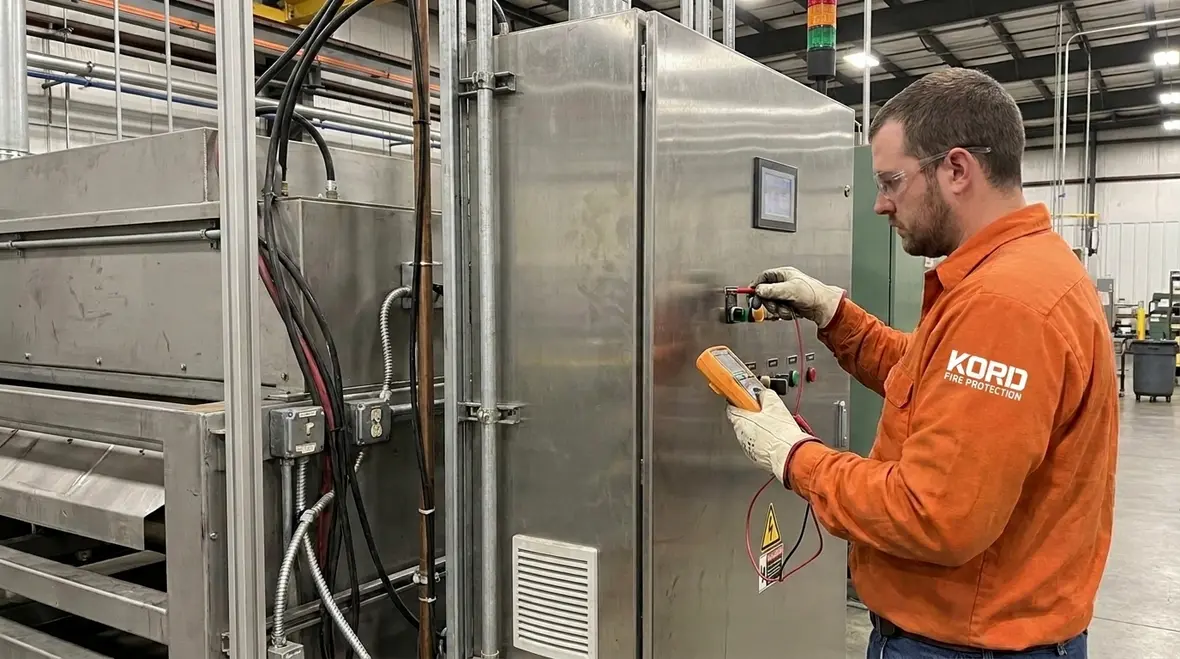
NFPA 34 Section 11.6: Electrical Safety for Electrostatic Detearing
Quick Answer
NFPA 34 Section 11.6 requires practical electrical controls to prevent ignition hazards during electrostatic detearing operations. Compliance focuses on bonding and grounding, equipment integrity, wiring protection, safe inspection intervals, and documented maintenance. Facilities must manage faults promptly and verify performance through routine testing.
If your facility is tightening inspection routines across connected fire and electrical risk areas, protecting electrical infrastructure from fire risk is a smart place to expand the conversation before the paperwork starts acting surprised later.
Why NFPA 34 electrostatic detearing electrical safety is critical in real operations
Electrostatic detearing systems use high voltage and charged components to influence material behavior. That electrical energy becomes a credible ignition source if the system produces sparks, arcing, static discharge, or uncontrolled energization. In commercial and industrial environments, the risk increases when equipment is installed in high duty cycles, maintenance is delayed, or materials, coatings, or dust loads change over time.
NFPA 34 electrostatic detearing electrical safety centers on preventing hazardous electrical conditions while supporting stable, repeatable operation. Operators should treat electrical safety as a managed lifecycle, not a one time installation task.
What Section 11.6 typically expects from electrostatic detearing electrical systems
Although facility designs vary, Section 11.6 aligned programs generally require several foundational controls. The most common implementation themes include:
- Proper bonding and grounding of conductive components that can become energized or accumulate charge.
- Controlled routing and protection of electrical wiring to avoid damage, abrasion, heat exposure, or contamination that reduces insulation performance.
- Electrical integrity assurance through inspections and testing that can detect insulation breakdown, loose connections, damaged housings, and abnormal leakage paths.
- Fault prevention and mitigation by using appropriate components and protective measures that reduce the likelihood of arcing or unintended discharge.
- Documented maintenance and corrective action so recurring issues do not persist across shifts and seasons.
How ignition hazards form: where failure points actually show up
Electrical safety failures in electrostatic detearing rarely result from a single “bad part.” They usually appear as a chain of conditions that degrade electrical performance.
1) Bonding and grounding drift from installation to operations
Grounding performance can degrade due to loose fasteners, corrosion, replacement of components with non matching hardware, or mechanical vibration. In retail, light industrial, and commercial packaging spaces, frequent changeovers increase the risk of missed re checks after equipment moves or part swaps. If bonding continuity weakens, charged surfaces can rise above safe potential and increase discharge events.
2) Insulation damage and contamination
Insulation breakdown often comes from:
- Wire abrasion where cables contact frames, panels, or moving parts.
- Heat from blocked ventilation or incorrect enclosure configuration.
- Residue buildup from the detearing process that can create conductive paths over time.
- Moisture intrusion into enclosures where seals degrade.
Even when equipment continues to run, insulation performance can erode silently until a fault condition accelerates.
3) Loose terminations and arcing at connection points
High current draw, thermal cycling, or repeated service can loosen terminations. Loose connections increase resistance, which increases heat, which worsens the connection. In electrostatic systems, localized heating and electrical stress can promote arcing or conductive tracking.
4) Control system issues and abnormal operating states
Some risks come from the controls and interlocks that manage charging, energization, and safe shutdown. If interlocks do not work as intended, the system can enter a state where charge delivery or discharge behavior changes. That may not show up as an obvious alarm but can elevate hazard conditions.
Operational compliance: inspection, testing, and maintenance that hold up under audit
Commercial facilities commonly struggle when NFPA 34 expectations are addressed informally. Strong compliance requires repeatable procedures, defined responsibility, and records that survive internal audits and third party inspections.
Inspection checklist areas to prioritize
- Bonding continuity verification across conductive pathways and at critical connection points.
- Visual assessment of wiring and enclosures, including insulation condition, jacket wear, conduit integrity, and gasket or seal condition.
- Verification of secure terminations where vibration or maintenance access typically causes looseness.
- Assessment of protective measures such as covers, barriers, and routing that prevent contact or mechanical damage.
- Review of operating logs for abnormal resets, repeated faults, or patterns that indicate degrading electrical performance.
Testing focus: proving safety performance, not just equipment uptime
A credible testing program verifies that the electrical safety functions perform under expected conditions. That includes confirming grounding and bonding effectiveness, checking for conditions that suggest insulation breakdown, and ensuring protective devices operate as designed. The scope and frequency should match the facility’s operating environment, duty cycle, and any changes in materials, airflow, cleaning methods, or enclosure conditions.
Maintenance practices that prevent recurring failures
- Use controlled parts and replacement hardware that maintain electrical continuity and matching ratings.
- Control cleaning methods to avoid damaging insulation or creating conductive residue pathways.
- Document corrective actions with root cause notes, not just “replaced component” entries.
- Coordinate service activities so bonding and grounding checks occur after any mechanical work near electrical assemblies.
Where facilities commonly fall short, and how to close the gaps
Even well run commercial sites often discover gaps during compliance reviews. The most frequent issues include:
- Incomplete records that show inspections happened but not what was verified, what results were obtained, or what corrective actions occurred.
- Under defined responsibilities where technicians assume another team owns electrical safety verification after service or modifications.
- Delayed corrective action when faults appear minor, even though minor electrical abnormalities often precede severe failures.
- Change management failures where swaps, upgrades, or process adjustments occur without an updated electrical safety verification plan.
Kord Fire Protection supports commercial compliance programs by aligning electrostatic detearing electrical safety practices with real facility workflows. That includes inspection planning, documentation expectations, testing support, and maintenance program strengthening so teams can sustain compliance across operational changes.
For teams reviewing site procedures more broadly, the commercial fire safety audit process is a useful companion read, especially if your documentation habits currently rely on memory, luck, and one overworked clipboard.
For additional guidance on managing fire risk across electrical systems and inspection programs, see Kord Fire Protection and request an assessment aligned to your operational hazards.
Frequently Asked Questions
Next step: build an NFPA 34 aligned electrical safety program
Confirm your electrostatic detearing electrical safety program includes bonding verification, wiring and enclosure integrity checks, and documented inspection and corrective action workflows. If you want to strengthen compliance across commercial operations, partner with Kord Fire Protection to assess your system, validate testing scope, and help maintain audit ready documentation. Schedule a site review today and reduce risk before minor electrical issues become operational downtime or safety events.

Join Our Newsletter!
Get the latest fire safety tips delivered straight to your inbox From our Newsletter.



