
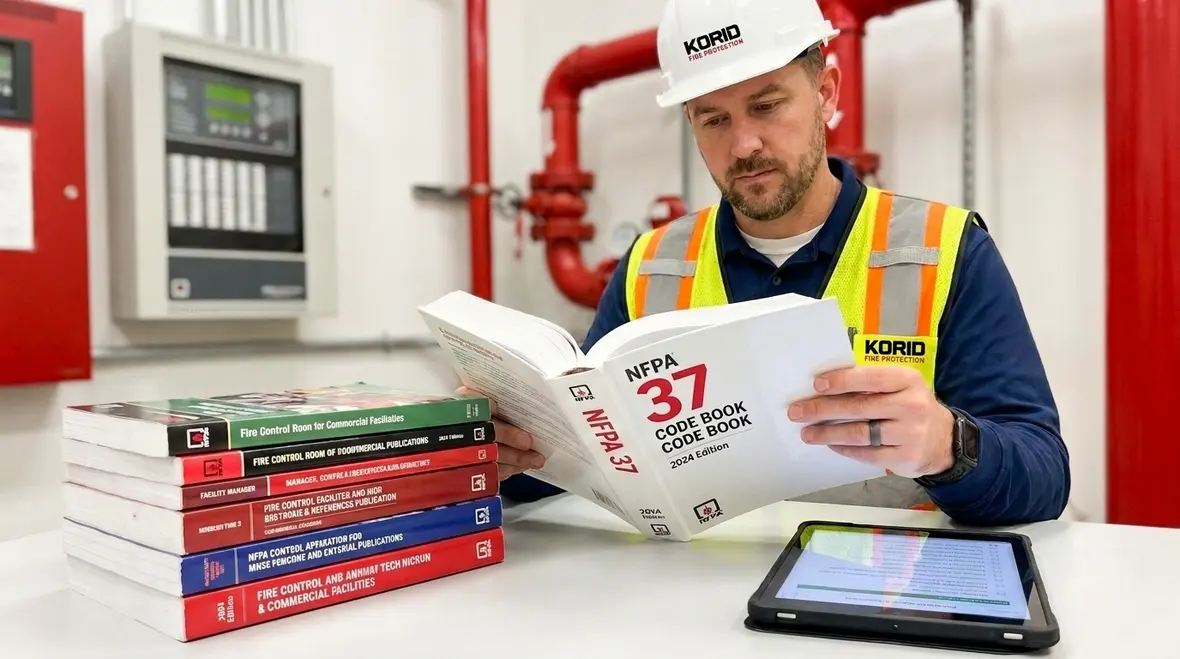
NFPA 37 Section 2.1 General: How Referenced Publication Editions Apply
Quick Answer: NFPA 37 Section 2.1 explains that when a referenced standard is cited, the edition specified in NFPA 37 applies. If no edition is named, the latest published edition at the time the NFPA 37 edition was issued governs. This controls enforcement, documentation, and inspection expectations for fire and life safety systems.
NFPA 37 Section 2.1 establishes the edition control framework for every commercial, industrial, and retail facility that relies on referenced documents for design, installation, inspection, and maintenance of processes and related fire protection features. It matters because edition mismatches can invalidate calculations, defeat inspection readiness, and create avoidable maintenance rework during audits.
For compliance teams managing multiple contractors and evolving vendor documentation, understanding NFPA 37 referenced publications edition rules reduces risk and improves audit defensibility.
If your team is tightening records before an inspection cycle, Kord Fire’s fire safety system documentation for compliance guide is a practical companion piece for keeping edition control and paperwork aligned.
What NFPA 37 Section 2.1 Actually Controls
NFPA 37 Section 2.1 addresses how to apply standards that NFPA 37 references. In practice, it determines which version of a cited publication the facility must follow when NFPA 37 requires compliance with that external standard.
Key operational takeaway: when NFPA 37 cites another publication for criteria, testing, terminology, or performance requirements, the referenced edition rules determine the correct document set that governs the method and acceptance baseline. This impacts:
Design engineering records used for approvals and as-built validation
Inspection test procedures that maintenance staff or contractors execute in the field
Maintenance intervals and acceptance criteria that inspectors verify during periodic testing
Commissioning and documentation packages that third party reviewers use to confirm compliance
For commercial facilities, the edition selection often becomes the difference between tests performed and tests performed to the required standard.
Edition Selection: How Compliance Teams Should Interpret Referenced Documents
NFPA 37 Section 2.1 requires facilities to use the referenced publication edition identified by the NFPA 37 text. When NFPA 37 does not specify a particular edition in the reference, the edition control rules direct users to apply the latest edition published at the time the referenced requirements were established for that NFPA 37 edition.
In plain terms, facility compliance hinges on two steps:
Identify every referenced publication cited within the applicable NFPA 37 sections for the equipment and processes at the site.
Lock the edition that corresponds to NFPA 37 Section 2.1 edition rules for your NFPA 37 edition level and project timeline.
This approach prevents a common failure point: a contractor using a newer edition because it is current, while your audit expects the edition that matches the NFPA 37 requirement set.
Why Edition Mismatches Become Real-World Problems
Even when testing is performed, incorrect edition selection can trigger compliance disputes. The most frequent commercial and industrial causes include late procurement of test standards, vendor document revisions, and internal training drift after periodic code updates.
Common operational failure points
Test procedure variance: different editions may change tolerances, measurement methods, acceptance thresholds, or documentation formatting requirements.
Calibration and maintenance triggers: referenced documents can revise how and when equipment checks must be scheduled or verified.
Component compatibility assumptions: updates may refine requirements for fittings, materials, valves, detection devices, or interfaces that drive system performance.
Recordkeeping expectations: auditors may require specific reporting fields or evidence types that align with the edition in effect.
Commercial facility impacts
Retail and light commercial sites often maintain shorter service histories and more frequent contractor turnover. As a result, edition drift can appear quickly, particularly where preventative maintenance plans reference external standards without an explicit edition log.
When facilities keep an edition matrix tied to each system, they can answer audit questions with defensible traceability instead of relying on the latest documents.
How to Build an Audit-Ready Edition Matrix for Your Facility
Facilities that successfully manage NFPA 37 compliance treat edition control as part of their document control system, not an afterthought during inspections. The goal is to tie each piece of referenced guidance to a specific NFPA 37 edition and project date.
Recommended documentation workflow
Create a referenced publications register listing each publication cited by the NFPA 37 sections that apply to your site’s equipment and hazards.
Capture the edition and issue date that NFPA 37 Section 2.1 requires for your NFPA 37 edition.
Map each reference to asset categories such as detection, suppression interfaces, fuel gas and process-related components, ventilation or protection features, and any related testing methods.
Lock inspection and maintenance procedures so technicians follow the version aligned with the NFPA 37 edition rule set.
Version-control your field documentation so test reports identify the procedure edition used at the time of inspection.
This practical structure prevents the most expensive outcome: redoing work because the edition basis cannot be verified.
Service partner note: Kord Fire Protection supports facilities by aligning inspection, maintenance, and documentation practices with the governing code edition expectations. This helps commercial teams maintain continuity across contractors, remodels, and recurring inspection cycles.
What Inspectors Expect During Periodic Reviews
During inspections and internal compliance audits, inspectors typically focus on whether the facility followed the applicable requirements and whether the documentation supports that alignment. Edition control affects both.
For NFPA 37 referenced publications edition rules, inspections commonly surface these questions:
Which publication editions were used for design basis, test methods, and acceptance criteria?
Do your procedures match your evidence (test reports, checklists, maintenance logs)?
Are records consistent across time when new contractors or vendors joined the project?
Are technicians trained to the correct procedure and operating limits tied to the referenced edition?
Facilities that maintain a clear edition matrix and edition-stamped procedures reduce friction with AHJs and internal stakeholders.
To strengthen your broader fire and life safety documentation strategy, facilities often also standardize how they handle referenced code materials and maintenance evidence. For additional context on operational readiness and documentation practices, review Kord Fire Protection’s fire protection compliance auditing guide.
Frequently Asked Questions
Conclusion and Call to Action
NFPA 37 Section 2.1 provides the edition control framework that governs referenced publications, and commercial facilities should treat it as an operational requirement, not a paperwork detail. Kord Fire Protection helps teams align inspections, maintenance, and documentation with the correct referenced publication editions so audits and AHJ reviews proceed with confidence. Contact Kord Fire Protection to build or validate your edition matrix and maintenance evidence workflow.
Teams reviewing adjacent compliance topics may also want to bookmark Kord Fire’s fire pump testing requirements guide for another code-driven look at testing expectations and documentation discipline.

Join Our Newsletter!
Get the latest fire safety tips delivered straight to your inbox From our Newsletter.



