
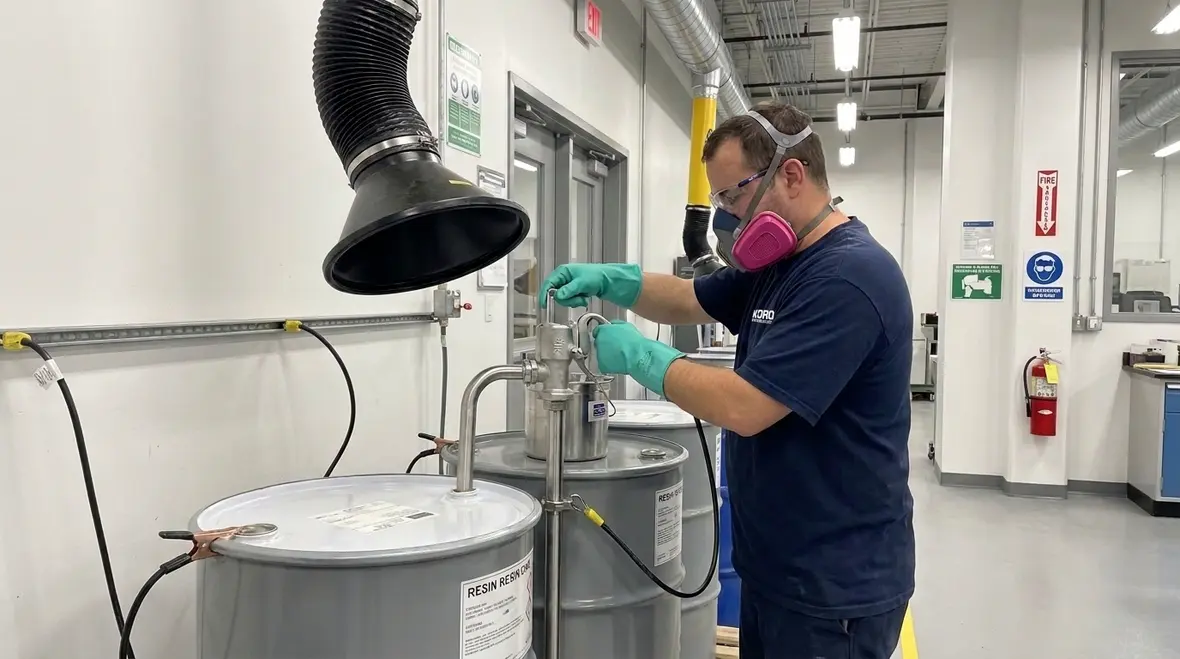
NFPA 33 Section 17.7: Using and Handling Styrene Resins Safely
Quick Answer
NFPA 33 Section 17.7 sets practical fire and explosion safety controls for styrene resin use, including ventilation, ignition source control, container handling, and maintenance of engineering systems. Meeting the NFPA 33 styrene resin use handling requirements reduces exposure to fire hazards and supports consistent compliance during production and cleanup.
Why Section 17.7 matters for commercial operations
Styrene resins introduce fire and health risks that change with process conditions: temperature, mixing energy, transfer practices, and the condition of ventilation and electrical controls. NFPA 33 Section 17.7 addresses those real-world variables by requiring a hazard based approach to using and handling styrene resins safely.
For commercial and industrial facilities, compliance typically fails not because the intent is unclear, but because operational details drift. Common gaps include ventilation that no longer matches airflow design, containers stored without segregation or labeling, transfer hoses that degrade, and ignition control programs that do not cover contractor work or maintenance activities.
What NFPA 33 Section 17.7 expects during use and handling
NFPA 33 focuses on controlling flammable and combustible hazards created by styrene resin handling and related operations. While the exact wording in Section 17.7 must be followed as written for the facility, commercial compliance typically includes the controls below.
1) Control vapors with effective ventilation
Styrene releases vapors that can form ignitable mixtures. Section 17.7 aligned controls generally require ventilation that keeps concentrations below hazardous levels and prevents vapor accumulation in work areas. Facilities often misapply ventilation by treating it as a one time installation. In practice, compliance depends on ongoing verification.
- Confirm capture effectiveness at resin mixing, pouring, and transfer points.
- Verify that ducting, make up air, and exhaust flow remain within design parameters after modifications.
- Ensure exhaust systems run continuously or on the required control logic during operations where styrene vapor release occurs.
Common failure point: filters, fans, or duct dampers drift over time. A system that passes initial commissioning can fall out of alignment due to dust loading, damper misadjustment, or changes to production flow.
2) Prevent ignition sources in and around handling areas
NFPA 33 requirements for ignition control are operational, not theoretical. The facility must manage sources that can ignite vapors, including electrical systems, hot surfaces, static discharge, and mechanical devices.
- Use approved electrical equipment in relevant zones and ensure it remains properly maintained.
- Control hot work by applying permit procedures with active monitoring and isolation of resin handling processes.
- Manage static charge during transfers and eliminate conditions that allow charge buildup on containers, hoses, or floors.
Common failure point: contractor crews introduce temporary equipment that is not rated for the hazardous environment or is connected incorrectly to existing power circuits.
3) Handle containers, transfers, and waste safely
Safe handling includes more than where resin is poured. It includes how containers are opened, how transfers occur, and how residues and waste are managed to prevent vapor release and ignition risk.
- Keep containers closed when not actively transferring resin.
- Use compatible transfer equipment and inspect hoses, couplings, and fittings for degradation.
- Store empty containers and waste materials to limit residual vapor generation and avoid contamination that increases hazard.
Common failure point: resin residue remains in containers or transfer lines. That residue can continue to off gas, especially when containers are moved, cleaned, or left open during downtime.
How facilities maintain compliance day to day
Build written SOPs that match the actual workflow
NFPA 33 compliance depends on operational consistency. Facilities should maintain job specific procedures for resin mixing, transfer, cleanup, and shutdown. SOPs must address start up checks for ventilation readiness, container handling steps, and the defined approach for managing spills or residue.
High performing facilities also include clear triggers for stopping work, such as loss of exhaust flow, abnormal odor increase, or ventilation alarms outside normal range.
If your team is tightening inspection readiness across related systems too, it helps to align these procedures with broader fire protection services for Southern California facilities so documentation, maintenance, and response steps stay consistent from one risk area to the next.
Training that covers contractors and maintenance activities
Most real incidents involve unexpected work: welding, grinding, pump replacement, or temporary wiring. Training should cover:
- Where styrene vapor release can occur even outside primary process areas.
- Permit requirements and isolation steps for hot work.
- Who verifies ventilation status before work resumes.
Engineering controls require inspection and preventive maintenance
Ventilation and ignition source prevention systems cannot rely on visual checks alone. Facilities need inspection routines that document condition, performance, and corrective actions.
- Inspect exhaust fans, dampers, and duct integrity on a schedule aligned with manufacturer recommendations and facility risk.
- Verify alarms and interlocks associated with ventilation performance.
- Maintain grounding and bonding verification for transfer and dispensing points.
For many facilities, keeping documentation audit ready is a decisive factor during internal audits or insurance reviews. Kord Fire Protection supports commercial customers by aligning fire and life safety maintenance practices with ongoing compliance expectations, including inspection readiness and corrective action planning.
To strengthen your program with a practical compliance perspective, consider reviewing related guidance on commercial fire suppression system services and maintenance support that helps keep safety systems functioning as intended.
Inspection and documentation: what auditors look for
Auditors and insurers typically focus on evidence that the facility controls hazards consistently. For NFPA 33 styrene resin use handling requirements, documentation should show that ventilation, ignition source controls, and handling procedures work together as one system.
Key records to keep current
- Ventilation performance logs, including maintenance activities and adjustments.
- Inspection records for transfer equipment, hoses, fittings, and container compatibility controls.
- Hot work permits and records showing ventilation status verification and area isolation.
- Training rosters for operators, supervisors, and contractors performing work in styrene areas.
- Corrective action records tied to identified deficiencies and follow up verification.
Common “paper compliance” traps
Facilities sometimes document policies without ensuring the equipment and maintenance performance match the policy claims. Common traps include:
- Ventilation setpoints that do not match installed airflow conditions.
- Spill kits present but not stocked with the correct materials or not staged near the process points.
- Training that covers NFPA concepts but does not include the facility specific SOP steps.
Kord Fire Protection helps clients reduce these gaps by providing structured, compliance focused support for inspection, testing, and maintenance planning across commercial environments.
For a related look at how records, testing intervals, and corrective actions are reviewed in the field, see this commercial fire safety audit step by step process.
High risk scenarios: where Section 17.7 controls get tested
Spills, drips, and cleanup cycles
Cleanup often increases risk because operations may continue with damaged containers, open waste streams, or reduced ventilation. Facilities should define spill response that includes stopping resin handling, increasing ventilation where required, and using cleanup methods that do not aerosolize vapors unnecessarily.
Startup, changeovers, and downtime
During changeovers, operators frequently open more containers and perform additional transfers than typical production. Downtime increases the chance that equipment remains contaminated with residue. Controls should ensure that ventilation and container closure practices remain consistent during these transition periods.
Maintenance on pumps, heaters, or mixing equipment
Mechanical work introduces ignition and vapor management challenges. Facilities should coordinate maintenance with a permit process that accounts for residual vapors in piping, temporary electrical changes, and safe lockout and restart steps.
Frequently Asked Questions
Stay compliant, not just documented
NFPA 33 Section 17.7 compliance succeeds when ventilation performance, ignition source controls, and handling procedures stay aligned with daily operations. Kord Fire Protection helps commercial facilities plan, inspect, and maintain the systems that support safe styrene resin use so your program remains audit ready and operationally effective. Contact Kord Fire Protection to review your current controls, identify failure points, and build a maintenance and compliance schedule that holds up under real work conditions.

Join Our Newsletter!
Get the latest fire safety tips delivered straight to your inbox From our Newsletter.



