
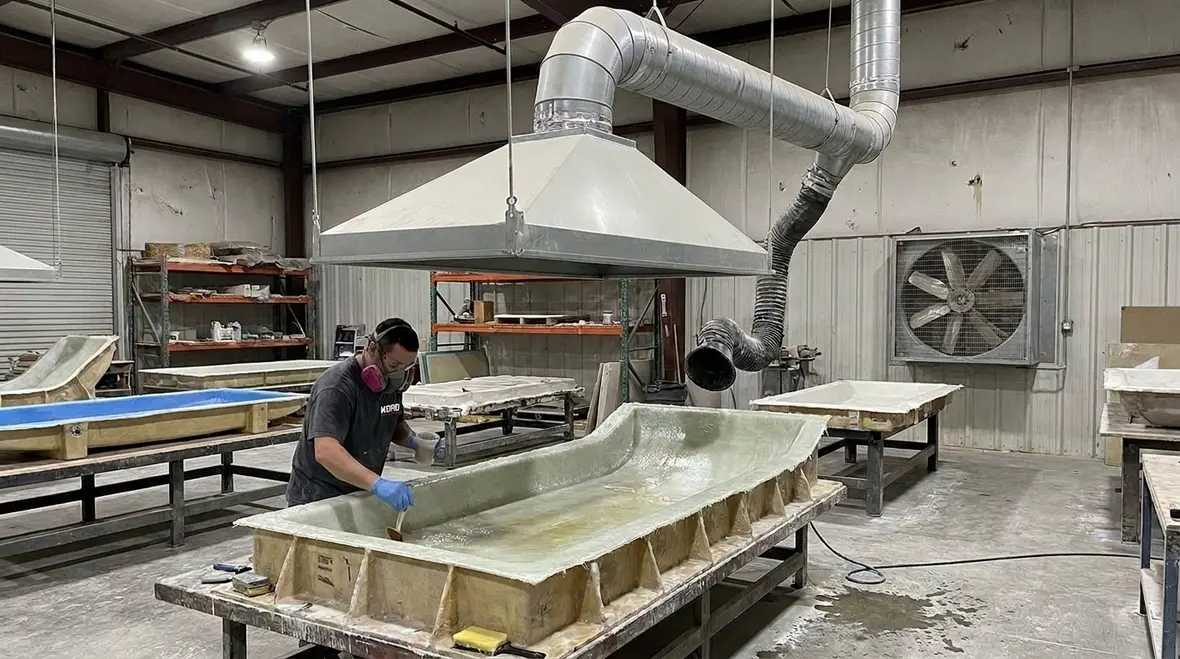
NFPA 33 Section 17.6: Ventilation for Styrene Cross-Linked Composite Work
Quick Answer: NFPA 33 Section 17.6 requires ventilation strategies that control styrene vapor during cross linked composite operations. Facilities must size exhaust and provide effective air movement, then maintain and verify performance through inspection, testing, and operational controls to prevent hazardous accumulation.
NFPA 33 styrene composite ventilation requirements focus on one outcome: keeping styrene vapor from building to flammable and harmful concentrations during composite mixing, layup, curing, and related handling. In commercial and industrial environments, compliance depends on more than installing an exhaust fan. It requires correct ducting, proper capture, continuous or task based control, and documented performance checks over the life of the equipment.
If your facility is tightening process safety documentation, it also helps to review fire protection services in Southern California so ventilation verification, inspection scheduling, and corrective work fit into a broader compliance plan.
Where NFPA 33 Section 17.6 fits in composite operations
Section 17.6 addresses ventilation where styrene is present during cross linked composite work. In practice, this includes operations such as resin mixing, application, tooling, cleaning, and curing processes where styrene vapors can be released. NFPA 33 treats ventilation as a controlling safety system, supported by safe work practices and functional safeguards.
Commercial facilities often face the real world problem of translating these requirements into layouts shared across production lines. Ventilation performance can degrade when operations shift, doors open, HVAC cycles change, or exhaust ductwork accumulates deposits. NFPA 33 compliance therefore requires both installation quality and ongoing verification.
What “effective ventilation” means in the field
Effective ventilation generally means the system collects and removes contaminated air at the source, limits escape of styrene laden vapors into occupied areas, and maintains adequate flow across the relevant work zone.
Key performance elements facilities must manage
- Capture at the source: Hood or local exhaust placement must align with where vapors are generated, not where they are simply noticed.
- Air movement balance: Exhaust must be matched with make up air so the process does not pull vapors away from the source or disrupt containment.
- Airflow stability: Systems must maintain design airflow despite normal production use, sash or cover positioning, and interlocks.
- Control of cross drafts: Forklift traffic, open dock doors, and general HVAC can move vapors away from capture points.
Common compliance failure points
- Undersized exhaust: Fans or ducts selected without accounting for actual hood effectiveness and static pressure losses.
- Improper duct routing: Long runs, sharp turns, or restrictive fittings reduce airflow and starve capture.
- Clogged filters and deposits: Blowback, resin mist, and particulate can foul internal surfaces and reduce effective flow.
- Operational drift: Operators bypass interlocks, reduce fan speed, or leave panels open for convenience.
- Inadequate verification: Systems look “installed” but are not tested for real airflow and static pressure conditions.
How to design ventilation controls for styrene cross linked composite work
Facilities typically need a local exhaust system tied to the process areas where styrene vapors are generated. NFPA 33 Section 17.6 expectations are best met through task matched capture and mechanical removal, rather than relying on general dilution ventilation alone.
Practical design considerations
- Local exhaust device selection: Use hoods or enclosures sized and configured for the work motion, resin open time, and layout constraints.
- Duct sizing and static pressure: Size ducts for airflow and maintain system pressure at the hood so performance matches the design intent.
- Make up air strategy: Provide controlled make up air to maintain capture effectiveness and limit negative pressure surprises.
- Interlocks and operating modes: Ventilation should run during relevant tasks, including cleaning and mixing, and align with production schedules.
- Exhaust discharge considerations: Ensure discharge locations do not reintroduce vapors near air intakes, doors, or occupied spaces.
Documentation that supports compliance
During inspections, commercial facilities often need proof that ventilation performance is not speculative. The strongest compliance files include hood and duct design basis notes, commissioning airflow measurements, and routine maintenance logs that show the system stays within defined operating parameters.
Inspection, testing, and maintenance: the compliance work after installation
Ventilation equipment becomes a recurring compliance task. NFPA 33 styrene composite ventilation requirements should translate into scheduled inspection checks that confirm airflow, control function, and equipment condition.
What to include in an inspection and maintenance program
- Periodic airflow verification: Measure airflow at representative points and compare with acceptance criteria or trending baselines.
- Static pressure checks: Validate that the system still overcomes resistance from ducting and any filtration components.
- Hood integrity and positioning: Confirm physical condition, adjustable components, and that operators maintain correct positioning.
- Controls and interlocks: Test switches, fan start logic, and alarm or indicator behavior tied to ventilation operation.
- Filter and duct cleaning: Establish clean out intervals based on actual use, resin deposition, and observed performance reduction.
- Make up air performance: Confirm doors, dampers, and airflow paths operate as designed and do not undermine capture.
Facilities should also address the “hidden” failure mode: the system begins the day meeting airflow targets, then performance drops as residue accumulates, filters load, or dampers drift. Routine testing catches the trend before it becomes a noncompliance event.
For facility teams that manage multiple life safety and process safety programs, Kord Fire Protection supports ongoing compliance through inspection planning, coordinated testing, and maintenance support that aligns ventilation control with broader fire protection and safety management goals. For a related read, see manufacturing fire suppression planning with Kord Fire Protection.
Operational controls that make ventilation actually work
Even a correctly designed system can fail operationally if production practices undermine containment. NFPA 33 styrene composite ventilation requirements perform best when supported by clear procedures and staff accountability.
High impact practices for commercial operators
- Start ventilation before releasing styrene: Confirm fans and local exhaust are active prior to mixing and application.
- Maintain enclosure closures: Keep covers and access panels in the approved position during tasks.
- Control work sequencing: Align cleanup and solvent use with ventilation operation modes to avoid vapor spikes.
- Address cross contamination: Prevent resin waste and contaminated rags from being staged in areas where vapors can escape capture.
- Train for “normal” adjustments: Provide instruction on fan speed changes, hood adjustments, and what can never be bypassed.
Common enforcement and audit issues
Auditors often focus on what employees do, not just what engineering documents claim. Expect questions about fan runtime verification, interlock bypass prevention, and the availability of current maintenance records.
Frequently asked questions
Next steps: bring ventilation into documented compliance
Review your styrene composite ventilation system against the operational realities of mixing, layup, and cleaning. Then verify airflow, controls, and maintenance records to ensure your program stays aligned with NFPA 33 styrene composite ventilation requirements. Kord Fire Protection can help your commercial team plan inspections, coordinate testing, and sustain ongoing compliance so your ventilation system performs when it matters. Contact Kord Fire Protection to assess current controls and build a practical maintenance and verification plan.

Join Our Newsletter!
Get the latest fire safety tips delivered straight to your inbox From our Newsletter.



