NFPA 33 Section 15.1 Scope: Powder Coating Operations
Quick Answer: NFPA 33 Section 15.1 establishes the baseline intent and applicability for powder coating operations, focusing on how combustible powders, ignition sources, and housekeeping hazards are managed. Facilities use this scope to design, install, operate, inspect, and maintain powder handling and protection systems.
The NFPA 33 powder coating scope is not a vague concept. It tells facility owners and fire protection professionals what kinds of powder coating activities must be evaluated, and it anchors the rest of the standard’s requirements to real operating conditions. In commercial and industrial settings, compliance failures often begin with misapplication of scope, unclear process boundaries, and incomplete inspection and maintenance practices.
For broader code-readiness support, facilities often pair powder coating reviews with NFPA code compliance solutions so scope decisions stay connected to inspection, maintenance, and documentation workflows.
What Section 15.1 Covers in Powder Coating
NFPA 33 Section 15.1 functions as a scope and applicability gate. In practical terms, it helps determine whether a facility’s powder coating areas, processes, and ancillary operations fall under NFPA 33’s design and safety framework. When facilities treat Section 15.1 as a generic reference instead of an operational boundary, they frequently miss hazards tied to loading, conveying, spraying, collection, and cleaning.
For powder coating operations, the “what” in Section 15.1 typically relates to how pulverized coating material behaves under normal operation and foreseeable abnormal conditions. The key compliance concept is that powder can form combustible dust accumulations and can become an ignition and deflagration hazard when dispersed. Therefore, the NFPA 33 powder coating scope is best implemented as a process map, not as a single labeled room.
Where the NFPA 33 Powder Coating Scope Commonly Expands in Real Facilities
Commercial, industrial, and retail facilities can appear simple from the outside, yet powder coating systems include multiple subsystems that may each introduce particulate hazards. The NFPA 33 powder coating scope typically expands across the process chain, such as the transfer path and the areas where residues accumulate.
Common areas included in practice
- Powder storage and material handling points, including loading and feed systems
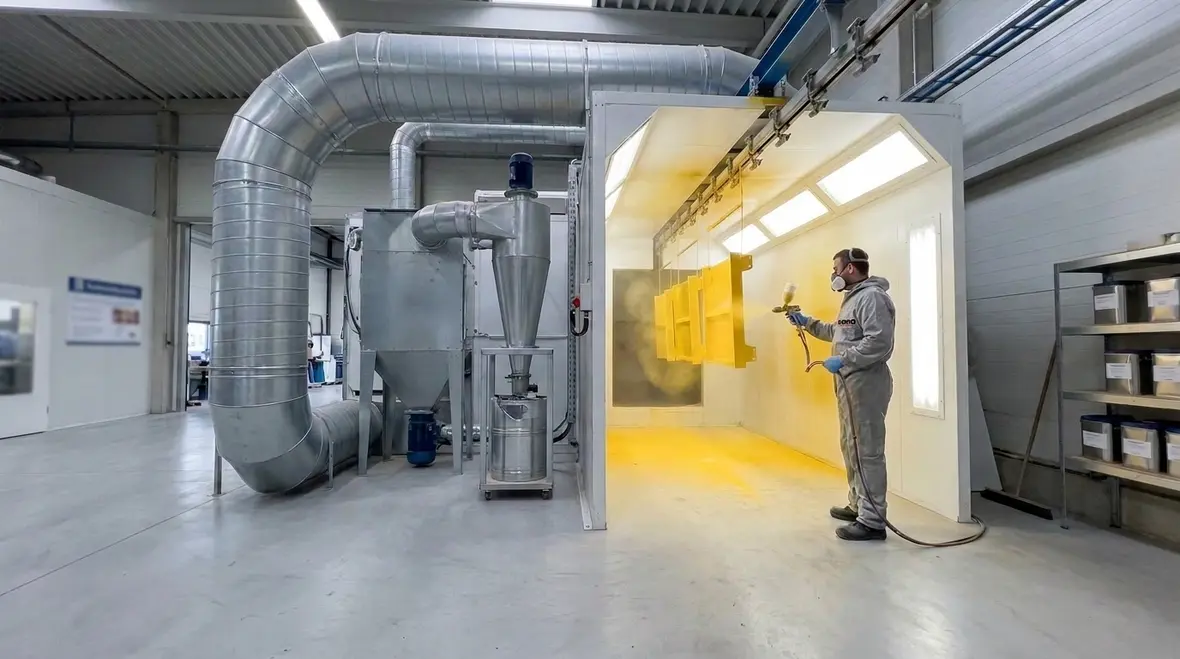
- Spray application zones and powder control areas, including overspray management
- Cyclone, filtration, and reclaim systems that handle settled and airborne fines
- Conveying systems and ductwork where powder can settle or be disturbed during maintenance
- Powder booths, recovery equipment enclosures, and related housekeeping zones
Boundary errors that trigger enforcement risk
- Assuming “booth only” compliance and excluding upstream feed, downstream collection, and floor residue zones
- Ignoring maintenance staging and cleaning activities where powder becomes airborne
- Failing to evaluate change outs, upgrades, and temporary operations such as duct repairs
To avoid these gaps, fire and safety teams should treat Section 15.1 as a prompt for documenting process boundaries, airflow pathways, and where powder can accumulate or be dispersed. Kord Fire Protection supports this approach by aligning the compliance review with how the facility actually runs, not only how it is written.
Operational Procedures That Drive Compliance Under Section 15.1
Scope requirements only matter if operations match them. Many facilities meet the “installed” side but fail the “operated and maintained” side. NFPA 33 powder coating scope implementation requires disciplined routines for ignition source control, dust management, and safe operation of powder handling equipment.
Spraying and collection operations
Powder coating operations rely on controlled application and effective capture of overspray. From a fire safety standpoint, the critical mechanisms include collection efficiency, airflow stability, and the ability to prevent powder accumulation in locations that later become fuel for a delayed ignition event.
Facility teams should maintain documented procedures for:
- Normal start up and shutdown sequences to prevent abnormal air movement and residue disturbance
- Alarm response and interlock verification where available, especially for ventilation and collection equipment
- Changeover procedures that reduce cross contamination and residue migration
Housekeeping and maintenance controls
Housekeeping is where many facilities lose compliance. Powder fines can settle into overhead surfaces, ledges, and equipment cavities. Later, cleaning activities, traffic, or mechanical vibration can resuspend the powder and create a combustible dust exposure.
Practical controls include:
- Using cleaning methods that do not disperse dust, with documented frequencies tied to operating conditions
- Inspecting concealed areas during maintenance cycles, not just visible floors and ledges
- Verifying that after any duct, filter, or cyclone work, the facility restores sealing integrity and capture performance
Equipment Mechanisms and Failure Points Affecting Powder Coating Scope
Under the NFPA 33 powder coating scope, equipment must operate in a way that prevents unsafe powder dispersion, accumulation, and ignition risk. Understanding typical failure points helps teams prioritize inspections and maintenance tasks.
Booths, recovery systems, and filtration
Powder recovery systems manage both settled material and airborne fines. When filtration performance degrades, more fines escape and accumulate in secondary areas. Common causes include:
- Damaged or improperly seated filter elements
- Malfunctioning pulse cleaning cycles or control logic issues
- Leaks at gasket interfaces, duct joints, or access panels
- Incorrect pressure differentials that indicate ineffective capture
Ducting, valves, and conveying paths
Ductwork and conveying components can accumulate powder where airflow changes direction or where settling conditions exist. Failure points include worn seals, vibration induced loosening, and residue buildup that later sheds during maintenance.
Facilities benefit from structured inspection plans that include:
- Visual and measured checks for leaks and abnormal dust deposits
- Verification that isolation devices operate as intended during maintenance
- Post maintenance verification that systems return to baseline capture performance
Inspection, Documentation, and Maintenance: How to Prove Compliance
Regulators and insurers typically look for evidence that the NFPA 33 powder coating scope is actively managed. That evidence includes inspection results, maintenance records, corrective actions, and training documentation tied to powder specific hazards.
What good documentation looks like
- Process boundary maps showing all powder handling stages relevant to Section 15.1
- Inspection checklists for booths, collectors, ductwork, and housekeeping zones
- Preventive maintenance schedules for filtration and airflow related components
- Corrective action logs that track defect identification to closure
- Employee training records on safe cleaning, shutdown, and abnormal operation response
Service partnership matters
Kord Fire Protection helps commercial facilities keep NFPA 33 powder coating scope compliance current through field assessments, inspection support, and maintenance aligned with operational realities. This reduces downtime risk by identifying failure trends early, before they create dust escape, accumulation, or system performance drift.
If you need broader context on commercial fire prevention planning, Kord Fire Protection also supports integrated compliance strategies through resources like Kord Fire Protection.
Frequently Asked Questions
Conclusion and Next Step
NFPA 33 Section 15.1 establishes the operational boundary for the powder coating hazard picture. To protect people and assets, commercial facilities must confirm scope boundaries, align procedures with real workflows, and document inspection and maintenance that proves systems control powder accumulation and dispersion. Engage Kord Fire Protection to conduct a focused compliance assessment, identify scope gaps and failure points, and build a practical maintenance and inspection plan that stands up during audits and ongoing operations.
If your team is also comparing adjacent spray-operation requirements, the related guide on spray operations covered and excluded under NFPA 33 adds useful context for drawing cleaner compliance boundaries.

Join Our Newsletter!
Get the latest fire safety tips delivered straight to your inbox From our Newsletter.