
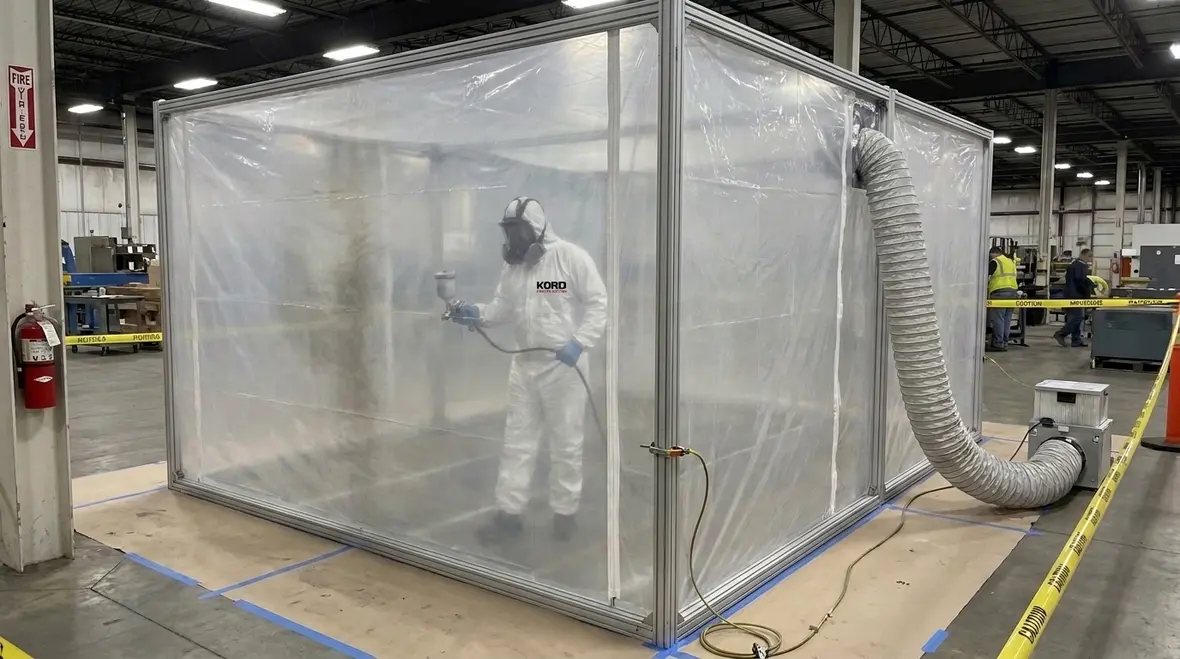
NFPA 33 Section 18.1 Scope: Spray Operations in Membrane Enclosures
Quick Answer: NFPA 33 Section 18.1 sets the scope and intent for spray operations performed within membrane enclosures. It frames when these enclosures apply, what hazards must be controlled, and which compliance activities follow, including inspections, maintenance, and documented operating procedures.
What does “NFPA 33 membrane enclosure spray operations scope” cover?
In NFPA 33, Section 18.1 addresses the scope for spray operations conducted in membrane enclosures. The NFPA 33 membrane enclosure spray operations scope establishes the boundaries of the requirements so facilities can control overspray, flammable vapor accumulation, and ignition risks while using enclosure systems that differ from rigid spray booths.
For commercial and industrial facilities, this scope matters because membrane enclosures often get deployed for localized or temporary spray work. That can create compliance gaps if the enclosure is treated as “temporary housekeeping” rather than an engineered fire and ventilation control system.
For a broader look at how inspection and verification fit into real fire protection service planning, see fire pump testing requirements.
Why Section 18.1 matters in real spray operations
Membrane enclosures change how air moves, how overspray deposits, and how ignition sources are managed. Section 18.1 scope language exists to ensure these systems still provide equivalent hazard control where they are used. In practice, the biggest operational challenges include:
- Maintaining consistent airflow to capture overspray and reduce combustible vapor hazards.
- Ensuring enclosure integrity so leaks do not allow material or vapors to migrate into occupied or process areas.
- Controlling ignition sources through proper bonding and grounding practices, electrical equipment selection, and safe housekeeping.
- Managing combustible residues from overspray and coating overspray buildup on membranes and ventilation components.
Commercial maintenance teams and safety managers typically notice issues only after a process change, a new contractor takes over, or a membrane is replaced and not recommissioned. Section 18.1 scope expectations help prevent that drift by keeping the enclosure system under fire protection and operational control.
How membrane enclosures affect compliance planning
Membrane enclosures rely on airflow and engineered confinement rather than rigid construction to manage spray hazards. That creates a compliance framework that requires disciplined setup and verification before each spray run.
Operational setup and pre use checks
Facilities should treat membrane enclosure deployment like a controlled operating condition. Typical scope-driven elements include:
- Verification of ventilation performance prior to spraying, including confirming that exhaust and make up air systems operate as designed.
- Ensuring correct enclosure placement so the membrane forms a stable barrier around the spray area without creating unintentional leak paths.
- Confirming bonding and grounding continuity for components that can accumulate static charge and for associated spray equipment.
- Confirming that ignition control measures remain in effect for the full duration of spraying and cure periods when relevant.
Common failure points
Inspections frequently reveal the same failure patterns. These are not minor “maintenance items.” They can undermine the hazard control intent behind NFPA 33:
- Membrane damage from sharp edges, forklift traffic, abrasion, overspray glazing, or improper folding during setup.
- Improper seal behavior at frames, flanges, or cable pass through points that allows airflow short circuiting or vapor escape.
- Ventilation drift due to clogged filters, damaged duct sections, dampers stuck out of position, or fan performance changes over time.
- Residue buildup on membranes and airflow components that reduces capture efficiency and can add to combustible loading.
These points align with why the scope matters: Section 18.1 supports requirements that keep spray operations within the safe operating envelope rather than relying on assumptions about how “similar” the setup looks.
Inspection, maintenance, and commissioning expectations
Membrane enclosure compliance depends on continuity of performance. That means inspection and maintenance should follow a repeatable cadence and should include functional checks, not only visual observations.
What to inspect during routine and periodic evaluations
Routine inspections should focus on the enclosure system components that directly control fire risk and overspray capture:
- Membrane condition including tears, thinning, delamination, and compromised edges.
- Airflow pathways including duct connections, dampers, hoses, and any transitions that can leak or restrict airflow.
- Exhaust and filtration condition including signs of loading, abnormal pressure drop, or bypass leakage.
- Electrical and grounding components including continuity and any modifications introduced by contractors.
- Housekeeping practices including overspray residue removal and control of waste handling.
Maintenance that protects the “system”
Maintenance should preserve how the enclosure performs as a system. For example, replacing only a portion of membrane material without checking seals and airflow can create a new leak path. Likewise, cleaning that removes visible residue but leaves degraded airflow components can compromise capture and increase combustible vapor risk.
Kord Fire Protection supports commercial facilities with practical service designed for ongoing compliance, including verification activities and maintenance support aligned with NFPA 33 intent. For additional technical context and service planning, see Kord Fire Protection.
Commercial implementation: staffing, documentation, and contractor control
Membrane enclosure spray operations scope requirements often fail in the field due to process control problems rather than equipment capability. Facilities that manage multiple trades, rotating contractors, or busy retail backrooms need stronger documentation and control mechanisms.
Training and competency
Spray operators, maintenance staff, and supervising safety personnel should understand what changes require a restart or recommissioning of the enclosure setup. Training should include how to recognize enclosure damage, how to confirm ventilation operation, and how to stop work if conditions drift.
Documentation that auditors and inspectors expect
Commercial compliance typically depends on records that show the enclosure system has been verified and maintained. Documentation should include:
- Enclosure setup parameters and pre use verification results.
- Maintenance and replacement records for membranes and airflow related components.
- Inspection reports identifying deficiencies, corrective actions, and retest outcomes.
- Work permits or job authorizations where the facility uses them for spraying.
These documentation practices reduce operational downtime because corrective actions are faster and clearer. They also improve consistency when different contractors perform similar work in the same location.
Frequently Asked Questions
Next step: get your scope aligned before spraying starts
Membrane enclosures can meet NFPA 33 intent when they are treated as engineered fire and ventilation controls, not as temporary plastic barriers. Kord Fire Protection helps commercial facilities verify performance, close common failure points, and maintain inspection and maintenance readiness. Contact Kord Fire Protection to review your current membrane enclosure spray operations scope approach, identify gaps, and build a practical compliance schedule.

Join Our Newsletter!
Get the latest fire safety tips delivered straight to your inbox From our Newsletter.



