
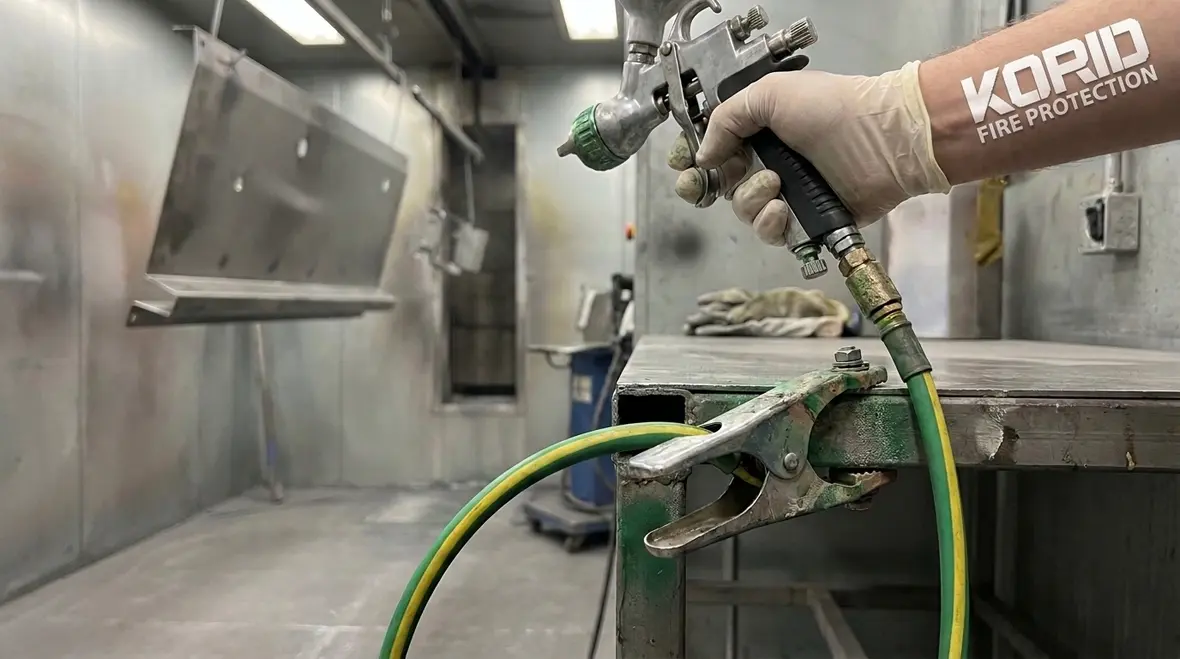
NFPA 33 Section 12.5: Grounding for Handheld Electrostatic Spray Equipment
Quick Answer: NFPA 33 Section 12.5 requires handheld electrostatic spray equipment to be properly grounded to control static charge and reduce ignition risk. Compliance depends on correct bonding pathways, verified conductivity, and documented inspection and maintenance. Grounding systems must remain intact during normal operation.
Why NFPA 33 handheld electrostatic grounding requirements matter in real facilities
Handheld electrostatic spray operations introduce unique ignition and shock hazards because charged mist and atomizing air can accumulate static energy. NFPA 33 handheld electrostatic grounding requirements address that risk by ensuring conductive paths route charge safely to ground and by preventing intermittent or degraded bonding.
In commercial, industrial, and retail settings such as automotive refinishing, composite or fiberglass coatings, appliance finishing, and metal fabrication, grounding failures usually do not start as total noncompliance. They begin as small changes: a worn grounding lead, a damaged hose assembly, a poorly seated plug, corrosion at a contact point, or equipment reassignment to a different workstation.
NFPA 33 grounding is not a one-time “install it and forget it” task. Facilities must sustain performance through inspection, testing, and maintenance practices consistent with their operating controls and the equipment manufacturer’s instructions.
For teams that already manage broader fire protection testing and documentation across the site, it helps to align electrostatic grounding verification with a disciplined inspection workflow similar to fire pump testing requirements, where inspection frequency, documented results, and repeatable field procedures all matter.
NFPA 33 Section 12.5 scope: what equipment must be grounded
Section 12.5 focuses on grounding for handheld electrostatic spray equipment. The intent is to establish a reliable electrical connection between the electrostatic system and ground so that charge generated during spray is controlled. For practical compliance, this includes not only the spray gun assembly but also the conductive components that form the grounding path, depending on the equipment design.
What typically forms the grounding path
- Handheld spray gun and cable assembly: The conductive elements designed to route charge through the system’s bonding network.
- Electrostatic power supply and control equipment: Components that support charge generation and monitor system behavior.
- Hoses, whip leads, and connectors: Flexible sections that can be damaged by abrasion, chemical attack, or improper handling.
- Workstation grounding point: The facility connection intended to provide an effective path to ground.
Facilities should treat every connection interface as part of the grounding system. That includes quick disconnects, clamps, and threaded contacts. A correct workstation ground does not compensate for a compromised gun connection.
How grounding works during electrostatic spraying
Electrostatic spray systems apply high voltage to create an electrostatic charge on coating particles. If charge management fails, the system can produce unwanted sparking, arcing, or localized ignition risk. Grounding provides a controlled reference so the electrostatic system and conductive parts maintain a safe electrical potential relative to ground.
Common operational failure points
- Loose or intermittent connectors: Movement during spraying can loosen connections and interrupt the conductive path.
- Damaged grounding cables: Cuts, abrasion, or chemical degradation can increase resistance or break continuity.
- Corroded contact surfaces: Oxidation or coating buildup at clamps and terminals can reduce conductivity.
- Improper routing of hoses and leads: Pinching or twisting can strain conductors and weaken connections.
- Workpiece grounding mismatch: While Section 12.5 centers on handheld equipment, coating operations often rely on overall conductive bonding of the system. If practices elsewhere in the electrostatic process are inconsistent, ignition risk increases.
These issues become compliance problems quickly in high turnover shops and multi-shift facilities, especially when technicians reconfigure equipment between jobs.
Inspection and verification: what facilities should require
NFPA 33 grounding compliance relies on effective ongoing verification. In practice, that means establishing a documented inspection and testing routine that checks continuity, connection integrity, and physical condition of all grounding-related components.
Inspection checklist used in the field
- Physical integrity: Verify grounding leads, connectors, and hose assemblies show no cuts, abrasion, melting, or chemical attack.
- Connection security: Confirm clamps, screws, and plugs seat fully and cannot be dislodged during normal handling.
- Continuity and conductivity checks: Measure bonding effectiveness using the appropriate method and equipment required by your program and manufacturer instructions.
- Workstation grounding point condition: Verify terminals remain tight, corrosion is controlled, and connections remain effective.
- Functional verification: Ensure the electrostatic system starts and operates with stable grounding-related behavior, consistent with manufacturer requirements.
Maintenance practices that prevent recurring defects
Many facilities reduce grounding issues by implementing “treat as mission critical” handling rules for conductive components. Kord Fire Protection typically recommends controlling:
- Training: Teach operators and maintenance staff to recognize conductor damage, corrosion, and loose connectors before use.
- Spare parts management: Stock approved grounding leads and compatible connectors to avoid field substitutions.
- Change control: When equipment is moved or reconfigured, require grounding re-verification and documentation.
- Cleaning standards: Use procedures that remove coating buildup from terminals without degrading contact surfaces.
For additional fire protection and inspection support, facilities can look to Kord Fire Protection’s approach to structured testing and documentation in articles such as NFPA 25 8.3 fire pump testing, churn tests, and flow planning when building a stronger compliance program.
Commercial compliance challenges: what causes “pass on paper, fail in use” outcomes
Even when an initial installation meets requirements, commercial operations often introduce drift. Common causes include:
- Equipment sharing: Multiple workstations and crews use the same handheld units, increasing connection wear and reassembly variability.
- Work orders without electrical checks: Maintenance may replace hoses or cables without performing grounding verification after reassembly.
- Accelerated wear in high throughput areas: Fast-paced spraying increases flex cycles and abrasion on grounding cables and connectors.
- Documentation gaps: Records may list “inspection performed” without recording results, test methods, or corrective actions.
To avoid these outcomes, facilities should integrate NFPA 33 handheld electrostatic grounding requirements into their work instruction and permit-to-work workflow. The goal is simple: no change to conductive components occurs without a grounding verification step and documented outcome.
Implementing an NFPA 33 grounding program with Kord Fire Protection
A durable program combines field-ready procedures, trained personnel, and verified results. Kord Fire Protection supports facilities by aligning electrostatic grounding inspections with the documentation and ongoing maintenance expectations that inspectors look for during audits.
Best results come when the program includes:
- Defined inspection frequency: Set based on risk, usage intensity, and equipment manufacturer guidance.
- Clear acceptance criteria: Specify pass fail thresholds for continuity and expected equipment bonding behavior.
- Corrective action tracking: Ensure damaged components are removed from service and replacements are verified.
- Audit-ready records: Maintain traceable testing documentation that reflects the actual condition of handheld electrostatic equipment.
If your facility uses electrostatic spray systems across multiple bays, workstations, or retail locations, Kord Fire Protection can help standardize controls so grounding performance stays consistent as equipment moves through daily operations.
Frequently Asked Questions
Next step: schedule an electrostatic grounding verification review
Ensure your handheld electrostatic spray equipment stays within NFPA 33 handheld electrostatic grounding requirements by validating grounding integrity, updating inspection documentation, and correcting common failure points. Contact Kord Fire Protection to review your program, confirm test records meet audit expectations, and implement practical maintenance controls that keep operations compliant across every shift and workstation.

Join Our Newsletter!
Get the latest fire safety tips delivered straight to your inbox From our Newsletter.



