
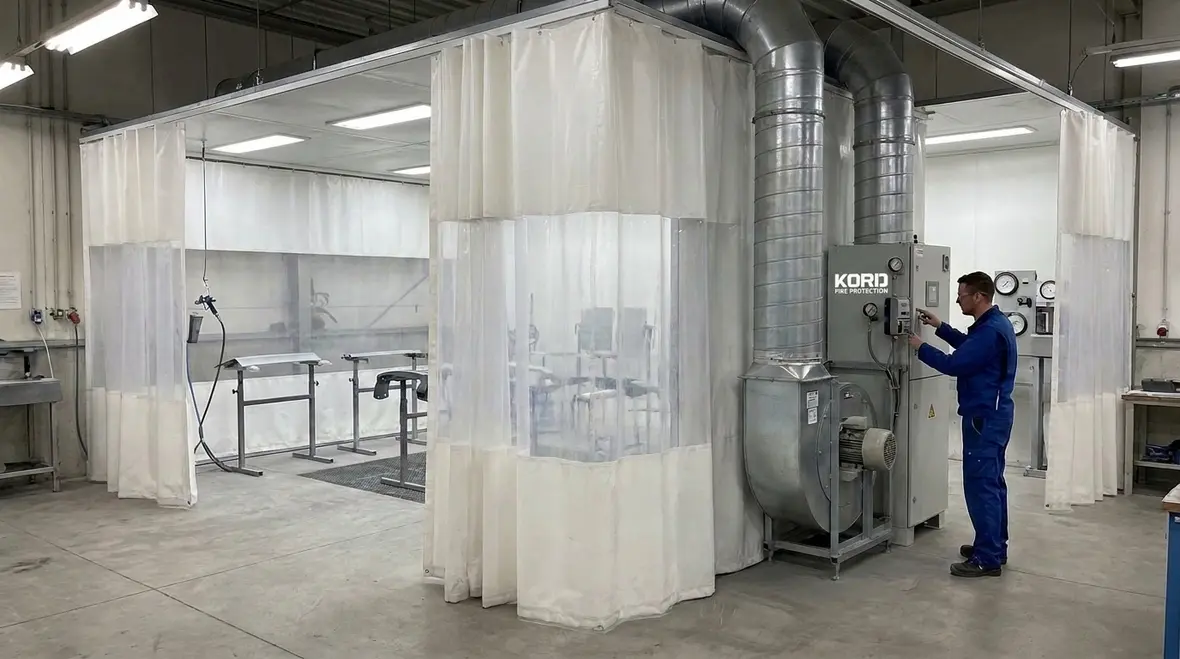
NFPA 33 Section 18.7: Ventilation in Membrane Spray Enclosures (Compliance Guide)
Quick Answer: NFPA 33 Section 18.7 sets ventilation expectations for membrane spray enclosures to control overspray, limit hazardous concentrations, and support safe operation. Effective compliance requires correct airflow design, ongoing inspection, and documented maintenance to prevent degraded performance and ignition risk.
Facilities working through spray enclosure compliance often also benefit from reviewing ventilation system protection in spray operations, especially when exhaust paths, maintenance discipline, and ignition risk all need to stay aligned.
What NFPA 33 membrane enclosure ventilation requirements mean in practice
NFPA 33 membrane enclosure ventilation requirements focus on how facilities move air through spray areas that use membrane enclosures, also called containment curtains or membrane booths. The goal is consistent capture and removal of overspray and solvent vapors so combustible or toxic mixtures do not accumulate. In commercial operations, compliance becomes a systems problem: airflow paths, fan performance, pressure control, filtration, and monitoring must work together, not individually.
Section 18.7 addresses ventilation within these enclosure types, requiring that ventilation is designed and maintained to achieve the required level of control. Facilities commonly meet the intent through a combination of properly sized exhaust, correct intake flow balance, and verified operating conditions during spraying and cleaning.
Where Section 18.7 typically shows up during inspections
During fire and safety reviews, inspectors and AHJs usually look for evidence that ventilation is not only installed, but maintained at the performance assumed by the enclosure design. For membrane spray enclosures, the most common inspection findings fall into these categories:
- Airflow verification gaps: Records show installation, but not periodic performance checks for fans, ductwork, and damper positions.
- Imbalanced pressure behavior: The enclosure may leak overspray due to incorrect make up air, blocked intake paths, or worn seals.
- Filtration impairment: Loaded or incorrectly installed filters increase resistance and reduce exhaust airflow, which directly undermines capture.
- Control logic failures: Interlocks or timers may allow spraying before ventilation stabilizes, or may stop ventilation too early after operations begin or end.
- Unsupported maintenance: Staff clean and service the enclosure, but they do not document changes, replacement part compatibility, or post service verification.
Practical compliance for retail, industrial, and light commercial paint operations usually requires a program that includes scheduled testing, disciplined filter change practices, and clear operating procedures for start up, shutdown, and abnormal conditions.
How membrane enclosures rely on ventilation to control overspray and vapors
Membrane spray enclosures use a flexible containment approach that depends heavily on air movement. Unlike rigid walls, membrane systems often allow more variable flow patterns, especially as filters load and as the membrane geometry changes during use. Ventilation therefore must establish stable capture while preventing hazardous accumulation.
Core ventilation mechanisms involved
- Exhaust capture: Exhaust removes overspray-laden air and solvent vapors from the work zone, reducing the concentration in breathing height and in the facility.
- Airflow balance: Make up air and exhaust must coordinate so the enclosure does not pressurize outward or collapse inward, both of which can spread overspray.
- Filter resistance control: As filters load, pressure drop increases. Without verification, the exhaust system may no longer deliver the airflow assumed by the original ventilation calculation.
- Operational timing: Ventilation must reach effective conditions before spraying begins and remain active as required during the period when overspray and vapors are still present.
Common failure points that reduce ventilation effectiveness
- Blocked or misaligned duct connections after maintenance.
- Dampers left in non design positions after filter service.
- Fan belt slippage, bearing wear, or VFD parameter drift that reduces airflow.
- Incorrect filter media type or replacement thickness that changes pressure drop.
- Membrane damage that alters airflow paths and can degrade capture efficiency.
For many commercial facilities, these issues occur gradually. That is why verification and documentation matter. NFPA 33 expectations cannot be satisfied by visual confirmation alone.
Operational procedures that support NFPA 33 compliance for membrane enclosures
Compliance succeeds when operational controls match the ventilation system design. Facilities should treat membrane enclosure ventilation like a controlled safety system, not a convenience utility. The most effective programs combine written procedures, operator training, and periodic testing.
Start up and spraying controls
- Start ventilation first: Operators should verify the system reaches the required operating condition before initiating spray operations.
- Confirm enclosure status: Ensure membranes are intact and intake and exhaust pathways are unobstructed.
- Check interlocks: Ensure ventilation interlocks and control logic prevent spraying when ventilation is not operating within specified conditions.
During spraying
- Monitor for degradation signals: Uneven capture, visible overspray accumulation, or odor complaints often indicate airflow loss.
- Control filter change timing: Follow manufacturer recommendations and site specific procedures based on resistance trends and documented results.
Shutdown and cleaning
- Maintain ventilation for the required duration: Overspray and solvent vapors remain airborne even after spray stops.
- Clean with ventilation active as required: Cleaning practices should not defeat capture or bypass filtration.
- Document service actions: Record filter changes, membrane repairs, damper adjustments, and any parts replacements.
These procedures directly support the intent behind NFPA 33 membrane enclosure ventilation requirements by keeping performance stable between inspections and preventing drift from design assumptions.
Inspection, testing, and maintenance practices facilities should standardize
Commercial facilities often struggle with recurring compliance because ventilation performance changes as equipment ages and as production schedules shift. A strong maintenance plan reduces variability and produces defensible records.
What to include in a verification and test routine
- Airflow and capture checks: Validate that airflow rates meet the design basis at the enclosure connections and relevant duct points.
- Pressure and balance verification: Confirm the system maintains intended pressure relationships to prevent enclosure leakage.
- Fan and control performance: Verify fan speed, damper position, and any VFD settings remain within the required operating range.
- Filter condition assessment: Track pressure drop or equivalent indicators and confirm correct filter installation and media compatibility.
- Physical inspection: Inspect ductwork joints, flexible connections, and membrane integrity for changes that alter airflow.
Maintenance that prevents the most common nonconformities
- Use a defined filter replacement workflow that includes verification after installation.
- Document damper and actuator settings before and after service.
- Perform routine checks of fan belts, bearings, and motor load to avoid hidden airflow loss.
- Repair membrane tears promptly and document the repair method.
Kord Fire Protection supports commercial sites with ongoing compliance services, helping facilities maintain ventilation performance through inspection and maintenance support that aligns operational reality with NFPA expectations. For additional technical context on fire protection program planning, visit Kord Fire Protection services in Southern California.
How to manage compliance risk in retail, industrial, and commercial spaces
Membrane spray enclosures often operate in shared or high traffic areas, which increases the cost of noncompliance. The risk management approach should consider facility constraints, staffing patterns, and production urgency.
Commercial facility challenges to plan for
- Compressed production schedules: Incomplete maintenance windows lead to deferred testing and delayed filter changes.
- Multi shift operations: Ventilation controls must perform reliably across shifts, with clear handoff documentation.
- Contracted maintenance: Third party work can change settings unless the facility enforces controlled procedures and verification.
- Housekeeping variability: Overspray cleanup practices can introduce obstructions to intake or duct runs if not standardized.
A practical compliance strategy includes a calendar for ventilation checks, assigned ownership for records, and clear criteria for stopping spray operations when ventilation effectiveness degrades. This approach strengthens defensibility with AHJs and internal audit teams.
Frequently Asked Questions
Next steps
To reduce compliance risk and keep production running safely, facilities should validate membrane enclosure ventilation performance, standardize filter and control maintenance, and document results for AHJ review. Kord Fire Protection can support ongoing inspections and maintenance planning so NFPA 33 membrane enclosure ventilation requirements stay aligned with real operating conditions. Schedule a ventilation compliance review and confirm your enclosure system performance before problems become operational downtime.
If your team is also reviewing related hazard controls, spray booth fire suppression for safer paint operations is a useful next read.

Join Our Newsletter!
Get the latest fire safety tips delivered straight to your inbox From our Newsletter.



