
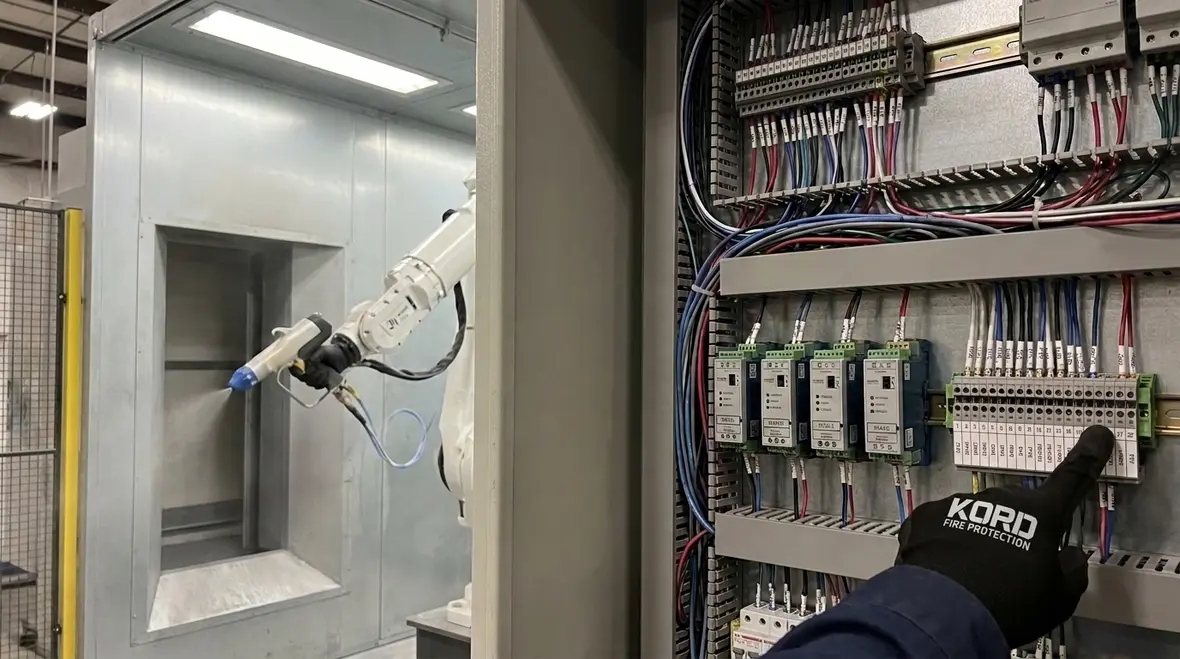
NFPA 33 Section 11.4: Incendive Equipment in Automated Electrostatic Systems
Quick Answer
NFPA 33 Section 11.4 governs how incendive components must be selected, installed, and maintained in automated electrostatic systems. Facilities must verify suitability for the connected system, prevent ignition-capable faults, and document inspection and testing to maintain ongoing compliance.
Why NFPA 33 Section 11.4 matters in automated electrostatic operations
Automated electrostatic coating and finishing systems create controlled opportunities for ignition sources to exist. NFPA 33 Section 11.4 addresses this risk by regulating “incendive” equipment, which refers to electrical equipment intended to operate in a manner that prevents ignition of a specific hazardous atmosphere under defined fault conditions. In practice, compliance requires more than purchasing “listed” components. It requires engineered integration, verification of limiting behavior, and maintenance that preserves the original protection concepts.
For facilities reviewing NFPA 33 incendive equipment automated electrostatic systems for new installations or continuing compliance, the common failure pattern is not the device itself. It is drift over time: worn insulation, modified wiring, loose fasteners, corroded connectors, damaged barriers, and control software changes that change operating behavior without updating the hazard analysis or inspection plan.
For facilities building a broader inspection strategy, Kord Fire Protection also offers fire protection services in Southern California that fit naturally alongside documentation review, field verification, and ongoing compliance planning.
What “incendive equipment” means for electrostatic system integration
Incendive concepts depend on the system behaving in a controlled way when faults occur. In automated electrostatic systems, that typically includes electrostatic power supplies, control electronics, sensing circuits, and wiring pathways that interact with spray zones or other potentially hazardous areas.
Section 11.4 expectations generally align with these operational realities:
- Energy limiting requirements: The incendive design must limit the electrical energy that could ignite a hazardous atmosphere.
- Fault behavior control: The system should remain safe under anticipated abnormal conditions, such as open circuits, short circuits, or component degradation.
- Correct interconnection: Incendive equipment must be connected in a way that maintains the intended protection properties, including the use of approved cables, terminations, and barriers where applicable.
- Separation and segregation: Wiring and components must not defeat the protective limits through improper routing, grounding, or external coupling.
Commercial and industrial environments must treat this as a lifecycle requirement. When facilities update conveyors, replace controllers, add sensors, or troubleshoot “nuisance trips,” they can inadvertently change the electrical energy delivered to field equipment or alter insulation and clearances.
Key compliance challenges facilities face during installation and commissioning
Many organizations assume compliance is mostly a documentation task. In reality, Section 11.4 compliance often fails during commissioning and during later maintenance because the electrical integration details are not fully captured, or because field modifications occur without a formal safety impact review.
1) Verifying the equipment matches the system design intent
Incendive components must match the intended hazardous location requirements and system parameters. Facilities should confirm alignment between:
- Equipment documentation and system hazard classification
- Rated parameters, including voltage, current, capacitance, inductance, and allowable wiring characteristics where relevant
- Control cabinet layout and segregation practices
2) Wiring practices that preserve protection concepts
During installation, crews often focus on mechanical correctness first. Incendive protection concepts can be compromised by:
- Incorrect conductor substitutions or cable type changes
- Unapproved splices, barrier bypasses, or altered termination hardware
- Improper cable routing that increases coupling or undermines intended separation
- Inadequate labeling and poor traceability between devices and circuits
3) Control system changes that shift operating behavior
Automated electrostatic systems can involve programmable logic controllers, interlocks, and monitoring that influence when circuits energize. After software updates, facilities must verify that interlocks still enforce the safe sequence and that fault detection does not mask abnormal conditions.
Inspection, testing, and maintenance that keeps incendive protection intact
NFPA 33 Section 11.4 compliance is not “set and forget.” The protection depends on the equipment remaining as designed and as installed. A practical maintenance program should address both visible condition and functional performance.
What to inspect during routine checks
- Terminations and connectors: Look for looseness, corrosion, damaged insulation, and signs of arcing or heat.
- Wiring integrity: Confirm conductor condition, secure routing, and that cable types match the original design.
- Enclosure condition: Verify gaskets, covers, and cable entries remain intact and correctly seated.
- Segregation: Ensure incendive circuits remain segregated from circuits that could introduce higher energy.
- Labels and as-built alignment: Verify field labels match drawings so troubleshooting does not cause unsafe substitution.
Common failure points tied to electrostatic automation
Facilities typically see repeated issues in these areas:
- Mechanical vibration effects: Leads to loosened terminals, intermittent faults, and repeated nuisance clears that mask deeper issues.
- Water intrusion and chemical exposure: Degrades insulation and affects contact resistance.
- Unauthorized troubleshooting shortcuts: Bypasses to “prove a point” can defeat the protection scheme and become permanent.
- Replacement part mismatch: A substitute sensor or control board that changes electrical characteristics.
To support ongoing compliance, facilities can leverage qualified commercial fire protection partners for structured inspections, testing coordination, and corrective action tracking. Kord Fire Protection supports businesses that need documentation-backed field verification and practical guidance for maintaining compliant electrostatic systems. For related fire protection program planning, see Kord Fire Protection.
If you want a related article that connects inspection discipline with system reliability, see fire pump testing protocols for reliable industrial uptime.
How to build an NFPA 33 11.4 focused compliance program
A strong program does not treat Section 11.4 as an isolated requirement. It ties incendive equipment verification to the broader electrostatic safety lifecycle, including commissioning, change management, and periodic testing.
Recommended program elements for commercial, industrial, and retail settings
- Document control: Maintain as-built wiring diagrams, equipment ratings, and interlock logic versions.
- Change management: Require safety review for device swaps, cabinet modifications, software updates, wiring changes, and rework after alarms.
- Competent inspection workflows: Use checklists aligned to equipment type and installation method, not generic electrical checklists.
- Corrective action tracking: Establish timelines and follow-up verification for any deficiency that could affect incendive behavior.
- Training: Train maintenance staff to recognize conditions that require escalation, such as altered cables, abnormal arcing evidence, or repeated fault clearing.
These steps help facilities protect both personnel and assets while reducing the likelihood of costly downtime caused by preventable fault conditions. They also strengthen audit readiness by demonstrating that the system remains compliant after routine maintenance.
Frequently Asked Questions
Take action now to maintain compliance
Facilities that operate automated electrostatic equipment should validate incendive circuit integrity through a structured inspection and change management process. Engage Kord Fire Protection to help verify documentation alignment, evaluate field conditions, and support ongoing testing and maintenance planning so NFPA 33 incendive equipment automated electrostatic systems remain compliant between shutdowns and audits. Contact Kord Fire Protection today to schedule an assessment and build a practical compliance roadmap.

Join Our Newsletter!
Get the latest fire safety tips delivered straight to your inbox From our Newsletter.



