
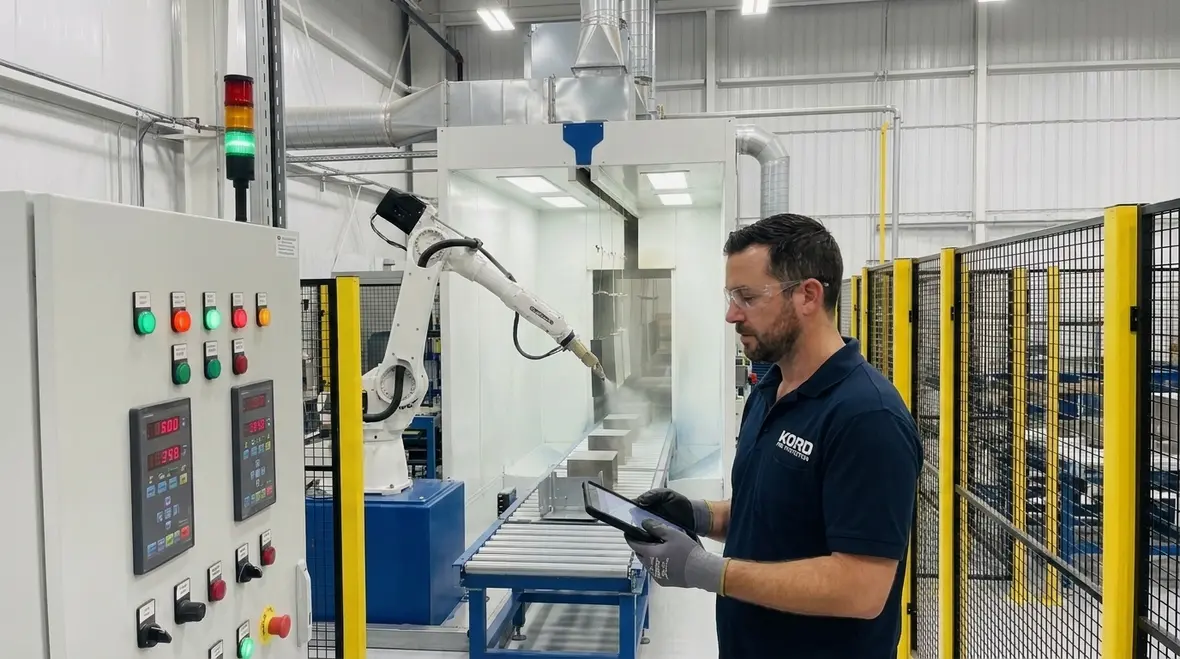
NFPA 33 Section 11.2: General Rules for Automated Electrostatic Systems
Quick Answer: NFPA 33 Section 11.2 sets the baseline requirements for automated electrostatic systems, focusing on system control, safe operation, and ongoing reliability. It governs how automated equipment is designed, installed, monitored, and maintained to prevent ignition hazards and unsafe electrostatic conditions.
If your team is building a broader inspection workflow around these safety requirements, it helps to pair electrostatic system oversight with a structured inspection, testing, and maintenance program so documentation, recurring checks, and corrective actions do not drift off into the void.
Why NFPA 33 automated electrostatic system general rules matter in real facilities
Commercial and industrial sites use automated electrostatic systems to improve coating uniformity and material transfer efficiency. In practice, the fire risk is not theoretical. It appears when control logic fails, grounding is compromised, interlocks are bypassed, or maintenance is overdue. NFPA 33 automated electrostatic system general rules in Section 11.2 establish the operational guardrails that keep automated electrostatic equipment performing within a designed safety envelope.
For facilities that support coating lines, dipping systems, powder or liquid electrostatic applicators, and integrated conveyor processes, compliance must be repeatable. That means procedures, inspection routines, and documentation that survive production schedules, shift changes, and vendor turnover.
What Section 11.2 typically requires for automated electrostatic system operation
Section 11.2 functions as a general framework. It focuses on how an automated system behaves during start up, running conditions, shutdown, and fault states. The intent is straightforward: automated electrostatic systems must prevent unsafe conditions from existing for more than brief periods, and they must fail in a safe manner when abnormal conditions occur.
1) System interlocks and control logic
Automated electrostatic systems rely on interlocks to ensure ignition hazards do not develop. These interlocks commonly include conditions related to spray or coating fluid availability, airflow or ventilation status, equipment position, and electrical output enabling. In commercial plants, a common compliance failure is “workarounds” implemented by production teams under time pressure. NFPA 33 expects the system’s safety functions to remain intact, observable, and testable.
2) Safe power delivery and output enabling
Automated systems should not energize electrostatic output unless prerequisites are satisfied. That may include proof that components are in the correct configuration, that the system is operating in a controlled airflow environment, and that coating application is present where designed. When electrostatic output is enabled outside intended conditions, the risk shifts from performance issues to ignition risk.
3) Automatic response to abnormal conditions
When faults occur, the control system must initiate an appropriate response, such as shutdown, output reduction, or prevention of energization. The response should align with the design basis of the electrostatic equipment. Typical examples include detection of loss of grounding continuity, ventilation impairment, or abnormal operating parameters that could lead to unsafe accumulation or unsafe discharge behavior.
Installation and equipment integrity: where NFPA 33 compliance breaks down
Even when the electrostatic power supply and applicators are installed by competent vendors, real compliance hinges on field conditions and long term integrity. Section 11.2 general rules anticipate that automated systems are exposed to vibration, thermal cycling, coating overspray, chemical exposure, and daily operational changes.
Grounding and bonding across automated zones
Grounding continuity is one of the most common practical failure points. Conductors can corrode, clamps loosen, insulation degrade, and cable routing can be altered during maintenance. Automated production intensifies this because components move and are serviced more frequently. Facilities should treat grounding inspection as a scheduled reliability task, not a “look when there is a problem” activity.
Separation of ignition sources and control of electrical hazards
Automated lines often combine electrostatic equipment with conveyors, fans, heaters, pumps, and control cabinets. The general rules require the overall installation to avoid introducing ignition sources into hazardous areas created by flammable atmospheres. This includes evaluating routing, enclosure integrity, and maintenance that can accidentally expose wiring or alter hazardous area classifications.
System labeling, documentation, and configuration management
In many commercial facilities, the biggest risk is configuration drift. Over time, hoses change, nozzles are swapped, interlock setpoints are modified, and control panels are reprogrammed. Section 11.2 general rules rely on the facility maintaining the intended safety configuration. Documentation and configuration control reduce the likelihood that the system operates in an unintended mode.
Inspection, testing, and maintenance expectations for automated electrostatic lines
Automated systems require more disciplined maintenance than manual spray operations. Coating residue, cable flexing, and repeated motion can degrade components without obvious visual indicators. Kord Fire Protection typically supports compliance by implementing inspection and testing workflows that align with NFPA 33 expectations, manufacturer instructions, and facility operating procedures.
Routine checks that keep interlocks trustworthy
Facilities should test that interlock logic still blocks electrostatic output when conditions are not met. This includes verifying that sensors respond correctly and that control cabinet indicators match actual system status. A common failure is “indicator mismatch,” where a status light suggests a permissive condition even after a sensor drifts out of calibration.
Periodic evaluation of grounding continuity
Grounding should be checked using methods consistent with the equipment design and maintenance documentation. The focus is ensuring electrical continuity remains within acceptable limits and that grounding paths do not rely on degraded connectors or paint or residue layers. Where coating buildup is expected, the inspection process should account for residue removal practices that protect both safety and surface finish requirements.
Cleaning and residue management without bypassing safeguards
Cleaning is necessary, but it can also introduce risk. Facilities should avoid procedures that temporarily defeat interlocks, remove protective covers, or reroute conductors to “make production run.” A compliant maintenance approach ensures cleaning and component service do not compromise the safety functions required for automated electrostatic operation.
For facilities that want a structured maintenance and compliance approach, Kord Fire Protection can help align inspection schedules and documentation with ongoing operational realities. Learn more through Kord Fire Protection or explore how recurring system reviews fit into broader fire protection compliance auditing.
Operational challenges in commercial, industrial, and retail environments
Commercial painting and finishing lines
Many commercial facilities run multiple shifts and multiple product types. Changeovers often involve nozzle swaps, recipe updates, and conveyor timing adjustments. Each changeover increases the chance of interlock or configuration drift. Section 11.2 general rules push facilities to treat automated system setup as a controlled activity with verified safety conditions.
Warehouses and distribution spaces with electrostatic applications
Retail and distribution operations sometimes deploy electrostatic sprayers for disinfection or coating applications. Even when the equipment appears portable, automated controls still matter. Where ventilation, grounding, and control logic are not treated as safety critical, ignition hazards can be underestimated.
Industrial plants with high throughput
In industrial environments, throughput pressures can lead to bypass practices, delayed repairs, or extended run times while faults are “investigated later.” NFPA 33 automated electrostatic system general rules emphasize that unsafe conditions should not persist. A strong facility process includes clear fault handling, escalation thresholds, and documented return to service criteria.
Common failure points and how facilities prevent them
Automated electrostatic systems tend to fail in predictable patterns. Preventing recurring failures requires disciplined monitoring and verification.
Failure point: interlock bypass or permissive logic drift
What it looks like: electrostatic output energizes when a permissive condition is not actually satisfied. Why it happens: control updates, sensor replacement without proper calibration, or temporary bypasses. Prevention: enforce configuration control, validate permissive conditions during testing, and document return to service requirements.
Failure point: grounding degradation from coating residue and environmental exposure
What it looks like: intermittent faults, inconsistent discharge behavior, or repeated service calls for “electrical issues.” Why it happens: corrosion, loose clamps, residue insulating a contact point, or cable damage. Prevention: schedule grounding inspections, verify continuity after cleaning, and track corrective actions.
Failure point: maintenance shortcuts during line downtime
What it looks like: covers removed and not reinstalled, wiring altered, or protective components left incomplete. Prevention: implement a maintenance checklist tied to safety functions, and verify that automated safeguards return to their normal state before production resumes.
Frequently Asked Questions
Call to action
NFPA 33 automated electrostatic system general rules under Section 11.2 require more than “paper compliance.” Build a repeatable process for interlock verification, grounding integrity, configuration control, and maintenance return to service. Contact Kord Fire Protection to develop an inspection and testing plan that fits your automated electrostatic equipment, production schedule, and documentation needs. Start by reviewing current safeguards and maintenance practices before the next scheduled production changeover.

Join Our Newsletter!
Get the latest fire safety tips delivered straight to your inbox From our Newsletter.



