
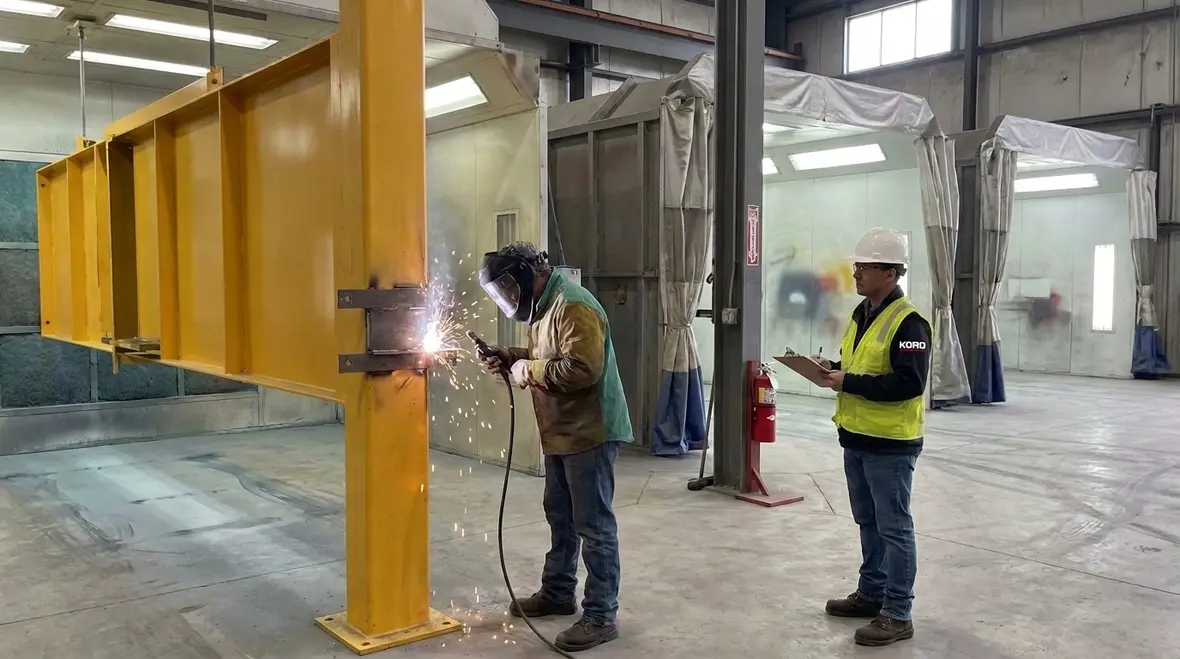
NFPA 33 Section 10.13: Hot Work Permits in Spray Facilities
Quick Answer: NFPA 33 Section 10.13 requires a controlled hot work permit process for spray areas to prevent ignition of flammable residues, overspray, and vapors. The program must define responsibilities, pre task controls, fire watch, equipment restrictions, and documentation, aligned with spray facility hazards and operating conditions.
Hot work in spray facilities creates a high consequence ignition risk because flammable vapors, atomized coatings, and accumulated residue can ignite from sparks, hot surfaces, or welding arcs. NFPA 33 Section 10.13 focuses on stopping ignition sources through formal permits, verified hazard controls, and effective oversight. This article explains what NFPA 33 hot work permit spray facility requirements typically demand in real commercial operations, where production schedules, maintenance cycles, and mixed combustible inventories complicate compliance.
Facilities tightening inspection and maintenance readiness can also review fire protection services in Southern California to support the broader compliance work that makes hot work permit controls easier to defend during audits.
What NFPA 33 Section 10.13 Expects for Hot Work in Spray Areas
NFPA 33 hot work permit spray facility requirements are not just administrative paperwork. The permit process acts as the hazard control bridge between coating operations and maintenance or repair activities that can introduce ignition energy. In practical terms, Section 10.13 drives the facility to do four things before any hot work begins:
- Verify the hot work is necessary and properly scoped (type of operation, duration, and location).
- Control the specific flammable hazards present in and around spray areas, including residual material and potential vapor migration.
- Use competent oversight such as a designated permit authority and, when required, a fire watch.
- Document authorization and maintain the permit trail for accountability and follow up verification.
For facilities that run both wet spray and solvent based processes, the hazard profile can change shift to shift. A compliant permit process therefore must be tied to the current operational state, not a static policy.
Hot Work Permit Controls: What the Permit Must Cover
NFPA 33’s intent requires controls that match the real ignition pathway. A strong hot work permit in a spray facility generally includes the following core elements.
1) Permit information that links work to hazard controls
The permit should identify who is performing the hot work, what equipment and process will be used, and where the work will occur. It should also specify the affected spray systems or adjacent areas, such as:
- Spray booths and prep areas
- Dip tanks, sumps, and coating lines
- Ventilation plenums, ductwork, and exhaust routes
- Storage and waste staging areas (especially solvent rags and filters)
2) Pre job verification of flammable residues and ignition sources
In spray environments, ignition risk extends beyond the immediate torch or electrode location. Residues can exist on rafters, ledges, duct interiors, and structural voids. Common compliance failures include permitting hot work without verifying that:
- Spray residue is removed or isolated from the work area and nearby surfaces
- Waste, filters, and contaminated materials are removed or sealed as required
- Vapors are controlled by operational isolation and ventilation conditions
- Hot work does not create hidden ignition through concealed spaces
3) Requirements for fire watch and duration controls
A proper permit process determines whether a fire watch is required based on the work type and environment. For many spray facility tasks, a fire watch becomes essential because delayed ignition can occur after sparks settle or when heat migrates into combustible deposits.
Operational best practice is to define fire watch responsibilities clearly:
- Continuous observation during the job
- Follow up checks after hot work ends, based on the risk and work scope
- Authority to stop work if conditions change
4) Equipment restrictions and work method limitations
Not all hot work modes carry equal risk in spray facilities. The permit process should restrict high risk alternatives and require engineering or method controls where possible. Examples include:
- Using the least energetic method feasible
- Preventing spark projection into spray or exhaust pathways
- Confirming that grinding, cutting, or welding processes comply with the permit controls
How Spray Facility Conditions Change the Risk Profile
Commercial and industrial facilities often believe hot work risk is local. In spray operations, risk expands through vapor movement, ventilation flows, and accumulated coating debris. NFPA 33 hot work permit spray facility requirements therefore align controls with the actual conditions at the time of work.
Booth and ventilation effects
Spray booths and exhaust systems move air constantly. Even if the hot work happens in a maintenance bay, airflow can draw vapors and residues toward the ignition source or across ignition sensitive materials. A compliant permit process should require verification of ventilation status, airflow direction, and isolation boundaries where applicable.
Residue on surfaces and in ductwork
Residues can ignite even when the booth appears clean. Facilities often miss:
- Deposits on vent plenums and fan housings
- Accumulation in duct bends and filter frames
- Contaminated structural surfaces used as work platforms
Where residue control is not consistently managed, hot work permits become a last line of defense rather than a risk based authorization process. This increases failure probability during peak production and maintenance windows.
Mixed combustible inventories
Retail and light industrial coating spaces may store packaging materials, cleaning solvents, rags, or filter media near spray operations. Hot work permits must consider these items as part of the hazard control plan, including storage separation and removal of likely ignition fuels from the immediate and adjacent areas.
Inspection, Maintenance, and Common Failure Points
NFPA 33 compliance depends on more than a permit form. Fire safety systems and spray facility housekeeping practices directly affect whether a permit can be issued safely and whether the facility can defend its controls during audits.
Common failure points during audits
- Permits issued without hazard condition verification at the start of the shift or before each task.
- Incomplete documentation that does not reflect actual work scope, location, or authorization decisions.
- Housekeeping gaps that allow residue accumulation in ledges, exhaust routes, and hard to reach areas.
- Fire watch misunderstandings, including incorrect assignment, insufficient authority, or no defined post job checks.
- Ventilation and ignition source mismatch, where operational changes are not reconciled with the permit controls.
How to strengthen ongoing readiness
Commercial operators reduce risk by maintaining consistent readiness before hot work arrives. That includes:
- Routine inspection of spray area housekeeping and residue control
- Maintenance verification for exhaust components that can collect flammable deposits
- Training that connects permit controls to real hazards, not just procedure memorization
- Periodic review of permit templates to reflect current processes and equipment
Kord Fire Protection supports commercial facilities with compliance focused services that help maintain defensible readiness for hot work and spray operations. This includes inspection support, testing coordination, and ongoing maintenance planning so that your permit controls start from a reliable baseline rather than emergency assumptions.
For a broader look at inspection, testing, and maintenance planning, see the full lifecycle of fire protection servicing, which fits naturally with spray facility readiness and audit preparation.
Implementation Checklist: NFPA 33 Hot Work Permit Best Practices for Spray Facilities
The following operational checklist reflects what a robust NFPA 33 hot work permit spray facility requirements program typically demonstrates in practice.
| Permit Step | What to Verify | Typical Evidence |
|---|---|---|
| Authorization | Permit authority approval and defined responsibilities | Signed permit with work scope and location |
| Hazard assessment | Residue, vapors, waste, and combustible materials near work | Documented pre job inspection and hazard controls |
| Area preparation | Removal or isolation of flammable residues and contaminated materials | Housekeeping verification notes |
| Controls during work | Spark control, safe method selection, and ventilation confirmation | Tooling and method notes, ventilation status references |
| Fire watch and stoppage authority | Assigned observer and post work checks when required | Fire watch logs and stop work criteria |
| Completion and documentation | Final condition verification and permit closeout | Completion signatures and any corrective actions |
If you want a practical compliance partner for ongoing readiness, refer to Kord Fire Protection. This helps facilities maintain inspection and maintenance continuity that strengthens permit outcomes during audits.
Frequently Asked Questions
Conclusion and Call to Action
NFPA 33 Section 10.13 requires a disciplined hot work permit process that controls flammable spray hazards through verified pre job conditions, effective oversight, and complete documentation. If your facility relies on templated permits without residue verification, fire watch rigor, or maintenance continuity, audit risk increases quickly. Contact Kord Fire Protection to strengthen your inspection, testing, and maintenance readiness so your hot work authorizations remain defensible and safe during real production demands.

Join Our Newsletter!
Get the latest fire safety tips delivered straight to your inbox From our Newsletter.



