
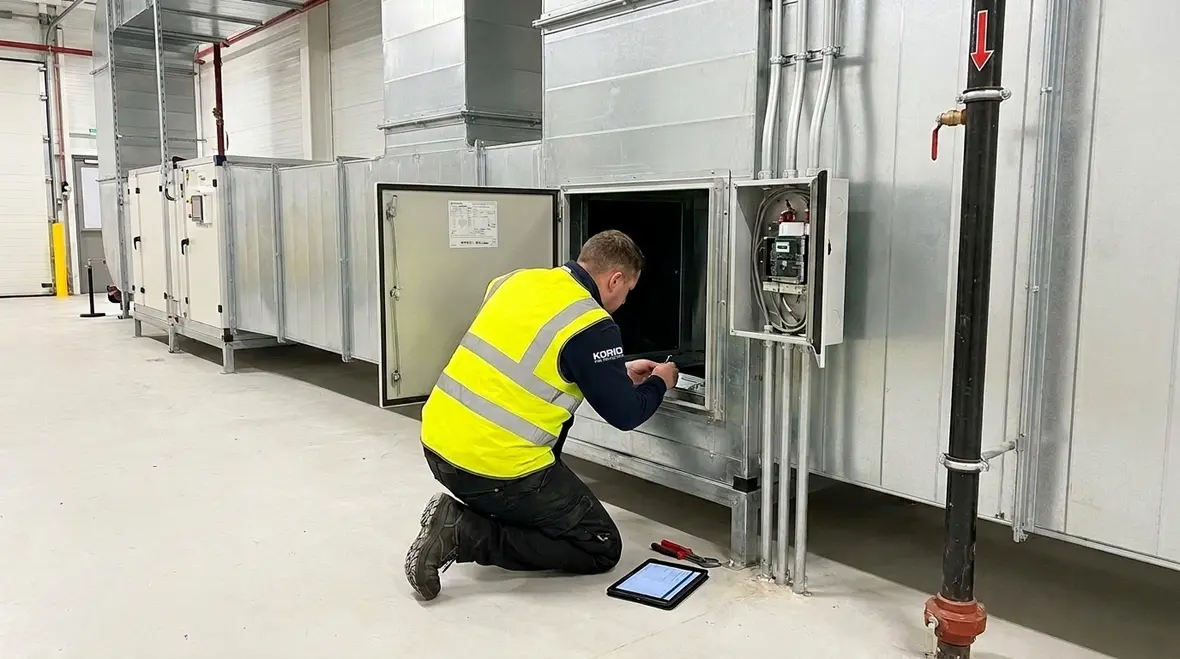
NFPA 32 Section 9.2: Building Services for Type IV Facilities
Quick Answer: NFPA 32 Section 9.2 sets performance and safety expectations for building services in Type IV facilities, including ventilation, electrical considerations, fire protection interfaces, and maintenance readiness. Facilities comply best by aligning design intent with inspection, testing, and documented service cycles.
NFPA 32 governs fire protection and life safety requirements for facilities handling combustible materials. For owners and operators, NFPA 32 Type IV facility building services represent the practical link between the code and day to day operational safety. Section 9.2 focuses on how building systems support fire prevention, safe detection and response, and reliable emergency operation.
Facilities that want a stronger maintenance framework can also review proactive maintenance for fire pump system reliability, which fits naturally with the verification mindset Section 9.2 expects.
What Section 9.2 Means for Building Systems in Type IV Operations
Section 9.2 addresses building services that affect ignition risk, smoke control, heat management, and the ability of fire protection systems to function as intended. In commercial settings, “building services” often include mechanical ventilation, air handling interfaces, electrical distribution and emergency power arrangements, and the physical conditions that keep those services dependable during abnormal events.
In practice, compliance is not limited to design. It requires maintaining service performance over time. Common operational realities such as tenant fit outs, warehouse expansion, changes in storage layout, blocked exhaust paths, and deferred maintenance frequently undermine the original hazard controls the code assumes.
Which Building Services Typically Fall Under NFPA 32 Section 9.2
NFPA 32 Section 9.2 concentrates on building services that influence fire dynamics and emergency functioning. Although exact scope depends on facility use and configuration, the following service categories commonly demand the most rigorous attention in Type IV facilities.
1) Mechanical ventilation and air handling interfaces
Ventilation supports both normal operations and hazard mitigation. Systems that remove heat, dilute flammable vapors or combustion products, or maintain pressure and airflow in a controlled manner must remain functional and correctly balanced. Section 9.2 considerations usually require that these systems do not create unsafe spread pathways and can be maintained to the required performance.
Operational failure modes include clogged filters, misaligned dampers, fan belt or motor deterioration, and duct penetrations that are not sealed after modifications. Any change in duct routing during maintenance or construction can alter airflow patterns and defeat the original protective intent.
2) Electrical and emergency power readiness
Building services in Type IV facilities frequently interact with detection, alarm, shutdown functions, and emergency lighting. Electrical circuits that power these functions must remain reliable under expected conditions, including correct labeling, panel integrity, and maintained testing records.
Common noncompliance drivers include undocumented circuit changes, failed components in emergency power transfer systems, and loose terminations that elevate heat and risk. Facilities also encounter usability issues when emergency power exists but is not tested under realistic load conditions.
3) Fire protection system interfaces that depend on building services
Sprinkler systems, fire pumps, standpipes, detection, and smoke control features can rely on building services for correct operation and access. Section 9.2 expectations often translate into clear physical arrangements and maintained utility performance so that fire protection systems start and operate without obstruction.
Examples include maintaining unobstructed access to valves and controls, preserving clearances for fire department connections, and ensuring that ventilation shutdown or smoke control strategies support the fire protection system rather than conflict with it.
How to Achieve Compliance: Operational Procedures and Verification
Most compliance gaps appear after the facility opens, not during initial code review. A compliance program centered on verification and documented maintenance is the most reliable approach to keeping NFPA 32 Type IV facility building services aligned with Section 9.2.
Building services maintenance plan aligned to hazard risk
Facilities should maintain a formal plan that maps service components to hazard controls. The plan should identify inspection frequency, acceptance criteria, and responsible parties. For mechanical systems, verification must include airflow balance where required, functional checks of dampers and fans, and inspection of ductwork condition and sealing integrity.
For electrical services, the plan should include routine checks of labeling, panel condition, conduit integrity, and periodic testing of emergency power and related protective functions.
Documented change control for tenant work and retrofit projects
Type IV facilities often experience frequent updates, especially in commercial and retail warehouse operations. Any modification to duct routing, exhaust locations, electrical circuits, or control wiring should follow change control procedures. Documentation should show what changed, which hazards it impacts, and what verification testing followed.
Without this discipline, even “small” adjustments can produce system drift that becomes difficult to detect during later annual inspections.
Inspection readiness: access, visibility, and protection of controls
Section 9.2 outcomes depend on access and reliability. Facilities should ensure that critical building service controls remain accessible, protected from mechanical damage, and not blocked by storage, equipment, or construction debris.
A frequent problem involves access to shutdown controls, electrical panels, and service valves being compromised by rack expansion. The facility must treat access as a safety feature, not a housekeeping detail.
For teams reviewing electrical reliability alongside fire protection readiness, fire pump electrical distribution needs for reliable power offers useful context on power paths, controls, and inspection expectations.
Common Failure Points in Type IV Building Services (and What Inspectors Look For)
Audits and inspections typically focus on observable conditions and evidence of verification. The following failure points repeatedly surface in commercial, industrial, and retail environments operating under NFPA 32 expectations.
Ventilation drift and obstructed airflow paths
Inspectors look for proof that ventilation components receive maintenance and that duct and termination points remain unobstructed. Failures often include persistent filter oversaturation, incorrect damper positions, damaged fan housings, and duct penetrations not properly sealed after alterations.
Uncontrolled modifications to ductwork and penetrations
Any added penetrations can alter airflow and compromise separation strategies. Facilities should document penetrations, verify sealing, and confirm that fire resisting assemblies are preserved where applicable by other code provisions.
Electrical reliability gaps and undocumented circuit work
Electrical compliance often fails due to poor documentation rather than equipment absence. Inspectors commonly request evidence of testing, corrective actions, and labeling accuracy for circuits tied to emergency functions.
Maintenance records that do not connect to performance
Generic “service performed” logs rarely support compliance. Records should indicate what was checked, what readings were measured, what acceptance criteria applied, and what corrective actions were completed.
This is where professional service providers add value by using consistent checklists, instrumented testing, and code-aligned reporting for maintainers and safety leadership.
Why Ongoing Testing and Maintenance Matter Most for NFPA 32 Type IV Facility Building Services
NFPA 32 is fundamentally a reliability standard. Building services drift over time due to wear, dust accumulation, vibration, corrosion, and unauthorized changes. A Type IV facility can remain “technically installed” but fail functionally if routine service does not maintain the protective performance the code assumes.
Kord Fire Protection supports commercial clients by maintaining the documentation and testing discipline required to keep building service and fire protection interfaces trustworthy. Their service approach typically includes coordinated inspection support, functional verification, and maintenance readiness planning that helps facilities respond quickly when deficiencies appear.
For related guidance on fire protection program structure and inspection support, facilities can review Kord Fire Protection resources here: Kord Fire Protection. Using a consistent partner for testing and maintenance improves traceability when future modifications or inspections occur.
Frequently Asked Questions
Conclusion and Call to Action
NFPA 32 Section 9.2 places the safety burden on reliable building services, not just original design. Type IV facilities should implement change control, performance based maintenance, and inspection ready access for critical controls. To strengthen compliance and reduce inspection risk, contact Kord Fire Protection for ongoing testing, documentation support, and maintenance planning tailored to your commercial operation. Start now by auditing ventilation and emergency power readiness, then close gaps with a repeatable service schedule.

Join Our Newsletter!
Get the latest fire safety tips delivered straight to your inbox From our Newsletter.



