
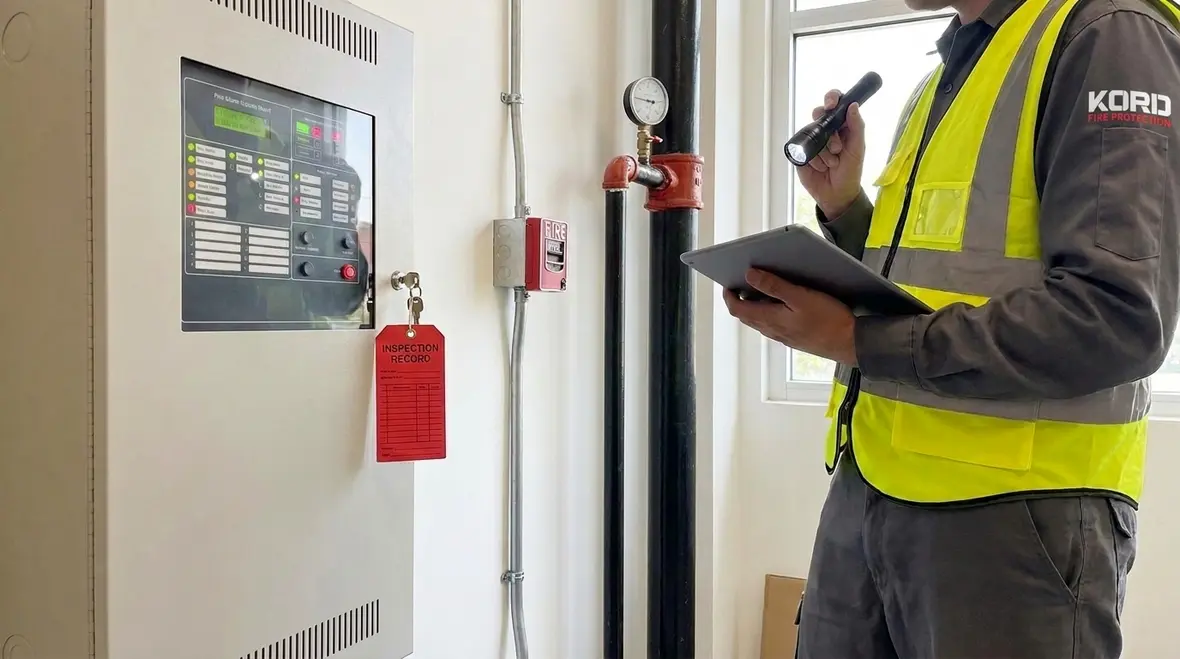
NFPA 32 Section 7.3 Building Services for Type II Facilities
Quick Answer
NFPA 32 Section 7.3 focuses on building services that support safe processing and handling in Type II facilities. It requires fire protection compatible with process hazards, reliable installation, and defined inspection and maintenance so systems remain dependable during normal operation and emergencies.
Facilities working through system coordination and ongoing compliance can also review fire protection infrastructure modernization for compliance for a practical look at how aging systems, upgrades, and documentation affect reliability in the real world.
What NFPA 32 Section 7.3 means for NFPA 32 Type II facility building services
NFPA 32 Type II facility building services connect the protection strategy to the real world of commercial operations. Section 7.3 addresses how building systems such as detection, alarms, extinguishing equipment, and related emergency support must be selected, installed, and maintained to match the hazards associated with the facility’s operations. For compliance teams, the most common risk is not missing a requirement on paper, but allowing building services to drift out of spec through deferred maintenance, improper modifications, or incomplete testing.
How Section 7.3 ties building services to process hazards
NFPA 32 Section 7.3 building services for Type II facilities focuses on ensuring the built environment supports safe interruption and suppression of fire scenarios relevant to the process. In practical terms, compliance teams should treat building services as hazard control layers that must remain coordinated. This means engineers and fire protection professionals must review how normal airflow, electrical layout, ignition sources, egress design, and fire department access affect the performance of the fire protection and emergency systems.
Operational alignment that prevents “compliance drift”
Match system behavior to expected fire scenarios. Building services must respond fast enough and perform long enough for likely incident types based on the facility’s materials and operating conditions.
Verify compatibility of interfaces. Detection inputs, alarm outputs, releasing functions, and emergency procedures must be coordinated so the system performs as a single safety network.
Account for occupancy and operational changes. Retail displays, storage rearrangements, new packaging lines, and HVAC modifications can change heat and smoke movement, affecting detection and visibility.
Detection and alarm building services: performance, coverage, and testing
Building services in Section 7.3 commonly require detection and alarm arrangements that remain capable under the facility’s environmental conditions. Type II facilities frequently face challenges such as dust, humidity variations, and transient process conditions that can create nuisance alarms or reduce detection reliability. Compliance teams should evaluate coverage and device selection as part of a risk based approach.
Key inspection points that frequently fail during surveys
Device placement and spacing. Obstructions, mezzanines, and changes to ceiling height or ventilation patterns can invalidate assumed coverage.
Power and supervision integrity. Trouble conditions, supervisory faults, and degraded power supplies can reduce system reliability during emergencies.
Alarm audibility and intelligibility. Changes in ambient noise or door operations can require re verification of audibility in occupied and maintenance areas.
Functional testing completeness. Partial testing, missed zones, or lack of documented scenarios can mask system gaps.
Practical compliance approach
Commercial facilities should maintain a testing program that includes scheduled verification of control panel reporting, notification appliance operation, and last known acceptable performance. Kord Fire Protection typically supports organizations with documentation, inspection coordination, and maintenance plans that keep building services aligned with NFPA expectations.
Suppression and protection systems: installation quality and failure points
While Section 7.3 building services emphasizes that systems must be compatible and dependable, the operational value depends on correct installation, correct component selection, and verified interface performance. In Type II facilities, maintenance organizations often discover that suppression equipment fails during real incidents not because it was absent, but because it was impaired by improper servicing, obstructed components, or unaddressed impairments.
Common suppression failure points
Blocked or partially obstructed nozzles and valves. Construction dust, storage changes, or unauthorized rerouting can compromise flow and spray patterns.
Valve supervisory and tamper issues. Supervisory switches and tamper protections must remain functional and verified.
Impairments that are not closed correctly. Open impairments, missing tags, or incomplete restoration after testing create unrecognized loss of coverage.
Inadequate maintenance records. Without complete records, compliance teams cannot demonstrate continuity of safety performance.
Coordination matters
Many building services interact with process shutdown, ventilation control, and emergency response procedures. If suppression activation does not correlate with hazard mitigation steps, personnel may face delays and unsafe conditions. Kord Fire Protection helps commercial stakeholders maintain safe interfaces through inspection, service, and compliance support.
Building services beyond the system room: water supply, access, and emergency readiness
NFPA 32 Section 7.3 should be evaluated as a whole building performance requirement, not only as equipment specifications. For Type II facilities, the building services that support emergency operations include reliable water supply conditions where applicable, clear access routes for responders, maintained emergency equipment, and consistent operating procedures for alarms and suppression.
Commercial and industrial maintenance realities
Standpipe and hydrant readiness. Seasonal issues, underground water issues, and signage gaps frequently delay firefighting.
Elevator, door control, and egress function. Alarm activation and emergency smoke management must not block evacuation or trap building occupants.
Fire department connection access. Storage congestion and landscaping can block access without being noticed.
Documentation availability. Inspectors and responding crews rely on quick access to system schematics and up to date records.
Organizations often benefit from pairing annual inspections with a quarterly operational verification routine for high risk areas. When maintenance is structured and documented, compliance teams reduce the likelihood that NFPA 32 Type II facility building services become “nominally compliant” but practically unreliable.
How to run an inspection and maintenance program that survives real audits
The difference between passing and failing a compliance review usually comes down to consistency. Section 7.3 expectations require that building services remain in service condition and that inspection, testing, and maintenance occur at appropriate frequencies, with records that demonstrate actual performance.
Program elements that auditors look for
Documented inspection history. Each system must show what was tested, what was found, and what corrective actions were completed.
Impairment controls. A formal process should track impairments from initiation through restoration, with clear authorization and communication.
Corrective action closure. Repeat faults indicate unresolved root causes such as device selection issues, recurring obstructions, or wiring problems.
Change management. Any operational modification that affects detection layout, ventilation flow, or risk exposure must trigger an impact review for building services.
For support designing and maintaining these controls, stakeholders can review Kord Fire Protection services at Kord Fire Protection. This partnership approach supports ongoing compliance for commercial, industrial, and retail facilities where changes happen frequently.
Frequently Asked Questions
Next step: tighten your Section 7.3 building services program
For NFPA 32 Type II facility building services, success depends on more than installation. Conduct a hazard aligned review, verify device coverage and interface performance, and implement disciplined inspection and maintenance with strong recordkeeping. Partner with Kord Fire Protection to coordinate ongoing testing, address recurring failure points, and keep commercial fire safety systems dependable as your operations evolve.

Join Our Newsletter!
Get the latest fire safety tips delivered straight to your inbox From our Newsletter.



