Fire Pump Electrical Distribution Needs for Reliable Power
When a building needs fire protection, the electrical system has to do its job without hesitation. That is why fire pump electrical distribution needs matter early, not late. Kord Fire Protection technicians often explain that the fire pump is not a “nice to have” load, but a life safety tool that must start, run, and stay stable during the worst moments. In other words, the power path cannot be a gamble. And no, flipping a switch and hoping for the best does not count as an engineering plan. In this article, Kord Fire Protection technicians walk through the practical electrical infrastructure requirements that help ensure reliable fire pump operation, from power sources to control logic, and from testing to maintenance.
Power sources that stay dependable under fire conditions
Most owners focus on the pump, yet Kord Fire Protection technicians remind them that the power upstream must hold steady too. The fire pump controller typically needs a dedicated supply that remains available when other systems struggle. Therefore, electrical feeds should come from a reliable source, often with more than one path available depending on the design.
To support dependable operation, the system should include clear separation from non essential loads. As a result, a fault in normal lighting, process loads, or HVAC should not reach the fire pump circuit. Additionally, utilities and generators must meet the required start and run capability. If the power system cannot support the pump motor across the expected duration, then the distribution design will fail when it matters most.
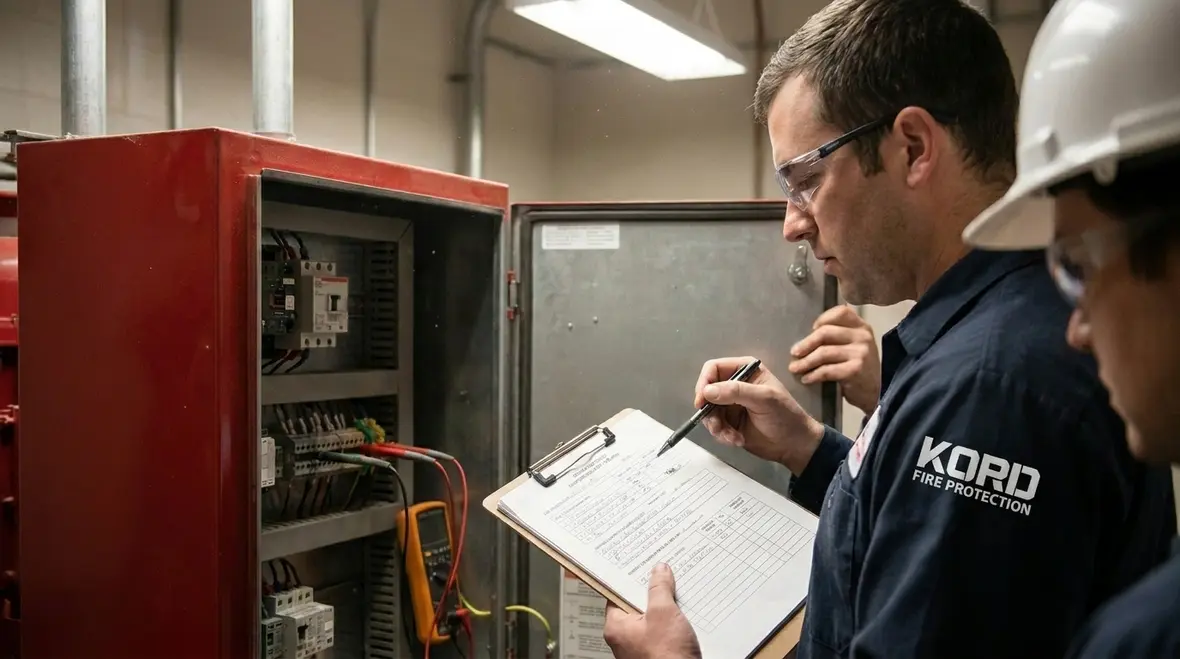
In practical terms, Kord technicians commonly review the service size, voltage drop assumptions, and transfer arrangements. Then they confirm the controller sees the correct voltage within its allowable range. Because voltage sag can behave like a gremlin in the night, the pump may start slowly, trip, or underperform even though power appears present.
Electrical distribution design and coordination for the pump
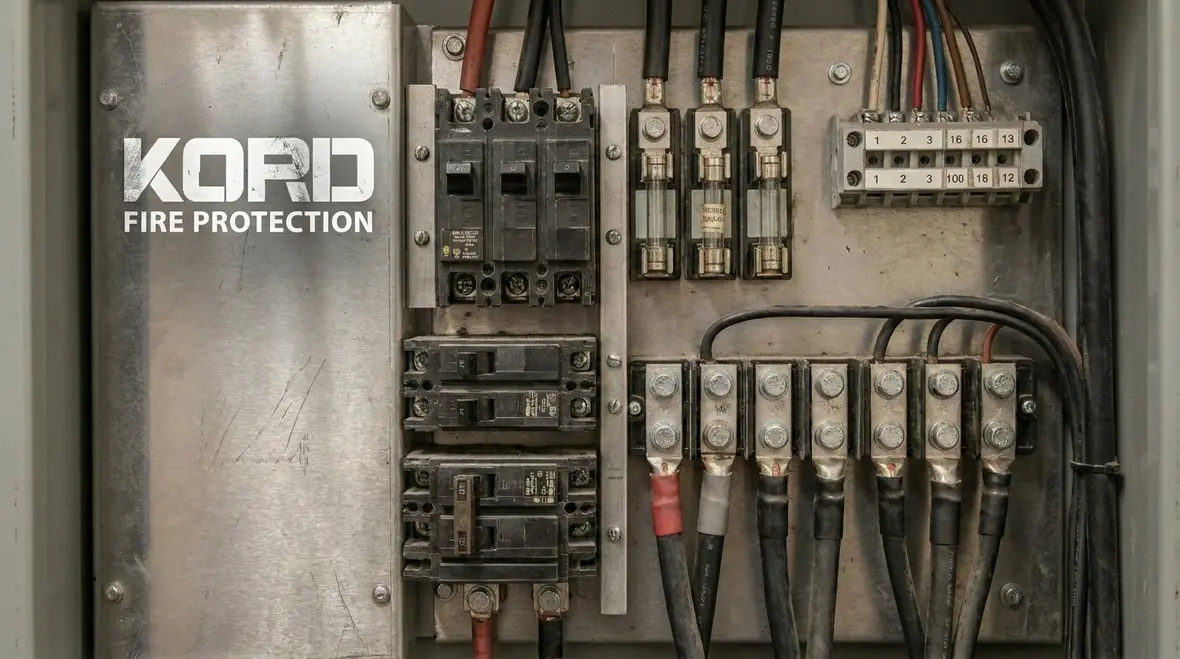
The fire pump electrical distribution system must route power in a way that reduces interruptions and delays. For this reason, distribution conductors should be properly sized and protected. Furthermore, protective devices must coordinate so that a short circuit clears quickly without killing the ability of the pump to run.
Kord Fire Protection technicians typically explain coordination using a simple principle: the system should protect people and equipment, yet it must not punish the pump for faults in unrelated circuits. Therefore, the design often includes selective coordination, correct short circuit ratings, and clear labeling so field crews do not improvise under stress.
Also, distribution components should meet the right environmental and fire rated expectations where applicable. Even if the pump controller survives, a weak link downstream can cause a loss of power to the starter or control circuits. Hence, careful layout and raceway choices support reliability.
A distribution system is only as strong as its weakest protection
When a short occurs, timing matters. If the wrong device opens too early, the pump loses power and the fire response becomes a waiting game. When devices are coordinated correctly, faults get isolated, and the pump circuit stays eligible to run. That is the difference between “it should work” and “it does work.”
Dedicated circuits, grounding, and bonding that reduce nuisance faults
Electrical systems fail in quiet ways before they fail loudly. Grounding and bonding help prevent abnormal voltage levels and reduce stray current problems that can trigger nuisance trips. Meanwhile, dedicated fire pump circuits help ensure the controller does not share its fate with other loads.
Kord technicians often stress that installers should follow the electrical code requirements for grounding electrode conductors and bonding jumpers. At the same time, they verify that the fire pump controller, motor, and related equipment maintain proper continuity. If a connection loosens, it can create intermittent faults that look like ghosts.
Then comes the practical part: insulation testing, megger checks on conductors, and verification of terminations. These steps prevent hidden damage that can later show up during testing. And yes, someone always “did it later.” Later becomes too late when a fire event happens.
Motor starting, voltage drop, and the reality of inrush current
A fire pump motor must start with authority. However, the electrical infrastructure has to handle inrush current without causing excessive voltage drop or controller brownout. As a result, the design needs to consider conductor resistance, starting method, and the pump controller’s operating limits.
Kord Fire Protection technicians explain that voltage drop calculations should follow the project requirements, not guesswork. In addition, the design should confirm that the equipment will operate under the worst expected conditions. That includes the maximum run length, ambient temperature effects on conductor resistance, and any upstream impedance.
For installations with variable loads elsewhere, the starting process can become a battleground. Yet a well designed system keeps the fire pump stable even while other circuits may see momentary changes. In short, the electrical distribution and control logic must cooperate so the motor can start and continue running.
Controller power, transfer schemes, and supervision circuits
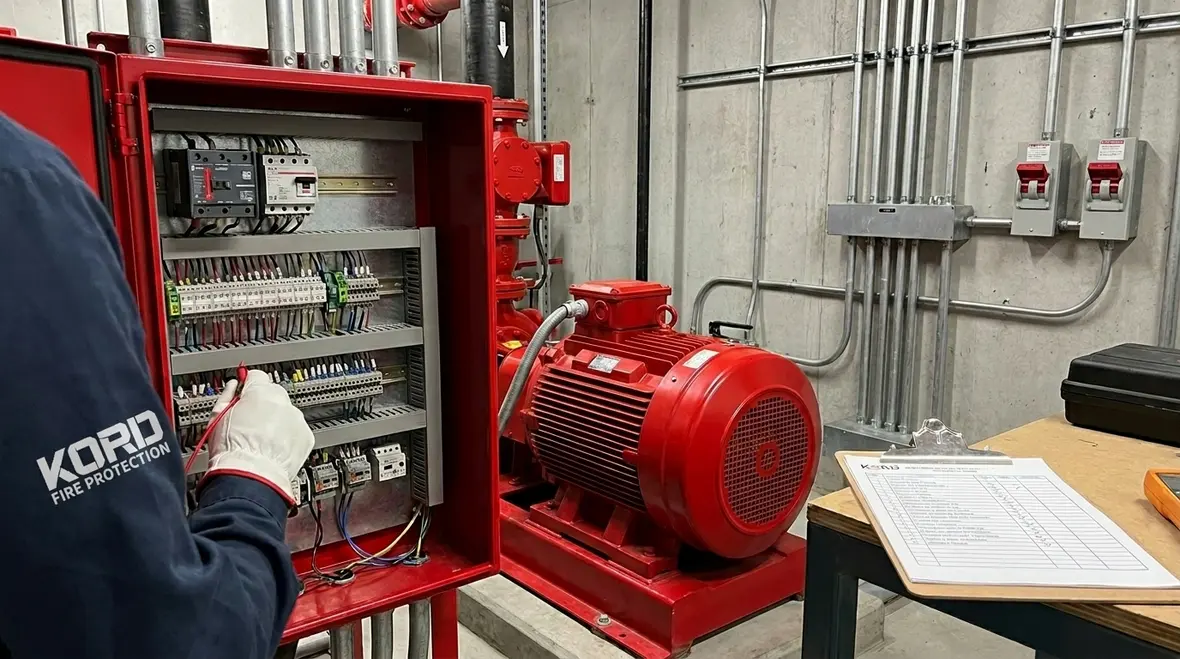
The fire pump controller includes its own control power needs, alarms, supervisory inputs, and protective functions. Therefore, reliable operation requires that these control circuits remain powered and healthy. Kord technicians often point out that a pump can be mechanically sound, yet the controller can still refuse to start if its control supply fails.
Where transfer schemes exist, the system should switch between sources without leaving the controller in a confusing state. The controller must supervise the availability of power and handle the transition correctly. Additionally, the system needs proper settings and monitoring so it can alarm on loss of phase, phase reversal, under voltage, or other abnormal conditions.
To make sure the logic performs during real stress, technicians also verify that the supervisory devices function as intended. They confirm that alarm signals reach the right panel or monitoring system. And during commissioning, they test that the controller reacts to test conditions without delays or unexpected resets.
Field wiring, termination quality, and test plans that prove reliability
Even the best design can fail during installation. That is why Kord Fire Protection technicians focus on field wiring practices, termination quality, and clear documentation. Terminations should be torqued to spec, wire sizes matched to the drawings, and labels applied so future inspections do not turn into a scavenger hunt.
Then technicians verify insulation resistance and check conductor continuity where the project scope requires it. After that, they test the system under controlled conditions. Commissioning steps often include verifying correct rotation, confirming starter operation, and checking alarms and supervisory outputs.
To keep the system reliable over time, the service plan needs periodic inspection and testing. Because corrosion, vibration, and aging connections happen slowly, schedule based testing catches issues before they become emergency events. Think of it like changing the batteries in a smoke detector, except the smoke is optional and the stakes are not.
Reliable ongoing maintenance: what Kord fire protection technicians document
After installation, the work continues. Kord Fire Protection technicians commonly document inspection results, component health indicators, and any corrective actions. They check that protective devices still match the design intent, that supervisory alarms remain clear, and that any required testing cycles occur on schedule.
Additionally, they verify that panels stay clean, dry, and properly closed. Ventilation paths should work so heat does not build inside enclosures. They also check for signs of overheating at terminals or evidence of moisture intrusion.
Below is a practical view of what technicians often track, so owners can understand the difference between “we looked at it” and “we proved it.”
Maintenance area
Typical Kord technician focus
- Controller and starters
- Terminal condition and torque verification
- Alarm and supervisory circuit behavior
- Battery backed power if present
Maintenance area
Typical Kord technician focus
- Distribution and protection
- Breaker and fuse settings and condition
- Visual check of wiring and raceways
- Insulation resistance checks when required
FAQ on electrical infrastructure for fire pump reliability
Conclusion and next step
Reliable fire pump operation depends on electrical infrastructure, not hope. When fire pump electrical distribution needs get designed, installed, and tested with care, the pump starts fast, runs steady, and avoids unwanted trips. Kord Fire Protection technicians bring the practical experience to review power sources, distribution coordination, wiring quality, and ongoing maintenance. If a project team wants fewer surprises and stronger code support, the next move is simple: contact Kord Fire Protection technicians to review the electrical plan and confirm the system will perform when it counts most.
Want to see how your electrical plan stacks up?
Kord Fire Protection can review your power paths, coordination approach, controller supervision, and maintenance expectations so your pump is ready to perform under fire conditions.
Know Your Weapon Before You Fight the Flame
Kord Fire Protection is your go-to when it comes to all things fire protection. For over 20 years, we’ve been serving Southern California with the quality service and equipment to keep your home or business safe at all times. Our competitive prices reflect our unwavering commitment to protecting what matters most in the event of a fire emergency. Give us a call, send an email, or use that form!

Join Our Newsletter!
Get the latest fire safety tips delivered straight to your inbox From our Newsletter.