
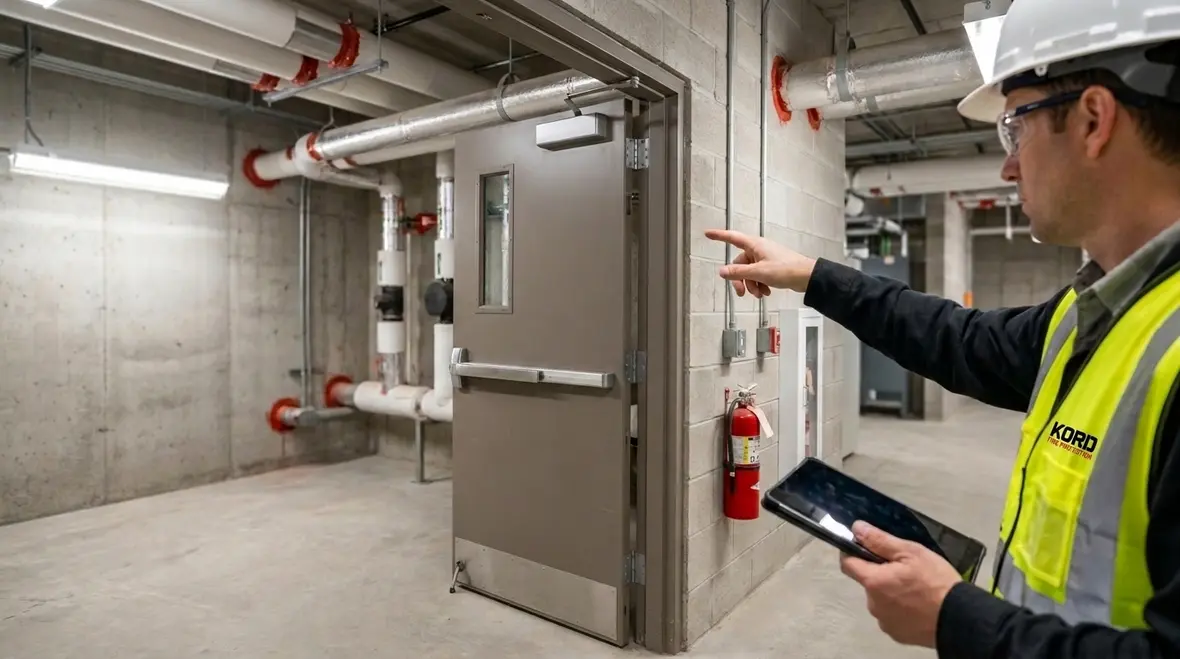
NFPA 32 Section 7.2: Location and Construction for Type II Facilities
Quick Answer
NFPA 32 Section 7.2 requires Type II facilities to meet specific location and construction safeguards that reduce fire and explosion risk from operations and hydrogen-like fuel hazards. Compliance focuses on site placement, separation, building construction features, and maintainable protection systems that remain effective over time.
For facilities building out a more defensible compliance program, fire protection services in Southern California can help connect inspections, repairs, testing, and documentation into one practical workflow.
What NFPA 32 Type II facility location construction actually covers
NFPA 32 Type II facility location construction addresses how a Type II facility is positioned and built so that accidental releases, ignition sources, and fire growth do not spread to people, adjacent buildings, or critical assets. Section 7.2 typically drives practical design decisions that commercial operators can verify through plans review, walkthroughs, and inspection readiness.
In real facilities, the most common gap is not the existence of “a safety feature,” but whether the feature is built to the required intent and maintained so it continues to perform as designed. A robust program connects construction details to operational checks, including after modifications, upgrades, tenant changes, or changes in process equipment.
NFPA 32 Section 7.2 location requirements: managing exposure and separation
Location and construction rules work together. Location rules control external exposure while construction rules control internal fire and hazard containment. For Type II facilities, NFPA 32 Section 7.2 pushes designers and operators to evaluate where the facility sits relative to adjacent structures, property boundaries, public access points, and other occupancy risks.
Common compliance challenges during permitting and tenant buildouts
- Site constraints that were not considered early. A facility can meet building code requirements and still fail NFPA 32 separation intent if changes happen late in construction.
- Routing and access conflicts. Construction that blocks egress paths or reduces emergency access undermines the practical purpose of location safeguards.
- Adjacent storage and loading activity. Nearby combustible storage, rack systems, or frequent vehicle movements can increase ignition sources and heat exposure.
- Utility placement and ignition potential. Improper placement of electrical equipment and service routes can introduce ignition risks that location controls were meant to mitigate.
Operational verification matters as much as design
Even when separation distance is correct on paper, operational realities can negate the benefit. Facility teams should verify that loading procedures, storage layout, housekeeping practices, and contractor work permits support the assumptions made during design. Maintenance teams also need clear responsibilities for keeping access routes clear and ensuring barriers remain unobstructed.
Construction requirements: containment, ignition control, and maintainability
Construction safeguards in NFPA 32 Section 7.2 focus on how the facility prevents fire spread, limits hazard migration, and maintains protective features through normal wear and foreseeable maintenance activity. The goal is to reduce propagation pathways from one area to another, especially around openings, service penetrations, and areas where equipment creates heat or ignition potential.
Where construction failures usually show up
- Improperly protected openings. Penetrations around conduits, piping, and cable trays often get sealed inconsistently during renovations, creating hidden pathways.
- Compartment integrity breaks over time. Repairs done without the same fire stopping materials or procedures can degrade performance.
- Roof and envelope compromises. Leaks and weather damage can affect wall interfaces, electrical enclosures, and any installed protection systems.
- Material substitutions. Substituting products or assemblies during construction without engineering or AHJ approval can leave the facility noncompliant.
Maintenance is the deciding factor for long term compliance
Commercial and industrial operators frequently discover that construction compliance depends on ongoing inspections. A maintainable approach includes documented intervals for verifying seals, verifying integrity at interfaces, and confirming that any fire or explosion protection features remain functional after maintenance cycles.
How inspections and testing connect to Section 7.2 readiness
NFPA 32 Section 7.2 does not function in isolation. It relies on a broader compliance ecosystem that includes hazardous materials controls, electrical safety practices, emergency planning, and fire protection testing. Facility teams should plan inspections that confirm both construction features and the operational conditions that allow those features to perform.
Inspection points facility teams often miss
- After change management reviews. Any modification that affects building systems, penetrations, or fire separations should trigger a verification step.
- Contractor work validation. Fire stopping and related construction details must be checked after renovations, not only at initial turnover.
- Documentation traceability. Records should tie inspection results to the specific location and assembly in question so corrective actions are targeted.
- Pre use verification of access and separation. Ensure that storage and equipment placement do not drift after schedules and staffing change.
For operators that need a structured, defensible program, Kord Fire Protection supports commercial facilities with ongoing compliance, testing, and maintenance workflows that align construction safeguards with day to day performance expectations.
A related read on the full lifecycle of fire protection servicing fits naturally here because Section 7.2 readiness rarely stays solved after one inspection and one proud binder photo.
Practical steps for facilities implementing NFPA 32 Type II facility location construction
Compliance success depends on translating NFPA 32 requirements into repeatable procedures. The steps below help commercial, industrial, and retail operators keep the facility aligned through turnover, occupancy, and lifecycle modifications.
Step 1: Establish the compliance basis early
- Confirm the intended Type II classification and scope of the facility operations.
- Review design drawings for location and construction details relevant to Section 7.2.
- Capture acceptance criteria so field verification matches the design intent.
Step 2: Build a construction integrity checklist
- List compartment interfaces, openings, and penetrations that require verified sealing or protective assemblies.
- Define responsibilities for contractors and maintenance staff.
- Require post renovation verification before equipment startup or return to normal operations.
Step 3: Train maintenance staff on the failure points
- Ensure staff understand that fire stopping and compartment integrity failures can be hidden and delayed.
- Use simple, location based inspection routes that cover common damage zones such as service corridors and equipment rooms.
- Document corrective actions and verify closure, not just completion of repairs.
Step 4: Schedule recurring verification with a fire protection partner
Routine inspections should confirm that the facility still meets the practical intent behind NFPA 32 Type II facility location construction. Kord Fire Protection can help standardize the inspection cycle, support testing requirements, and maintain documentation that reduces compliance risk during audits and insurance reviews.
To strengthen your maintenance and readiness program, consider reviewing related fire safety resources from Kord Fire Protection using anchor text such as “commercial fire protection services” to connect inspection planning with long term compliance support.
Frequently Asked Questions
Next step: confirm your Section 7.2 compliance posture
If your Type II facility has changed, expanded, or experienced contractor work in recent cycles, schedule a focused inspection of location and construction integrity. Kord Fire Protection can help verify protective assemblies, penetration sealing, and operational conditions that keep NFPA 32 Type II facility location construction compliant. Contact Kord Fire Protection to start an assessment and build a maintainable inspection and maintenance plan.

Join Our Newsletter!
Get the latest fire safety tips delivered straight to your inbox From our Newsletter.



