
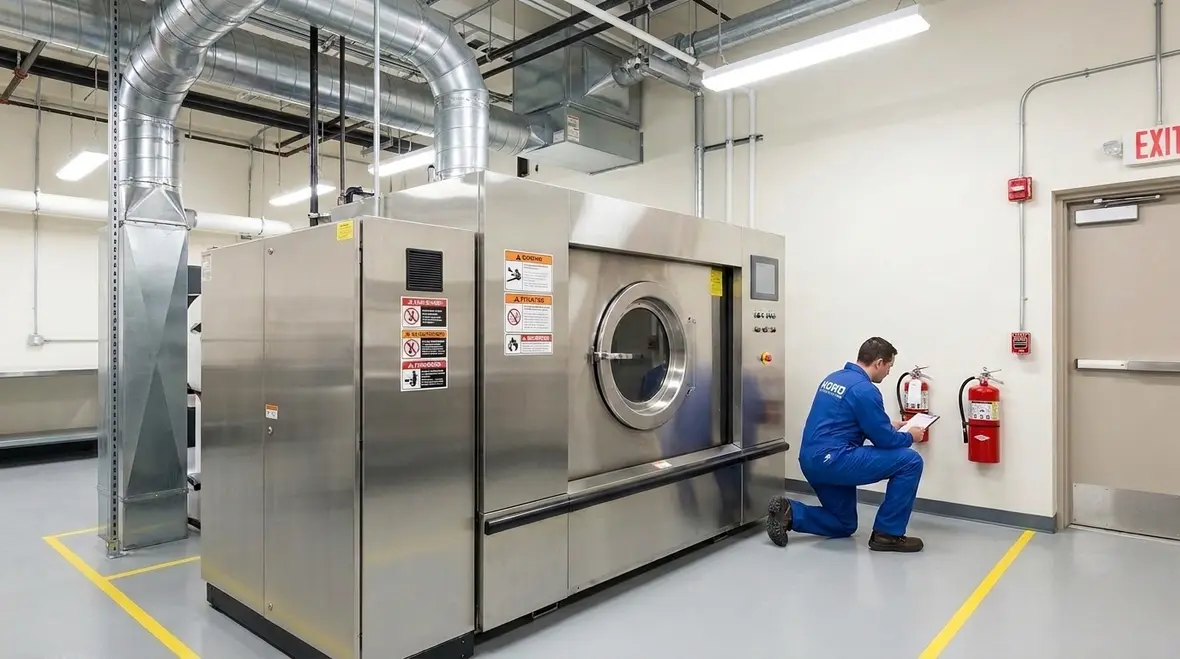
NFPA 32 Section 1.2 Purpose: Fire Safety Goals for Drycleaning Operations
Quick Answer
NFPA 32 Section 1.2 defines the fire safety goals that guide design, installation, operation, and maintenance of drycleaning equipment and systems. The intent centers on preventing ignition, limiting fire spread, protecting occupants and responders, and ensuring equipment remains reliable through disciplined inspection and upkeep.
For facilities building a stronger inspection rhythm around these goals, Kord Fire Protection’s inspection, testing, and maintenance approach offers a useful reference point for keeping safety-critical systems from quietly drifting out of shape.
Why NFPA 32 purpose matters for real drycleaning risk
Drycleaning facilities manage a combination of flammable vapors, combustible residues, heat sources, and industrial-grade machinery. The NFPA 32 purpose fire safety drycleaning operations framework translates hazard recognition into enforceable performance goals. Section 1.2 sets the “why” behind the rule structure, so operators and property teams can understand what compliance must accomplish, not just what to check.
In commercial and industrial buildings, the difficulty often comes from how systems interact: ventilation and vapor control depend on maintenance; detection and suppression depend on cleanliness and correct placement; safe shutdown depends on the operation of controls, interlocks, and housekeeping practices. When these systems drift out of spec, the facility may still “pass” a cursory review while failing to meet the underlying fire safety objectives.
What Section 1.2 is trying to achieve
NFPA 32 Section 1.2 establishes fire safety goals that influence how drycleaning equipment is selected, installed, and maintained. The focus moves beyond general fire prevention into operational protection for systems that create, circulate, or concentrate combustible vapors.
1) Prevent ignition and control release
Drycleaning operations can produce flammable vapor-air mixtures, especially during loading, unloading, transfer, and maintenance cycles. The fire safety goals emphasize preventing ignition sources within hazardous areas and controlling the conditions that allow vapor concentrations to rise.
- Equipment must be designed and installed to limit leakage and unintended vapor release.
- Electrical systems and components must be appropriate for the hazard environment.
- Ventilation and vapor control must function as intended during normal operations and foreseeable upset conditions.
2) Limit fire growth and spread
Even with prevention measures in place, facilities must be able to limit consequences if ignition occurs. The goals support design choices that reduce fire duration, reduce heat and flame impingement risks, and prevent migration to other spaces.
- Containment and separation strategies must protect adjacent combustibles, including lint, fabric waste, packaging materials, and storage racks.
- Clear pathways for emergency response and equipment access support effective intervention.
- Systems must perform reliably when challenged by real-world contamination and wear.
3) Protect people and provide response time
Drycleaning facilities commonly include customer-facing retail space, back-of-house processing areas, and sometimes shared corridors within mixed-use buildings. The fire safety goals address occupant protection, controlled shutdown behavior, and the ability for responders to act without being defeated by ongoing vapor generation.
- Alarm and detection arrangements must support timely awareness.
- Shutdown and isolation sequences must work as designed, especially when abnormal conditions occur.
- Operational procedures must reduce the likelihood that personnel continue producing vapors during an emergency.
4) Maintain system reliability through inspection and maintenance
Many drycleaning incidents link back to degraded performance: clogged filters, failed interlocks, worn seals, malfunctioning ventilation components, or improper cleaning of residues that behave as fuel sources. Section 1.2 goals depend on continued verification.
- Inspections confirm components remain within acceptable performance limits.
- Preventive maintenance reduces recurring failures tied to normal processing cycles.
- Repairs restore designed performance rather than applying temporary fixes that hide the root issue.
How these goals show up in drycleaning equipment and daily operations
Fire safety goals only translate into risk reduction when the facility runs the equipment correctly and keeps safety-critical functions in serviceable condition. The following operational areas commonly determine compliance outcomes for commercial and retail facilities.
Ventilation and vapor control
Ventilation systems remove contaminated air and support safe vapor dilution. When airflow drops due to blocked ducting, dirty filters, or fan degradation, vapor control can weaken even though the machine appears to “run normally.” Facility teams should treat airflow verification and component cleaning as recurring compliance tasks, not one-time commissioning.
Controls, interlocks, and emergency shutdown behavior
Drycleaning machines often rely on interlocks that prevent unsafe operation, maintain correct sequencing, or isolate hazards during abnormal conditions. Failures can appear as inconsistent cycling, nuisance trips, or delayed shutdown. These symptoms matter because delayed shutdown can allow vapor release to continue after alarms activate.
Ignition source management and electrical integrity
Fans, motors, heaters, switches, and wiring all influence ignition risk. Over time, loose connections, damaged insulation, incorrect components, or improper repairs can increase failure probability. Maintenance records should show not only that work occurred, but that parts and procedures matched the original safety intent.
Housekeeping and residues
Residues and lint behave as fuel and as barriers to heat dissipation. Housekeeping goals under NFPA 32 connect directly to the prevention and limitation objectives in Section 1.2. The highest-risk issues typically include buildup around vents, near motors and heaters, in recovery areas, and within concealed spaces where cleaning does not occur routinely.
Detection, alarms, and access for response
When detection devices become contaminated, moved, or partially obstructed, response time can degrade. Additionally, obstructed access affects responders more than teams expect, particularly in compact retail spaces. The goals require practical site readiness: clear working space around equipment and safe egress paths.
Common compliance challenges commercial facilities face
Drycleaning operations often exist in buildings that must serve multiple tenants and variable occupancy patterns. That reality creates predictable compliance gaps that can undermine NFPA 32 purpose fire safety drycleaning operations objectives.
Mixed-use occupancy and shared building systems
Drycleaning spaces sometimes share ventilation systems, electrical feeds, or egress routes with other uses. Fire safety goals require that the drycleaning process does not degrade overall building fire performance. Coordination with building management and documentation of interfaces matter.
Deferred maintenance and “machine uptime” pressure
Facilities under production pressure can delay corrective work for ventilation, seal replacement, detection verification, and cleaning. The result often includes slow degradation that elevates risk without triggering immediate operational stoppage.
Inconsistent inspection documentation
Compliance relies on evidence. Missing logs, incomplete test results, or vague notes prevent stakeholders from confirming that safety functions stay within acceptable thresholds. Inspectors and auditors look for traceability, dates, and identifiable corrective actions.
Modification and equipment substitutions
Changes to components, wiring routes, ventilation components, or control devices can shift the hazard profile. Even when upgrades improve performance, they can unintentionally break safety design assumptions if not aligned to the safety intent in Section 1.2.
Inspection, testing, and maintenance: what “good” looks like
To support NFPA 32 purpose fire safety drycleaning operations objectives, maintenance programs should be structured around safety-critical performance. The most effective programs treat inspections and tests as verification tools for the fire safety goals rather than as checklists.
Maintenance that targets failure modes
- Leak and seal integrity: verify seals, gaskets, and transfer points to prevent vapor release.
- Airflow performance: check fans, dampers, filters, and duct condition to sustain vapor dilution.
- Electrical condition: inspect terminations, protective devices, and component ratings appropriate to the hazard environment.
- Cleaning of residues: remove buildup in processing, recovery, and ventilation-adjacent areas.
- Control verification: confirm interlocks and shutdown sequences operate as intended during abnormal conditions.
Quality assurance through records and corrective action
Operational personnel should be trained to recognize early indicators: abnormal odors, recurring alarms, reduced airflow, inconsistent cycling, or cleaning effectiveness issues. Engineering and safety teams should ensure corrective action closes the loop with documented repairs and retesting where required.
Kord Fire Protection support for ongoing compliance
Kord Fire Protection helps commercial facilities maintain the intent behind NFPA requirements through disciplined testing, inspection planning, and maintenance support. This partnership focuses on keeping detection, shutdown behavior, and fire protection interfaces aligned with the facility’s operating reality, reducing the chance that small degradations accumulate into major compliance gaps.
If your facility needs a compliance roadmap and an evidence-based maintenance approach, review Kord Fire Protection resources at Kord Fire Protection and contact the team for a tailored assessment.
How to apply Section 1.2 during compliance planning
Teams can use Section 1.2 as a planning framework. Rather than treating compliance as a single annual event, they should align site work to the four goal categories: prevention, limitation of spread, protection of occupants and responders, and sustained reliability through maintenance.
Step-by-step planning approach
- Map fire safety goals to site equipment and spaces: identify where vapors are generated, where ignition sources can occur, and how people access the area.
- Identify safety-critical systems and interfaces: ventilation, controls, shutdown sequencing, detection and alarms, housekeeping access, and emergency response pathways.
- Set verification cadence: define inspection and testing intervals that match risk and equipment duty cycles.
- Track corrective actions: ensure failures result in documented repair plus validation testing where applicable.
- Train and update procedures: reinforce operator habits for loading, unloading, maintenance cycles, and emergency response behaviors.
Facilities that follow this approach typically find that audit readiness improves because documentation matches real risk, and maintenance effort targets root performance drivers tied to NFPA 32 purpose fire safety drycleaning operations.
Frequently Asked Questions
Conclusion and Call to Action
NFPA 32 Section 1.2 turns drycleaning fire safety into measurable goals. Facilities should align maintenance, inspection evidence, housekeeping, and emergency shutdown readiness to those goals rather than treating compliance as a checklist. Kord Fire Protection can help commercial teams validate safety performance over time. Contact Kord Fire Protection through https://kordfire.com/ to schedule an assessment and build an ongoing compliance plan tailored to your equipment, facility layout, and operating schedule.

Join Our Newsletter!
Get the latest fire safety tips delivered straight to your inbox From our Newsletter.



