
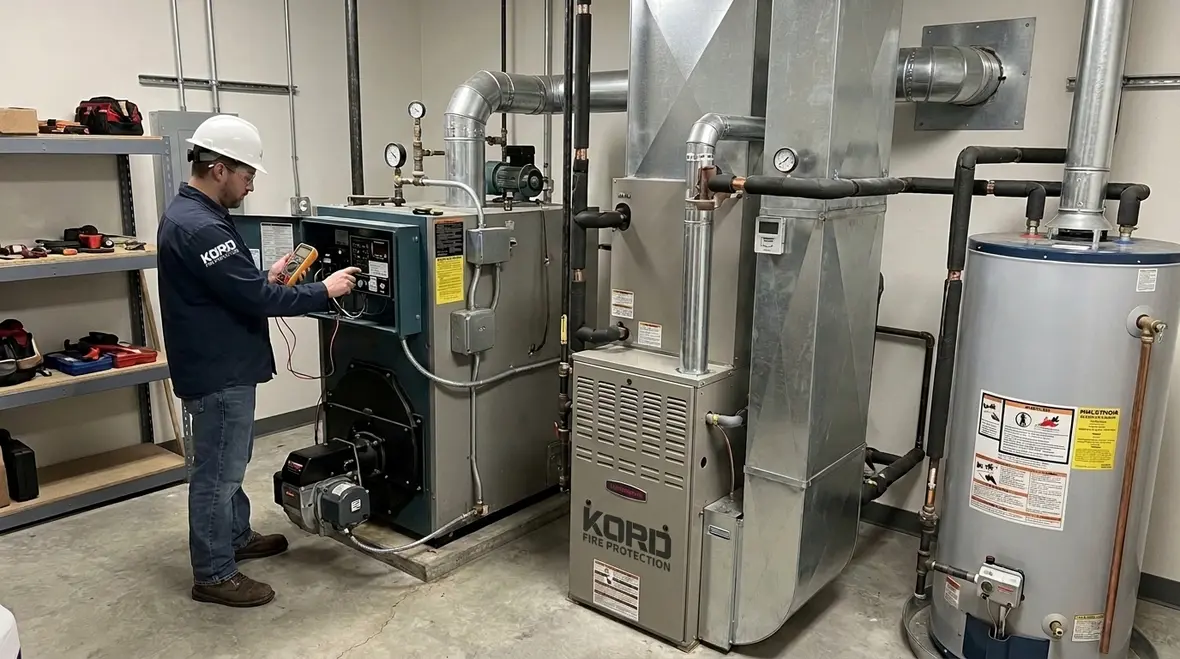
NFPA 31 Section 10.6: Installing Boilers, Furnaces, Unit Heaters, and Water Heaters
Quick Answer: NFPA 31 Section 10.6 sets installation requirements for oil burning equipment including boilers, furnaces, unit heaters, and water heaters. Compliance focuses on correct placement, venting, piping, combustion air, ignition safety, and safeguards that support safe operation, inspection access, and reliable maintenance.
What does NFPA 31 Section 10.6 require for oil burning equipment?
NFPA 31 boiler furnace water heater installation requirements in Section 10.6 establish baseline expectations for safe placement, system integration, and workmanship. In commercial facilities, these rules directly affect fire risk, combustion performance, and the ability to pass inspections. The section connects installation details to operating hazards such as improper draft, blocked vents, incorrect fuel piping, inadequate clearance, and water or burner control failures.
Because real installations face schedule pressure, equipment swaps, and retrofit constraints, compliance succeeds when contractors treat Section 10.6 as a complete system requirement, not a checklist item. For a practical installation workflow and field considerations, see NFPA 31: A practical guide to oil burning equipment installation.
If your team is also tightening up inspection readiness across the property, it helps to pair installation compliance with a broader commercial fire safety audit process so documentation, access, and maintenance follow-through do not fall apart the moment someone moves a ladder, adds storage, or decides the mechanical room looks like free real estate.
Where Section 10.6 fits in the overall safety and inspection chain
Section 10.6 does not operate alone. Installers typically coordinate it with equipment listing requirements, fuel system rules, venting and chimney standards, combustion air provisions, and control and safety device requirements. Inspectors evaluate whether installed components behave as intended under normal operation and predictable malfunctions.
In practice, facilities that struggle with NFPA 31 compliance usually have one or more of the following problems:
- Equipment set too close to combustible materials or to service access areas needed for cleaning and adjustment
- Vent systems with incorrect materials, improper slope, or inadequate support leading to leaks, spillage, or draft loss
- Fuel piping with workmanship issues such as improper fittings, poor sealing, or routing that promotes air entrainment
- Combustion air conditions that allow negative pressure in the mechanical room, starving burners or pulling combustion products
- Controls and safeties installed in a way that bypasses intended interlocks or prevents safe shutdown
Kord Fire Protection supports commercial and industrial operators by translating these requirements into verifiable installation acceptance steps and ongoing inspection readiness. That helps reduce downtime caused by failed inspections or repeat corrective work.
Installing boilers: combustion stability, venting performance, and service access
Key installation checkpoints
For boilers, Section 10.6 installation practices focus on the entire path of safe combustion: burner operation, combustion air supply, venting and draft management, and safe operation of limits and controls.
- Unit placement and clearances: Install the boiler to support safe operation, predictable airflow patterns in the room, and accessibility for burner servicing and cleaning.
- Vent connector and chimney integration: Ensure the vent system supports stable draft and prevents flue gas spillage. Poor connector routing or improper sizing is a common cause of soot, smoking, and nuisance shutdowns.
- Combustion air and room pressure: Prevent negative pressure conditions created by exhaust fans, make up air imbalance, or HVAC zoning errors. Combustion air starvation increases the likelihood of incomplete combustion and unsafe vent behavior.
- Controls and safety device function: Verify limits, operating controls, and burner safety interlocks function as designed, including lockout and restart logic.
Common boiler failure points after installation
Even when equipment is correctly sized, installations can create failure modes. High-risk issues include oil leaks at fittings, air in the fuel line causing ignition instability, vent leaks that develop under thermal cycling, and incorrect settings that lead to short cycling. Short cycling increases soot accumulation and accelerates wear on ignition components and electrodes.
Installing furnaces and unit heaters: airflow, draft control, and safe operation in commercial spaces
Commercial facility realities
Furnaces and unit heaters often operate in retail and light industrial areas with frequent HVAC changes, ceiling obstructions, and tenant or maintenance access changes. Section 10.6 installation expectations support robust performance despite those changes.
- Air movement consistency: Verify supply and return paths allow designed air distribution. Obstructions or misrouted ducting can cause overheating or poor combustion.
- Draft and vent integrity: Confirm the venting system provides the intended draft characteristics. Service panels and cleanouts must remain accessible without damaging seals.
- Combustion air continuity: Ensure combustion air supply remains unobstructed and is not compromised by new storage, seasonal changes, or modifications to the mechanical room.
- Ignition and safety response: Confirm the burner ignition sequence and safety response operate correctly, particularly during transitions like call for heat and thermostat cycling.
Why unit heater installs fail during inspections
Inspections frequently find that the venting or combustion air arrangement changed after commissioning. Examples include added rooftop equipment, new exhaust systems, or structural modifications. Kord Fire Protection can help facilities build a maintenance and change management plan so the installation configuration remains compliant between annual services.
Installing water heaters: piping integration, temperature controls, and leakage prevention
What good installation looks like
Water heaters require careful integration of fuel, venting, and water piping so the system maintains safe operating temperatures and avoids unintended pressure or leakage conditions. Section 10.6 installation practices support safe combustion and safe water control performance.
- Fuel piping quality: Route and connect fuel lines to minimize air entrainment and leaks. Use workmanship practices that support long term seal integrity.
- Venting correctness: Ensure venting prevents flue gas leakage and maintains draft stability. Leaks often appear after months due to thermal expansion and vibration.
- Temperature and limit function: Verify temperature controls and safety limits function as intended to reduce scald and overheating risks.
- Water-side protection: Provide correct piping arrangement to avoid backflow or pressure anomalies. Confirm condensate management where applicable to prevent corrosion and water damage.
High consequence operational risks
Water heater installations create high consequence risks when small failures accumulate. Common commercial problems include dripping at fittings that lead to slip hazards and corrosion, soot buildup from marginal combustion that increases heat exchanger stress, and vent issues that can cause burner lockouts. Early detection through routine inspection and combustion analysis prevents more costly repair events.
How facilities should prepare for inspection and ongoing compliance
Compliance does not end at installation. Commercial facility operators need a repeatable acceptance and maintenance routine that supports inspection readiness. A strong approach includes documented commissioning, routine burner tuning, and verification of safeties. It also includes controls testing and vent inspection at defined intervals based on equipment duty cycle and site conditions.
Operational procedures that reduce compliance gaps
- Commissioning documentation: Record settings, combustion test results, and safety device verification so inspectors can see the installed baseline.
- Maintenance access assurance: Maintain service clearances and keep access panels functional without obstruction.
- Change management: Re inspect combustion air and draft impacts after renovations, exhaust system changes, or HVAC balancing updates.
- Vent and fuel system checks: Schedule recurring checks for vent leaks, burner soot patterns, and fuel line integrity.
Kord Fire Protection assists commercial, industrial, and retail sites by coordinating inspections and maintenance activities that align with NFPA 31 expectations. That support helps reduce downtime, supports safe operation, and keeps the facility in a defensible compliance position.
Frequently Asked Questions
Call to action: Schedule a compliance-focused review of your NFPA 31 boiler furnace water heater installation details before an inspection cycle or major change. Kord Fire Protection supports commercial sites with practical verification of combustion, venting, fuel system integrity, and safety device performance. Early identification of installation risks reduces rework, supports safe operation, and protects uptime. Contact Kord Fire Protection to plan your next inspection and maintenance alignment.

Join Our Newsletter!
Get the latest fire safety tips delivered straight to your inbox From our Newsletter.



