
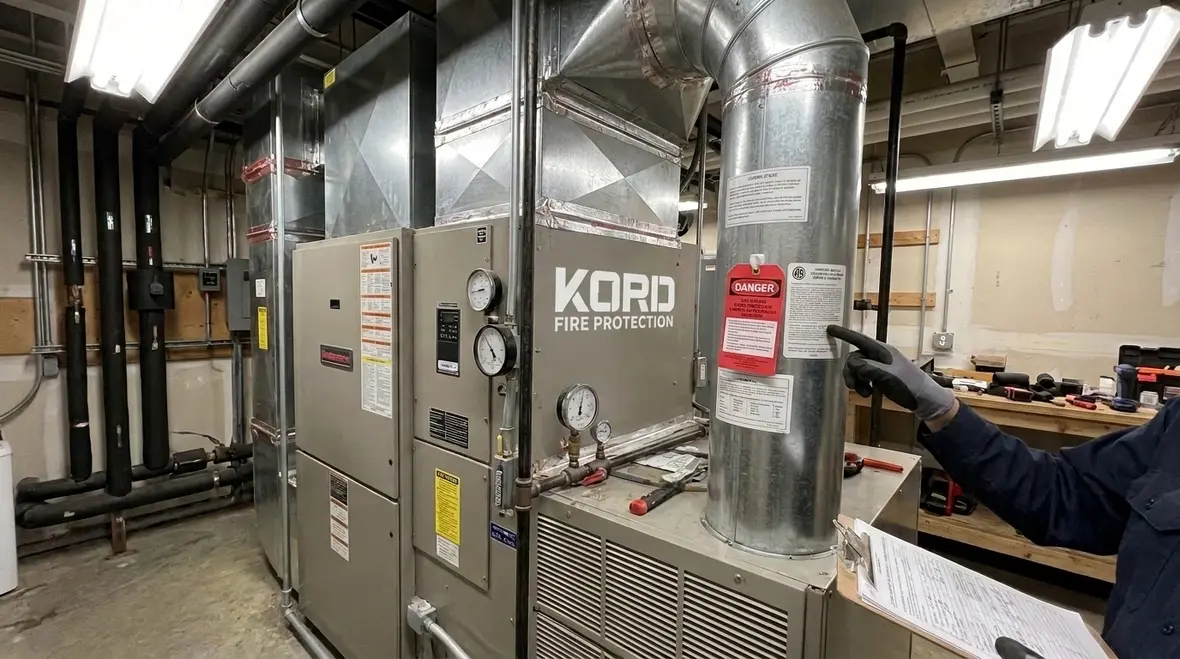
NFPA 31 Section 10.8: Duct Furnace Installation Rules (Practical Compliance Guide)
Quick Answer: NFPA 31 Section 10.8 sets installation controls for duct furnaces, focusing on safe venting, combustion air, clearances, ignition and safety controls, and proper integration with ductwork. Compliance depends on correct configuration, inspection readiness, and ongoing maintenance of safety and fuel components.
What NFPA 31 duct furnace installation requirements mean in real buildings
NFPA 31 duct furnace installation requirements go beyond “mounting equipment.” Section 10.8 governs how the furnace interfaces with duct systems, combustion air pathways, venting methods, and fire protection hazards unique to ducted heating. For commercial, industrial, and retail facilities, this typically involves coordinated work between mechanical contractors, controls technicians, and fire safety professionals who must verify that the system behaves safely during normal operation and foreseeable fault conditions.
If your team is also tightening inspection schedules or sorting out deficiencies across the building, fire protection services in Southern California can fit naturally into the compliance planning side of duct furnace projects.
For an installation focused, trade readable overview of oil burning equipment rules that often intersect with duct furnace work, use this internal guide: NFPA 31 oil burning equipment installation practical guide.
1) Start with the right scope: duct furnace integration, not standalone heating
Section 10.8 targets duct furnaces installed into air handling pathways where heat, products of combustion, and airflow interact. The compliance challenge for facilities is that duct systems create unique fire and smoke dynamics. When the furnace is misapplied or improperly connected, the system can introduce ignition sources into areas that should remain protected.
Key operational and inspection expectations commonly driven by Section 10.8 include:
- Correct furnace location relative to combustibles, insulation, duct supports, and service access zones.
- Proper sealing and connection methods to limit leakage of products of combustion into occupied or return air sections.
- Assurance that ducted airflow does not destabilize combustion or safety control operation.
- Verification that the furnace can shut down safely if airflow conditions or burner safety devices indicate abnormal operation.
In practice, compliance often fails at the interface points: wrong connector length, incorrect transition fittings, missing seals, poorly routed wiring, or inadequate service clearances that prevent functional testing during commissioning and maintenance.
2) Combustion air and venting: the highest consequence failure points
Duct furnaces depend on stable combustion air supply and safe venting of combustion products. NFPA 31 duct furnace installation requirements under Section 10.8 emphasize that combustion must not rely on uncontrolled leakage or compromised pressure boundaries.
Combustion air controls and practical compliance checks
Facilities commonly face issues when combustion air is drawn from spaces with negative pressure, from areas subject to airside equipment changes, or through improvised penetrations. Fire safety verification should include:
- Review of the air source, including any shared air ducts, dampers, or louvers.
- Confirming that duct airflow does not reverse or dilute combustion air during fan transitions.
- Ensuring that intake openings remain protected from blockage and maintain intended free area.
Venting design, materials, and connection discipline
Venting must safely remove products of combustion without introducing hazards into duct cavities or return sections. Common field problems that create inspection failures include:
- Improper vent connector routing that crosses or approaches combustibles without required separation.
- Incorrect slope, length, or support that promotes condensate pooling and vent degradation.
- Missing or incorrect vent seals or joints that permit leakage.
- Use of components not compatible with the furnace and venting method required for the installation.
Kord Fire Protection typically supports commercial sites by coordinating documentation review, on site verification, and maintenance planning so venting and combustion systems remain testable and compliant during operational changes such as retrofit ductwork, air handling upgrades, or tenant fit outs.
3) Controls and safety devices: what inspectors look for during proof of operation
Even when the mechanical setup appears correct, compliance depends on burner controls and safety interlocks working as intended with the duct furnace system. Section 10.8 aligns installation configuration with safe operation sequences so that abnormal conditions cause safe shutdown rather than unsafe continued operation.
Operational sequence and interlock alignment
During testing and inspection, technicians should confirm that controls prevent burner operation under unsafe airflow or abnormal draft conditions. The most frequent commercial compliance gaps include:
- Improper or incomplete proving of airflow, resulting in ignition attempt without safe fan status.
- Incorrect wiring or terminal assignments that bypass safety interlocks.
- Damaged or mispositioned sensors that drift out of calibration or fail during seasonal changes.
- Failure to restore safe defaults after commissioning adjustments.
Service access as a compliance requirement
Service access supports inspection frequency, functional testing, and safe replacement of components. Facilities often discover that access limitations delay testing, compromise workmanship during maintenance, and increase the likelihood that safety devices are not properly verified at scheduled intervals.
4) Clearances, ductwork interfaces, and fire spread controls
Duct furnace installations involve heat sources located inside or adjacent to air distribution infrastructure. Fire safety compliance therefore relies on controlling ignition potential and limiting exposure to combustibles.
Section 10.8 expectations typically translate into practical, field measurable controls:
- Maintaining required clearances from the furnace and venting components to combustible materials, insulation, and structural elements.
- Ensuring ductwork construction, supports, and penetrations do not create concealed pathways for fire or smoke spread.
- Using correct materials and transitions at the furnace discharge or connection points.
- Providing protection around duct penetrations where airflow and heat can transfer to adjacent spaces.
Common commercial failure scenarios include duct modifications without updating the interface clearances, retrofits that install incompatible duct liners near the furnace, and service access cutbacks that disturb protective insulation or separation distances.
5) Inspection, testing, and maintenance: how compliance stays current
NFPA 31 duct furnace installation requirements remain effective only if the installation continues to operate safely over time. Maintenance supports operational stability and reduces the chance of safety control failure.
Commissioning and periodic verification
Commercial facilities should plan for:
- Initial functional tests that confirm ignition sequence timing and safety shutdown performance.
- Routine inspection of venting integrity, seals, supports, and visible leakage points.
- Testing of safety controls and interlocks that depend on airflow or draft conditions.
- Verification that combustion performance remains within the intended operating range after filter changes, duct cleaning, or burner service.
Seasonal performance and common degradation mechanisms
Duct furnace systems experience seasonal cycling and variable duct static pressures. The failure mechanisms that most often drive recurring noncompliance findings include:
- Accumulation of soot and residue that alters combustion characteristics and increases maintenance demand.
- Vent connector deterioration due to condensate, vibration, or thermal stress.
- Sensor aging or contamination impacting air proving or limit functions.
- Airside system changes affecting airflow interlocks after HVAC balancing or equipment replacement.
Kord Fire Protection helps commercial operators reduce downtime risk by supporting inspection readiness, coordinating documentation, and aligning maintenance schedules with safe operating verification. This approach supports stable audits for industrial sites, retail precincts, and multi tenant buildings.
6) Documentation and audit readiness: what to keep on file
Compliance inspections routinely request evidence that the duct furnace system is installed and maintained to meet applicable requirements. Facilities should prepare and maintain a clear documentation trail that maps configuration to tested outcomes.
For audit readiness, keep:
- As built drawings and equipment schedules for the duct furnace and venting layout.
- Commissioning test results showing safe operation sequence and interlock performance.
- Inspection and maintenance records for burner components, venting checks, and safety devices.
- Change logs for ductwork, air handling equipment, controls, and any site pressure or balancing modifications.
When facilities struggle with documentation gaps, it often correlates with delayed testing, incomplete handover packages, and unclear responsibility between contractors. A managed compliance partner like Kord Fire Protection supports smoother handovers and reduces the risk of rework during regulatory review.
Frequently Asked Questions
Conclusion and call to action
NFPA 31 Section 10.8 sets clear installation intent for duct furnaces, but compliance depends on field details, functional testing, and maintenance discipline. If your facility has an existing duct furnace, is retrofitting ductwork, or needs audit ready documentation, contact Kord Fire Protection for targeted inspections, commissioning support coordination, and ongoing maintenance planning. This approach reduces shutdown risk, prevents rework, and keeps your system aligned with NFPA 31 duct furnace installation requirements.

Join Our Newsletter!
Get the latest fire safety tips delivered straight to your inbox From our Newsletter.



