
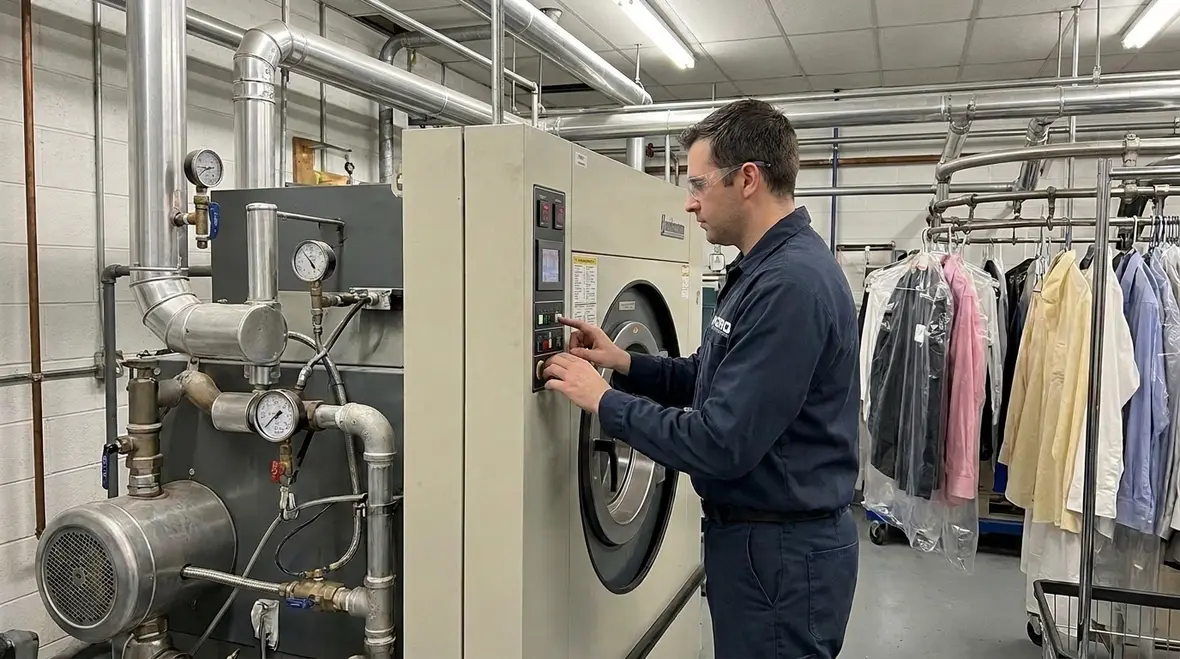
NFPA 32 Section 1.3 Retroactivity: Existing Drycleaner Rules Under the 2026 Edition
Quick Answer: NFPA 32 Section 1.3 addresses how the 2026 edition applies to existing drycleaning operations. In practice, most facilities must keep existing systems in compliance while upgrading specific hazards where the code identifies them. The key issue is what triggers mandatory changes during alterations, inspections, or failure events.
If your facility is already planning inspections, testing, repairs, or deficiency corrections, Kord Fire Protection’s full fire protection services for commercial and industrial properties fit naturally into this conversation because retroactivity questions rarely stay theoretical once an inspector starts pointing at real equipment.
What Section 1.3 Retroactivity Actually Means for Existing Operations
NFPA 32 retroactivity existing drycleaning facilities requires facility owners and operators to understand when the 2026 edition applies to equipment and building features already installed. Section 1.3 typically focuses on balancing life safety improvements with practical limitations. It generally does not force every legacy installation to be replaced at once, but it does not treat the existing plant as frozen in time either.
For compliance planning, the operational question becomes: which components are treated as grandfathered, which are required to be brought forward, and which changes require meeting the current edition standards. Inspectors and enforcement authorities usually look for hazards, operational continuity, and whether maintenance and inspection routines meet current expectations.
How Retroactivity Drives Real Compliance Decisions in Drycleaning Plants
In day to day enforcement, retroactivity usually shows up through three pathways. Each pathway creates practical obligations that influence engineering, procurement, and maintenance schedules for commercial and industrial facilities.
1) Alterations, renovations, and equipment replacement
When a drycleaning business modifies the system or replaces key components, the modified portions often must align with the 2026 edition requirements. This can include vapor management components, ventilation arrangements, fire protection interfaces, and the operational controls that affect ignition source control and emergency response.
Common compliance failure point: facilities replace a single major component without validating the entire interface. For example, upgrading a unit without verifying that ducting, exhaust balancing, lint handling, suppression interface points, and drainage behavior still meet the current intent can create system mismatch during inspection.
2) Enforcement during inspections and complaints
Retroactivity also becomes active when inspectors identify a hazard condition that violates the code intent for safe operation. Even if a component was installed under an earlier edition, the facility may need corrective action to restore acceptable performance. This is especially common where maintenance has degraded, controls do not operate as designed, or housekeeping contributes to combustible loading.
3) Deterioration, damage, or repeated impairments
Drycleaning operations involve energetic solvents, vapor, and ignition management. If equipment shows recurring impairments, the authority may require the facility to address root causes rather than only patch symptoms. Retroactive obligations can accelerate when failure modes repeatedly re occur.
Where Inspectors Focus Under the 2026 Edition for Existing Systems
For NFPA 32 compliance, the inspection spotlight tends to shift based on hazards that can escalate quickly in commercial, industrial, and retail environments. Existing facilities often struggle less with paperwork and more with verifying that installed systems still perform correctly under real operating conditions.
Control of ignition sources and solvent vapor hazards
Drycleaning systems must manage solvent vapor and ignition risk through correct equipment operation, safe electrical and control behavior, and protection of air movement paths. Existing setups may require validation that control logic, shutdown sequencing, and alarms work as intended after maintenance or parts replacement.
Common failure points include degraded wiring, malfunctioning sensors, incorrect setpoints, and blocked or partially obstructed air paths that change vapor behavior.
Ventilation and exhaust integrity
Ventilation performance affects vapor containment. Retroactivity often triggers when exhaust systems are found damaged, improperly routed, or not maintained. Inspectors look for evidence of functioning exhaust, correct duct routing and support, and absence of conditions that promote flammable vapor accumulation.
In existing facilities, the most common gaps involve maintenance records that do not confirm air movement targets, damaged flexible connections, and duct contamination that reduces effectiveness over time.
Lint accumulation, combustible residues, and housekeeping controls
Lint and residue management remains a central risk control. NFPA 32 expectations for inspection and maintenance become difficult to sustain when cleaning is reactive instead of scheduled. For existing drycleaners, retroactivity pressures often materialize through enforcement of housekeeping frequency, cleaning method suitability, and verification that waste handling does not create new ignition hazards.
Operational Procedures That Make Retroactivity Easier to Defend
Existing facilities can reduce the compliance burden by demonstrating that operational control is consistent, documented, and linked to safety outcomes. The most effective programs align written procedures with what technicians actually do during shift operations.
Maintenance and impairment reporting
Drycleaning equipment needs preventive maintenance aligned to the equipment manufacturer and the hazard control intent of NFPA 32. Retroactivity concerns intensify when the inspection reveals impairments repeatedly, or when maintenance fails to return systems to verified operational performance.
- Use a maintenance plan that includes verification steps, not only component replacement.
- Track recurring faults and root cause corrective actions.
- Ensure records show scheduled inspections, corrective work completion, and functional checks.
Training and operational authority
Technician actions affect hazard control. Facilities should ensure staff can identify abnormal conditions that increase vapor or ignition risk, and that they understand shutdown and escalation steps. A retroactive requirement often becomes a practical requirement when staff are unable to demonstrate safe operating behavior.
How Kord Fire Protection Supports 2026 Compliance for Existing Drycleaners
Kord Fire Protection helps commercial and industrial drycleaners translate NFPA 32 expectations into ongoing, auditable field performance. Instead of treating compliance as a one time event, the service approach focuses on inspections, testing, and maintenance workflows that align with the realities of daily plant operations.
To strengthen internal consistency, facilities should use documented testing and inspection checkpoints for life safety components and supporting systems. For additional practical guidance, Kord Fire Protection also supports sprinkler and fire protection asset management through resources such as this overview: Kord Fire Protection Resources.
Teams that need better records before an audit or insurer review can also pair field work with stronger documentation habits using Kord Fire Protection’s guidance on fire safety system documentation for compliance. That way, the binder stops being decorative and starts doing actual work.
In an enforcement environment, documentation quality often becomes the difference between a minor corrective action and a major retroactive upgrade. Kord Fire Protection supports that readiness by helping facilities plan work, verify performance, and close inspection findings efficiently.
What to Ask Your Authority Having Jurisdiction (AHJ) and Your Insurer
Retroactivity language can be interpreted in different ways depending on the AHJ, the facility configuration, and the specific hazard condition observed. Asking the right questions reduces delays and protects operating continuity.
- Which components are treated as existing and grandfathered, and which must meet the 2026 edition due to specific triggers?
- During planned equipment replacement, what exact interfaces must be brought to the current standard?
- What inspection findings most commonly result in required upgrades for existing drycleaning facilities?
- Which documentation and test records satisfy the AHJ for ongoing compliance verification?
Frequently Asked Questions
Conclusion: Next Steps for Compliance Readiness
Existing drycleaners can manage NFPA 32 retroactivity risk by mapping the 2026 edition intent to installed systems, documenting verified performance, and planning upgrades around actual triggers such as alterations and inspection findings. Start by reviewing maintenance records, identifying components with known failure patterns, and confirming that ventilation, ignition controls, and housekeeping are operating as designed. Then engage Kord Fire Protection to support inspections, testing, and corrective actions so compliance remains practical, defensible, and aligned with your operational schedule.

Join Our Newsletter!
Get the latest fire safety tips delivered straight to your inbox From our Newsletter.



