
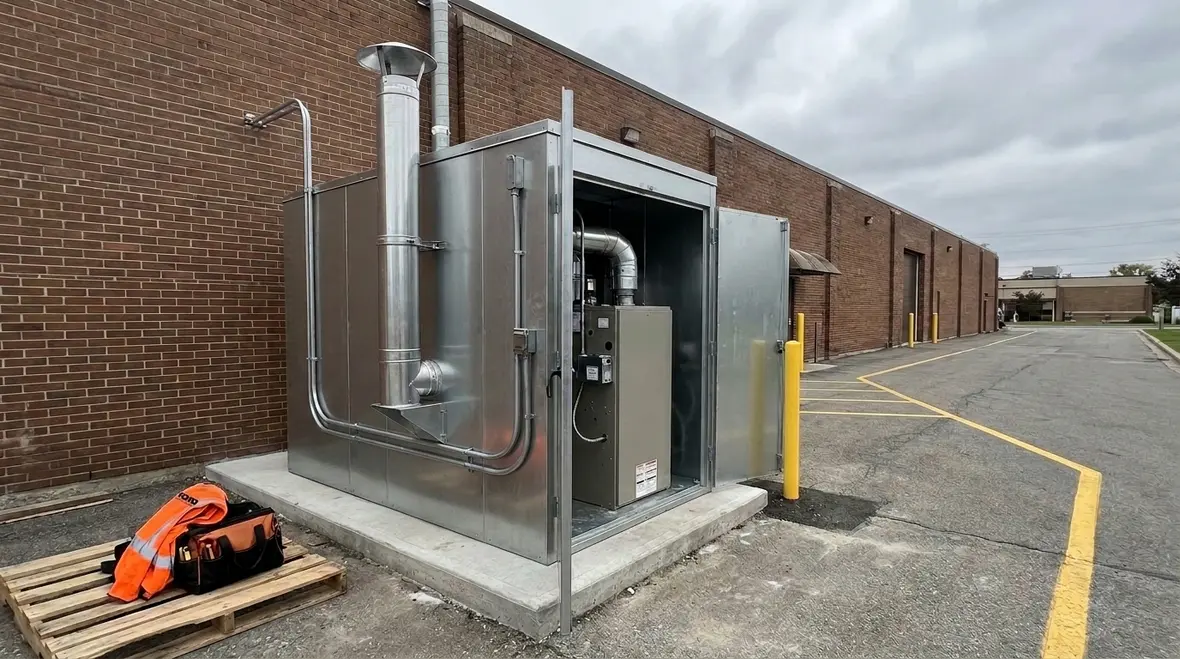
NFPA 31 Section 10.18: Installing Outdoor Oil-Burning Appliances
Quick Answer: NFPA 31 Section 10.18 sets the installation and operational safeguards for outdoor oil-burning appliances, focusing on weather protection, safe clearances, oil supply integrity, combustion air, venting, and maintenance access. These requirements reduce fire risk and support consistent inspection outcomes for commercial sites.
For related installation context near the start, teams can also review NFPA 31 Section 10.2 basic requirements for installing oil burners, which helps connect burner setup decisions to the broader field realities that affect outdoor equipment.
Why “outdoor” changes the compliance picture
NFPA 31 outdoor oil appliance installation requirements treat outdoor installations as a higher-risk exposure category because the equipment must operate reliably through wind, rain, temperature swings, and dirt accumulation. Even minor installation errors can create cascading failures such as impaired draft, restricted combustion air, or oil leaks that go unnoticed until conditions worsen. For commercial and industrial facilities, this becomes a direct driver for inspection readiness, preventive maintenance planning, and documentation quality.
In practice, the compliance challenge rarely comes from the appliance nameplate alone. It comes from the system around it: oil piping routes, shutoff and filtration arrangements, vent terminations, electrical controls, and the way the site manages drainage and access during routine service.
NFPA 31 Section 10.18 scope: what installers must control
NFPA 31 Section 10.18 addresses the installation of oil-burning appliances intended for outdoor use. The core objective focuses on ensuring safe operation under environmental stress and preventing fuel, ignition, and venting hazards from developing over time. The section emphasizes that outdoor equipment must be protected from conditions that can impair safe combustion and create ignition sources for escaping oil vapor or liquid.
Key compliance control areas
- Appliance weather protection and exposure management: Outdoor units must maintain intended combustion performance and component protection without trapping heat or moisture in a way that damages controls.
- Vent and flue integrity: Outdoor draft and condensation conditions can change vent behavior. Installers must prevent improper routing and ensure terminations perform as designed.
- Oil supply safety: The oil system must limit the potential for leaks, contamination, and unsafe flow conditions. Proper routing and shutoff placement remain essential.
- Combustion air and air movement: Wind patterns and obstructions can reduce effective combustion air or cause recirculation that affects flame stability.
- Accessibility for service and inspection: Outdoor service often occurs in unfavorable conditions. NFPA 31 expects installations that allow inspection, maintenance, and test activities without unsafe workarounds.
Operational safeguards that drive fire risk outcomes
Outdoor oil appliance systems can fail in predictable ways. A senior compliance approach treats those failure points as design constraints, not as later troubleshooting issues. This perspective aligns with how inspectors and fire safety professionals evaluate NFPA 31 outdoor oil appliance installation requirements during commissioning and ongoing maintenance.
1) Venting and draft stability under real weather
Outdoor combustion relies on stable venting behavior. Poor vent routing, incorrect termination location, or restrictions caused by site elements can lead to inadequate draft, flue gas spillage, or excessive condensate formation. Condensate management matters because it can degrade vent materials, carry acidic residue, and promote leakage at joints or seals.
Commercial facilities typically see this problem during seasonal transitions when wind direction changes and condensate production shifts. Installers should verify that the vent system maintains the intended flow path and that termination points remain free from obstructions that could alter draft. For additional venting context, see NFPA 31 Section 6.2 basic flue venting requirements for oil equipment.
2) Combustion air starvation and recirculation
Wind can either support or disrupt combustion air delivery. An outdoor installation can experience combustion air starvation if intake locations sit in turbulent zones, become blocked by stored materials, or accumulate debris. Recirculation can occur where exhaust discharge influences intake air, leading to unstable flame behavior and incomplete combustion.
These issues present as operational symptoms such as nuisance lockouts, soot buildup, or inconsistent burner performance. They also affect inspection outcomes because soot and residue often indicate combustion inefficiency that can elevate ignition risk. For related air supply perspective, review NFPA 31 Section 5.5 combustion air for commercial and industrial installations.
3) Oil leakage and oil contamination routes
Outdoor piping and fittings face thermal cycling, mechanical vibration, and potential impact during site maintenance activities. Even small leaks can create surface fuel accumulation, which then becomes a fire ignition source. Contamination from moisture ingress or improper filtration can cause nozzle performance deterioration, filter plugging, and erratic combustion.
Preventive control requires correct piping support, proper joint sealing methods, and a serviceable layout that allows inspection of fittings and components without dismantling major assemblies. For piping-related context, see NFPA 31 Section 8.4 fuel piping system design principles.
Installation procedures that inspectors look for
When NFPA 31 outdoor oil appliance installation requirements get enforced in the field, the evaluation typically focuses on observable installation characteristics and whether the equipment can be safely operated and maintained as installed. The following practices commonly distinguish compliant projects from installations that require corrective action.
Site layout, clearances, and service access
Outdoor appliances must maintain safe clearances from combustibles and from areas where service activities may create hazards. Clear access to covers, burner compartments, filters, and control panels supports proper maintenance cycles and inspection routines. Where snow, landscaping, or dock operations exist, clearances must account for seasonal changes and equipment movement.
Protection against water intrusion and component damage
Outdoor exposure creates a moisture and freeze thaw cycle that can degrade electrical connections, burner seals, and vent seals. Installation choices should prevent water from entering sensitive compartments and should keep control wiring and junction areas protected from direct exposure where the manufacturer does not explicitly allow it.
Commissioning and functional verification
Commercial compliance does not end at “installed.” It must include functional verification. Technicians should confirm burner start behavior, flame stability, safe shutdown functions, proper operation of oil valves, and vent performance under the conditions expected at the site. Documentation should capture test results, adjustments, and configuration details needed for future maintenance.
Common commercial failure points and how to prevent them
Large retail sites, industrial facilities, and multi-tenant buildings often install outdoor oil-burning appliances with shared infrastructure constraints such as limited access, ongoing landscaping, or adjacent loading areas. Those constraints increase the likelihood of compliance drift between initial installation and long-term operation.
Failure point: blocked or poorly positioned intake and vent terminations
Stored materials, snow management practices, and temporary site barriers can block intakes and alter vent behavior. The fix is not just “clean it.” The fix is to design and maintain a predictable clear zone and to incorporate those zones into site routines and work permits.
Failure point: maintenance access that encourages unsafe bypasses
When maintenance requires removing guards that were intended to stay in place, or when reaching filters and controls requires standing in hazardous zones, the facility tends to defer service. Over time, combustion efficiency drops, residue increases, and the risk profile rises. Proper access supports both safety and better inspection readiness.
Failure point: documentation gaps for ongoing inspections
Commercial owners frequently struggle to produce consistent evidence of inspections, service dates, and test results. Without documentation, compliance becomes reactive. A structured maintenance plan tied to NFPA 31 helps facilities maintain traceability and reduces last-minute service escalation.
For a practical, operation-focused reference on how facilities manage oil-burning equipment installation and ongoing obligations, Kord Fire Protection recommends: NFPA 31: a practical guide to oil burning equipment installation. This resource supports the jobsite decisions that prevent drift into nonconformity after commissioning.
Partnering for compliance: Kord Fire Protection’s role
Outdoor oil appliance installations require discipline across design, commissioning, and maintenance. Kord Fire Protection helps commercial, industrial, and retail facilities reduce risk by supporting compliance verification, inspection support, and maintenance planning that aligns with how NFPA 31 outdoor oil appliance installation requirements get applied in the real world. This includes practical review of installation features, service accessibility, and documentation that supports ongoing inspection cycles.
Facilities also benefit when maintenance teams receive clear guidance on what to check and what failure signs to treat as early indicators, such as changes in burner performance, soot trends, or evidence of moisture ingress around venting and controls.
Frequently Asked Questions
Conclusion and next step
NFPA 31 Section 10.18 compliance depends on how the outdoor environment interacts with the entire oil burner system, not just the appliance. If your facility has outdoor oil-burning equipment, arrange a documented compliance review and maintenance plan so installation details stay within acceptable risk tolerances over time. Contact Kord Fire Protection to support inspections, commissioning checks, and ongoing service alignment for commercial uptime and fire safety readiness.

Join Our Newsletter!
Get the latest fire safety tips delivered straight to your inbox From our Newsletter.



