
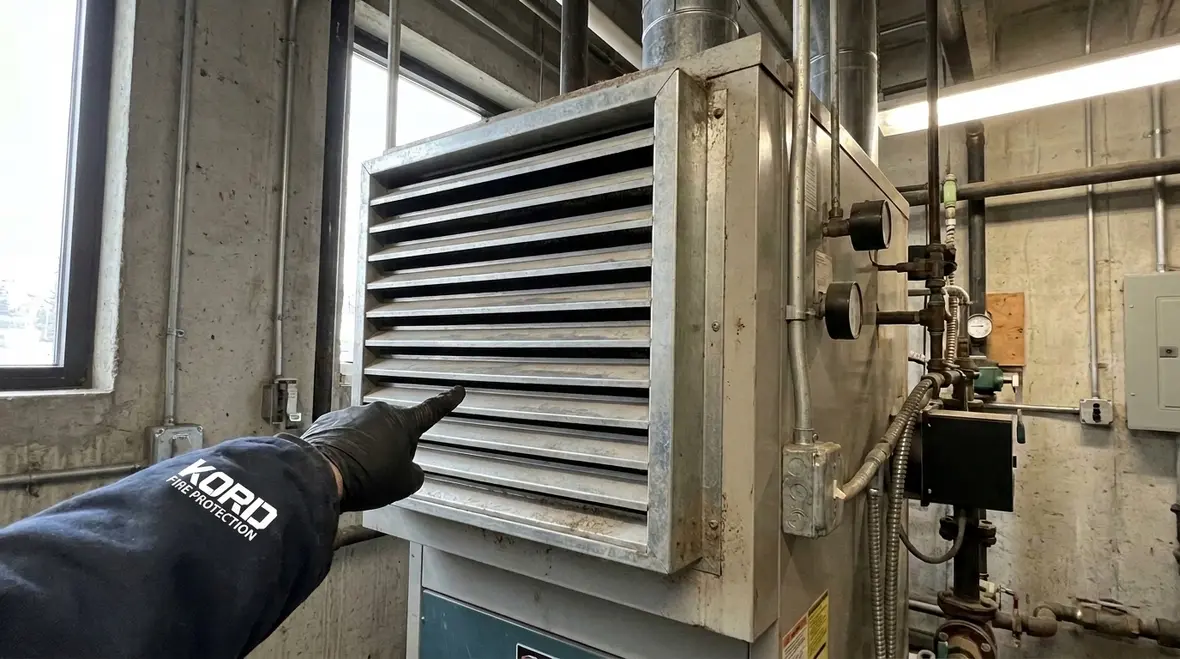
NFPA 31 Section 5.5: Combustion Air for Commercial and Industrial Installations
Quick Answer
NFPA 31 Section 5.5 sets combustion air requirements to ensure stable, complete fuel burning in commercial and industrial oil burning equipment. It addresses adequate air supply, proper ventilation, and how to prevent oxygen deficiency, excessive draft problems, and carbon monoxide risks through correct installation and maintenance.
For facilities managing broader inspection and testing demands, fire protection services in Southern California can help connect combustion air verification with the rest of the building’s compliance workload.
What NFPA 31 Section 5.5 is trying to prevent
NFPA 31 commercial industrial combustion air provisions exist to stop predictable failure modes in oil burner systems: incomplete combustion, unstable operation, and unsafe flue gas conditions. When combustion air is inadequate or poorly distributed, burners can pull the wrong amount of air, creating negative pressure effects, draft instability, and increased formation of soot and carbon monoxide.
From a compliance and operations standpoint, Section 5.5 also targets a common real world problem: facilities change. Retail tenants expand storage, service bays get upgraded, HVAC runs cycle differently, and doors open more frequently. Even when equipment stays the same, the air balance around the appliance changes, and the combustion air strategy can drift out of compliance unless it is maintained and verified.
NFPA 31 commercial industrial combustion air requirements in practice
NFPA 31 Section 5.5 focuses on ensuring the burner can access enough air for combustion under expected operating conditions. This typically includes air from indoor sources or outdoor openings, depending on the installation design and whether the space is considered suitable for combustion air. The core principle remains consistent: combustion air must be adequate, not compromised by building pressure differentials, and not restricted by construction or operational changes.
Air supply must match the burner demand
Oil burners require a predictable air supply to maintain correct mixture formation. Facilities often underestimate the impact of burner staging, nozzle changes, and service adjustments. When combustion air supply falls short, the burner may “run, but poorly,” showing symptoms such as:
- Frequent flame instability or nuisance shutdowns.
- Elevated smoke, soot deposition, or increased cleaning frequency.
- Higher carbon monoxide levels or inconsistent combustion test results.
- Visible odors or complaints from occupants due to poor combustion.
Building pressure can override “it has an opening” assumptions
Commercial and industrial spaces commonly experience pressure imbalance due to exhaust fans, make up air systems, warehouse loading dock operation, and HVAC economizer cycles. Even when air openings exist, negative pressure can pull air from the wrong location, increasing the likelihood of backdrafting tendencies or draft reversal during upset conditions. The result is not merely reduced oxygen availability. It is unstable flue gas behavior that can elevate safety risk.
Practically, NFPA 31 commercial industrial combustion air compliance is more than measuring an opening size on paper. It requires verification that the installation remains stable during real operating conditions, including when other systems start up.
Common compliance challenges in commercial facilities
Inspections and maintenance teams routinely encounter the same obstacles that erode combustion air adequacy over time. The following issues commonly cause test failures or operational instability, even when the original equipment installation was correct.
Blocked or altered combustion air paths
Air openings and intake routes can become obstructed by storage expansion, temporary partitions, debris accumulation, or maintenance practices. In multi tenant retail, changes in adjacent spaces can redirect air movement. In industrial buildings, modification to ductwork or ventilation layouts can unintentionally isolate the burner area from the intended air source.
Improper or missing provisions for make up air
Exhaust systems and process ventilation often outpace make up air during high demand periods. When supply air does not keep up, the building tends toward negative pressure, which can pull combustion products into occupied areas or destabilize burner combustion. Facilities may not identify this until a combustion analysis shows poor air to fuel results or until draft measurements indicate a shift.
Equipment room conditions differ from “normal” conditions
Equipment rooms can be affected by:
- HVAC cycling that changes airflow patterns around the burner.
- Door usage that changes air infiltration and stratification.
- Seasonal changes that alter pressure and ambient temperature effects.
NFPA 31 commercial industrial combustion air compliance needs to reflect these conditions. A room that works during one season can become deficient during another without deliberate controls or periodic re verification.
How to verify compliance: tests, measurements, and operational checks
Section 5.5 is satisfied through a combination of correct design and verification. Field verification should not be limited to visual confirmation of openings. A disciplined test and inspection approach improves safety, reduces service calls, and supports consistent regulatory outcomes.
Start with an installation review
Technicians should review:
- The combustion air source and routing to the burner location.
- Any louvers, screens, or dampers and whether they can foul or stick.
- Relationship between combustion air pathways and exhaust or make up air systems.
- Whether the space has been modified since the original installation.
Use combustion analysis and draft behavior to confirm performance
A proper compliance verification program typically incorporates combustion testing and draft evaluation. When combustion air is correct, oil burners generally produce stable flame characteristics and consistent combustion test results. When combustion air is incorrect, technicians often see trends such as oxygen depletion, increased products of incomplete combustion, or inconsistent draft behavior.
These results matter because they confirm the air supply and mixture formation in the real world, not just in the design intent.
Maintenance and inspection practices that keep combustion air compliant
Combustion air performance degrades with time. A practical maintenance plan treats combustion air like a critical life safety support system, not a “set and forget” component.
Schedule inspections aligned to facility change
Commercial and industrial facilities frequently change tenancy, storage layouts, equipment, and ventilation settings. Kord Fire Protection supports ongoing compliance by integrating combustion air checks into routine maintenance so the facility can identify drift early, before burner performance affects safety.
Inspect and clear openings and air routes
- Verify combustion air openings remain unobstructed and correctly positioned.
- Inspect louvers, screens, and grilles for blockage or corrosion.
- Confirm dampers move freely and fail to the intended position if applicable.
Re check air balance when HVAC or exhaust changes
Any modification to exhaust systems, loading dock ventilation, or make up air should trigger a combustion air re evaluation. This is where facilities often miss compliance even though the burner itself did not change. Air movement changes can directly impact oxygen availability and draft stability.
Related installation guidance for oil burning equipment
For a broader practical framework on how combustion air interacts with oil burner installation quality, documentation, and commissioning steps, review this guide: NFPA 31: A Practical Guide to Oil Burning Equipment Installation. It supports a safer implementation strategy that aligns with the same operational logic behind Section 5.5.
Frequently Asked Questions
Call Kord Fire Protection for ongoing compliance
NFPA 31 commercial industrial combustion air requirements succeed when verification and maintenance stay aligned with how the building actually operates. Kord Fire Protection helps commercial, industrial, and retail facilities manage combustion air risk through inspection readiness, combustion testing support, and maintenance planning that accounts for ventilation and occupancy changes. Contact Kord Fire Protection to schedule a practical compliance review and keep your burner operation stable, safe, and audit ready.

Join Our Newsletter!
Get the latest fire safety tips delivered straight to your inbox From our Newsletter.



