
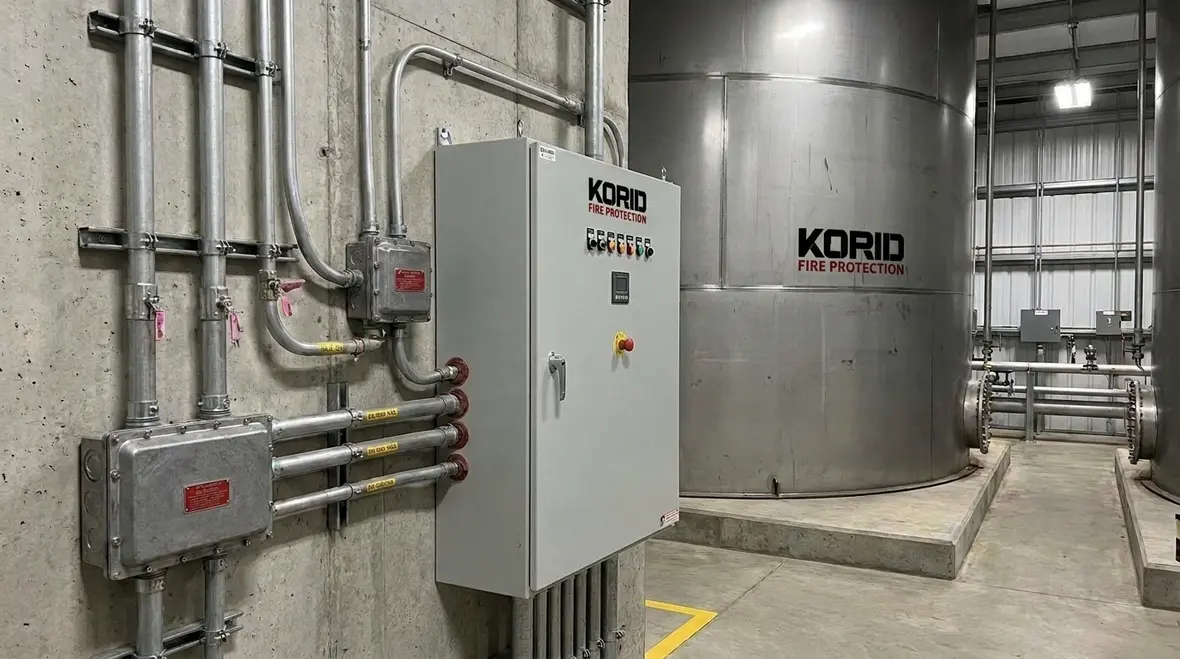
NFPA 30 Section 24.8: Electrical Systems in Tank Buildings
Quick Answer
NFPA 30 Section 24.8 tank building electrical requirements govern how electrical equipment, wiring, grounding, and protection methods must be installed and maintained in and around tank buildings. The goal is to control ignition sources in hazardous locations and sustain safe operation through inspection, testing, and documentation.
Why NFPA 30 Section 24.8 tank building electrical requirements matter
Electrical ignition risk drives the structure of NFPA 30 Chapter 24. In tank building environments, vapors can accumulate depending on product properties, ventilation performance, and operating conditions. When electrical equipment fails, overheats, sparks, or allows uncontrolled arcing, it can ignite flammable mixtures. NFPA 30 Section 24.8 focuses on limiting that ignition potential through correct equipment selection, installation practices, and ongoing maintenance.
Commercial operators often treat electrical compliance as a one time installation project. In practice, compliance depends on how the facility controls changes over time, including equipment replacements, cable routing modifications, corrosion management, and the performance of protective devices. Kord Fire Protection supports facilities that need durable compliance programs aligned with real inspection findings.
For a broader look at how liquid hazards tie into protection strategy, see layered fire protection system for flammable liquids. If your facility also needs suppression support for special hazards, Kord Fire Protection provides commercial fire suppression systems and services throughout Southern California. ([kordfire.com](https://kordfire.com/layered-fire-protection-system-for-flammable-liquids/?utm_source=openai))
What Section 24.8 typically requires for tank building electrical systems
NFPA 30 Section 24.8 addresses electrical systems in tank buildings as part of an overall flammable liquids safety strategy. While specific provisions can vary based on building design and the classification of locations, common control themes include ignition source prevention and electrical system integrity.
1) Equipment suitability for hazardous locations
Electrical components installed in or serving areas where flammable vapor mixtures may exist must be suitable for the hazardous environment. That suitability normally relies on recognized protection concepts, such as explosionproof construction, intrinsically safe design, purged and pressurized enclosures, or other methods acceptable under the applicable electrical standards referenced by NFPA 30.
Common compliance challenge: facilities purchase or upgrade equipment without verifying hazardous location rating matches the actual zone or class and division scheme used by the tank building design. Even a correct rating can be undermined by incorrect installation practices or damaged enclosures.
2) Wiring methods and routing controls
Proper wiring methods help prevent mechanical damage, moisture intrusion, and deterioration. Tank buildings frequently experience condensation, chemical exposure, and vibration from pumps and piping. Cable supports, conduit terminations, seal fittings, and protection from impact help preserve electrical performance and reduce insulation breakdown.
Common failure point: field penetrations made during maintenance that bypass sealing requirements or create gaps in enclosures. These changes can allow vapor migration into areas not intended for hazardous exposure.
3) Bonding and grounding continuity
Section 24.8 tank building electrical requirements emphasize that grounding and bonding must be established and maintained to control static and electrical fault conditions. Grounding also supports overcurrent and protective device operation by providing a low impedance fault path when faults occur.
Operational risk: corrosion on bonds, loosened clamps, or replacement of metallic parts with nonconductive components can interrupt continuity. Facilities sometimes discover these issues after trouble calls, rather than through proactive inspection.
Hazard control in practice: electrical installation to commissioning
Compliance succeeds when installation quality matches the design assumptions. NFPA 30 Section 24.8 tank building electrical controls should be embedded in the commissioning process, not left for later remediation.
Documentation that inspectors and auditors expect
Commercial and industrial facilities typically maintain a compliance folder that includes equipment submittals, hazardous location determinations, electrical single line diagrams, wiring diagrams, conduit and penetration details, and product nameplates. For tank buildings, this documentation becomes critical because inspectors often trace hazards back to specific circuits and equipment.
Kord Fire Protection helps facilities map electrical changes to ongoing safety obligations by coordinating review with fire protection, impairment tracking, and field verification practices.
Mechanical integrity checks
Electrical installations in tank buildings must remain mechanically intact. That means verified conduit supports, sealed fittings, properly torqued connections, intact enclosures, and correct gasket condition. After construction, facilities should perform a documented verification walkdown that looks beyond nameplates and confirms installation details.
Functional verification of protective devices
Protective devices and monitoring systems must operate correctly. Fault protection depends on proper grounding, conductor integrity, and the expected trip characteristics of protective devices. Facilities should confirm performance after any work that affects circuit components, including cable pulls, termination changes, or equipment replacement.
Inspection and maintenance: the compliance gap most facilities miss
NFPA 30 Section 24.8 tank building electrical is not a one time pass or fail requirement. The real risk accumulates through deterioration, unauthorized modifications, and deferred corrective action.
Common deterioration mechanisms
Corrosion at terminals and junctions: moisture and chemical exposure degrade electrical interfaces and increase resistance.
Enclosure damage: impact or poor access procedures compromise explosionproof or sealed integrity.
Conduit and penetration failures: missing seals or compromised sealing systems permit vapor pathways where none were intended.
Loose bonding conductors: vibration and thermal cycling can reduce continuity over time.
Field testing that supports safe operation
Facilities should integrate electrical safety checks into routine maintenance. Practical examples include verifying grounding continuity, inspecting protective device condition, confirming integrity of enclosures and fittings, and checking for signs of overheating at connections. Testing should be paired with visual inspections because the earliest indicators often appear before a hard failure.
Change management for commercial operations
A frequent root cause of noncompliance is untracked changes. Retail and commercial industrial tenants may add temporary heaters, replace lighting, install additional instrumentation, or reroute cables for new processes. Without a formal change management process that references NFPA 30 Section 24.8 tank building electrical requirements, these changes can quietly increase ignition risk.
How Kord Fire Protection supports ongoing NFPA 30 compliance
Electrical compliance in tank buildings depends on coordination across fire protection, maintenance teams, and facility engineering. Kord Fire Protection provides commercial service support that aligns operational inspections with flammable liquids safety requirements so facilities can sustain safe conditions year round. Kord Fire Protection offers a wide range of code-compliant services, including fire pumps, hydrants, standpipes, alarms, suppression, and preventive maintenance programs. ([kordfire.com](https://kordfire.com/?utm_source=openai))
As a practical compliance partner, Kord Fire Protection helps facilities reduce repeat findings by supporting documentation quality, field verification, and maintenance planning tied to ignition source control. For broader context on flammable liquid regulation and how NFPA 30 drives facility safety controls, review: how NFPA 30 regulates flammable liquids. ([kordfire.com](https://kordfire.com/how-nfpa-30-regulates-flammable-liquids/?utm_source=openai))
FAQs about NFPA 30 Section 24.8 tank building electrical
Conclusion and call to action
Electrical systems in tank buildings require disciplined design, installation quality, and maintenance to prevent ignition sources from developing. NFPA 30 Section 24.8 tank building electrical compliance works best when facilities treat electrical safety as an ongoing program supported by change management and documented inspection results. Schedule a compliance review with Kord Fire Protection to validate installation integrity, identify deterioration risk, and strengthen your maintenance plan before small defects become ignition hazards.

Join Our Newsletter!
Get the latest fire safety tips delivered straight to your inbox From our Newsletter.



