
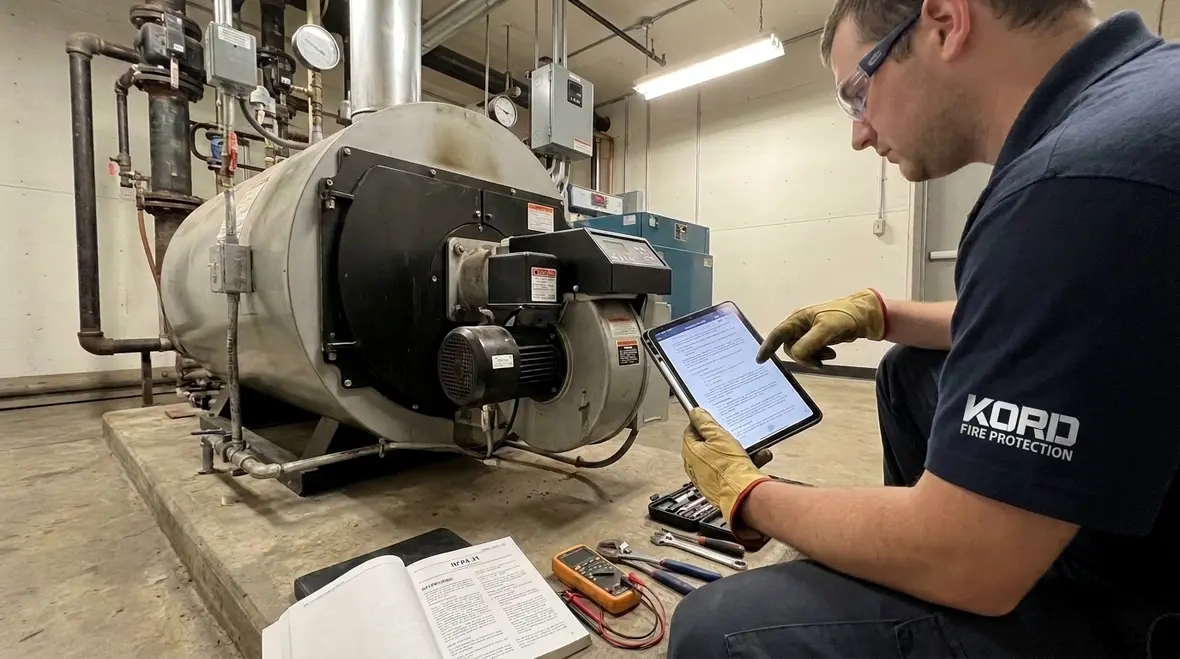
NFPA 31 Section 3.3: Key Terms Every Oil Burner Tech Should Know
Quick Answer: NFPA 31 Section 3.3 defines the oil burner and fuel oil vocabulary used throughout the standard. Mastering these terms helps technicians interpret installation, inspection, testing, and maintenance requirements correctly, reducing compliance gaps in commercial facilities, retail sites, and industrial plants.
Teams that need broader compliance support can also explore fire protection services in Southern California to connect terminology, inspections, repairs, and maintenance planning in a more practical way.
Why NFPA 31 general definitions oil burner terminology matters on real jobs
Oil burner work fails when technicians interpret requirements inconsistently. NFPA 31 general definitions oil burner terminology provides the exact meanings that govern how equipment must be installed, adjusted, safeguarded, and maintained. When a term is misread, the inspection checklist becomes unreliable, documentation becomes incorrect, and the safety intent of the standard is diluted. This becomes especially critical in commercial and industrial environments where multiple technicians, contractors, and maintenance schedules share accountability.
For field-ready context, this practical installation perspective helps technicians map definitions to real equipment configurations: NFPA 31 a practical guide to oil burning equipment installation.
Section 3.3 in practice: how definitions control compliance decisions
NFPA 31 Section 3.3 establishes the vocabulary that the rest of NFPA 31 relies on. That means definitions are not academic. They determine what the system includes, what inspection targets apply, and which operating states the technician must verify.
Commercial facilities often operate on strict uptime targets, yet the standard still expects verifiable safeguards and correct operating conditions. When the technician understands the defined terms, they can:
- Confirm that burner components and controls are correctly identified before testing.
- Perform adjustments using the right interpretation of operating modes and safety functions.
- Recognize when a configuration does not match the documentation or equipment nameplate intent.
- Track recurring failures to the correct subsystem rather than treating symptoms.
Key NFPA 31 terms technicians use every day (and what they imply)
The exact list in Section 3.3 includes defined terms that appear repeatedly across burner and fuel oil requirements. The trade value comes from knowing what each defined term implies for test points, acceptance checks, and maintenance scopes. Below are the high impact concept clusters technicians encounter during inspections and start ups.
Fuel oil and firing equipment terminology
When NFPA 31 references fuel oil and firing equipment, it drives how technicians assess storage, transfer, filtration, and burner delivery. In practical terms, correct definition interpretation affects:
- Which filtration condition must be evaluated during service to prevent nozzle and combustion issues.
- How the burner delivery system is treated during troubleshooting, especially when symptoms shift between poor ignition and unstable flame.
- How technicians document fuel type and operating assumptions to support recurring service verification.
Burner components and controls
Defined control and component terms directly influence what the technician tests and how they verify safety function operation. Common compliance failure patterns occur when controls are replaced or adjusted without confirming defined functions, sequence behavior, and required responses during simulated fault conditions.
Technicians should treat defined burner control functions as inspection anchors. If a control function is misunderstood, testers may verify “it starts” while skipping the required safeguards that prevent unsafe ignition, improper air oil mix, or unsafe firing states.
Ignition, flame monitoring, and safety shutdown vocabulary
Flame monitoring and safety shutdown language in NFPA 31 general definitions oil burner terminology determines what evidence the technician must collect during testing. In commercial settings, recurring issues often include:
- Intermittent flame failure caused by sensor contamination, wiring drift, or ignition performance degradation.
- Delayed shutdown events that pass basic start tests but fail under controlled conditions.
- Improper air or fuel settings that create a flame quality window outside of the monitor’s reliable detection range.
The technician must connect the defined term to the exact verification step. That means test procedures should target the defined safety outcome, not merely observed flame appearance.
System arrangements: supply, return, and delivery path concepts
Oil burner systems can be configured with multiple piping paths and flow behaviors. Defined terms governing supply and return concepts determine what technicians should inspect for leaks, restriction, improper routing, and abnormal pressure or flow symptoms.
On commercial and retail projects, the most common real world challenge comes from renovations. Systems get modified, valves get relocated, piping labeling gets outdated, and technicians inherit undocumented changes. Section 3.3 definitions provide a common reference point to prevent chasing the wrong flow path during troubleshooting.
How to use Section 3.3 during inspections and service calls
Technicians benefit when they treat definitions like a checklist framework. The goal is to remove ambiguity before testing starts.
Step 1: Identify the equipment configuration using defined vocabulary
Before touching adjustments, technicians should identify:
- Which burner assembly is installed and how its delivery and control components match the documented configuration.
- Which fuel oil path concepts apply to the site piping arrangement.
- Which safety and monitoring functions the system uses for flame proofing and shutdown.
This prevents “wrong baseline” service actions such as adjusting air settings or fuel pressure while misunderstanding which control function governs flame verification.
Step 2: Test using acceptance outcomes tied to defined terms
Service testing should link directly to the safety intent of the defined terms. For example, if a defined term indicates a safety shutdown function, the technician should verify the shutdown behavior and response sequence in accordance with the applicable NFPA 31 requirements for the setup.
Step 3: Verify documentation matches defined naming and installed scope
Commercial facilities frequently require formal compliance evidence for insurers, property managers, and ongoing maintenance agreements. Kord Fire Protection supports teams by aligning maintenance records with the installation and testing intent, helping reduce disputes caused by inconsistent terminology or incomplete reports.
Common failure points when technicians misuse defined oil burner terms
Misinterpretation usually shows up as repeat callbacks or “near misses” that eventually become failures. The following are practical patterns seen during commercial inspections:
- Mislabeling equipment functions: Technicians describe components by assumption rather than defined function, leading to incorrect test focus.
- Skipping defined safeguards: Start up success can mask improper flame detection behavior that only appears under controlled conditions.
- Adjustment drift: Air to fuel balance changes seasonally. When technicians do not anchor settings to the defined control intent, flame stability problems recur.
- Renewed ignition issues after parts swaps: Replacing ignition or flame components without validating the defined sequence can cause intermittent ignition or delayed lockout.
- Renovation mapping errors: Valve and piping routing changes can invalidate assumptions. Defined delivery and supply concepts help technicians re establish the correct test strategy.
These failure points become more likely when multiple contractors work on a site. A consistent definition based approach reduces variability and improves predictability of compliance outcomes.
Partnering for compliance: where Kord Fire Protection fits
Commercial, industrial, and retail facilities typically require reliable, repeatable maintenance that aligns with inspection expectations. Kord Fire Protection works as a technical compliance partner by supporting equipment understanding, service planning, and ongoing testing needs.
For a practical starting point tied to installation realities, use the Kord Fire Protection reference here: NFPA 31 a practical guide to oil burning equipment installation. It supports technicians and facilities with clearer mapping from requirements to field execution, especially when equipment configurations and site layouts differ from textbook examples.
Frequently Asked Questions
Call to action
Technicians and facility managers can prevent costly callbacks by treating NFPA 31 Section 3.3 definitions as the baseline for every service call, inspection, and adjustment. Kord Fire Protection supports ongoing compliance through practical guidance, testing alignment, and maintenance documentation that fits commercial operating realities. Contact Kord Fire Protection to review your burner systems, verify safety function behavior, and strengthen NFPA 31 readiness before issues escalate.

Join Our Newsletter!
Get the latest fire safety tips delivered straight to your inbox From our Newsletter.



