
NFPA 30 Section 24.5: Constructing Storage Tank Buildings
Quick Answer: NFPA 30 Section 24.5 sets performance driven requirements for building construction around bulk storage tanks. It focuses on fire resistive construction, compartmentation, and protection details that control fire, heat, and vapor migration. Facilities must design, inspect, and maintain these features to remain compliant.
The construction of storage tank buildings is not a “finish work” project. Under NFPA 30 Section 24.5 tank building construction, the building becomes part of the fire protection strategy. Commercial and industrial owners use this section to define how structures should resist fire exposure, limit fire spread, and manage abnormal conditions involving flammable liquids.
If your facility is tightening compliance planning, it helps to review broader fire protection services in Southern California early so inspections, repairs, and documentation support line up before small construction details turn into expensive rework.
What NFPA 30 Section 24.5 is trying to achieve
NFPA 30 Section 24.5 tank building construction is designed to reduce the probability that a fire inside or outside the tank area escalates into uncontrolled tank involvement. The standard’s intent centers on three operational realities:
- Heat transfer can defeat “distance.” Radiant heat and fire exposure can overwhelm containment measures if the building envelope fails.
- Fire spread is often path dependent. Openings, joints, penetrations, and unsealed gaps can create rapid fire migration.
- Vapors travel through the built environment. Venting, drainage, and compartment boundaries influence how vapors accumulate and ignite.
In practice, compliance means aligning the architectural shell with the fire engineering objectives for the tanks and the flammable liquids they contain. For many sites, this requires coordination between process, mechanical, structural, and fire protection teams early in design and again during commissioning and inspection.
Where Section 24.5 applies in real tank farm and commercial environments
Section 24.5 requirements typically come into play when the facility uses a building or enclosure approach to manage fire exposure around storage tanks. This matters across commercial, industrial, and retail occupancies where flammable liquid storage is present, including:
- Bunded or diked tank farms with structural enclosures to control fire exposure and protect equipment
- Facilities that require shielding for security, weather protection, or process integration
- Operations where maintenance activities create additional ignition and access risks
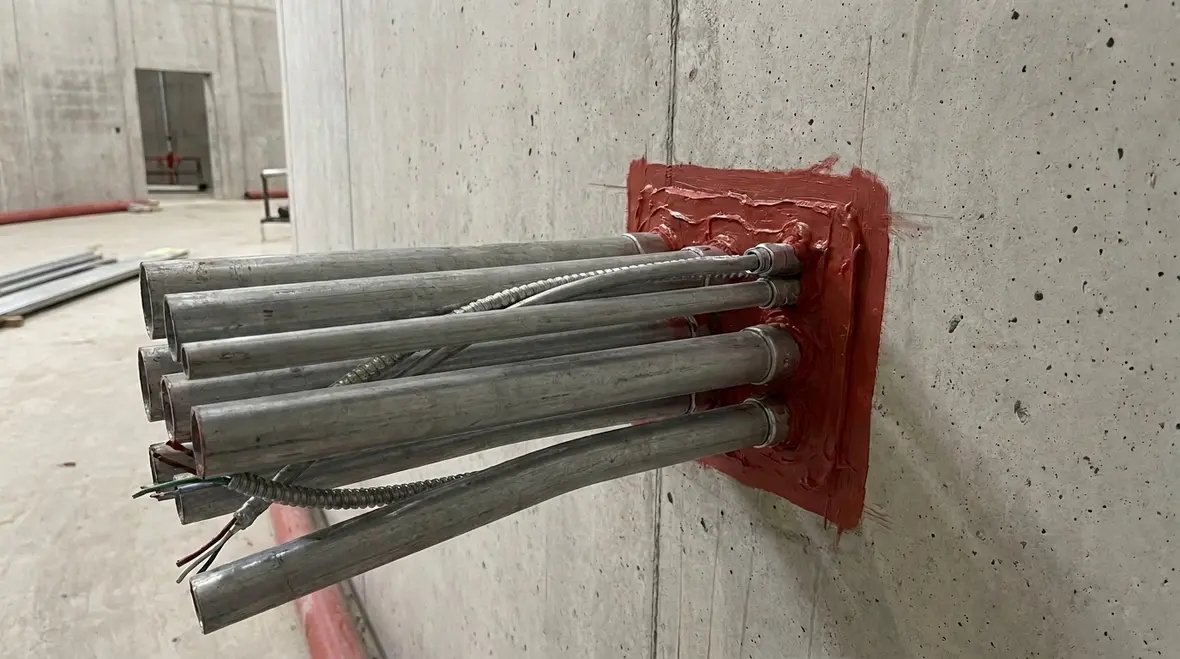
Owners often discover late in projects that the “tank building” includes more than walls and a roof. Doors, roof penetrations, pipe sleeves, electrical conduits, HVAC interfaces, and drainage systems become part of the fire performance assessment. If those details are not engineered and verified, inspectors will treat gaps and unprotected penetrations as failure points that undermine the whole construction strategy.
Core construction concepts behind tank building requirements
NFPA 30 Section 24.5 tank building construction focuses on building elements that prevent fire from spreading and that maintain structural and compartment integrity long enough for safe intervention. The recurring compliance themes include the following.
Compartmentation and fire resistive boundaries
Tank buildings rely on compartment boundaries that limit how fire and heat move between areas. In practical terms, this requires disciplined detailing at:
- Wall to roof interfaces and structural frame penetrations
- Service corridors, utility rooms, and access bays
- Seals at joints where dissimilar materials meet
Common failure point: contractors complete “fire stop” work without verification testing or without matching the firestop system to the hourly rating and the penetrating item type. During inspections, this shows up as incomplete sealing, incorrect materials, or systems that were not installed per listing.
Openings, doors, and dampers
Tank buildings often include openings for access, piping, and ventilation interfaces. NFPA 30 Section 24.5 tank building construction expects these openings to be controlled using rated assemblies where required. Operationally, that means selecting the right hardware and ensuring it remains functional under fire conditions.
- Rated doors need proper latching and self closing or equivalent functional performance, as applicable
- Where dampers are part of the system, the control and release behavior must integrate with the facility’s fire protection strategy
- Large openings should not become “future retrofit” zones that bypass firestop verification
Commercial facilities frequently face a maintenance gap: doors get held open for convenience, seals wear out, or door closers are disabled. These conditions can invalidate the practical intent of the fire resistive design.
Penetrations and pathways for fire and vapor migration
Penetrations represent the highest concentration of risk in tank building construction. NFPA 30 Section 24.5 tank building construction assumes the enclosure behaves as a system. That requires correct fire stopping and sealing for:
- Mechanical and process pipe penetrations
- Electrical conduits and cable trays
- Vent lines, drains, and sump connections
- Future modifications that introduce new pathways without updated approvals
Best practice involves an installation control process and an inspection record trail that ties each fire stop to the listing, the installed conditions, and the penetrant configuration. Where facilities expand over time, Kord Fire Protection can support change management inspections to confirm that new work does not reduce rated integrity.
How compliance is verified: inspections, documentation, and testing
NFPA 30 compliance is not satisfied by design intent alone. Authorities and internal safety audits expect evidence that the tank building features perform as installed. The compliance verification process usually includes.
Commissioning closeout and as built alignment
Facilities should maintain as built drawings, fire rated assembly schedules, and inspection reports that match the actual installation. A gap appears when:
- Materials substituted without updated ratings
- Penetrations added during construction without rerouting through the fire stopping plan
- Access openings were “temporarily” left incomplete
Construction and penetration integrity checks
Inspection focus typically includes rated assemblies, seals, and penetrations. A practical inspection program also checks for physical damage, missing covers, and evidence of bypassing.
For many commercial sites, operational realities include frequent plant shut downs and maintenance windows. Kord Fire Protection can help ensure fire protection remains intact after work orders, hot work, or equipment replacements, which are common triggers for degraded compartment boundaries.
Operational readiness and maintenance controls
Construction compliance fails when operational controls are not managed. Typical high risk maintenance issues include:
- Doors propped open and not returned to service
- Fire stop areas disturbed during future upgrades
- Drain and vent system modifications that change vapor behavior
Facilities benefit from a maintenance schedule that includes visual checks, functional tests where applicable, and documented follow ups after alterations.
Common failure points that drive enforcement and expensive rework
Even well designed projects can fail due to predictable field conditions. The most common problems tied to NFPA 30 Section 24.5 tank building construction include:
- Unprotected or incorrectly protected penetrations. Fire stop systems that do not match the hourly rating, penetrant size, or product type.
- Compartment integrity not maintained during modifications. Facility expansions and “small” utility reroutes can create new pathways that bypass rated assemblies.
- Door and opening management failures. Missing closers, damaged seals, or hardware replacement without like for like specifications.
- Documentation gaps. Incomplete as built records or missing installation evidence for rated components.
- Mismatch between vapor control assumptions and physical pathways. Drainage and vent interfaces can create accumulation zones if not handled as part of the constructed fire strategy.
Commercial compliance outcomes improve when owners treat tank building construction like a continuing system. Kord Fire Protection positions compliance as an ongoing service that connects design verification, installation quality, and periodic maintenance confirmation.
How flammable liquid regulation intersects with tank building construction
Tank buildings do not operate in isolation. Building construction requirements connect to broader flammable liquids control measures, including classification, separation, and protection concepts. For a deeper look at the regulatory relationships that drive facility design decisions, see:
How NFPA 30 regulates flammable liquids
Where these systems align well, the facility reduces ignition risk, controls heat exposure, and limits escalation potential. Where they misalign, enforcement often targets the weakest link, typically the enclosure integrity and the construction details that allow fire or heat to migrate.
Frequently Asked Questions
Conclusion: verify the tank building system, not just the drawings
NFPA 30 Section 24.5 tank building construction succeeds only when the enclosure performs as a system under fire exposure and through ongoing maintenance. Kord Fire Protection helps commercial and industrial operators validate rated assemblies, verify penetration integrity, and manage change so compliance remains defensible during inspections and audits. Contact Kord Fire Protection to plan a tank building review, post construction commissioning checks, and recurring maintenance verification for your facility.

Join Our Newsletter!
Get the latest fire safety tips delivered straight to your inbox From our Newsletter.



