
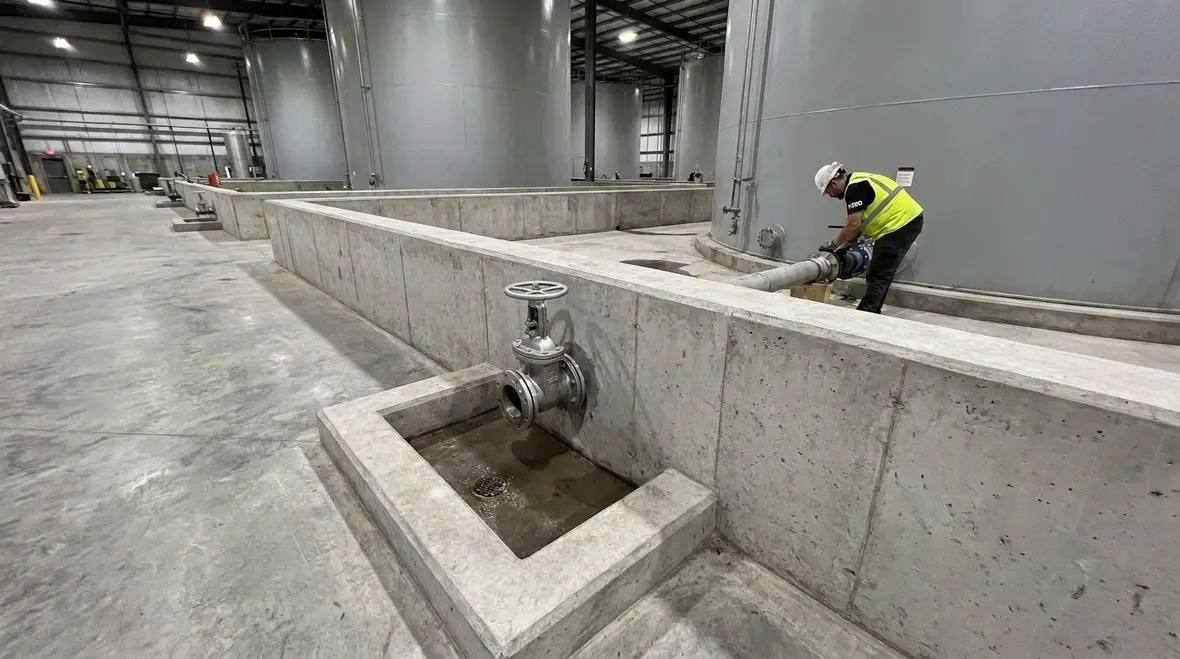
NFPA 30 Section 24.9: Spill Control in Storage Tank Buildings
Quick Answer
NFPA 30 Section 24.9 tank building spill control focuses on containing releases from aboveground storage so they remain within the tank building or designated drainage arrangements. It drives requirements for diking, curbing, drainage piping, drainage valves, and inspection readiness to prevent uncontrolled spread and ignition hazards.
Facilities that are tightening inspection routines around flammable liquid hazards can also review Kord Fire Protection’s fire suppression services for broader system support tied to compliant inspections, maintenance, and ongoing protection planning.
What Section 24.9 is trying to prevent in real facilities
In storage tank buildings, the credible worst case often starts as a relatively small leak: a gasket failure, a valve packing issue, a hose connection malfunction, or a pump seal release. NFPA 30 Section 24.9 tank building spill control addresses how facilities control that liquid so it does not migrate into uncontrolled areas, contact ignition sources, or overload drainage systems. For commercial, industrial, and retail sites, this section becomes practical risk management for day to day operations, not just design documentation.
Compliance usually succeeds or fails based on operational reality: how the building is drained, how quickly controls can isolate, whether valves remain in the correct position, and whether housekeeping and inspection routines keep containment features effective. Facilities that treat spill control elements as “set and forget” typically discover failure points during periodic inspections, maintenance cycles, or during a real incident.
For additional context on how NFPA 30 regulates flammable liquids and why spill control integrates with the broader code framework, facilities can review how NFPA 30 regulates flammable liquids.
NFPA 30 Section 24.9 tank building spill control: what to check
Section 24.9 centres on containment and drainage control. The facility must prevent released liquid from escaping the tank building or from reaching areas that increase fire exposure, ignition potential, or environmental impact. The operational backbone is the combination of containment construction and a controlled pathway for any rainwater or accidental releases.
1) Containment by diking, curbing, or equivalent features
Tank building spill control relies on containment features that can hold or divert liquid until it can be controlled and recovered. In practice, inspectors and auditors look for more than presence. They evaluate whether the containment configuration remains functional as equipment and piping are modified over time.
Integrity and continuity: Dikes and curbs must not be compromised by corrosion, patchwork repairs, or penetrations that were not properly sealed.
Capacity and slope: The containment area must retain liquid without rapid bypass. Sumps, low points, and internal grading should not create unintended escape routes.
Penetrations: Pipe and cable penetrations through containment boundaries require attention. Unsealed voids and abandoned openings commonly become migration paths.
2) Controlled drainage and isolation
Many tank buildings manage normal precipitation differently from spill conditions. NFPA 30 expectations in this area typically translate to having a drainage arrangement that can prevent release from entering areas that are not part of the spill control strategy. The most common compliance challenge is not the initial install. It is what happens after daily use.
Drain valves and automatic isolation: Isolation devices must reliably operate and remain in the intended state. Tampering, mispositioning, or failed actuators create unacceptable risk.
Discharge routing: Drain discharge points must not become a secondary hazard. Facilities need documented understanding of where water and contaminated liquids ultimately go.
Holding or recovery pathway: Spill control systems should support containment and recovery, not uncontrolled transfer to storm systems or adjacent areas.
3) Access for maintenance and inspection
NFPA 30 Section 24.9 tank building spill control depends on inspection readiness. Containment features and drainage components need practical access for crews to verify condition, clean out debris, confirm valve positions, and test mechanical operation.
Common operational failures include accumulated debris that blocks drainage paths, sediment in sumps that changes effective capacity, and poor visibility to key isolation devices. Facilities address these issues through access design, clear labeling, and routine checks.
How to operationalize spill control day to day
Even when the tank building meets design intent, operational drift can erode compliance. A strong spill control program integrates inspection checklists, maintenance work orders, and incident response triggers.
Daily and weekly practical checks
Housekeeping verification: Staff must keep containment areas free of trash, oily rags, and construction debris that can displace containment volume or plug drainage paths.
Valve position verification: Isolation valves must remain in the correct operating state. Training should emphasize that “normally open” and “normally closed” states are not interchangeable.
Evidence of leakage: Look for staining, pooling, and dampness at flanges, seals, and fittings that can indicate developing failures within a containment boundary.
Maintenance that preserves containment function
Maintenance activities often introduce new penetrations, modify piping routes, or alter drainage components. Each job should include a containment impact review, including verification that any newly installed seals remain gas and liquid tight, and that drainage isolation remains functional.
Incident response readiness
A spill event tests the system quickly. Facilities should confirm that response personnel know how to isolate drainage and where to recover contained liquid. Training should align with the site’s drainage map so staff do not rely on assumptions during stressful conditions.
Inspection standards: what auditors look for during verification
Auditors typically evaluate spill control readiness using a mixture of visual assessment and evidence of functional maintenance. For NFPA 30 Section 24.9 tank building spill control, inspections should focus on the entire containment and drainage system as an integrated safety function.
Containment system inspection points
Surface condition: Check for cracks, spalling, corrosion, and signs of chemical attack that reduce effective containment integrity.
Sealing at penetrations: Confirm that all openings through containment boundaries remain sealed and that flexible seals are not degraded.
Freeboard and effective capacity: Verify that added equipment, modifications, or stored materials do not reduce containment performance.
Drain and isolation inspection points
Valve operability: Valves and actuators should demonstrate reliable movement and correct position feedback where applicable.
Functional verification: Where procedures permit, confirm that drainage isolation can prevent unintended discharge pathways during a release scenario.
Documentation consistency: Ensure valve IDs, as built drawings, and test records match field conditions. Mismatches commonly become the critical finding.
To reduce the compliance burden on maintenance teams, Kord Fire Protection supports commercial facilities with structured inspection planning, practical test coordination, and ongoing maintenance oversight designed to keep spill control features reliable between major shutdowns.
Common failure points that break compliance
Experience shows that NFPA 30 Section 24.9 tank building spill control failures usually come from operational realities, not from missing construction at the outset.
1) Blocked or bypassed drainage pathways
Debris, sediment, and construction debris can block intended drainage routes, which forces liquid to find alternative pathways. In some layouts, blocked drains increase pooling inside the building and accelerate corrosion of containment surfaces.
2) Isolation devices left in the wrong state
Valve position errors and actuator faults can allow contaminated water to enter the wrong discharge system. Mislabeling also contributes when multiple valves or shared manifolds exist.
3) Penetrations installed without containment restoration
Contractor work frequently adds cable trays, sensor mounts, temporary wiring, or piping additions. If containment boundaries are not restored to the same liquid and vapour tightness, the “gap” becomes the hazard pathway.
4) Aging materials and chemical attack
Containment structures and sealants experience chemical exposure. Over time, they can lose effectiveness. Regular inspection and replacement criteria should reflect the specific stored products and environmental conditions inside the building.
Why a fire protection partner matters for ongoing NFPA 30 compliance
NFPA 30 Section 24.9 tank building spill control requires continuity. The system must stay correct through routine operations, seasonal drainage changes, and maintenance cycles. Commercial teams benefit when they use a service partner that understands how containment, drainage isolation, and documentation must align.
Kord Fire Protection helps facilities maintain spill control performance through recurring compliance support, inspection coordination, and maintenance follow through. This approach reduces last minute compliance gaps and supports stronger evidence packages during audits by keeping field conditions aligned with drawings, procedures, and test records.
If a facility needs a practical starting point, teams can align on existing as built documentation, current maintenance routines, and the operational state of isolation devices before scheduling verification testing and targeted corrective actions.
Frequently Asked Questions
Next step: confirm your spill control readiness
NFPA 30 Section 24.9 tank building spill control is only as strong as its maintenance and verification. Facilities should schedule a focused review of containment integrity, drainage isolation performance, and documentation alignment before problems accumulate. Contact Kord Fire Protection to support inspections, functional testing coordination, and ongoing maintenance planning so your tank building spill control stays dependable between audits, shutdowns, and operational changes.

Join Our Newsletter!
Get the latest fire safety tips delivered straight to your inbox From our Newsletter.



