
NFPA 30 Section 24.1 Scope Tank Buildings: What Facilities Must Know
Quick Answer: NFPA 30 Section 24.1 defines when and how storage tank buildings are regulated for flammable liquids, focusing on protection features, construction considerations, and operational controls. The scope determines which tanks and building arrangements fall under the section, guiding compliance testing and ongoing maintenance.
NFPA 30 Section 24.1 scope tank buildings: why it matters on-site
For commercial and industrial owners, NFPA 30 is not just a reference document. It becomes a practical inspection checklist that drives what gets installed, how it is operated, and how it is maintained. In storage tank buildings, small design and maintenance gaps often lead to major deficiencies, including compromised fire protection systems, incorrect ventilation assumptions, and deterioration of building boundaries.
When NFPA 30 Section 24.1 scope tank buildings applies, facility teams must align building design and tank arrangement with the intent of the standard. This alignment supports safer containment, controlled exposure to fire and heat, and reliable performance of detection and extinguishment systems during abnormal events.
For facilities building out a stronger inspection and maintenance rhythm, it helps to pair the scope decision with a broader fire protection ITM program so documentation, testing, and corrective work all stay tied to the actual site conditions.
What Section 24.1 covers, and where compliance teams get tripped up
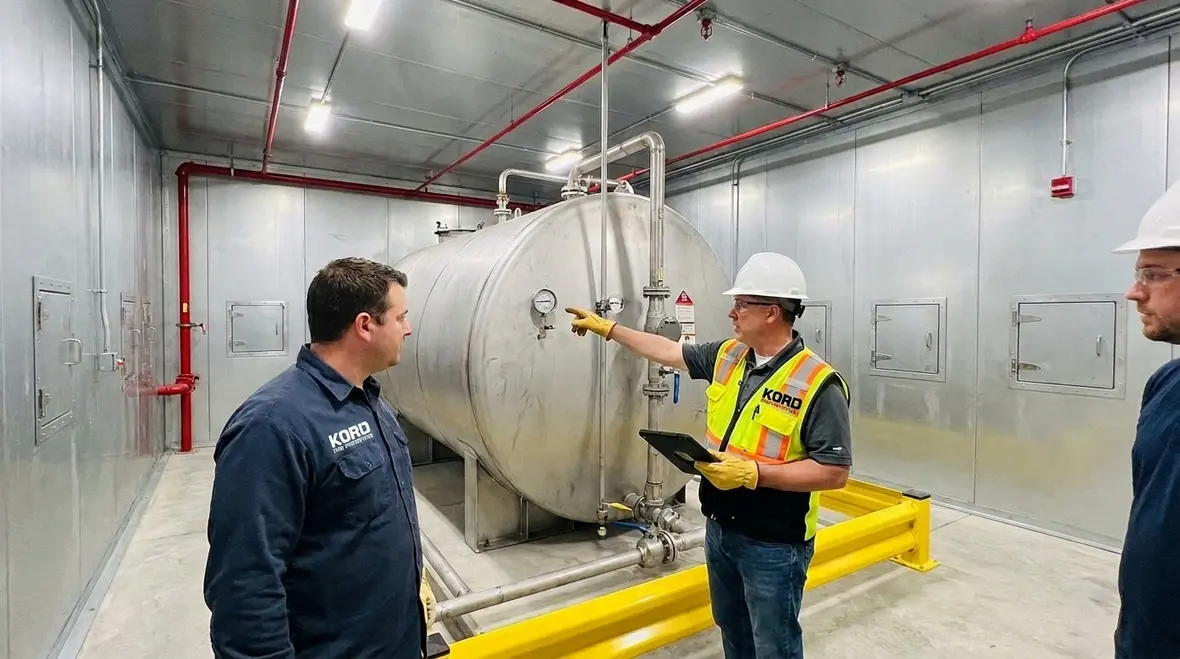
NFPA 30 Section 24.1 establishes the scope that governs storage tank buildings serving flammable liquid storage. In practical terms, it clarifies that not every tank location is treated the same way. The section targets building based tank arrangements where the building contributes to protection, separation, and fire exposure control.
Common scope confusion in commercial facilities
- Misclassification of the arrangement: Teams sometimes treat a partially enclosed structure as “outdoor” storage, then later discover it functions as a tank building for regulatory purposes.
- Boundary uncertainty: Inspectors frequently evaluate whether walls, doors, penetrations, and openings meet the intended level of protection for the tank building concept.
- Operational deviations: Even when drawings align, day to day operations can change the effective hazard profile, such as blocked vents, modified ducting, or unapproved maintenance bypasses.
How tank buildings affect fire and life safety controls
Once a facility falls under NFPA 30 Section 24.1 scope tank buildings, the building becomes part of the fire risk management system. The goal is to limit fire growth and spread, reduce exposure of tanks and connected systems, and ensure emergency controls operate when needed.
Containment and exposure management
Tank buildings rely on the integrity of building elements and the proper performance of valves, piping runs, and containment features. Practitioners typically focus on:
- Penetration control: Pipe and cable penetrations through walls and floors can become hidden failure points if seals degrade or are replaced incorrectly during maintenance.
- Openings and closures: Doors, hatches, louvers, and access panels must operate as intended. Jammed dampers or missing hardware can undermine ventilation and fire protection assumptions.
- Spill management: Floor construction and drainage influence how flammable liquid accumulates. Poor drainage can increase vapor formation and extend heat exposure to structural elements.
Ventilation and vapor control mechanisms
Flammable liquid vapor hazards drive building ventilation and detection strategies. The most common operational failures involve changes that alter airflow paths or remove protective components. For example, temporary work orders that leave fans running in manual mode or that keep dampers open can increase risk during normal operations and emergency conditions.
Inspection realities: what “compliant” looks like during audits
Audits and authority having jurisdiction walkthroughs typically evaluate evidence. Facilities must be able to show that the tank building system works, remains in service, and stays within the original design intent. This is where documentation, testing records, and field verification become critical.
Field checks that catch the real-world gaps
- Fire protection system readiness: Inspectors look for unobstructed access, correct signage, correct panel status, and recent functional checks that match the installed configuration.
- Detection and alarm behavior: Detection devices must remain calibrated and operational, with verifying tests performed according to the facility program.
- Housekeeping and ignition control: Oil buildup, solvent residue, or unmanaged debris can elevate ignition potential and create concealment of corrosion or damage.
- Corrosion and seal integrity: Tank building components often face elevated humidity and chemical exposure. Seal replacement quality frequently becomes a recurring deficiency.
To strengthen compliance outcomes, facilities should connect NFPA 30 requirements to their inspection and maintenance program for flammable liquids and associated systems. For additional regulatory context on flammable liquids management, see how NFPA 30 regulates flammable liquids.
Maintenance and operational controls that prevent recurring failures
Many storage tank building issues do not originate in the initial installation. They emerge during maintenance, upgrades, and routine operations. A robust compliance program addresses those failure points proactively.
Key maintenance disciplines for tank buildings
- Life cycle inspection planning: Build inspection intervals around exposure severity, not only manufacturer defaults. High moisture, vibration, or chemical atmosphere accelerates deterioration.
- Penetration management: Maintain a “no exceptions” standard for firestopping, cable sealing, and re sealing after works. Track penetrations by asset and date.
- Vent and damper verification: Confirm that vents, louvers, and dampers remain aligned with the design. Validate operation after any HVAC work or electrical panel upgrades.
- Functional testing alignment: Make sure testing procedures match how systems are configured in the field, including sensor placement and control logic.
Kord Fire Protection supports commercial and industrial sites by delivering ongoing testing, inspection readiness support, and practical maintenance alignment. This helps facilities close the gap between drawing intent and site reality, especially when systems age, undergo minor modifications, or experience drift in operational performance.
How to apply the scope decision in everyday facility planning
A reliable compliance approach treats the NFPA 30 Section 24.1 scope determination as a planning step, not an afterthought. Facility teams should:
- Confirm the tank building status early: Review layout, enclosure features, and how the structure functions during normal operation and emergency response.
- Verify installed configuration against drawings: Ensure penetrations, closures, ventilation pathways, and system components match the basis of design.
- Set an inspection and maintenance schedule: Prioritize items that affect containment integrity, vapor control, and emergency operability.
- Maintain test evidence: Keep functional test records current and accessible for audits.
Frequently Asked Questions
Get a practical compliance readiness review
If your facility has storage tank buildings handling flammable liquids, confirm that the NFPA 30 scope determination and your maintenance program match the installed reality. Kord Fire Protection can support inspections, functional testing readiness, and maintenance alignment so your systems perform as intended when it matters. Contact Kord Fire Protection today to schedule a compliance focused review and close common gap areas before the next audit.

Join Our Newsletter!
Get the latest fire safety tips delivered straight to your inbox From our Newsletter.



