
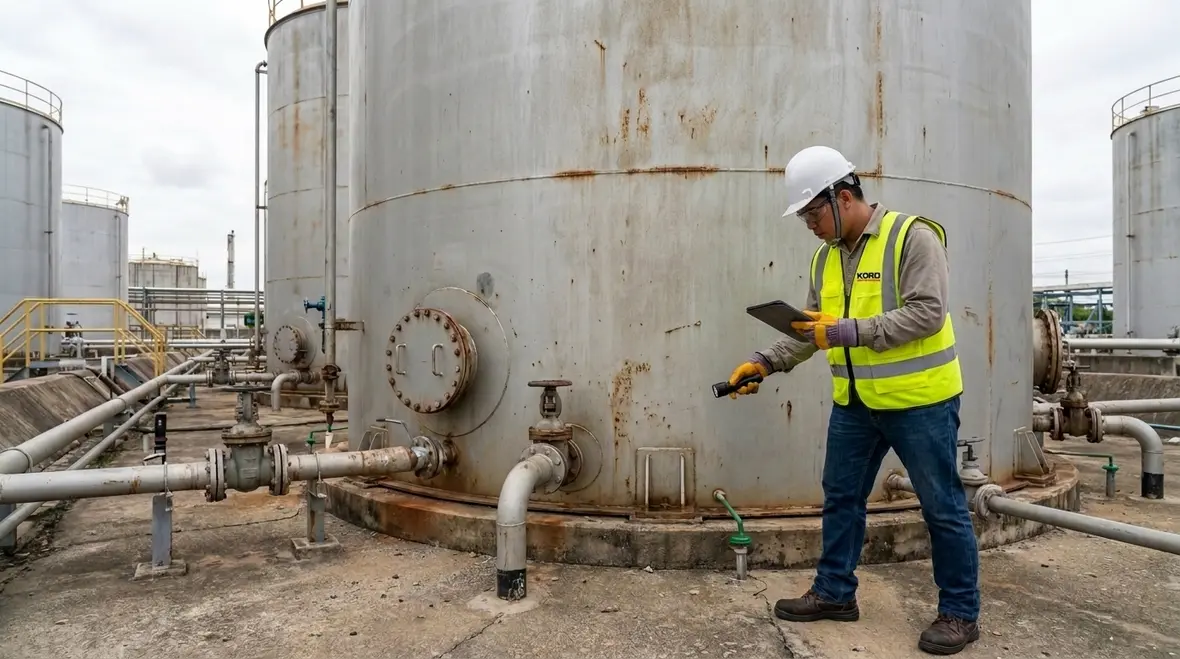
NFPA 30 Section 22.17: Inspecting and Maintaining Aboveground Tanks (AST) for Compliance
Quick Answer
NFPA 30 Section 22.17 AST inspection maintenance requires facilities to inspect aboveground storage tanks on a defined schedule, document findings, and correct deficiencies promptly. The intent is to prevent leaks, protect containment integrity, and sustain safe operating conditions for flammable liquid storage.
Why NFPA 30 Section 22.17 AST inspection maintenance matters for commercial sites
Commercial and industrial facilities rely on aboveground storage tanks to keep fuels and process liquids available. NFPA 30 sets the safety framework, but compliance only holds when inspection and maintenance occur consistently, and when discovered hazards receive corrective action. Under NFPA 30 Section 22.17, NFPA 30 Section 22.17 AST inspection maintenance focuses on practical assurance that tank systems remain capable of preventing abnormal conditions such as leaks, corrosion progression, or compromised appurtenances.
Common compliance challenges in retail, industrial, and commercial environments include managing inspections during operational windows, controlling access in hazardous zones, maintaining records that withstand audit scrutiny, and responding quickly when failures expose containment and ignition source risks.
What Section 22.17 expects: inspection frequency, scope, and documentation
NFPA 30 Section 22.17 establishes the expectation that owners and operators implement an ongoing inspection and maintenance program for aboveground tanks and associated components. While exact inspection intervals and depth can vary by tank type and operating conditions, facilities generally need to address both routine condition assessment and condition-based follow up.
- Documented inspection plan: Written procedures that define what gets checked, how it gets checked, and how often.
- Competent performance: Inspection activity performed by trained personnel or qualified contractors, with clear accountability for findings.
- Deficiency handling: Timely reporting, risk evaluation, and corrective action processes.
- Records: Inspection logs, maintenance records, repair or replacement documentation, and any monitoring results tied to safety performance.
For facilities operating multiple ASTs, the most practical approach uses a “system map” of tank and appurtenances to ensure nothing is missed during walk downs. It also supports audit readiness by linking each inspection to a specific component list.
If your site needs broader context on outdoor liquid storage controls before getting deep into AST maintenance, a useful related read is NFPA 30 Section 15.4 general requirements for outdoor liquid storage.
Core AST inspection points that commonly reveal failures
Aboveground tanks typically fail first at points where stress, corrosion, or mechanical damage accumulates. Effective NFPA 30 Section 22.17 AST inspection maintenance concentrates on high risk interfaces rather than only the tank shell’s visible condition.
1) Shell, bottom, and corrosion control indicators
Tank shells and bottoms experience corrosion influenced by stored liquid chemistry, moisture, ambient air exposure, coatings, and contamination. Inspectors should look for evidence of:
- Coating breakdown, blistering, or undercutting around field joints
- Rust scale, pitting, or weeping at welds
- Local deformation or dents that can accelerate corrosion or compromise structural integrity
- Signs of underside corrosion risk, where accessible or inferable through monitoring and prior assessments
When deterioration signs appear, maintenance often requires more than repainting. Facilities may need cleaning, coating system rehabilitation, gasket or seal replacement, and in some cases additional evaluation methods aligned with the facility’s engineering process.
2) Nozzles, manways, and gasket integrity
Leak paths frequently originate at openings and closure hardware. During NFPA 30 Section 22.17 AST inspection maintenance, technicians should verify:
- Manway cover condition and closure hardware security
- Gasket condition, seating, and signs of chemical attack
- Nozzle flange alignment, bolt integrity, and visible seepage
- Sampling connections and associated valves for tamper evidence and proper closure
Failure at these points can create small leaks that progress quickly under thermal cycling and product exposure, especially in high turnover commercial fuel systems.
3) Valves, piping interfaces, and grounding
Appurtenances and piping carry both pressure and ignition control responsibilities. Inspectors should verify:
- Valve operability, stem packing condition, and leakage at seals
- Hose or flexible connector condition, where used in dispensing systems
- Pipe support integrity and evidence of stress at connections
- Bonding and grounding continuity and any corrosion or missing components
Even minor bonding deficiencies can increase hazard potential during transfers. Maintenance teams should include grounding verification as part of the recurring compliance routine.
4) Venting, relief devices, and fire safety interfaces
Improper venting can drive tank abnormal pressure or vacuum conditions. Relief and vent system performance affects both safety and emissions related outcomes. Inspection activity should focus on:
- Physical integrity of vents, flame arrestors, and vent lines
- Blockage indicators such as paint overspray buildup, insect nesting, or debris accumulation
- Evidence of damage after impact or maintenance work
Where relief devices require functional testing, facilities should coordinate with downtime planning and document outcomes clearly.
Operational realities: how to perform inspections without disrupting business
Facilities often struggle to balance inspection quality with uptime, especially when tanks support ongoing retail dispensing or continuous manufacturing. A workable compliance program uses structured scheduling, access control, and pre job hazard reviews.
Use a staged inspection workflow
- Pre inspection: Verify tank status, product compatibility requirements, permits, and access readiness.
- Visual and mechanical checks: Identify visible corrosion, leakage points, coating failure, and component misalignment.
- Targeted measurements: Apply additional checks where visuals suggest potential failure progression.
- Close out: Issue findings, categorize severity, and attach evidence to the record set.
Define what triggers corrective action
Not every finding requires immediate replacement, but every finding requires documented risk evaluation. Many facilities implement a practical severity model tied to leak likelihood, ignition source exposure, and potential for containment loss. The fastest path to compliance is a corrective action workflow that includes:
- Time to repair target based on hazard level
- Engineering review where structural integrity or venting performance is uncertain
- Follow up verification after repairs or replacements
Coordinate with related code obligations
AST inspection maintenance integrates with broader flammable liquid requirements. For additional context on how the code regulates flammable liquids, review: how NFPA 30 regulates flammable liquids.
Maintenance best practices that keep AST systems stable over time
Inspection identifies issues, but maintenance prevents recurrence. High performing programs focus on prevention and repeatability, not only repairs.
Coatings, corrosion treatment, and surface preparation discipline
Coating failures often return when surface preparation and application conditions do not match the coating system requirements. Maintenance teams should:
- Confirm surface cleanliness and dryness before application
- Use correct primers and top coats for the specific environment
- Apply repairs at detected defects, not after widespread coating loss
Seal and gasket management
Many leak events originate from worn gaskets or damaged closure surfaces. Facilities should maintain an inventory strategy for compatible gasket materials and closure hardware that matches product chemistry and temperature exposure. After replacement, they should verify proper seating and perform leak checks aligned with site procedures.
Valve and relief device upkeep with verification
Valves and pressure relief components need periodic attention to prevent sticking, leakage, or functional degradation. Maintenance work should include verification steps, such as operational checks and documentation of results, to confirm the system returns to safe condition.
Keep records audit ready
Audits typically focus on the link between inspection findings and corrective actions. A complete record set usually includes:
- Inspection date and tank identification
- Component checklist evidence and measurements where applicable
- Photo documentation of defects, when practical
- Maintenance work orders and verification that repairs addressed the hazard
How Kord Fire Protection supports compliant NFPA 30 AST inspection maintenance
Kord Fire Protection helps commercial facilities maintain safe, code aligned aboveground tank systems through practical inspection planning, targeted maintenance support, and documentation quality that stands up to operational review. For sites managing multiple tanks, Kord Fire Protection can help standardize component checklists, streamline corrective action tracking, and support scheduling that reduces downtime pressure.
Facility managers benefit when the inspection program aligns with real site constraints, including access control, operational continuity, and hazard management. For more guidance on code driven flammable liquid governance, visit kordfire.com. For service enquiries in Australia, visit kordfire.com.au.
Frequently Asked Questions
Conclusion and next step
AST compliance depends on disciplined inspection and maintenance, not just occasional compliance checks. Facilities should confirm their NFPA 30 Section 22.17 AST inspection maintenance program includes a defined scope, documented findings, and fast corrective action workflows. Kord Fire Protection can help your team improve inspection consistency, strengthen record quality, and support timely maintenance for safer operations. Contact Kord Fire Protection today to review your current AST inspection maintenance approach and close compliance gaps.

Join Our Newsletter!
Get the latest fire safety tips delivered straight to your inbox From our Newsletter.



