
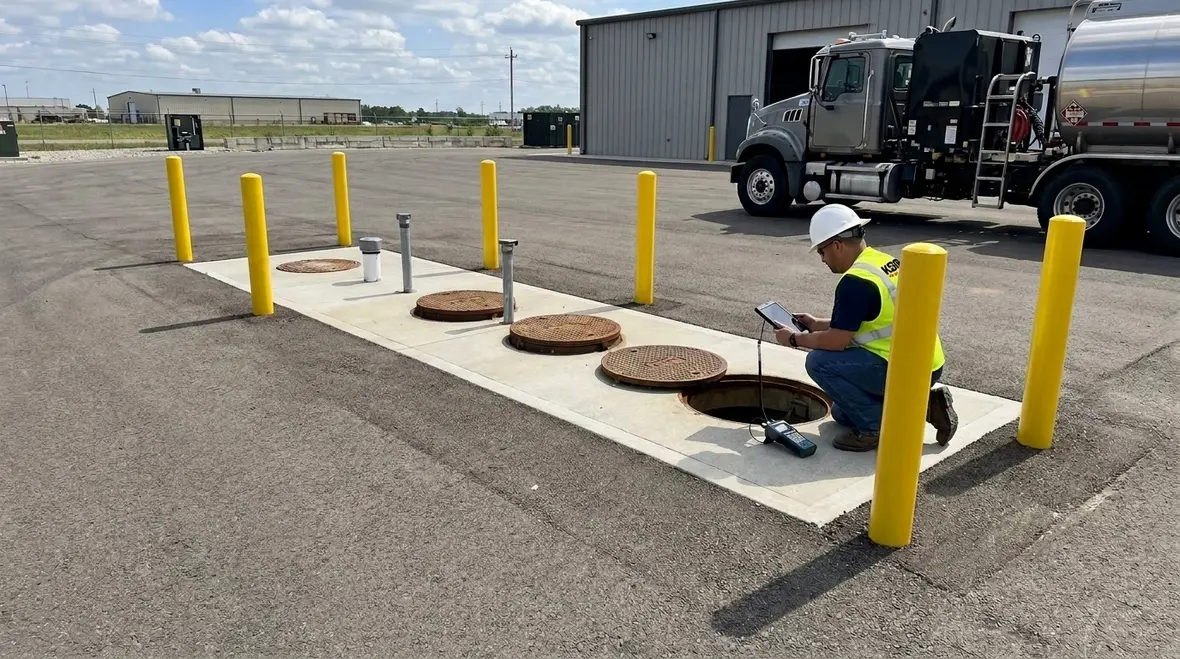
NFPA 30 Section 23.1 Scope: Underground Storage Tanks
Quick Answer: NFPA 30 Section 23.1 scope underground tanks defines what underground storage systems for flammable liquids are covered, what performance and protection expectations apply, and which installation, corrosion control, and inspection practices commercial sites must maintain. It supports life safety, property protection, and leak control through enforceable requirements.
Facilities dealing with flammable liquid hazards often benefit from a broader layered fire protection strategy for flammable liquids, especially when underground storage conditions intersect with detection, suppression, and operational response planning.
What does NFPA 30 Section 23.1 cover for underground storage?
NFPA 30 is the primary reference for flammable and combustible liquids across commercial, industrial, and retail environments. Within that standard, Section 23.1 sets the scope for underground tank installations. It establishes the boundary between covered underground systems and other tank configurations so designers, installers, inspectors, and fire safety professionals apply the correct protections, testing methods, and ongoing maintenance routines.
For facilities, the practical impact is straightforward: when a storage system falls within the NFPA 30 Section 23.1 scope underground tanks, the site must be able to demonstrate that its tank design and corrosion management, leak detection approach, venting and closure integrity, and inspection and documentation practices align with the applicable requirements.
How scope drives compliance: identify the installation correctly
Most compliance gaps do not come from “missing” firefighting equipment. They come from teams applying the wrong standards to the wrong storage arrangement. NFPA 30 Section 23.1 scope underground tanks focuses attention on underground storage systems because their failure modes and mitigation strategies differ from aboveground tanks.
Operationally, the first compliance step is accurate classification of the tank and surrounding arrangement. Facilities should confirm and document:
- Tank location relative to grade, including burial depth and surrounding fill characteristics.
- Tank construction type, such as single wall versus double wall configurations, and compatibility with the specific flammable liquid.
- Containment components that manage releases, including spill containment interfaces and corrosion protection assemblies.
- Any system features that change how leaks are detected or isolated, such as monitoring and interstitial space controls for double wall tanks.
This classification work also supports inspection planning. Inspectors evaluate different risk points underground because releases can migrate through soil and remain undetected longer than releases from aboveground sources.
What underground protection must accomplish day to day
Underground tanks represent a long term integrity problem. The primary compliance intent is to prevent releases and detect or limit them early enough to reduce fire and explosion potential. In practice, that means corrosion control and containment performance matter as much as emergency planning.
Corrosion control and integrity management
Underground environments drive corrosion through soil chemistry, moisture, oxygen, stray electrical currents, and mechanical backfill conditions. NFPA 30 Section 23.1 scope underground tanks treats tank integrity as an ongoing management obligation, not a one time installation event. Facilities typically maintain corrosion control through engineered systems and verified practices, such as:
- Coating performance and coating continuity checks where applicable.
- Cathodic protection monitoring and corrective actions when readings drift.
- Proper installation practices that avoid coating damage during handling and backfilling.
- Backfill selection and placement that reduces water retention and supports stable conditions around the tank.
Common failure points include deteriorated coatings, ineffective electrical bonding, interrupted monitoring, and corrosion “hot spots” created by localized soil conditions. These issues can progress slowly, which makes routine measurement and documentation essential.
Leak detection and release mitigation
Underground systems often rely on sensors, monitored interstitial spaces, or tightness monitoring strategies. Compliance requires that the chosen detection method matches the tank design and remains functional. That typically includes:
- Functional testing of detection components at required intervals.
- Alarm verification and documented response procedures.
- Maintenance that prevents sensor drift and wiring damage due to burial settlement or water intrusion.
- Clear operator training on what an alarm means and what actions follow immediately.
For retail and industrial sites, a frequent operational issue is alarm fatigue. When maintenance teams do not treat every alarm as a legitimate integrity signal, detection systems lose credibility and response times degrade. A strong compliance program maintains traceability from alarm event to inspection finding to corrective action closure.
Inspection and testing realities for commercial, industrial, and retail facilities
Underground tank compliance often fails during audits because documentation trails are inconsistent. Facilities can meet “field” requirements and still fall short if inspection records cannot demonstrate that each critical component has been tested, measured, and verified according to the applicable program expectations.
Field verification checkpoints that inspectors expect
When technicians and fire safety consultants evaluate tanks within NFPA 30 Section 23.1 scope underground tanks, they typically look for evidence of controlled integrity over time. Practical verification may include:
- Evidence of corrosion control device operation and trend data, not only point readings.
- Verification that alarms, control panels, and monitoring equipment remain calibrated and operational.
- Documentation that covers system components and any modifications performed over the tank life.
- Records that show timely corrective action when readings fall outside acceptance criteria.
Testing mechanics and how failures present
Underground leak detection systems can fail in subtle ways. Instead of a total system outage, issues often appear as partial performance degradation. Examples include:
- Intermittent sensor faults caused by moisture ingress in conduit runs.
- Reduced detection sensitivity due to sensor aging or improper maintenance.
- Control system logic errors from attempted repairs without correct functional verification.
- Electrical bonding changes after nearby construction that alter cathodic protection performance.
Effective compliance programs treat testing results as a risk management feed. That means technicians review trends, confirm component condition, and document corrective actions in a way that a third party auditor can follow.
Where facilities commonly struggle, and how to fix it
Underground tank programs face predictable pressure points. The best outcomes come when facilities align maintenance tasks with compliance documentation and operational accountability.
Challenge: corrosion control that is not trend managed
Some sites collect readings but do not manage trends. When values drift slowly, the system still appears “working” until integrity becomes compromised. A better practice uses a structured schedule for monitoring, review, and escalation to maintenance actions before failures develop.
Challenge: incomplete alarm response procedures
Commercial sites sometimes rely on general “notify someone” procedures rather than defined technical response steps. Under NFPA 30 Section 23.1 scope underground tanks, the expectation is that the facility can show a reliable process for verification, isolation, and follow up. Procedures should define roles, immediate actions, and verification requirements.
Challenge: maintenance records are not audit ready
Auditors need traceability. Kord Fire Protection supports facilities by organizing and maintaining verification records so compliance teams can quickly demonstrate what was tested, when it was tested, and what outcomes occurred. For ongoing risk reduction, that documentation must remain current through modifications and repairs.
For additional context on how NFPA 30 regulates flammable liquids and why scope decisions matter operationally, see how NFPA 30 regulates flammable liquids.
How Kord Fire Protection supports NFPA 30 compliance
Many facilities use multiple contractors for installation, tank maintenance, and monitoring upgrades. The compliance risk grows when responsibilities are fragmented. Kord Fire Protection acts as a coordinated commercial service partner to help facilities maintain control of underground tank program requirements associated with NFPA 30 Section 23.1 scope underground tanks.
Typical support includes compliance planning, inspection coordination, testing verification support, and documentation readiness assistance so facilities can respond effectively to internal audits and external reviews. Kord Fire Protection also helps facilities align practical maintenance workflows with the expectations auditors look for, including consistent records, clear response actions, and verified system performance over time.
Sites that need broader compliance support can also review Kord Fire Protection’s fire protection infrastructure modernization for compliance guidance for a practical look at reducing fragmented responsibilities across systems.
Frequently Asked Questions
Next step: confirm scope, then tighten your program
Facilities should verify that the site’s underground tanks fall within the NFPA 30 Section 23.1 scope underground tanks and confirm the tank integrity and detection program is supported by current, audit ready records. If you want a structured compliance review, contact Kord Fire Protection to assess your underground tank documentation, verification readiness, and ongoing maintenance workflow, then map clear next actions for testing, trending, and corrective work closure.

Join Our Newsletter!
Get the latest fire safety tips delivered straight to your inbox From our Newsletter.



