
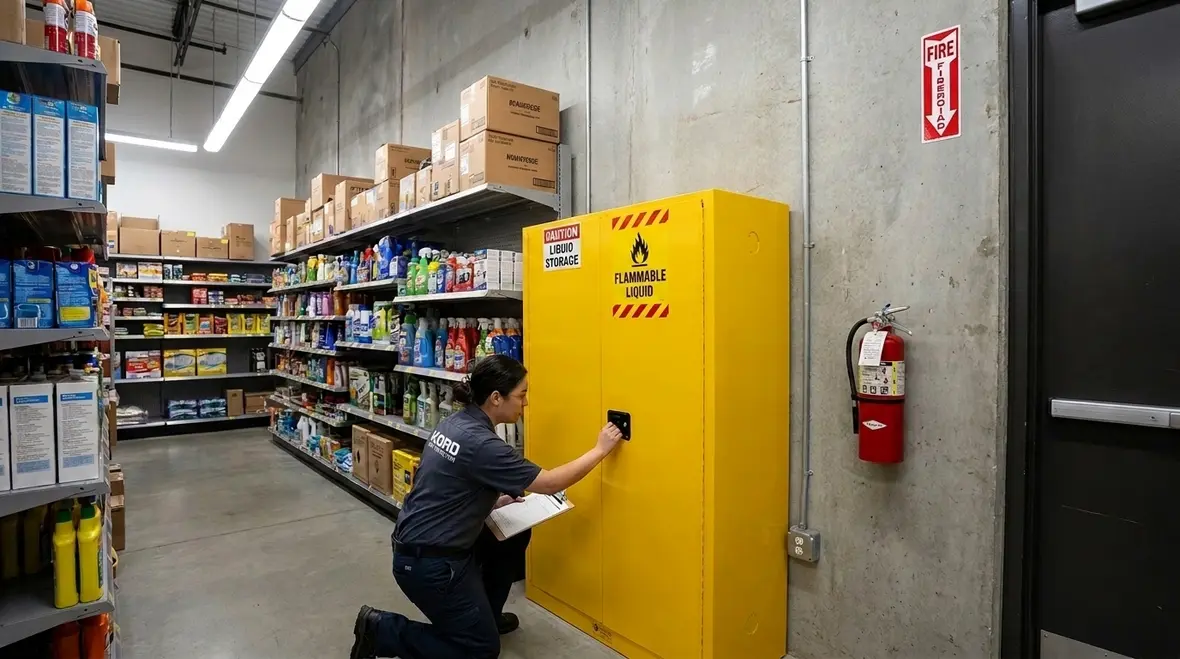
NFPA 30 Section 10.6: Storage Cabinets in Mercantile Occupancies
Quick Answer
NFPA 30 Section 10.6 addresses when and how liquid cabinets are permitted for storing certain flammable and combustible liquids in mercantile occupancies. It focuses on cabinet suitability, installation conditions, containment performance, and inspection readiness so facilities maintain safer storage practices.
What does NFPA 30 Section 10.6 cover in mercantile occupancies?
NFPA 30 regulates flammable and combustible liquids across storage, handling, and use. Within mercantile occupancies, the intent of NFPA 30 Section 10.6 liquid cabinets mercantile occupancies is to ensure small, controlled quantities of liquids stay in purpose designed storage units that reduce spill impacts, limit ignition sources, and support safe day to day operations.
In practice, facility teams treat Section 10.6 as a “compatibility and control” checkpoint. Cabinets must be appropriate for the liquid type, installed in a manner consistent with cabinet listings and the code intent, and maintained so that doors, seals, and venting or non venting components continue to perform as designed.
For broader context on classification, storage limits, and how cabinet requirements fit into a bigger compliance strategy, see this NFPA 30 flammable and combustible liquids guide.
How liquid cabinets support safer storage control
Commercial environments often store liquids in close proximity to daily work, customers, or maintenance activities. Cabinets provide mechanical containment and environmental control that typical open shelf storage cannot. Section 10.6 expectations generally translate into these operational outcomes:
- Containment performance: Cabinets manage small leaks and reduce the likelihood of liquids spreading across floors.
- Controlled access: Cabinets help standardize who can open and replenish liquids, which supports procedure compliance.
- Ignition risk reduction: Listed construction and hardware design help limit hazards associated with electrical ignition sources and internal cabinet components.
- Reduced cleanup burden: Containment enables faster, more consistent spill response within a known boundary.
For commercial fire safety programs, cabinet usage supports broader fire prevention goals that include maintaining separation, controlling ignition sources, and ensuring that flammable liquid storage aligns with the facility hazardous materials inventory plan.
Compliance essentials: cabinet selection, placement, and suitability
Facilities typically fail compliance not because cabinets do not exist, but because cabinets do not match the actual materials, conditions, and operating habits. A strong compliance process focuses on suitability first, then installation and routine use.
Cabinet suitability for the stored liquids
For NFPA 30 Section 10.6 liquid cabinets mercantile occupancies, cabinet selection must align with the cabinet listing and the intended liquid category. Key checks include:
- Type compatibility: Ensure the cabinet is designed for the liquid class stored, including flammable versus combustible characteristics.
- Container compatibility: Verify that the cabinet material and internal surfaces do not react adversely with the product.
- Capacity alignment: Limit quantities to what the cabinet is intended to store and what the overall code and site plan permits.
- Hardware and closing performance: Confirm doors close fully and latching systems operate without binding.
Placement and installation requirements
Cabinet location affects both fire risk and inspection outcomes. Common placement issues include cabinets tucked into corners that block access for inspection, cabinets placed near door paths where they become obstructed, and cabinets installed on surfaces that do not support stable mounting.
Commercial facilities should require that cabinets are installed according to manufacturer instructions and that the site team verifies practical constraints such as:
- Unobstructed clearance for access and emergency response.
- Stable support and correct mounting where required.
- Protected location relative to traffic impacts that can damage cabinet doors, hinges, or seals.
- Consistent marking so staff quickly identify cabinet contents and operating rules.
Operational procedures that make cabinets work day to day
NFPA compliance depends on more than purchase and installation. Cabinets only reduce risk when procedures prevent damage, overfilling, and improper replenishment habits. Facilities should standardize the full workflow from receiving to disposal.
Receiving, storage, and replenishment controls
Implement written practices that include:
- Label verification: Confirm product identity and flammability classification before placing into the cabinet.
- Closed container rule: Store only containers that are sealed and in serviceable condition.
- No temporary staging: Prevent “just for now” staging outside the cabinet, especially near ignition sources.
- Quantity discipline: Keep inventories within permitted limits and within cabinet capacity.
- Spill response readiness: Ensure spill kits and procedures support containment and safe cleanup.
Common failure points in mercantile operations
Inspection teams frequently observe predictable problem patterns:
- Overfilled cabinets: Containers exceed internal usable space and doors do not close properly.
- Damaged door seals: Rubber seals or gasket surfaces degrade or get pinched, increasing leak risk.
- Improper latching: Staff forces latches due to mispositioned containers.
- Product mismatch: A cabinet intended for specific liquids stores different products without suitability confirmation.
- Blocked access: Display fixtures, shelving, or cleaning carts obstruct cabinet access and delay response.
Inspection, testing, and maintenance expectations
A compliant program treats cabinets as safety critical assets. Regular inspection and documented maintenance reduce the probability of hidden degradation and ensure staff continue to use cabinets correctly.
What inspectors typically verify
During routine fire safety inspections, teams often focus on observable performance indicators:
- Condition of doors, hinges, and latches: Evidence of binding, corrosion, or misalignment.
- Seal integrity: Signs of cracks, deformation, or missing seal components.
- Interior condition: Staining, corrosion, or residue that suggests leaks or incompatible products.
- Exterior labeling and identification: Clear markings that match the site hazardous materials inventory.
- Access clearances: Cabinet accessibility without obstacles for staff and emergency responders.
- Housekeeping around cabinets: Spill residues and absorbent use that can indicate recurring issues.
Maintenance actions that prevent recurrence
When deficiencies occur, maintenance plans should include root cause actions, not only cosmetic repairs. Typical corrective steps include:
- Replacing damaged seals and repairing hardware alignment.
- Correcting storage arrangements that cause door closure failure.
- Updating training and replenishment checklists to stop container mismatch.
- Cleaning and inspecting for chemical compatibility issues when residue is present.
- Reviewing inventory quantities and reorder patterns so cabinet limits are not exceeded.
For a deeper understanding of the regulatory framework around flammable liquids and how storage requirements fit together, refer to how NFPA 30 regulates flammable liquids. This supports consistent interpretation across storage, cabinet usage, and broader hazard management.
Why Kord Fire Protection supports Section 10.6 compliance programs
Commercial facilities often need more than periodic checks. They need a repeatable compliance system that connects cabinet selection, site installation, inspection routines, and maintenance into one operational workflow. Kord Fire Protection supports organisations with practical compliance delivery, including on site assessments, document ready reporting, and recommendations that align cabinet usage with the facility’s hazardous materials realities.
Using Kord Fire Protection as a service partner helps facilities reduce the most common gaps: cabinets installed without full suitability verification, cabinets maintained reactively after damage occurs, and inconsistent inspection documentation that fails internal audits.
Facilities also benefit from aligning cabinet programs with a broader layered fire protection system for flammable liquids, so storage controls are supported by inspection, suppression, and emergency planning measures that actually talk to each other instead of acting like distant cousins at a holiday dinner.
Frequently Asked Questions
Call to action
Review your mercantile storage practices against NFPA 30 Section 10.6 liquid cabinet expectations now. Verify cabinet suitability, correct placement, and daily operating procedures, then schedule inspections that check seals, latches, container compatibility, and access clearances. For practical support and documented compliance outcomes, contact Kord Fire Protection at kordfire.com.au and build a maintenance ready program your team can sustain.

Join Our Newsletter!
Get the latest fire safety tips delivered straight to your inbox From our Newsletter.



