
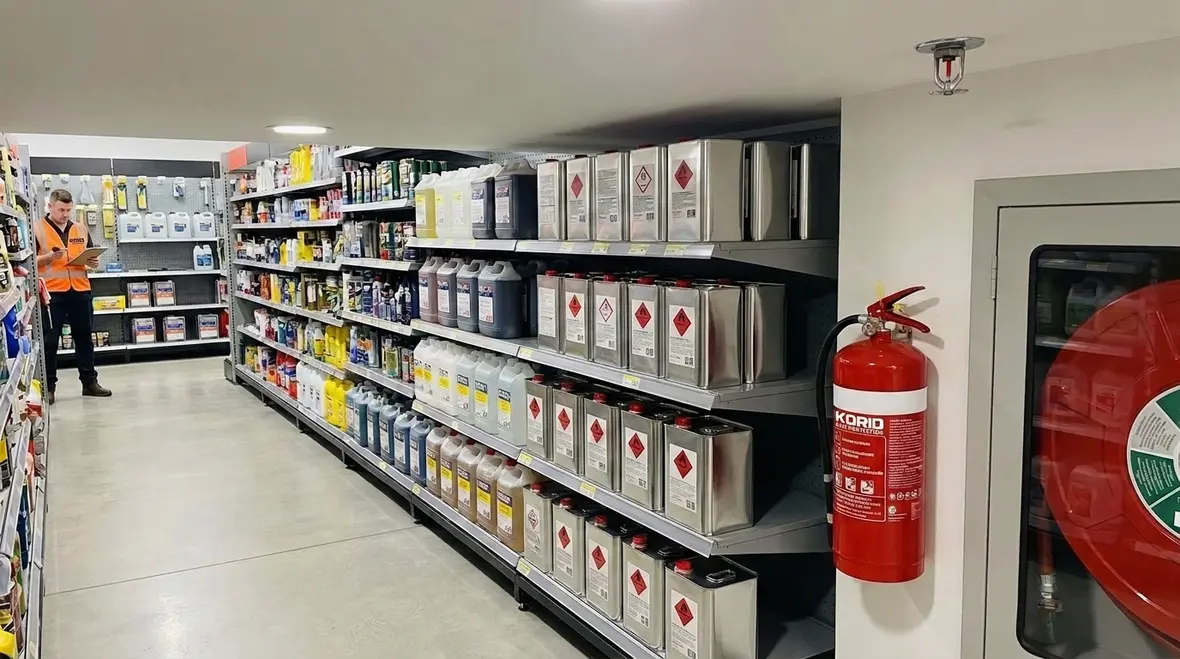
NFPA 30 Section 10.11: Fire Protection in Mercantile Liquid Storage
Quick Answer: NFPA 30 Section 10.11 sets minimum fire protection expectations for mercantile liquid storage, focusing on how facilities manage ignition control, protection systems, and ongoing maintenance. Compliance depends on accurate hazard classification, correct system installation, and disciplined inspection and testing to prevent degradation.
For facilities that also need coordinated fire pump inspection services, it helps to review fire pump testing requirements and what to know early, especially when water supply reliability and impairment management are part of the bigger compliance picture. For additional context on how NFPA 30 governs flammable liquid controls and facility responsibilities, Kord Fire Protection recommends reviewing how NFPA 30 regulates flammable liquids.
What does NFPA 30 Section 10.11 cover for mercantile storage?
NFPA 30 Section 10.11 fire protection mercantile storage addresses safeguards for facilities storing flammable and combustible liquids as part of commercial operations. The standard’s intent is to reduce the likelihood of ignition, limit fire spread, and ensure protection systems remain functional throughout the life of the storage arrangement.
In practical terms, facilities must align the fire protection design and operating approach with the storage configuration, container type, the quantities involved, and the site conditions. The section is commonly triggered by “mercantile” workflows where liquids are stocked for sale, not bulk industrial processing. That context drives compliance challenges tied to frequent deliveries, re merchandising, and ongoing changes in storage layout.
Key compliance elements that facilities must implement
1) Hazard awareness and storage classification before controls
Before any protection system is discussed, competent hazard identification drives correct design. Compliance typically starts with verifying the product classifications and confirming the expected storage conditions. Operational data, not assumptions, drives this step, including:
- Chemical identity and relevant flammable or combustible classification
- Container type (drums, bottles, tanks, totes) and closure condition
- Quantity on hand, turnover rates, and delivery schedules
- Storage arrangement and separation from ignition sources
Common failure points include outdated product lists, mixing incompatible materials, and ignoring changes introduced by new retail SKUs or substitute formulations. When storage contents change, the risk profile changes, and fire protection effectiveness can degrade unless documentation and inspection scope also update.
2) Ignition source control and operational barriers
NFPA 30 Section 10.11 fire protection mercantile storage relies heavily on operational discipline. Facilities must control ignition sources through site practices that match the actual work performed, such as receiving operations, transfer, and housekeeping around storage. Effective ignition controls usually include:
- Hot work management and permitting where applicable
- Control of electrical equipment in or near storage areas per the hazard conditions
- Static control where flammable liquids are transferred or dispensed
- Housekeeping procedures that prevent accumulation of residues and combustibles
Retail and commercial stores often introduce ignition risk during routine activity. Staff may introduce maintenance activities, customer movement, or temporary storage of cartons and packaging. The protection strategy must remain compatible with real day to day operations.
3) Separation, containment, and mitigation of spill related scenarios
Protection systems often fail not because they are absent, but because the scenario designers did not fully account for spill pathways. Mercantile storage environments can experience minor leaks from damaged containers or improper closures. Therefore, facilities should ensure that:
- Containment methods suit the liquid’s behavior and expected spill control needs
- Walkways, drains, and floor slopes do not create unintended spread
- Spill response materials are suitable and maintained for readiness
- Barriers and separation distances remain intact during restocking
Operational changes, such as shelving rearrangements and seasonal product displays, can compromise separation and containment. Inspections should verify both the design intent and the current layout.
How fire protection systems are kept effective over time
NFPA 30 Section 10.11 fire protection mercantile storage is not a one time installation requirement. It depends on ongoing system performance and the reliability of the supporting fire safety management program. The commercial facility standard that matters most is the ability to prove, through documented checks, that systems respond as intended.
Sprinkler and detection effectiveness in storage occupancies
Where automatic suppression or detection is installed, the system must match the fire protection intent for the storage hazard. In mercantile settings, the most common degradation mechanisms include:
- Obstructions that change airflow or water delivery characteristics
- Damaged piping, fittings, or hangers from warehouse movement
- Corrosion and contamination affecting valves, detectors, and control components
- Inadequate sensitivity settings relative to the environment
Maintenance and inspection should include verification that the protection elements remain unobstructed, functional, and compliant with the current occupancy conditions. Any change in storage layout should trigger a revalidation check for clearance and system arrangement impacts.
Water supply, valves, and impairment management
For many commercial and industrial facilities, the most serious risk occurs when systems are impaired without adequate compensatory controls. Valve position errors, temporary shutdowns, or poor documentation can create silent non compliance. Strong practices include:
- Routine impairment logging and disciplined release procedures
- Verification that supervisory signals and monitoring function correctly
- Periodic testing aligned with the equipment manufacturer and adopted codes
- Corrective actions tracked to completion and verified
Impairment management should include operational ownership. Stores frequently adjust equipment and signage, and the fire protection system must remain controlled, not opportunistically altered.
Commercial compliance challenges for retail and mercantile operations
Mercantile storage often happens inside facilities built for retail throughput. That creates unique constraints compared with purpose built chemical storage areas. Teams typically face:
- Frequent product turnover and varying quantities on hand
- Changes to storage shelving, end caps, and seasonal displays
- Limited space for secondary containment and clear egress routes
- Mixed occupancy conditions where staff safety and customer access intersect
To manage these realities, facilities need procedures that link receiving activities to hazard controls. A robust compliance program includes pre delivery checks, container condition verification, and confirmation that storerooms remain within permitted storage limits and arrangement requirements.
Inspection, testing, and documentation practices that hold up in audits
Auditors and enforcement bodies usually look for three things: alignment with the standard’s intent, evidence that controls remain in place, and proof that impairment and maintenance are managed properly. For NFPA 30 Section 10.11 fire protection mercantile storage, documentation should be current and tied to the actual stored products and arrangements.
What good documentation looks like
- Up to date hazard inventory including product changes and quantities
- Site drawings or layout references showing storage arrangement
- Inspection and testing records for suppression, detection, and control systems
- Maintenance records for valves, pumps, detection devices, and water supply components
- Impairment logs with compensatory measures and restoration verification
A common audit gap is when records exist but do not match today’s layout. A store remodel, new shelving, or a different container type can make older documentation misleading. Kord Fire Protection supports commercial facilities with practical compliance servicing that focuses on real operational conditions, not just paperwork.
Operational checks that prevent common failure points
- Container inspection for leaks, damaged closures, and correct labeling
- Verification of clearance around detection and suppression components
- Housekeeping confirmation that combustibles do not accumulate near storage
- Spill kit readiness and accessibility with review of expiration dates
These checks should connect to corrective action workflows. If staff report repeated container failures, the facility should address the root cause, such as handling procedures during receiving and restocking.
How Kord Fire Protection supports ongoing NFPA 30 compliance
Kord Fire Protection works with commercial and industrial operators to keep fire protection systems operational and demonstrably compliant. That includes maintenance planning, inspection coordination, and practical review of storage arrangements so the fire protection approach stays aligned with how the site actually operates.
Instead of treating compliance as an annual exercise, Kord Fire Protection supports a lifecycle approach: verify hazards, confirm installed protection matches the current configuration, and maintain the systems through disciplined testing and maintenance intervals.
Frequently Asked Questions
Conclusion and call to action
NFPA 30 Section 10.11 fire protection mercantile storage depends on accurate hazard understanding, correct installation, and verified ongoing performance. Commercial teams should prioritize layout control, ignition and spill management, and disciplined testing and maintenance documentation. Kord Fire Protection can help your facility keep suppression, detection, and operational controls audit ready. Arrange a compliance review and servicing plan to confirm your mercantile storage fire protection remains effective as products, layouts, and conditions change.

Join Our Newsletter!
Get the latest fire safety tips delivered straight to your inbox From our Newsletter.



