NFPA 25C Section 9.6: Water Storage Tank Component Action Requirements
Quick Answer: NFPA 25C Section 9.6 establishes how water storage tanks supporting fire protection systems must be maintained and how specific components must be acted on when deficiencies are identified. Action requirements focus on preventing impaired water supply, maintaining automatic readiness, and documenting corrective steps.
Why Section 9.6 matters in commercial fire protection
Commercial and industrial facilities rely on consistent water supply performance for sprinkler and related water based fire protection systems. In practice, tank related failures rarely show up as dramatic events. Instead, they appear as degraded inlet and outlet conditions, stuck or out of tolerance valves, improper inspection intervals, failed alarms, or water levels that do not meet system demand. That is why NFPA 25C Section 9.6 water storage tank component action requirements drive both inspection rigor and corrective action discipline.
Facilities in retail, warehouses, manufacturing, and mixed use buildings also face operational constraints. Tanks may sit in locked mechanical areas, water levels may vary due to site demands, and components may be difficult to access without planned downtime. Section 9.6 requirements help standardize what inspectors must observe and what owners must do next to keep the system reliably able to deliver water during an alarm condition.
For facilities building a stronger maintenance framework near the top rather than after the fact, Kord Fire Protection’s full fire protection services fit naturally into a broader compliance strategy that keeps inspections, repairs, and verification from turning into organized chaos.
What components typically fall under Section 9.6 action requirements
Section 9.6 focuses on action for water storage tank components that can impair system operation or delay water availability. While tank designs vary by site, compliance programs commonly treat the following component categories as action critical:
- Tank water level and associated level devices that must maintain the required supply status and provide accurate indication.
- Inlet and outlet piping arrangements including connections, check valves, strainers, and other flow path elements that can restrict or divert water.
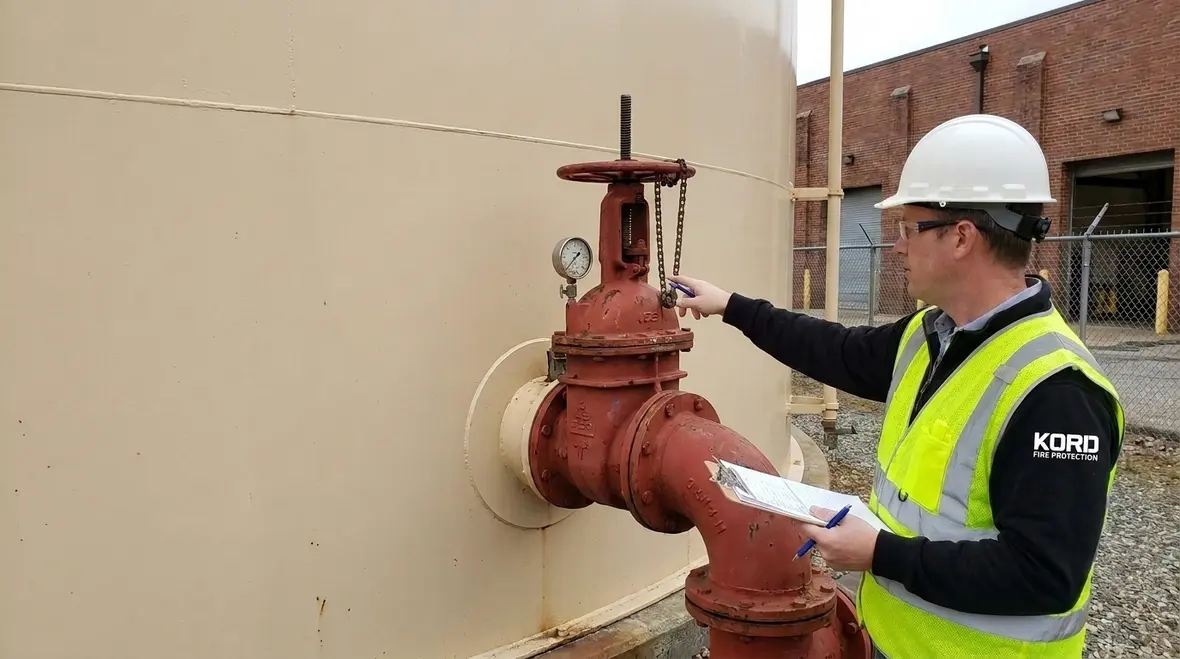
- Valves that control suction, discharge, or isolation where improper position can prevent flow or reduce effective capacity.
- Alarms, supervisory features, and related instrumentation used to detect abnormal tank condition and initiate operational response.
- Mechanical and structural interfaces that can lead to leaks, loss of usable water, or impaired access to components that must be functionally verified.
The key compliance principle remains consistent: if an inspector determines a tank component does not perform as required, the facility must execute defined corrective action promptly and document the outcome in the maintenance records.
How action requirements connect to real inspection findings
To apply Section 9.6 correctly, inspectors evaluate both the condition and the functional implications of a deficiency. Commercial facilities often see the same recurring failure points, regardless of tank size or age:
1) Valves found in the wrong position or with inhibited movement
Common issues include isolation valves inadvertently shut after work, supervisory switches misaligned, or valve linkages stiff due to corrosion or lack of cycling. When these conditions exist, the tank cannot reliably supply system water. Action typically includes returning the component to the required configuration and verifying correct operation of the full valve train, not only the visible handle position.
2) Reduced effective water supply from strainer blockage or flow restriction
Strainers, fittings, and suction path components can accumulate debris. Even when the tank holds water, restriction can reduce flow rate and pressure under demand. Section 9.6 style corrective actions typically require cleaning or replacement as necessary and then confirming the flow path is unobstructed and properly reassembled.
3) Level measurement inaccuracies or supervisory failure
Level switches, transmitters, and related wiring can drift out of calibration or fail intermittently. In many facilities, the tank may still be adequate, but the alarm and indication system does not correctly represent the condition. Action requirements therefore extend beyond “fixing the symptom” to ensuring the monitoring system reliably reports true tank status.
4) Delayed corrective response that breaks the compliance timeline
One of the biggest compliance challenges is not the deficiency itself, but the schedule. If action is deferred past the required timeframe, the facility operates without the assurance that the water storage function remains in serviceable condition. Strong commercial maintenance programs tie inspections to work orders, parts availability, and verified closeout documentation.
For facilities using water based system infrastructure, maintaining dependable supply also complements broader sprinkler system compliance. Where appropriate, owners often coordinate tank maintenance with overall water based fire protection system scheduling, including installation and maintenance expectations under applicable codes such as automatic sprinkler system requirements. For additional context, see Kord Fire Protection’s NFPA 13 overview.
Operational procedures: what “good” looks like during corrective action
Section 9.6 action requirements work best when maintenance teams follow repeatable procedures. A strong workflow typically includes:
- Isolate the deficiency with precise observations recorded during inspection, including component identification, condition notes, and any related alarm or indication status.
- Confirm system impact by validating how the component failure affects water availability, flow, or monitoring during a fire event.
- Execute corrective action that returns the component to compliant operation. This can include adjustment, cleaning, lubrication where permitted, repair, or replacement.
- Verify after repair by retesting the component function and confirming supervisory or alarm behavior when applicable.
- Document results with dates, findings, actions taken, and evidence of verification to support ongoing compliance.
Commercial facilities must also align corrective action with the site’s operating constraints. Kord Fire Protection routinely supports maintenance planning that reduces unplanned shutdowns by staging parts and coordinating verified testing windows. For broader water based program structure, refer to NFPA 25 overview and maintenance breakdown.
Common compliance challenges in commercial, industrial, and retail settings
Even when the tank equipment is correctly installed, day to day facility operations can erode compliance if responsibilities are unclear. Common challenges include:
- Access and accountability: Tanks may be locked, remote, or partially inaccessible. Action cannot progress without timely access authorization and safe work planning.
- Parts and lead times: Replacement components such as valve assemblies, level devices, and supervisory switches may require lead time. Proactive parts strategy reduces downtime and supports required correction windows.
- Maintenance record quality: Deficiencies may be tracked inconsistently, or corrective action may not include verification results. Documentation quality affects audit readiness and continuity of service history.
- System cross dependencies: Tank condition affects pump operation, system pressure, and alarm signaling. Maintenance teams must avoid “component only” thinking when multiple pieces interact.
Because many jurisdictions emphasize water supply reliability, aligning tank component action requirements with local code administration and maintenance expectations is a practical necessity. For example, facilities in California frequently coordinate fire sprinkler code interpretation with water supply and maintenance program details. See Fire sprinkler code explained for California to understand how local interpretation can affect compliance planning.
How Kord Fire Protection supports ongoing tank compliance
Kord Fire Protection helps commercial owners and facility managers maintain reliable compliance through structured inspection, documented corrective action, and verification testing. This includes coordinating schedules, confirming component function, and ensuring action items from tank inspections remain traceable through closeout.
For facilities that also evaluate pump and water supply infrastructure, additional technical resources can support a complete understanding of fire pump and water supply system behavior. A helpful reference is firepumps.org. Kord Fire Protection’s service approach is designed to integrate tank readiness with the broader water based protection strategy used in commercial and industrial facilities.
For more information, visit kordfire.com or kordfire.com.au.
Frequently Asked Questions
Next step: schedule a compliance-focused tank review
If a tank inspection recently identified component deficiencies or if documentation gaps exist, the fastest path to compliance is a targeted review and corrective action plan. Kord Fire Protection can inspect water storage tank components, confirm functional readiness, and manage verification and closeout reporting. Contact Kord Fire Protection to schedule a Section 9.6 aligned maintenance visit and strengthen water supply reliability across your commercial site.

Join Our Newsletter!
Get the latest fire safety tips delivered straight to your inbox From our Newsletter.