
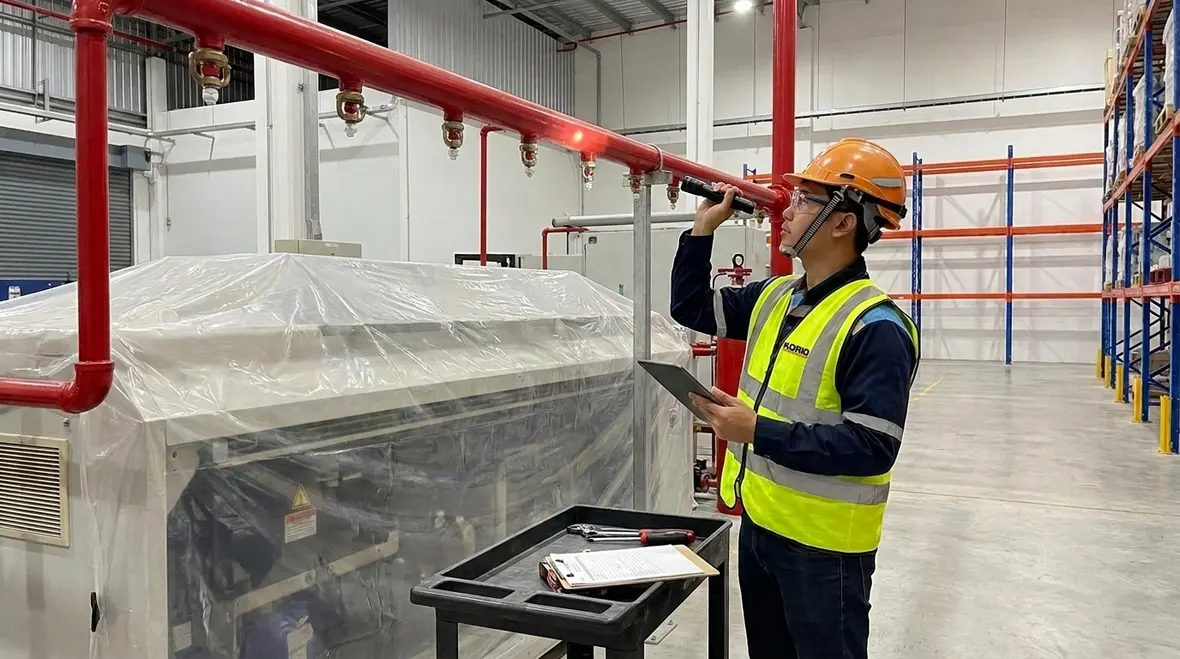
NFPA 25C Section 10.2: Water Spray System Inspection and Maintenance Procedures
Quick Answer: NFPA 25C Section 10.2 establishes inspection and maintenance requirements for water spray systems to verify protection remains effective. It focuses on maintaining system components, confirming operational readiness, correcting deficiencies, and documenting work performed according to an established schedule.
Facilities that want a broader compliance partner can also review Kord Fire Protection’s full fire protection services for coordinated inspections, repairs, testing, and maintenance across related life safety systems.
Why NFPA 25C Section 10.2 water spray system maintenance procedures matter
Commercial facilities rely on water spray systems for targeted fire control on hazards such as process areas, storage spaces, and specific machinery. In practice, the most common compliance gaps come from neglected nozzles, corroded piping, valve impairments, and incomplete documentation. The NFPA 25C Section 10.2 water spray system inspection maintenance procedures framework helps facilities maintain reliability through systematic inspection, testing, and corrective actions, while aligning with how modern owners manage preventive maintenance and life safety system records.
What Section 10.2 requires an inspection and maintenance program to cover
Section 10.2 emphasizes performance verification rather than casual visual checks. A workable program typically includes the following coverage areas to satisfy typical field expectations during audits and insurer reviews.
1) System components that must remain in service
Water spray systems depend on intact hydraulic performance and dependable activation. Maintenance procedures generally focus on ensuring each component stays functional, including:
Water supply and reliable pressure delivery to spray nozzles
Valves and detection interfaces that must not be obstructed or impaired
Spray nozzles, strainers, and orifices that can accumulate sediment, scale, or blockage
Pipe supports, hangers, and tamper switches where installed, to prevent mechanical issues
Drainage and test connections so the system can be exercised safely and effectively
2) Inspection readiness and documentation controls
Compliance is not only what technicians do but how they prove it. A mature program records observed conditions, test outcomes, corrective actions taken, and component status. Facilities often struggle when documentation is incomplete, when work is performed by multiple vendors, or when records do not clearly connect findings to required follow-up actions.
How water spray systems function during inspection: the operational mechanics
Understanding system mechanics helps inspectors avoid “checklist only” work that misses failure points. A water spray system includes a water distribution network with nozzles that discharge water onto designated hazard surfaces. Operation can involve valves and control components arranged around demand, such as activation by a fire detection and control interface or other system design.
Key hydraulic and flow failure modes inspectors should look for
Nozzle blockage or partial obstruction: Debris from water supply, construction residue, biological growth, or mineral scale reduces discharge density and coverage.
Incorrect nozzle condition or installation mismatch: Nozzle types, orifice sizes, and orientation errors can disrupt spray patterns and coverage.
Air and trapped water management issues: Improper drainage, improper maintenance of drains, or system arrangement problems can lead to delayed discharge or ineffective testing.
Corroded piping and valve internals: Internal corrosion can reduce flow, create leaks, or impair valve operation.
Valve impairment: Valves may be stuck, obstructed, or inadvertently left in a non ready position after prior service.
For facilities managing water based fire protection systems, it also helps to maintain consistency with broader code expectations and system maintenance concepts discussed in Kord Fire Protection resources, such as the maintenance breakdown approach for complete water based systems: NFPA 25 overview complete water based fire protection systems maintenance breakdown.
Inspection and maintenance procedures: a field ready step by step approach
The steps below represent a practical way facilities typically execute Section 10.2 expectations. Actual scope should follow the system design, authority having jurisdiction requirements, and the facility’s established testing schedule.
Step 1: Pre inspection verification and system securing
Before any operational testing, technicians verify:
Work authorization and safety planning for the hazard area
Access to valves, panels, and drains without bypassing safety systems
That impairments are documented and cleared within required timelines
That water discharge paths during testing will not create secondary hazards
Step 2: Visual inspection of water spray components
Technicians visually inspect for the most common commercial site issues:
Overspray obstructions, storage interference, and physical damage to nozzles
Corrosion on piping, fittings, and supports
Leak evidence around valves, joints, and flange connections
Signs of tampering, missing seals, or valve positions not matching system requirements
Step 3: Test interfaces and valve operational checks
Where the design includes valves, inspectors verify that valves operate as intended and that detection and control interfaces allow correct activation. Common failure points include seized valve components from lack of exercise, incorrect actuator behavior, and impaired supervisory signaling paths.
Facilities that coordinate water spray services with sprinkler related work often benefit from consistent installation and system design considerations discussed in: NFPA 13 overview automatic fire sprinkler system installation. While that topic focuses on sprinklers, the installation quality and interface philosophy strongly influences water spray system maintainability.
Step 4: Nozzle and strainer maintenance to protect discharge performance
Nozzles and any protective filtration components can become the first mechanical bottleneck. Maintenance typically includes cleaning, inspection of discharge condition, and replacing components when wear or blockage is confirmed. This work prevents the “it looks clear” trap where systems appear intact but lose effective spray density.
In high mineral areas, facilities often schedule more frequent checks to detect scale early. For jurisdictions and climate driven conditions, commercial owners sometimes request an enhanced maintenance cadence to reduce out of service time and avoid late discovered obstructions.
Step 5: Correcting deficiencies and restoring full readiness
Section 10.2 compliance relies on prompt correction of deficiencies. A strong workflow includes:
Repair or replace failed components
Re test where required by the maintenance procedure
Remove impairments after verification
Update records so the next service visit starts with accurate baseline conditions
Step 6: Documentation that withstands audits
Technicians should document at minimum: inspection dates, component conditions, test results, measured outputs where applicable, and the deficiency disposition. For commercial retail and industrial plants, well maintained documentation reduces administrative friction and supports continued insurance and AHJ confidence.
Compliance challenges in real commercial facilities (and how to prevent them)
Even when staff understand the value of life safety systems, the day to day operational environment introduces recurring issues that affect water spray performance. The most common are listed below with prevention strategies that align to Section 10.2 outcomes.
Challenge: blocked or mispositioned spray discharge zones
Forklift traffic, storage reconfiguration, ceiling renovations, and signage can reduce effective coverage. A prevention program includes scheduled area walks and rapid correction of obstructions discovered during inspections.
Challenge: corrosion and sediment from water supply variability
Scale and sediment accumulation can silently reduce flow. Proper filtration inspection, nozzle condition checks, and timely corrective maintenance help preserve spray pattern performance.
Challenge: valve impairments after unrelated maintenance
Contractors may perform repairs in adjacent piping systems. Without a controlled impairment and hand back process, valves can end up left in the wrong position. Documented lockout, clear labeling, and post work verification reduce the risk.
Challenge: fragmented vendor maintenance records
Commercial facilities often use multiple contractors for different fire systems. Record fragmentation can lead to missed follow ups. Using a unified maintenance provider supports consistency across inspections, testing, and service verification.
Kord Fire Protection supports commercial owners with ongoing compliance execution and maintenance planning for water based fire protection systems through service approaches built around clear inspection outputs. For an overview of related maintenance concepts, see: NFPA 25 overview complete water based fire protection systems maintenance breakdown. For regional context on code application discussions, review: fire sprinkler code California explained.
For additional technical perspective on fire pump reliability and system operational readiness, facilities often review resources from firepumps.org, particularly when pump performance influences water spray pressure and discharge consistency.
Frequently Asked Questions
Call to action
Water spray systems fail quietly when inspection routines miss nozzle condition, valve readiness, or discharge obstructions. Kord Fire Protection helps commercial facilities maintain compliance with inspection and maintenance programs built around clear field procedures and audit ready documentation. Contact Kord Fire Protection to schedule a Section 10.2 focused review and build a maintenance plan that matches facility risk, operational realities, and local compliance expectations.

Join Our Newsletter!
Get the latest fire safety tips delivered straight to your inbox From our Newsletter.


