
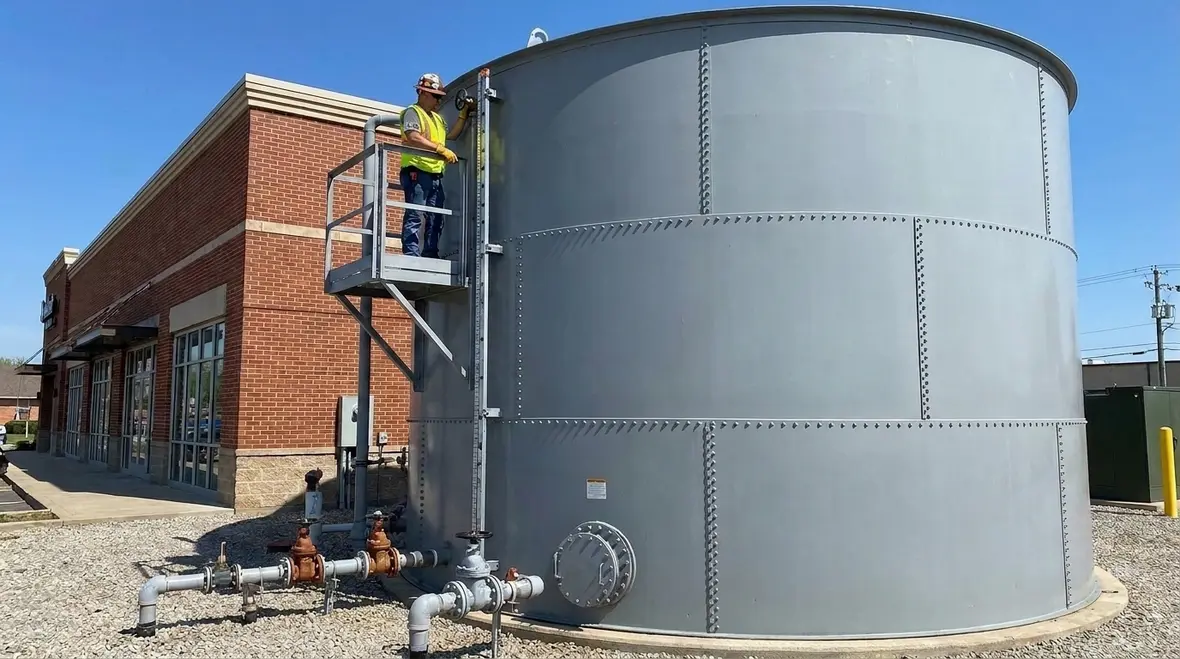
NFPA 25C Section 9.2: Water Storage Tank Inspection Requirements and Procedures
Quick Answer
NFPA 25C Section 9.2 defines how facilities inspect and document water storage tank conditions used for fire protection systems. It establishes inspection intervals, specifies what technicians must verify, and explains how to record findings, correct deficiencies, and manage recurring failure risks.
Facilities that want a broader maintenance framework around tank readiness can also look at full fire protection services from Kord Fire Protection, which fits naturally here without making the week feel like organized chaos.
Why NFPA 25C Section 9.2 matters for commercial fire protection
Commercial and industrial sites depend on stored water to deliver reliable fire flow, especially where the water supply can fluctuate, where remote areas require dedicated storage, or where system design calls for tank-based supply. NFPA 25C Section 9.2 water storage tank inspection requirements directly influence operational readiness by ensuring the tank, appurtenances, and related components stay in a condition that supports fire demand.
In practice, noncompliance typically appears as incomplete records, missed functional checks, or inspections limited to visual observation. Those gaps become critical when systems fail to achieve expected flow due to clogged strainers, ineffective valve alignment, abnormal tank levels, corrosion-driven loss of capacity, or poor operability of alarm and control devices.
What facilities must inspect under Section 9.2
Section 9.2 focuses on verifying that water storage tanks and their functional elements can reliably supply the fire protection system. The inspection scope usually includes both the tank condition and the components that control, protect, and sense water supply performance. Facilities should treat tank inspections as system inspections, not isolated asset checks.
1) Tank interior and structural condition
Tank performance can degrade long before it becomes obvious externally. Technicians must verify that the tank interior and surfaces do not present conditions that interfere with intended capacity or water quality. Common issues include sediment buildup, biological growth, coating failure, pitting, and corrosion that may reduce usable volume or damage structural integrity.
2) Water level verification and usable volume
Stored water must remain available. The inspection process verifies water level and checks that the tank remains within the design operating band. If level control devices are present, technicians verify they function as intended, preventing accidental drawdown or overfilling that can compromise system behavior and cause alarms.
3) Valves, appurtenances, and flow path integrity
Tank valves and appurtenances often represent the highest risk of failure because they sit unused during normal building operations. Section 9.2 inspections should confirm valve alignment, confirm free movement where applicable, and verify that connected components do not introduce blockages or flow restrictions.
Technicians also check associated hardware such as strainers, check devices, and distribution connections that can become partially blocked by debris or corrosion products. Even minor obstructions can significantly impact system flow when demanded.
4) Mechanical and functional components tied to fire demand
Many tanks connect to pumps, jockey pumps, or controllers that manage supply during system operation. Inspection requirements typically extend to tank-related components that support system performance, such as controls, indications, and devices that signal water availability or system status.
Commercial facilities should align the tank inspection process with their overall water based fire protection strategy. For additional context on how water based system components interact with maintenance priorities, Kord Fire Protection provides a practical overview of maintenance breakdowns in NFPA 25 overview and complete water based fire protection systems maintenance breakdown.
Inspection procedures: a repeatable field workflow
To meet NFPA expectations and protect reliability, inspections should follow a consistent field workflow. The goal is to ensure every required check is performed, results are recorded, and deficiencies trigger corrective actions before system operation is impacted.
Step 1: Pre inspection verification and safety controls
- Confirm the applicable inspection scope for the tank type and system connection.
- Verify access readiness, including safe entry practices if confined space conditions exist.
- Confirm that lockout and isolation requirements are followed when operating valves or devices.
- Review prior inspection records and open work orders to detect recurring patterns.
Step 2: Record the baseline condition
- Document tank identification, location, and water level indicators or measurement method.
- Record valve positions and observable conditions of appurtenances.
- Capture photos where facility policy allows, especially for corrosion, coating breakdown, or sediment accumulation.
Step 3: Conduct the required checks of the water supply path
Technicians verify that the path from tank water to the connected system remains unobstructed and functional. This includes checking that strainer elements do not block flow, valves do not remain stuck in an incorrect position, and check mechanisms do not create unintended restrictions or backflow that prevents proper supply.
When the tank supports an automatic fire sprinkler system, alignment with sprinkler system installation principles helps maintenance teams anticipate the operational relationships. For installation and system context, see NFPA 13 overview and automatic fire sprinkler system installation.
Step 4: Functional verification and performance confirmation
Where the tank configuration includes controls, alarms, or sensors, technicians verify the devices respond as expected and that indications match actual conditions. The inspection procedure should confirm correct operation without compromising system integrity.
Facilities frequently misinterpret functional checks as optional. In compliance programs, a functional verification supports the reliability objective because it validates that the system will react to demand as designed.
Step 5: Post inspection documentation and deficiency management
- Document measured values, observed conditions, and device statuses.
- Tag deficiencies by severity and impact on system performance.
- Initiate corrective actions with clear timelines and verification steps.
- Update the facility’s maintenance history so future inspections target known risks.
Commercial facilities typically benefit from an integrated maintenance approach across water storage, pumps, and piping. Industry education and practical guidance around fire pump and water supply components supports that approach through firepumps.org.
Common failure points and how inspections prevent them
Inspection success depends on recognizing patterns. The following failure points commonly reduce tank reliability and create repeat work orders when inspections remain superficial.
Corrosion and coating failure that reduces usable capacity
Corrosion can create both structural risk and operational risk by reducing available water volume and producing debris. Inspections help identify deterioration early, long before the tank can no longer support design flow.
Sediment and biological growth that interferes with flow and water quality
Sediment can clog strainers and create restrictions in the suction or distribution path. Biological growth can accelerate internal degradation. Inspection procedures should include targeted verification of interior conditions, not just a quick external review.
Valve misalignment, sticking, or incomplete operability
Valves used during fire events often experience corrosion, mechanical wear, or misalignment due to maintenance activities unrelated to fire protection. Functional checks and position verification reduce the chance of discovering issues only during system tests.
Inaccurate water level indication
If the level sensing or indicating components provide incorrect information, facility operators may assume adequate water availability when the actual storage capacity is below required minimums.
Compliance reality: recordkeeping, intervals, and coordination
NFPA compliance depends on more than performing inspections. It requires documentation that proves the inspection occurred and that results drove corrective actions. Commercial facilities often struggle with three areas:
- Incomplete records: Reports that omit measurements, valve positions, or observed conditions.
- Untracked deficiencies: Items noted but not assigned, verified, or closed.
- Coordination gaps: Tank work performed without aligning with system maintenance, which can delay testing or reintroduce deficiencies after repairs.
For many sites, specialized water based systems maintenance support improves compliance outcomes. Kord Fire Protection positions itself as a practical commercial partner by maintaining an inspection and testing rhythm across connected water based components, reducing the likelihood of missed checks and recurring failures.
For facilities in California, understanding how code interpretation interacts with practical sprinkler system obligations can help standardize maintenance planning. Additional guidance is available in Fire sprinkler code California explained.
How Kord Fire Protection supports NFPA 25C Section 9.2 readiness
Kord Fire Protection helps commercial, industrial, and retail facilities operationalize NFPA 25C Section 9.2 water storage tank inspection requirements through disciplined field execution, documentation, and corrective action verification. This support typically includes review of prior inspection history, structured inspections that cover tank condition and supply path integrity, and reporting that facilities can use for internal audits and AHJ coordination.
When water tanks connect to larger water based fire protection systems, consistent maintenance reduces the risk that one component failure undermines the full fire response strategy. Facilities can explore broader support through Kord Fire Protection resources such as NFPA 25 overview complete water based fire protection systems maintenance breakdown.
Frequently Asked Questions
Next step: schedule an NFPA 25C Section 9.2 tank inspection review
Facilities should confirm tank inspection readiness by reviewing the last maintenance record set and planning the next inspection with a scope that covers both tank condition and connected supply path performance. Kord Fire Protection can help standardize the workflow, verify deficiencies, and close gaps that commonly trigger audit findings. Contact Kord Fire Protection through kordfire.com or kordfire.com.au to schedule a compliance focused inspection and maintenance coordination.

Join Our Newsletter!
Get the latest fire safety tips delivered straight to your inbox From our Newsletter.


