NFPA 25C Chapter 2: Understanding Non-NFPA Publications and External References
Quick Answer: NFPA 25C Chapter 2 explains how the standard relies on other sources beyond NFPA documents. It clarifies when non-NFPA publications apply, how references are interpreted, and what compliance teams must document to protect inspection, testing, and maintenance decisions in commercial facilities.
If your facility team wants a broader service framework behind these documentation decisions, Kord Fire Protection’s fire protection services page shows how inspections, testing, maintenance, repairs, and compliance support can fit into one coordinated program.
Why NFPA 25C Chapter 2 references other publications at all
NFPA 25C focuses on the care and maintenance of water-based fire protection systems, including fire pumps, fire sprinkler systems, and related components. Chapter 2 exists because certain technical details, such as equipment specifications, test procedures, calibration practices, and performance criteria, often originate in standards maintained by organizations outside the NFPA framework.
In practical field work, this matters for commercial facility compliance. Maintenance organizations frequently encounter manufacturer manuals, pump standards, valve data sheets, and test guidance that reference external documents. If the facility team does not correctly interpret those external references, inspection results can become inconsistent across sites, auditors can flag documentation gaps, and components can be maintained using outdated or incorrect criteria.
The compliance question behind NFPA 25C Chapter 2 non-NFPA publications external references is straightforward: the facility must understand which outside documents apply, which edition is intended, and how the referenced requirements affect ongoing inspection and testing plans.
How NFPA 25C Chapter 2 defines and uses external references
Chapter 2 establishes the interpretive rules for references used within the standard. In other words, it tells the reader how to treat cited material when the cited material is not itself an NFPA publication. For maintenance and compliance teams, the goal is to remove ambiguity about what governs when performing inspection and testing tasks.
1) “Referenced” versus “optional” documents
Referenced non-NFPA publications typically become part of the compliance pathway when the NFPA clause points to them for technical requirements. Optional guidance or “informational” materials may still influence best practices, but they do not carry the same compliance weight.
Facility teams should build inspection plans that clearly separate mandatory reference requirements from recommended guidance. During audits, this separation reduces disputes about what the work scope was intended to satisfy.
2) Edition control and version drift
External references can change over time. Equipment manuals are frequently updated, pump testing criteria can be revised, and calibration intervals can be tightened. Chapter 2 supports consistent interpretation, but compliance teams must operationalize it.
Commercial facilities should maintain a controlled document list tied to the inspection year and the applicable standard editions. When a manufacturer updates a manual or a referenced standard changes, the maintenance vendor must evaluate whether the facility needs a plan revision and whether existing test records remain valid.
3) Geographic and regulatory overlay
Even when NFPA sets a technical baseline, local enforcement can introduce additional requirements, especially where state or local adoption modifies language. For example, sprinkler and fire protection code interpretations can differ in California and other jurisdictions. Understanding how external references align with local amendments prevents a common compliance failure where a facility meets NFPA language but misses jurisdiction-specific documentation or acceptance criteria.
For context on sprinkler system installation expectations that often cascade into ongoing maintenance decisions, see Kord Fire Protection’s overview of NFPA 13 installation and how system design intent affects inspection priorities.
Common non-NFPA reference categories found in real maintenance work
In commercial, industrial, and retail facilities, the external references that most often influence NFPA 25C Chapter 2 compliance typically fall into these categories.
Equipment manufacturer documentation
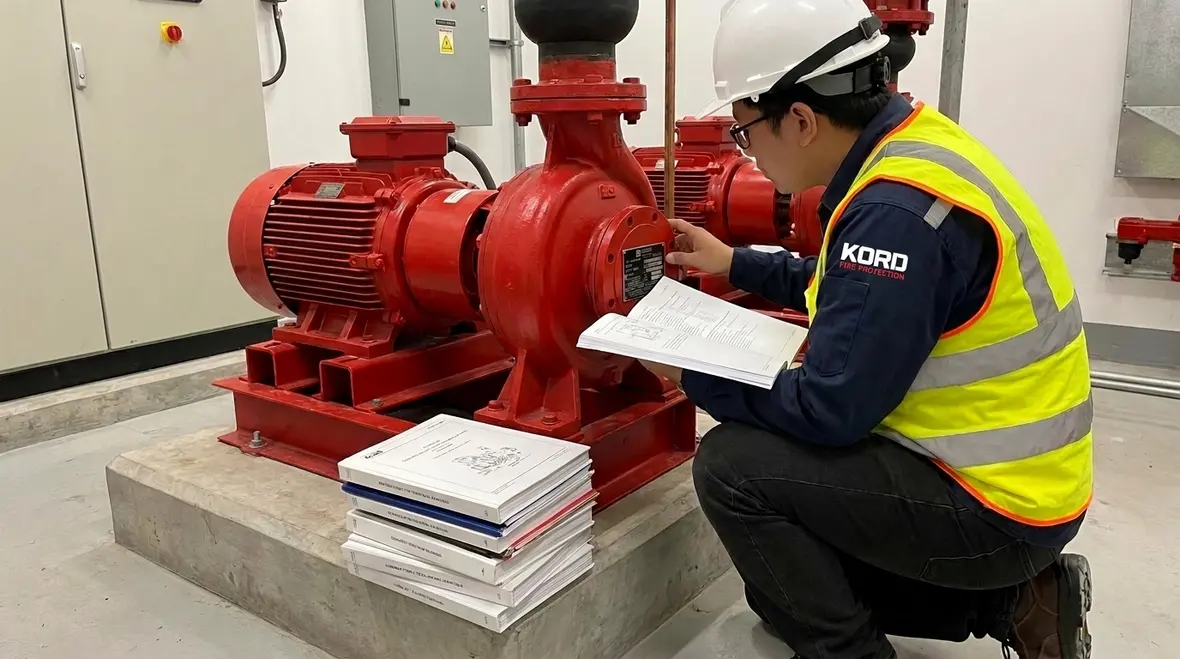
Fire pumps, jockey pumps, pressure maintenance devices, controllers, flow switches, and valves often include manufacturer-defined test methods, tolerances, and replacement criteria. When NFPA language points to performance verification, the practical method typically follows the manufacturer’s technical guidance, aligned with the NFPA requirement.
Common failure points include using generic settings, applying incorrect calibration offsets, or running tests without recording baseline parameters. These issues can hide pump degradation until a high-demand event occurs.
Calibration and measurement standards
Inspection and testing often depends on properly calibrated instruments. External reference documents may define calibration intervals, acceptable uncertainty, and field measurement methods. If pressure gauges, flow meters, or electrical test instruments are not calibrated to the correct standard, test results can become unreliable even if the procedure was otherwise followed.
Maintenance vendors should ensure calibration certificates are traceable and included in the service record set for the facility.
Performance testing methodology
Fire pump performance testing requires repeatable procedures and acceptance criteria. External references frequently define how to measure total dynamic pressure, compute performance curves, and evaluate run conditions. If the test setup deviates from the referenced methodology, the facility can end up with data that does not support acceptance decisions.
For a systems-level view of water-based maintenance elements that drive pump and sprinkler testing scope, review Kord Fire Protection’s NFPA 25 overview and maintenance breakdown.
How facilities should apply external references to stay audit ready
NFPA 25C Chapter 2 external references become operational when the facility turns them into controlled procedures. The following steps reflect what compliance teams typically need to demonstrate during inspections and plan reviews.
Step 1: Create an “external reference map” for each asset
Assign each critical system component an owner record that lists the applicable external documents used for testing, tolerances, and acceptance criteria. Include manufacturer model and revision numbers where available.
This mapping prevents the common problem where the facility relies on one vendor’s current practices without knowing which documents those practices were based on.
Step 2: Tie inspection frequency to referenced requirements, not convenience
Commercial facilities frequently face scheduling pressure. Teams may compress activities or reschedule tests without considering whether the external reference defines a specific test condition or interval. If the referenced document expects periodic verification under defined conditions, skipped or poorly executed tests can force rework later.
For pump-related documentation and best-practice context, industry resources such as firepumps.org can help facility teams understand how pump testing and maintenance concepts are addressed across the industry.
Step 3: Document the evidence chain
Auditable records typically include instrument serial numbers, calibration status, test parameter sheets, baseline readings, and corrective action notes. When external references define acceptable tolerances, the record set should explicitly show how the facility met or addressed those tolerance limits.
When corrective actions occur, the facility should document whether the repair returned the component to the referenced baseline performance or whether additional verification tests were performed.
Step 4: Keep plans consistent across sites
Multi site operators often use templates for inspection plans. However, external references can vary by equipment model, controller generation, or local adoption requirements. A centralized compliance program should maintain site level adjustments while preserving the core NFPA aligned procedure structure.
Operational challenges and failure modes caused by misreading external references
Even well run organizations encounter non conformance when the link between NFPA requirements and external references breaks. These issues commonly appear during internal reviews, third party audits, and jurisdictional plan checks.
Failure mode: Using the wrong test procedure for the pump configuration
Fire pumps can include different controller types, alternate power sources, and varying suction and discharge configurations. External references may specify test setup details that differ based on configuration. Using the wrong method can lead to “pass” results that do not reflect true performance.
Failure mode: Out of date manuals or reference editions
A facility can follow a vendor procedure that was based on an older manual. The outcome might still appear acceptable, but the test tolerances or acceptance logic may have changed. Over time, this can create a history of marginal compliance and a higher likelihood of repeat findings.
Failure mode: Incomplete calibration documentation
Technicians may complete tests correctly but fail to include calibration proof or instrument uncertainty details. Auditors may treat the missing documentation as a failure of compliance verification rather than an administrative oversight.
Failure mode: Not accounting for local code interpretation
In jurisdictions with additional interpretation, the facility may need evidence that matches local expectations. For example, California related sprinkler code interpretations can influence installation features and inspection focus. See Kord Fire Protection’s California sprinkler code explanation for an example of how local overlay affects practical compliance.
How Kord Fire Protection supports Chapter 2 compliant documentation and maintenance
Kord Fire Protection supports commercial and industrial facility owners by converting NFPA 25C and referenced external documentation into repeatable field procedures and audit ready records. This approach matters because Chapter 2 external references only improve compliance outcomes when the facility can prove the right document was used for the right asset under the right test conditions.
In practice, a Kord service engagement typically emphasizes controlled records, configuration awareness, and verification testing that aligns with both system design intent and the referenced technical criteria. For water-based system maintenance planning, refer to Kord Fire Protection’s NFPA 25 maintenance breakdown. For additional regional service context, facilities can also reference kordelectric.com and kordfire.com.au for broader service alignment across locations.
Frequently Asked Questions
Call to action
To reduce audit findings and prevent test rework, facilities should validate how NFPA 25C Chapter 2 non-NFPA publications external references apply to each pump and water based component. Engage Kord Fire Protection to build a controlled reference map, verify calibration and test setup, and maintain inspection records that clearly show compliance under the referenced criteria. Contact Kord Fire Protection today to align your maintenance plan with Chapter 2 expectations.

Join Our Newsletter!
Get the latest fire safety tips delivered straight to your inbox From our Newsletter.