NFPA 25 Private Fire Main Corrective Action Planning
Quick Answer: NFPA 25 § 7.2 requires inspections of private fire service mains and plans for correcting problems. A smart team documents findings, prioritizes risk, fixes issues with clear timelines, and verifies results. Kord Fire Protection can streamline this work, reduce downtime, and keep facilities inspection ready across Australia.
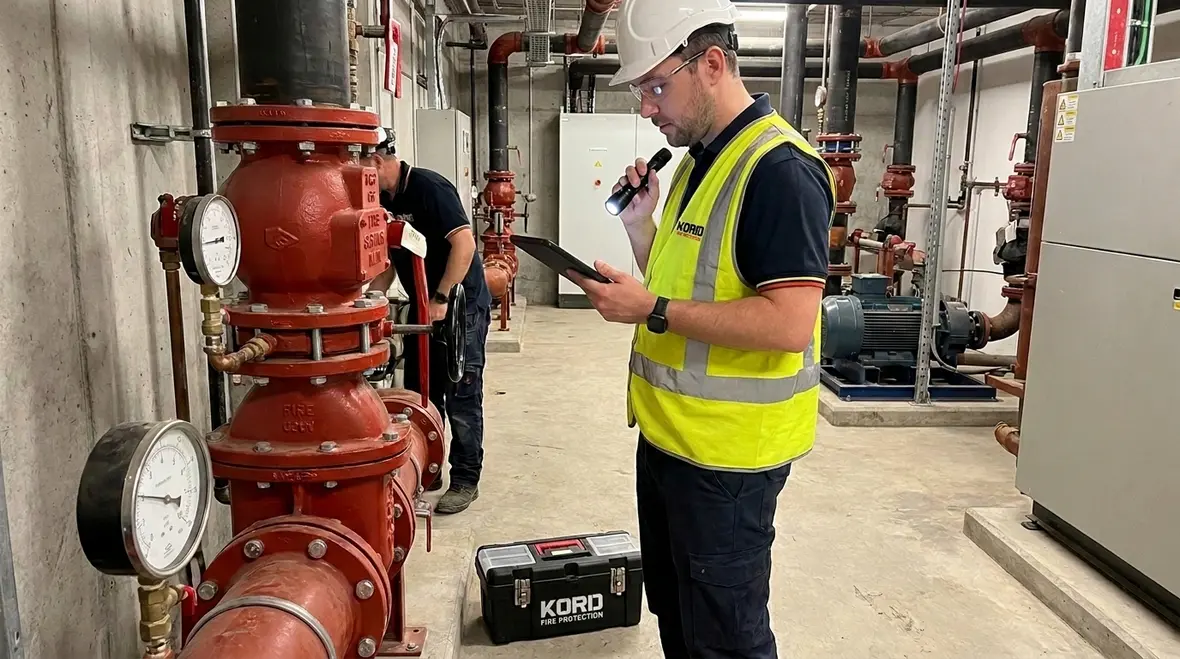
In the real world, the NFPA 25 private fire main corrective action process does not stay in a neat binder. It shows up on loading docks, in plant rooms, under stairwells, and sometimes right beside equipment that refuses to be shut down. That is why NFPA 25 § 7.2 focuses on private fire service main inspection and corrective action planning. In this article, a facility leader will see how the job works, what strong planning looks like, and how kord fire protection can become a vital partner to deliver reliable outcomes across industrial, retail, and commercial sites throughout Australia.
For businesses that want a broader support model around compliance and system readiness, Kord’s Australia fire protection for compliance and readiness service page fits naturally into the discussion. It shows how ongoing support can connect inspections, corrective action planning, and long term operational follow-through without turning every finding into a last minute scramble.
What NFPA 25 § 7.2 expects from private fire service mains
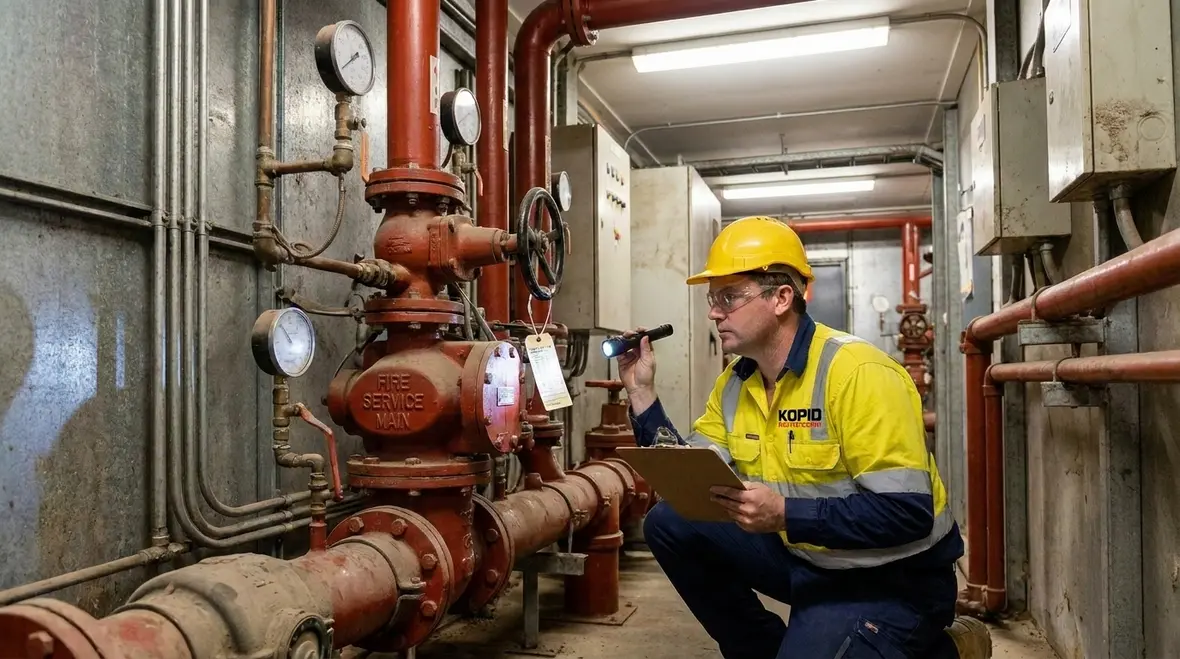
NFPA 25 § 7.2 lays out the expectation that a facility evaluates its private fire service main and then acts when the system shows signs of trouble. First, the inspection must occur as required by the standard. Next, the inspection must produce clear, usable results rather than vague “seems fine” notes. Then, the facility must plan corrective action so problems do not linger until the next inspection cycle.
To be direct, a private fire service main handles the flow that starts the entire emergency response chain. If it struggles, the incident response becomes harder. And while nobody wants to think about a worst case scenario, planning is what keeps operations calm when the alarm sounds. Besides, the fire protection system does not care that the factory schedule is busy.
Why this section matters in practical facility management
A standard can look tidy on paper and still create chaos in the field if nobody plans around access, shutdown windows, or real site conditions. That is exactly why corrective action planning matters. The inspection is the signal. The plan is the response. If a team stops at the inspection report, the problem does not magically respect the spreadsheet and go away.
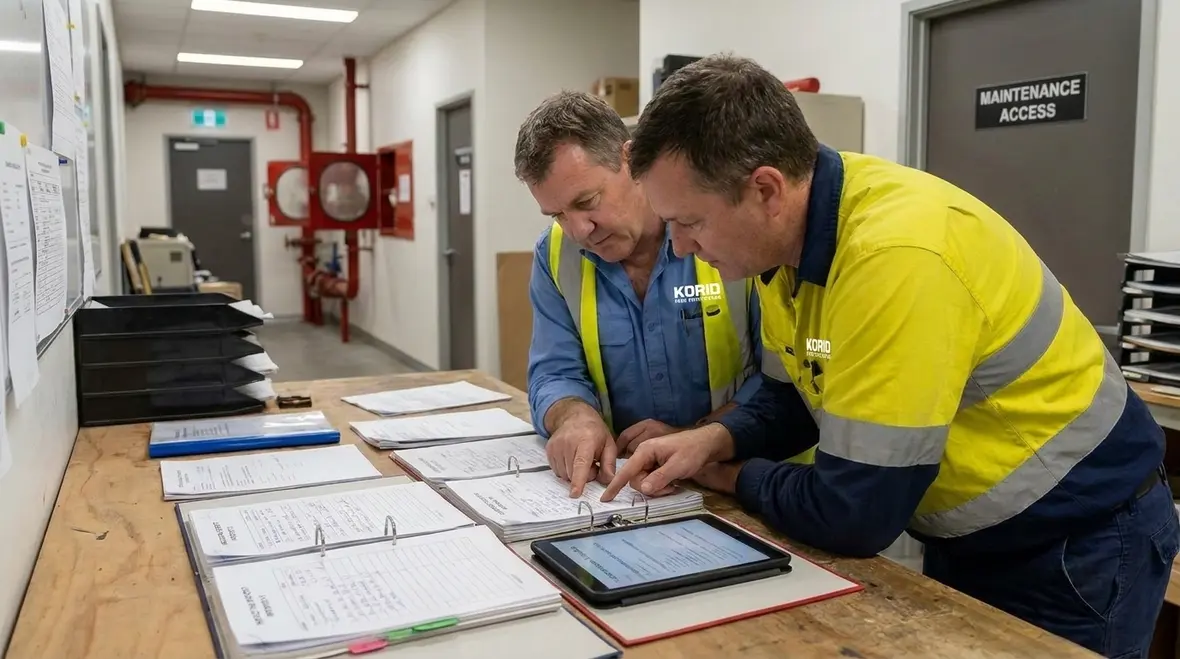
How inspection findings become a corrective action plan
A well built inspection process turns observations into actions in a controlled way. Therefore, the first step is recording conditions with enough detail to guide decisions. For example, a correct plan captures what was found, where it was found, and what performance concerns it raises. After that, the facility team determines urgency based on risk, impact, and likelihood of failure.
Then the plan needs timing and ownership. In other words, corrective action should not be “someday, probably.” It should include who will perform the work, what parts or services are needed, and when the facility will get verification that the NFPA 25 private fire main corrective action is complete.
Practical approach for facilities across Australia
- Segment the system: Identify the main sections so inspections do not become a mystery tour.
- Rank by risk: Address issues that threaten reliable flow first.
- Assign responsibilities: Make sure each corrective item has a clear owner.
- Schedule verification: Confirm the fix works, rather than assuming it does.
That approach sounds simple because, at its core, it is. The hard part is maintaining discipline when a site is busy and every department believes its own emergency is the most urgent one. A good corrective action plan cuts through that noise by showing what matters first, who owns the next step, and how success will be confirmed before everyone moves on to the next fire drill that is not technically a fire drill.
For readers who want a wider maintenance context around these responsibilities, Kord’s NFPA 25 overview for complete water-based fire protection systems maintenance breakdown is a useful companion piece. It connects private fire service mains to the broader inspection, testing, and maintenance cycle that owners are expected to manage.
What “corrective action” really means in day to day operations
Corrective action can mean repair, adjustment, replacement, or further testing. Yet the goal stays the same: restore dependable operation and document that the system meets expectations. For private fire service mains, issues often involve the physical condition of components, access to equipment, and the ability of the system to deliver water when called on.
In many facilities, the challenge is not the theory. The challenge is execution. For instance, a work order might trigger production downtime, permits, or access constraints. As a result, the facility team benefits when corrective planning includes realistic sequencing and coordination. Otherwise, the plan becomes a slideshow of good intentions.
Also, the plan should include follow up communication. If operations, maintenance, and management never align, then corrective action can stall. However, when the plan includes clear expectations, teams move faster, and the inspection program stays credible.
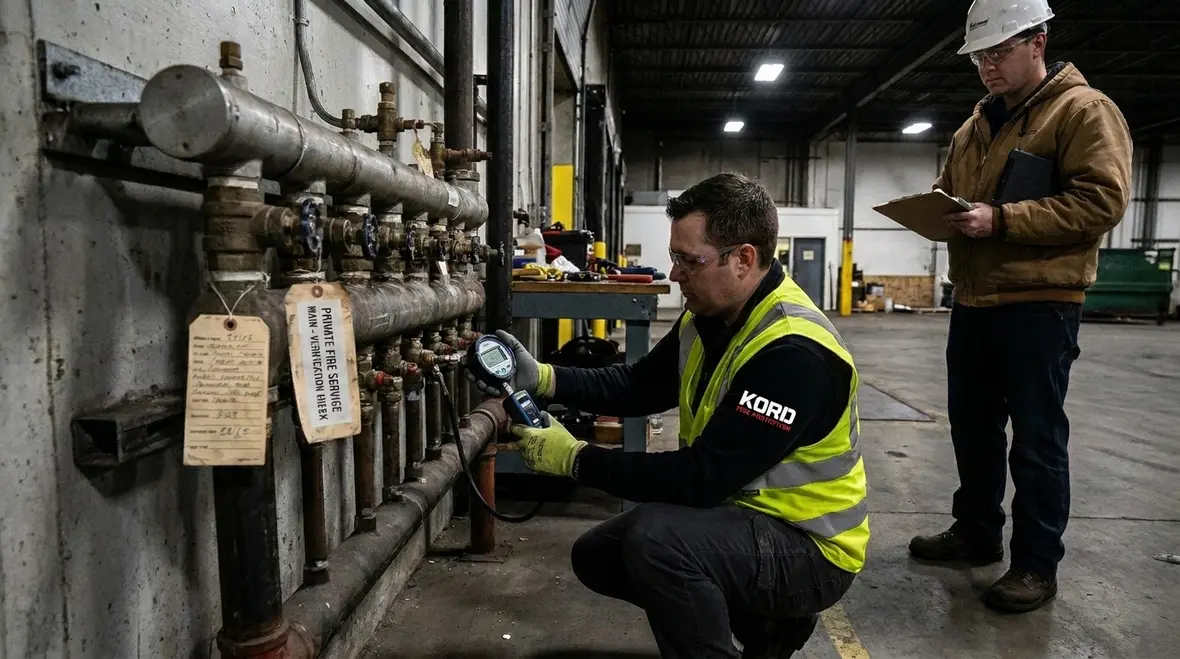
Why thorough documentation keeps the program defensible
Documentation makes the difference between “we did the right thing” and “we can prove we did the right thing.” Under NFPA 25 § 7.2 expectations, the inspection record and corrective action plan should connect findings to outcomes. Therefore, records should show what the inspector observed, what risks or concerns were identified, and what actions corrected them.
In practice, this matters for audits, stakeholder confidence, and long term maintenance planning. It also helps when teams change. Nobody wants to inherit a system with half written notes and a shrug. So, a strong program records details early and updates the plan as work completes.
Dual column: What to capture for compliance and what to capture for operations
Compliance ready detail
- Inspection results tied to specific locations
- Corrective action items linked to the finding
- Timelines and responsible parties
- Verification after correction
Operationally useful detail
- Access notes and constraints for the next job
- Estimated downtime and scheduling windows
- Material requirements and procurement lead times
- What changed, so maintenance can manage it
When documentation is done well, it does more than satisfy a requirement. It saves future labor, shortens handoffs, and reduces the odds that the next team has to play detective with a flashlight and an optimistic attitude. That is not glamorous, but it is very effective.
Where kord fire protection adds real value as a partner
Facilities often treat inspection and corrective action planning as a one off event. But in many Australian industrial, retail, and commercial environments, the job works best when it runs like a dependable program. That is where kord fire protection can become a vital partner.
They help teams move from inspection results to corrective action with less friction. Instead of leaving the facility to translate findings into work scopes, kord fire protection supports the planning step so actions stay clear, measurable, and verifiable. In turn, this improves scheduling and reduces the chance that corrective work drifts beyond the planned cycle.
And yes, people sometimes joke about fire protection paperwork. Yet, in practice, the paperwork protects budgets and operations. When documentation is strong, decision makers see priorities clearly. Consequently, teams spend less time debating what “fixed” means and more time making sure the system performs.
Common pitfalls that slow or weaken the corrective action loop
Even good facilities can stumble. Therefore, it helps to know where failures often happen. First, teams sometimes fail to prioritize actions based on risk. Next, they may create a plan but skip verification. Then, corrective actions can lack clear ownership, so tasks move at the speed of calendar meetings. Finally, some programs capture results but do not update the plan after work completes.
Another pitfall involves access and coordination. When facilities do not plan for shutdown windows, traffic management, or permits, corrective work drags out. However, when kord fire protection supports planning and execution readiness, those delays become easier to prevent.
Here is a simple way to stay sharp: every finding should lead to a corrective item, every corrective item should have an owner and a timeline, and every corrective item should end with verification. Fire protection is not magic. It is method.
FAQ: Private fire service main inspections and corrective planning
Ready to strengthen inspection and corrective planning?
Facilities across Australia need private fire service mains handled with discipline, clear documentation, and practical scheduling. If the NFPA 25 private fire main corrective action workflow feels heavy, delayed, or hard to verify, kord fire protection can help make it smoother. Reach out to coordinate inspections, build corrective action plans, and confirm outcomes with confidence.
When the plan is solid, operations stay steady and the system stays ready. That is the real win: fewer surprises, better visibility, and a program that holds up when people ask tough questions. Calm, boring reliability may not sound exciting, but on fire protection day, boring is beautiful.

Join Our Newsletter!
Get the latest fire safety tips delivered straight to your inbox From our Newsletter.