NFPA 25 Private Fire Hydrant Testing for Site Water Supply
Quick Answer (40–60 words)
NFPA 25 § 7.3 requires testing of private fire service mains, hydrants, and site water supplies to confirm reliable water flow and pressure. These tests help facilities in Australia reduce downtime risk, prevent hidden failures, and meet compliance expectations. Kord Fire Protection can support this work with scheduling, reporting, and field execution.
In the real world, private fire hydrant testing NFPA 25 is not the kind of task that makes people clap. Yet it matters, because when a system fails, the outage lasts longer than the fire would. NFPA 25 § 7.3 focuses on testing private fire service mains, hydrants, and site water supplies to verify the water supply performs when seconds count. And while this standard can read like a checklist from a distant planet, facilities teams across Australia still have to make it happen, with clear documentation and repeatable results.
Fortunately, Kord Fire Protection can become a vital partner with this service job. They help keep the work controlled, scheduled, and traceable, so compliance does not turn into a last minute scramble with paperwork and tired techs. Because nothing says “fun” like chasing a pressure reading at the wrong hydrant. Still, the right plan makes it calm. Near the top of that plan, it also helps to connect testing with broader fire protection services so inspections, maintenance, and corrective actions are not treated like distant cousins who only show up at audit time.
What NFPA 25 § 7.3 demands for site water reliability
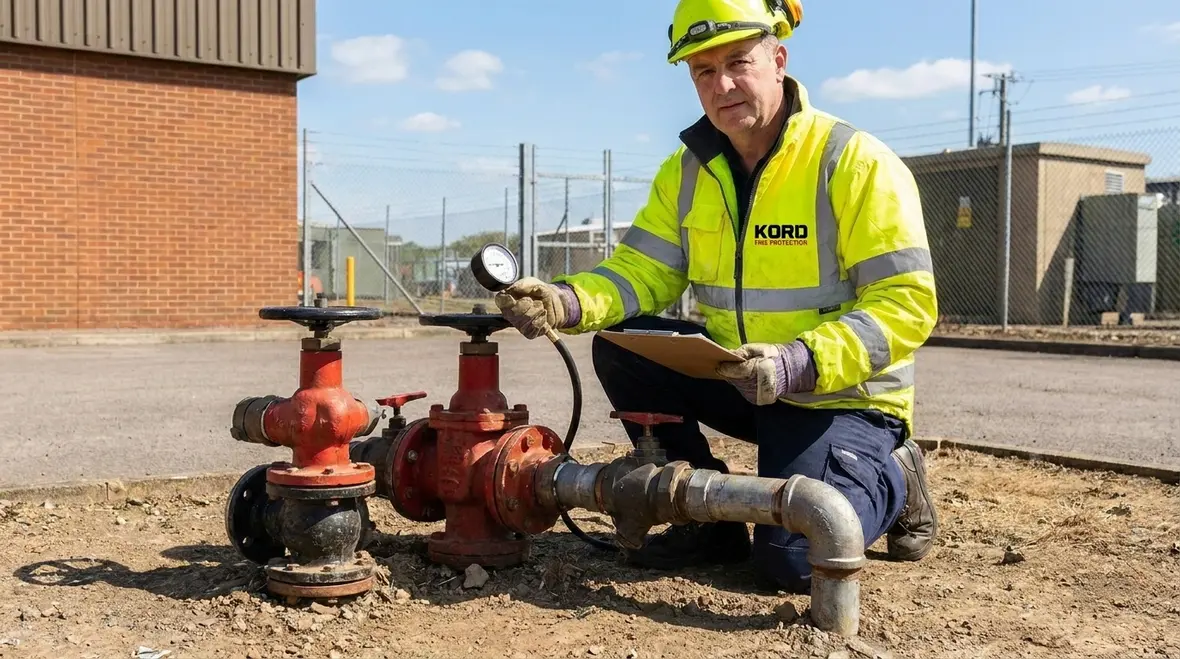
NFPA 25 § 7.3 addresses how facilities test the private fire service mains and associated site water supplies. In practice, it means teams confirm that the water supply can deliver the flow and pressure needed for fire department use and internal operations, where applicable. Therefore, the intent is not just to “check a box.” It is to prove the system can perform under conditions that match real use.
Typically, testing includes hydrant-related verification, flow or pressure checks, and checks that help reveal issues like blocked piping, incorrect valve positions, damaged components, and water supply limitations. Moreover, because the system connects to site infrastructure, failures can hide behind normal operations for months. Then, when someone needs water, the site learns the lesson the hard way. Facilities in industrial, retail, and commercial settings cannot afford that surprise.
Why the water supply has to prove itself
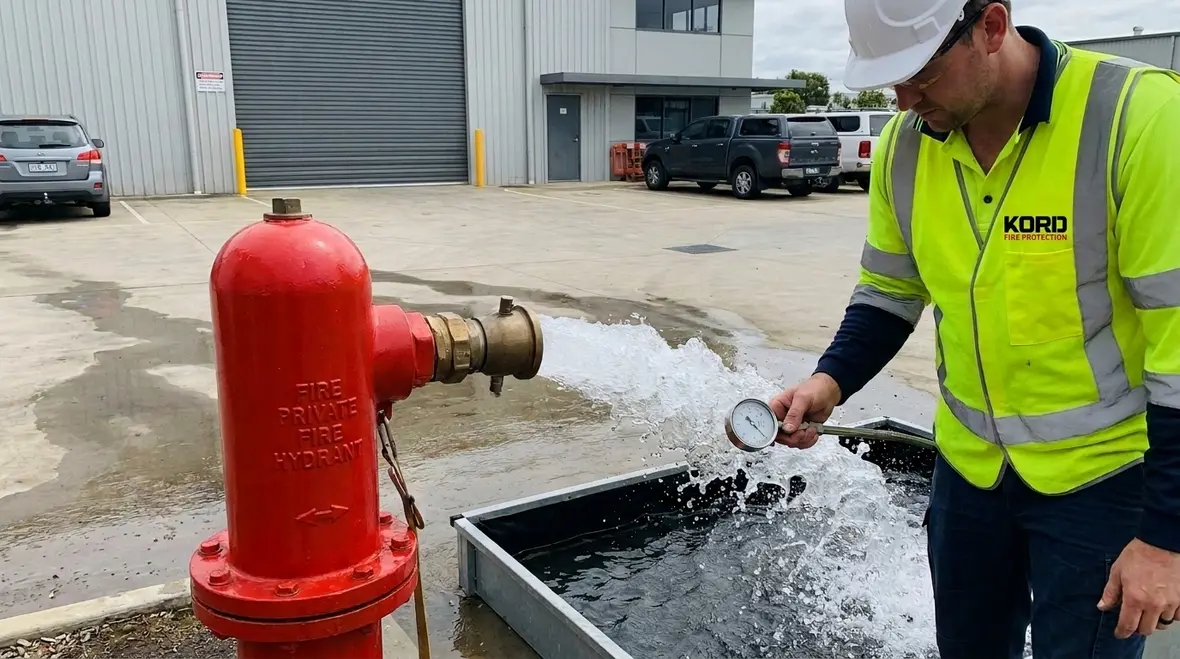
A private hydrant setup can look perfectly respectable from the outside and still underperform when demand rises. That is the tricky part. Painted barrel, visible cap, no obvious drama, and yet the actual site water supply may have pressure loss, restrictions, or an issue hiding in the private main. Testing closes the gap between assumptions and performance. It gives the facility something much better than optimism: evidence.
How private fire hydrant testing NFPA 25 fits into a full compliance program
Compliance works best when it behaves like a system, not a series of random visits. For most businesses, private fire hydrant testing NFPA 25 becomes one part of a broader fire protection plan that includes maintenance, inspections, and documentation across the year. Consequently, the testing schedule must align with other duties so the facility does not interrupt operations more than necessary.
Facilities teams often juggle multiple priorities: production schedules, trading hours, cleaning rosters, and contractor access. Thus, the testing approach needs coordination. Kord Fire Protection can help by organizing field work around access windows, equipment availability, and reporting timelines. That way, compliance stays consistent and the facility avoids that classic scenario where the hydrant test happens during a busy delivery period. Nobody wants trucks backing up to a hydrant like it is part of the parking plan.
This is also where interlinked planning matters. If a facility already follows a broader maintenance path, tying hydrant testing to a useful reference such as this NFPA 25 overview for water-based fire protection systems maintenance helps teams keep the bigger picture in view instead of treating each task like a surprise pop quiz from the code book.
Testing private fire mains: the hidden details that matter
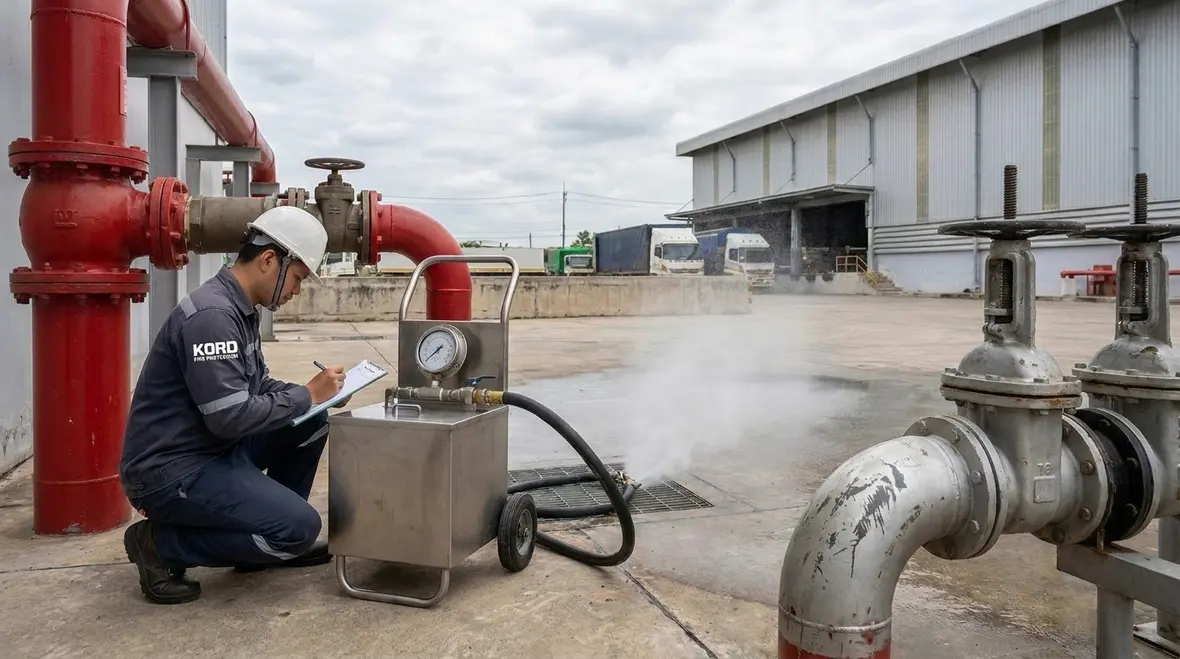
Private fire service mains sit underground or within protected areas, which means problems can develop without obvious signs. Therefore, testing must focus on the system’s ability to deliver water where it is needed. When teams perform testing on mains and hydrant connections, they look for indicators that the water path remains clear and valves operate correctly.
These tests also support better decision making. For example, if results show a limitation, the facility can plan repairs and retesting. Meanwhile, if multiple hydrants serve different zones, the results help confirm whether water delivery stays consistent across the site. In industrial and large commercial properties in Australia, this consistency becomes critical, since buildings often have different risks, different access routes, and different response needs.
And yes, like most tasks, the devil sits in the details. A small issue in a valve position or a water supply constraint can create a big gap at the worst time. That is exactly why the testing process needs discipline and qualified execution, not guesswork. Good testing is less about drama and more about boring reliability, which is honestly the highest compliment a water supply can get.
What a disciplined test can reveal
- Partially closed or incorrectly positioned valves
- Pressure loss that points to restrictions or deterioration
- Zone-to-zone performance differences across larger sites
- Supply behavior that no longer matches the intended system demand
Hydrants and site water supplies: what teams should verify
Hydrants are visible, which makes them feel easy. Yet operational reality proves otherwise. Hydrants can suffer from damage, corrosion, blocked nozzles, or internal issues that do not show up during a quick visual check. Moreover, site water supplies can vary due to infrastructure age, demand changes, or valves that were adjusted for non fire reasons.
When a facility tests, it should verify that the hydrants and connected supply provide the expected performance. This includes checking flow behavior and pressure response, and making sure the results connect to the system’s intended use. Then the facility can capture data for future comparison. Over time, trending results helps teams spot gradual deterioration before it becomes a major repair.
In facilities across retail campuses, warehouses, and multi tenancy commercial buildings, hydrant testing must also respect access. Kord Fire Protection can manage on site coordination so teams avoid unnecessary disruption, while still collecting data properly. That is the difference between “we tested it” and “we proved it.” One is trivia. The other is risk control.

Useful checkpoints during hydrant and supply verification
- Hydrant condition and accessibility
- Flow behavior under test conditions
- Static and residual pressure response
- Consistency of results compared with prior records
- Any signs that corrective work or retesting should be scheduled
Scheduling and documentation: how facilities keep audits from turning into fires
Even when testing goes well, documentation can become the real challenge. Facilities need records that clearly show what was tested, when it was tested, and what the outcomes were. Additionally, reports should support corrective actions where issues appear. If a facility can explain its testing history quickly, audits become a conversation instead of a stressful interrogation.
To stay organized, a good program maps test activities by asset, location, and access needs. Then it assigns responsibilities to prevent overlaps between contractors, internal teams, and other service providers. Kord Fire Protection can help by structuring the field work and report handover so stakeholders receive clear information without chasing details.
That approach also supports internal planning. For instance, if results indicate a maintenance cycle is needed for a valve or a section of pipe, the facility can schedule repairs during a less disruptive period. Therefore, compliance becomes predictable rather than reactive. And predictable is good, because unpredictability burns time and budgets, not just assets.
Why Kord Fire Protection can partner on NFPA 25 field execution
Testing private fire mains, hydrants, and site water supplies requires more than a tool and a clipboard. It requires skilled planning, correct test execution, and reporting that stands up to scrutiny. Kord Fire Protection can become a vital partner with this service job by coordinating the testing process, supporting asset level tracking, and helping facilities keep compliance aligned with real operating schedules across Australia.
In many sites, the biggest problem is not the lack of effort. It is the lack of control. Meanwhile, Kord Fire Protection brings structure, so testing happens when it should, and the records arrive in a format that supports management decisions. That means less scrambling, less confusion, and fewer moments where someone discovers the “important report” is sitting in the wrong inbox with three versions and no conclusion.
| Facility need | How Kord Fire Protection helps |
| Access coordination across industrial and commercial operations | Scheduling that reduces disruption while keeping testing valid and complete |
| Clear traceable test records for audits and internal review | Structured documentation with results and follow up actions |
| Asset based consistency across multiple sites or zones | Repeatable processes that support comparisons over time |
| Fast clarity when results show a limitation | Guidance that supports corrective planning and retesting strategy |
Featured snippet FAQ for NFPA 25 testing and private hydrants
Conclusion and call to action
NFPA 25 § 7.3 testing helps facilities prove that their private fire service mains, hydrants, and site water supplies can deliver when needed. Instead of reacting during an audit or an emergency, businesses can build a calm, repeatable testing rhythm. Kord Fire Protection can help coordinate the work, manage documentation, and support corrective actions.
Reach out to plan your next test cycle and keep compliance steady, not stressful. When the water supply has already been tested, recorded, and understood, the facility is in a much better position to respond without panic, paperwork chaos, or last minute detective work around a hydrant that suddenly became everyone’s problem.

Join Our Newsletter!
Get the latest fire safety tips delivered straight to your inbox From our Newsletter.