Fire Protection Water Storage Tank Inspection NFPA 25
Quick Answer
NFPA 25 §§ 9.1–9.6 sets the rules for inspecting, testing, and maintaining water storage tanks, including fill valves and related components. In practice, facilities that follow these steps reduce downtime and prevent supply failures. Kord Fire Protection can act as a steady partner, keeping records clean and compliance on track.
If your site also needs broader fire sprinkler inspection and maintenance support, it makes sense to connect tank work with the rest of the water-based system early, not after a problem starts auditioning for center stage. Kord Fire Protection approaches that coordination in a practical, compliance-focused way. ([kordfire.com](https://kordfire.com/fire-sprinkler-service/?utm_source=openai))
NFPA 25 Water Storage Tank Inspection and what it protects
In Australia’s industrial, retail, and commercial environments, water storage tanks sit quietly in the background, doing the heavy lifting when systems need water fast. A solid fire protection water storage tank inspection NFPA 25 program focuses on tanks, levels, valves, and the details that keep water available. NFPA 25 covers water storage tanks as part of its maintenance framework for water-based fire protection systems, and Kord’s own overview explains that these systems rely on routine inspection, testing, and maintenance to stay ready. ([kordfire.com](https://kordfire.com/nfpa-25-overview-complete-water-based-fire-protection-systems-maintenance-breakdown/?utm_source=openai))
That matters because water storage is not decorative infrastructure. It directly supports sprinkler and standpipe performance when demand shows up uninvited and usually at the worst possible time. If someone ignores fill valve problems long enough, those issues grow legs and walk straight into the next incident report. Nobody wants that.
Why sections 9.1 to 9.6 matter to facilities across Australia
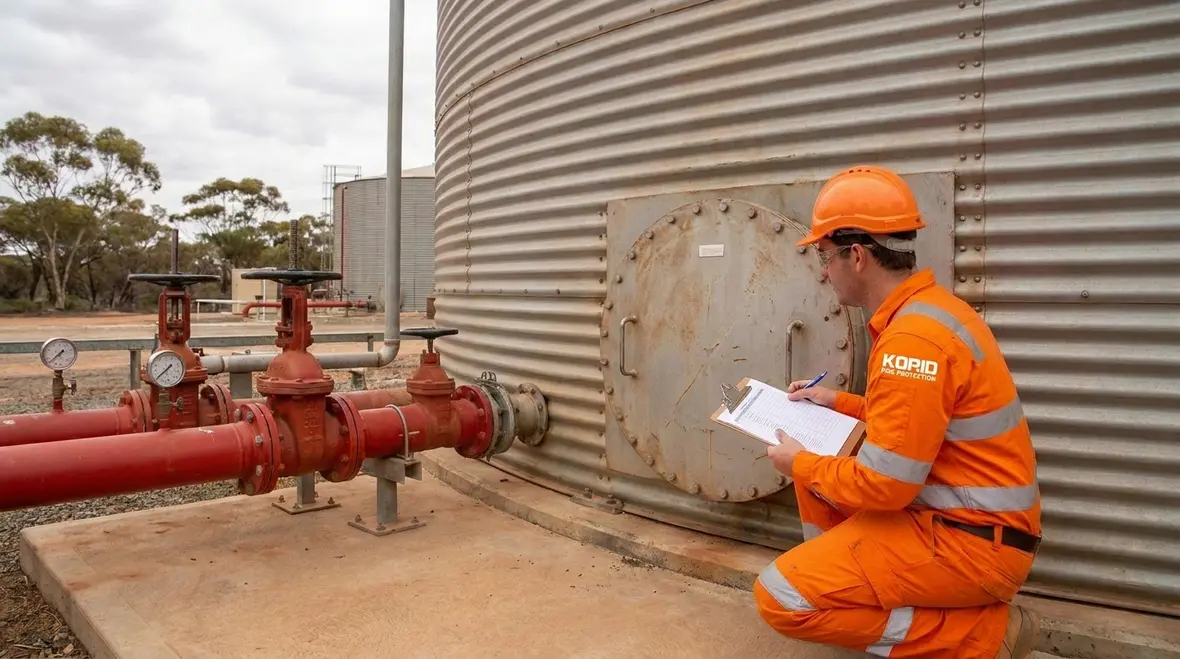
Facilities often treat tank work as routine, but those rules exist for a reason. First, water storage systems rely on stored volume and correct valve positions. Next, tanks face everyday challenges like sediment buildup, valve wear, corrosion, and changes in water supply behavior. Then there is the operational side: pumps, level switches, and water delivery depend on tank condition. When companies align maintenance to fire protection water storage tank inspection NFPA 25 expectations, they protect sprinkler and standpipe performance when it counts.
In addition, audits and insurance reviews frequently ask for proof. Kord’s NFPA 25 overview notes that owners are responsible for ensuring systems are serviced at recommended intervals and for keeping detailed maintenance information, such as inspection dates and testing results. That means records are not clerical clutter; they are part of system readiness and accountability. ([kordfire.com](https://kordfire.com/nfpa-25-overview-complete-water-based-fire-protection-systems-maintenance-breakdown/?utm_source=openai))
When maintenance is documented with the right intervals and observations, teams spend less time explaining, and more time running sites. Kord Fire Protection helps organisations build that proof in a businesslike way, not a “we sort of looked at it” way.
The connection between tanks, pumps, and real-world water supply reliability
Kord’s water supply reliability analysis points out that dependable fire suppression depends on confirming pump controls, suction conditions, and whether any water storage tank functions as designed. In other words, a tank issue rarely stays politely inside the tank. It can spill into pressure, duration, response time, and the confidence anyone should have in the system. ([kordfire.com](https://kordfire.com/water-supply-reliability-analysis-for-fire-suppression-systems/?utm_source=openai))
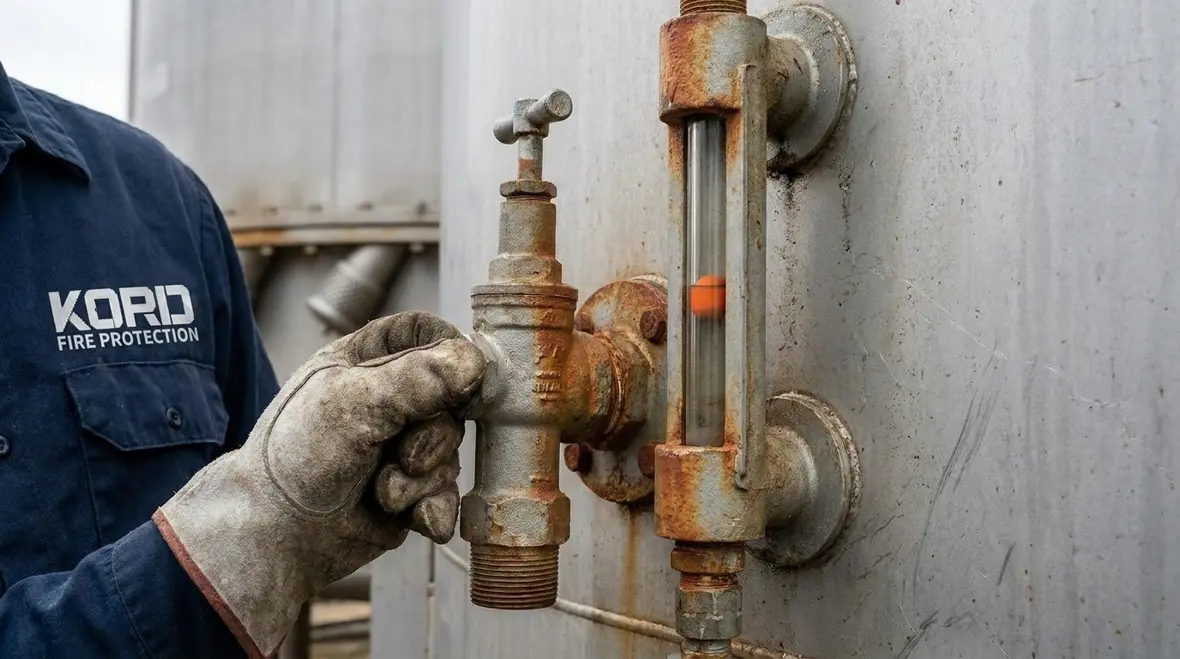
Tank inspection focus: what teams must verify
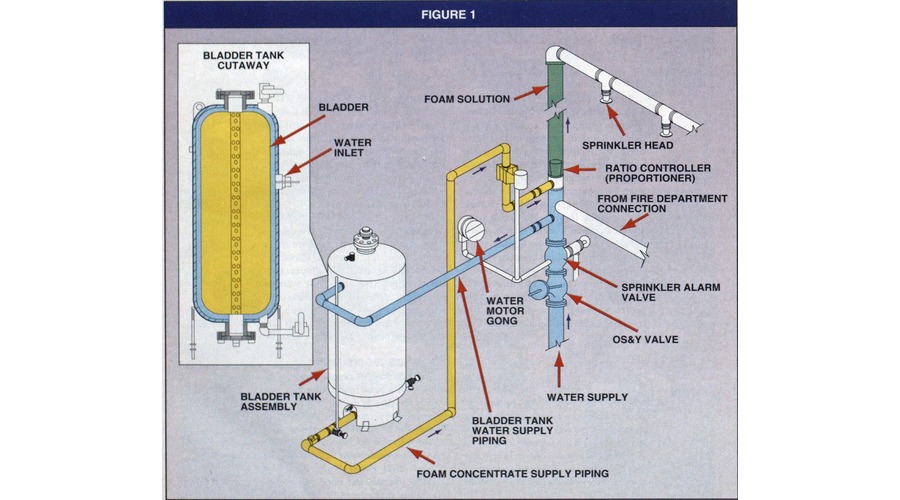
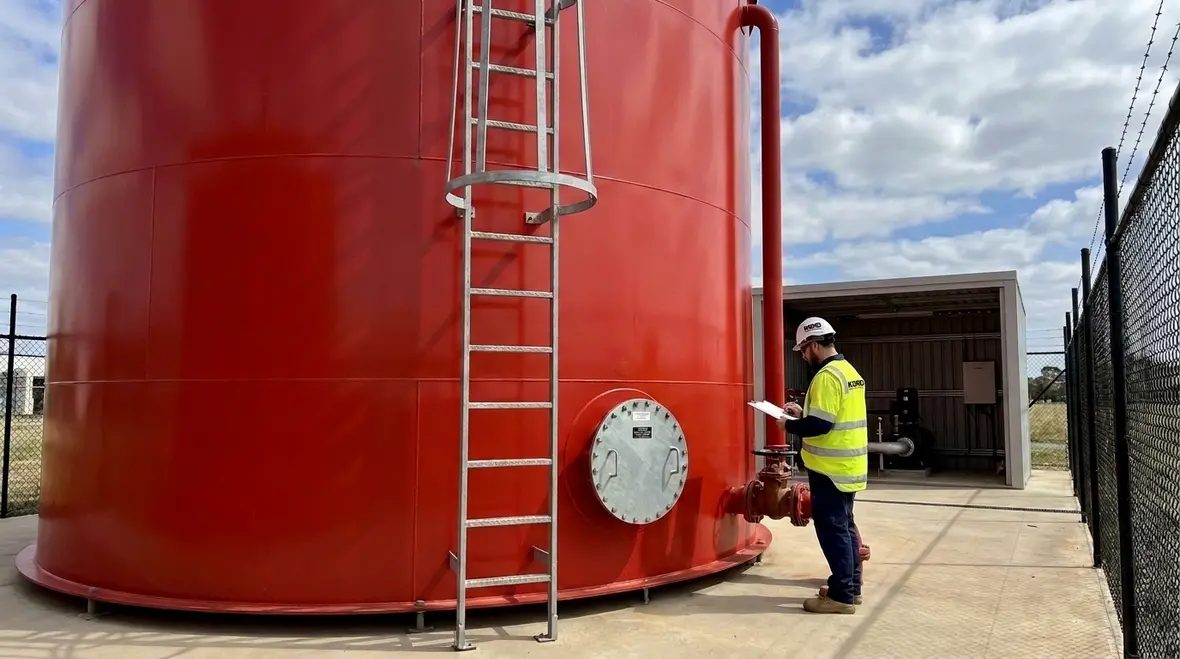
For NFPA 25’s water storage tank requirements, inspection is not a cursory glance. It is structured verification. Teams typically look at the tank exterior condition, access points, foundation integrity, and signs of deterioration. They also confirm that the tank is properly equipped for the fire protection system and that required components are present and functional.
Then comes the inside story. Inspectors check for sediment, scale, or debris that can affect water quality and flow. They also watch for issues around strainers and inlets, because blocked pathways can reduce effective delivery. If the tank is covered or housed, technicians also confirm vents and openings remain unobstructed and protected.
Equally important, crews verify the tank level indicators and related controls. If the level controls drift or fail, the system may not draw from the correct volume. And if someone says, “It looked fine last time,” the tank does not care about last time. It cares about right now.
What inspectors are really trying to prevent
The goal is not simply to find flaws for the joy of making a checklist longer. The goal is to verify that stored water remains available, accessible, and usable under demand. Kord’s broader fire protection services page emphasizes inspections, testing, and readiness across life safety systems, which fits naturally with a tank program that looks beyond appearances and into actual performance. ([kordfire.com](https://kordfire.com/full-fire-protection-services/?utm_source=openai))
Testing and performance: keeping water reliable under demand
Testing under NFPA 25 helps confirm the tank system performs how it should, not how it hopes to. Depending on the site design, testing may include checking water level response, verifying that related gauges and devices communicate correctly, and confirming that the system can access the stored water without delay. Technicians may also confirm that pumps and controls operate within expected parameters.
When test results show unusual behavior, teams trace the cause rather than just resetting and moving on. They examine fill valve function, check for sticking, and look for irregular supply patterns that could affect tank level. If the tank fills too slowly, the system could run short during a longer event. If it overfills, it may create stress on overflow or related components.
At that stage, a strong partner makes a difference. Kord Fire Protection can coordinate inspection and testing so that equipment history stays connected, and so that corrective actions land quickly instead of becoming a “later” project.
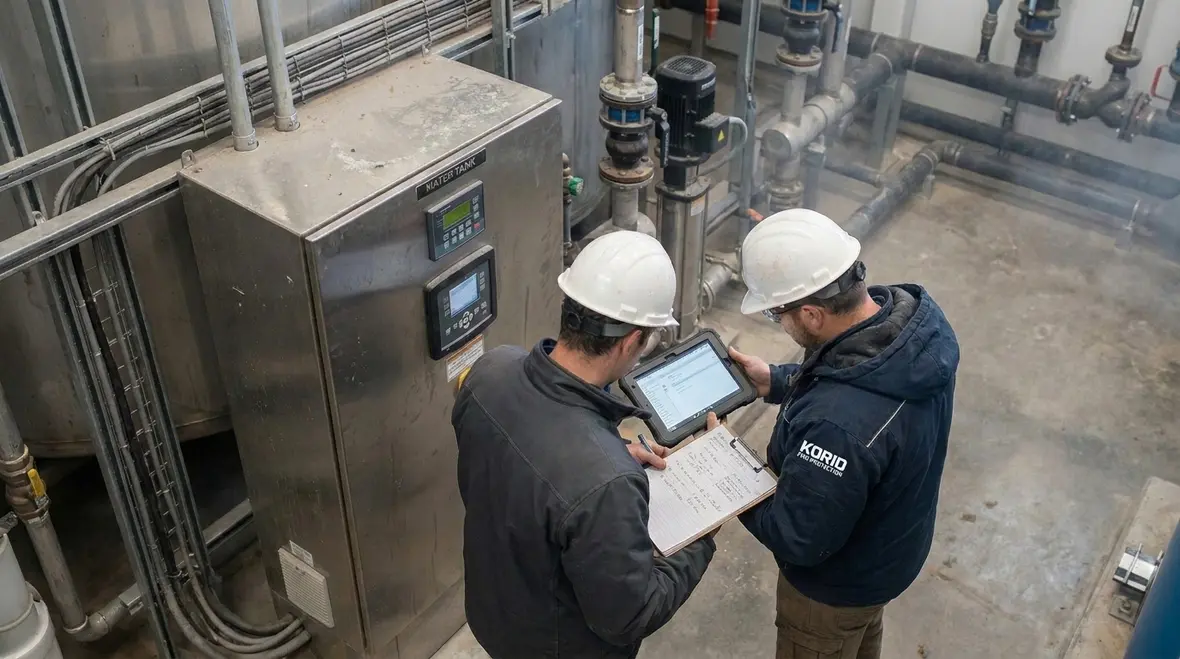
Maintenance plans that prevent fill valve problems from sneaking in
Fill valves often take the spotlight because they directly control tank level. When fill valves stick, wear, or fail to shut properly, facilities can experience chronic underfill or overflow. Both outcomes can hurt system readiness. Underfill reduces available water. Overflow can create water loss, impact surrounding areas, and create maintenance churn.
To prevent these headaches, maintenance should include cleaning and inspection of valve internals, verification of correct sealing surfaces, and confirmation that control operation aligns with the tank’s design. Technicians also check the surrounding piping and connections for leaks, damage, or corrosion. They verify that any strainers or screens stay clear and that water paths remain unobstructed.
Then the team documents the work in a way that helps the next technician. Clear records reduce confusion, and better continuity reduces costly repeat calls. With Kord Fire Protection, organisations can keep a consistent cadence across multiple sites, which matters for retailers with many locations and facilities with mixed equipment.
Why documentation is part of maintenance, not an afterthought
Kord’s recent article on water-based fire protection maintenance safety ties maintenance to documented intervals, technician access, and practical follow-through. That larger pattern reinforces an obvious truth: a maintenance task that is not tracked well has a suspicious habit of becoming a maintenance task that quietly disappears. ([kordfire.com](https://kordfire.com/nfpa-25-4-10-4-11-water-based-fire-protection-maintenance-safety/?utm_source=openai))
Common findings that trigger corrective action
Even well-run sites can uncover issues during a fire protection water storage tank inspection NFPA 25 cycle. The key is responding fast and correctly. Here are common findings that often lead to corrective action.
- Fill valve drift or sticking: The valve may cycle late, fail to shut cleanly, or behave inconsistently under changing water pressure.
- Sediment and debris accumulation: Sediment can reduce effective water delivery, impact strainer performance, and increase maintenance needs over time.
- Corrosion in the tank or piping: Corrosion can weaken components and worsen leaks, especially around joints and fittings.
- Valve and control wear: Worn seals, misaligned floats, or damaged linkage can disrupt normal tank level control.
- Blocked inlets or strainers: Obstructions can cause starvation at the moment the system needs water most.
Once a team identifies a root cause, it should also confirm the fix with follow-up checks. That step turns a “we replaced a part” moment into a controlled improvement. Yes, it takes a little more effort, but so does explaining a failure during an emergency review.
How Kord Fire Protection supports inspection, testing, and maintenance
Kord Fire Protection can become a vital partner because tank work is not a one-time task. It is a program. First, the service team aligns scope to NFPA 25 so the facility gets coverage that matches the standard’s intent. Next, Kord supports structured testing, proper maintenance steps, and clear reporting that facilities can use for compliance, audits, and internal governance. Kord’s services pages and educational resources consistently frame readiness as a combination of inspection, testing, maintenance, and documentation. ([kordfire.com](https://kordfire.com/full-fire-protection-services/?utm_source=openai))
In addition, Kord helps facilities manage schedules across multiple sites in Australia. That matters when industrial and commercial operations run year-round and downtime becomes expensive. By coordinating inspections with site access windows and maintenance planning, Kord reduces disruption while keeping systems ready.
Finally, Kord’s approach supports long term risk reduction. Rather than treating each job like a separate event, the team builds continuity between inspections, corrective actions, and documentation. In fire protection, continuity is not a luxury. It is the quiet difference between “it should work” and “it will work.” For a broader look at that framework, Kord’s NFPA 25 overview for complete water-based fire protection systems maintenance fits naturally here. ([kordfire.com](https://kordfire.com/nfpa-25-overview-complete-water-based-fire-protection-systems-maintenance-breakdown/?utm_source=openai))
FAQ: fire protection water storage tank inspection NFPA 25
Conclusion
Facilities that follow NFPA 25 §§ 9.1–9.6 protect water availability, reduce surprises, and strengthen audit readiness. Kord Fire Protection can review tank condition, validate fill valve operation, and provide clear reporting that teams actually use. If your site needs inspection, testing, or a maintenance plan that holds up under scrutiny, reach out today.
Schedule a tank compliance review with Kord Fire Protection
Let the tank do its job, and let your team sleep a little better. A structured inspection, testing, and maintenance program keeps equipment history connected, supports cleaner audits, and reduces the chance that a small valve issue becomes a large operational problem wearing a fake moustache. Kord Fire Protection helps facilities stay inspection-ready with a practical, documented approach. ([kordfire.com](https://kordfire.com/full-fire-protection-services/?utm_source=openai))

Join Our Newsletter!
Get the latest fire safety tips delivered straight to your inbox From our Newsletter.