Private Fire Service Main Inspection NFPA 25 7.1 to 7.5
Quick Answer: NFPA 25 §§ 7.1–7.5 lays out how facilities handle private fire service main inspection, testing, and maintenance so systems stay reliable when it matters most. Kord Fire Protection can act as a dependable partner, coordinating compliance, documentation, and practical upkeep across industrial, retail, and commercial sites in Australia.
In Australia, facilities that rely on a private fire service main need more than good intentions. They need disciplined routines that keep water flow dependable, valves responsive, and records audit ready. That is exactly what private fire service main inspection NFPA 25 focuses on, especially within NFPA 25 §§ 7.1–7.5. These sections guide how teams inspect, test, and maintain the system so the fire department does not arrive to a dry handshake. And yes, that is as funny as it sounds, which is to say it is not funny at all.
For businesses that want broader lifecycle support near the top of the process, Kord’s fire protection services guide gives a useful view of how inspections, maintenance, and compliance planning fit together across active sites. That bigger picture helps because a private fire service main does not exist in isolation. It has to work alongside valves, sprinklers, pumps, records, and the very real habits of a busy facility that never seems to have a quiet week.
What NFPA 25 §§ 7.1 to 7.5 require for inspection
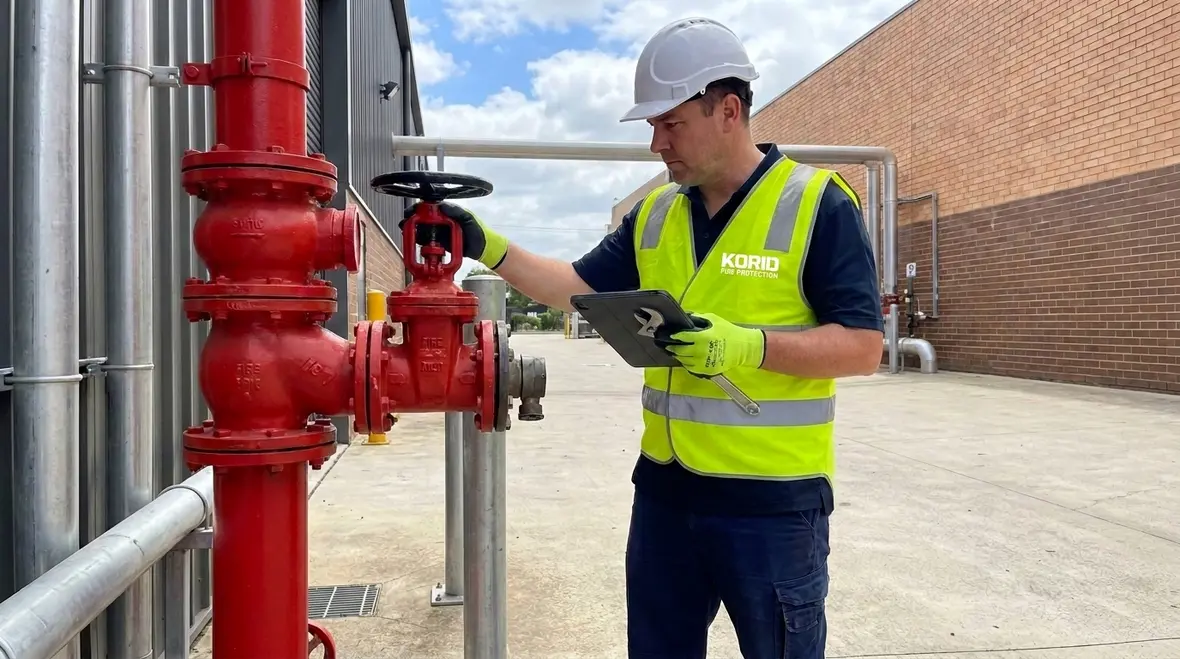
NFPA 25 §§ 7.1–7.5 covers the private fire service main and how it stays in service. The core idea is simple: the system must perform as designed, not as hoped. Therefore, the facility must follow scheduled inspection steps and confirm key components are in good working order.
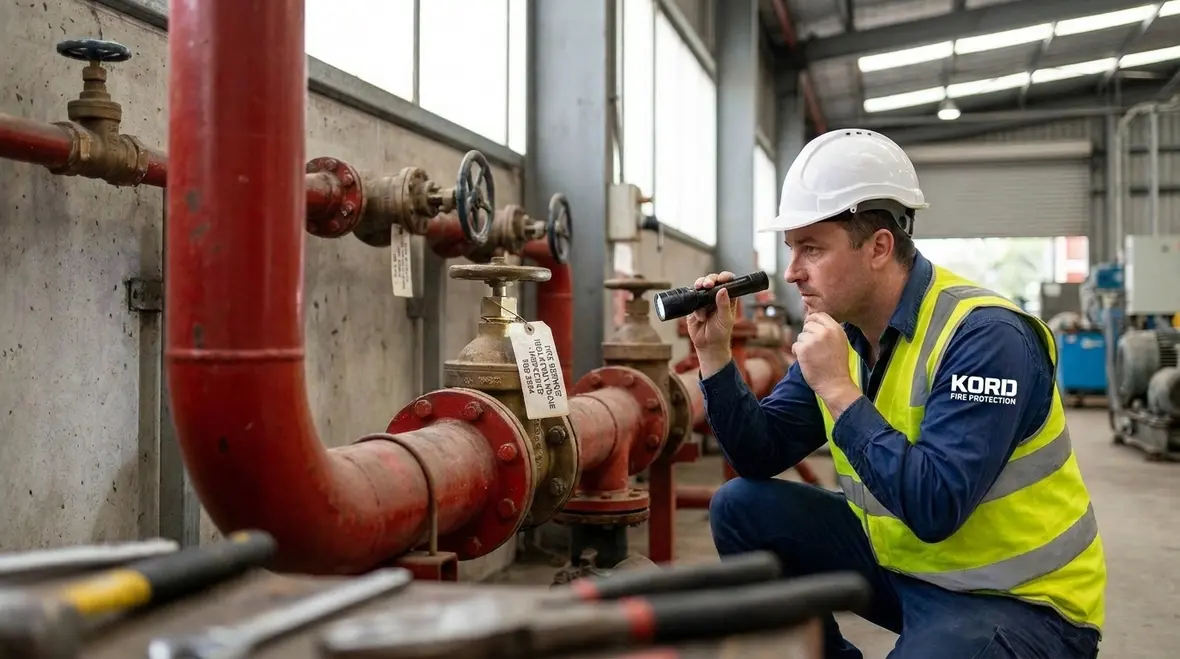
Typically, inspection activities focus on condition and readiness. For example, inspectors verify accessibility, check that components remain secure, and look for issues that can slow response. In addition, they pay attention to signs of damage, corrosion, leaks, or obstructions that could reduce flow when it is needed most.
Furthermore, inspection is not a “look and walk away” exercise. Teams should identify problems early, because small failures tend to grow quietly, like mould in an uninspected corner. And nobody wants that surprise on a schedule that already has deadlines.
Why visual checks still matter before testing starts
A private fire service main often gives off very little drama before something goes wrong. That is precisely why consistent inspection matters. Visual checks help teams catch obvious but important issues such as blocked access points, exposed damage, tampering concerns, poor housekeeping around valves, or early signs that the system is aging faster than expected. In practical terms, the inspection phase creates the baseline that later testing either confirms or challenges.
This is also where facilities benefit from understanding the broader NFPA framework. Kord’s NFPA 25 overview connects private fire service mains to the larger maintenance cycle for water-based fire protection systems, which makes it easier to understand why these early inspections are not just admin theater with boots on.
How private fire service main testing supports dependable flow
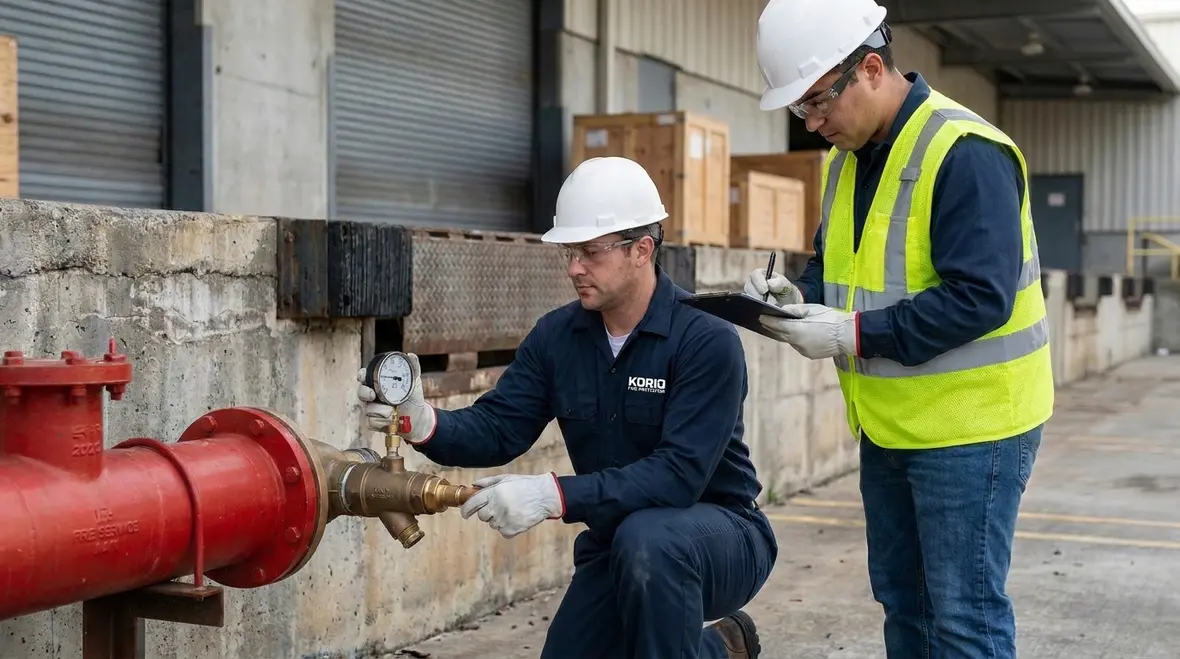
Testing turns observation into proof. After all, a clean exterior can still hide a valve that does not move freely, a system that holds pressure too poorly, or a line that loses performance under demand. When facilities follow private fire service main inspection NFPA 25 requirements, they use testing to confirm that the system can deliver water reliably.
In practice, testing helps evaluate whether the main and connected components perform within expected parameters. This usually includes confirming flow characteristics, checking operational performance of main connections, and ensuring valves function correctly. Moreover, good testing supports decision making, because it tells teams what actually needs attention.
For industrial and commercial operators, this matters because fire scenarios are rarely gentle. A loading bay, a service corridor, a retail precinct with complex occupancies, or a facility with varied ignition sources all demand dependable water delivery. When the main performs under test conditions, response planning becomes more confident, and training becomes more meaningful.
Testing shows what a polite visual inspection cannot
Some system weaknesses are wonderfully sneaky. Everything can look respectable on the outside while performance quietly drifts in the wrong direction. That is why testing is not a bureaucratic extra. It is the part where the facility stops assuming and starts verifying. Teams can compare results over time, spot recurring issues, and decide whether a repair is urgent, strategic, or part of a larger upgrade path.
That practical evidence matters especially on busy Australian sites where shutdown windows are limited and no one wants to discover a hidden issue during an emergency or right before an audit. Reliable testing gives operators something better than optimism. It gives them proof, which is less charming but far more useful.
Maintenance steps that keep the private fire service main in service
Maintenance is where compliance becomes operational readiness. NFPA 25 §§ 7.1–7.5 expects facilities to keep components working and to address deficiencies before they degrade performance. That includes keeping parts aligned, repaired, or replaced when needed, and maintaining the overall system so it remains reliable across seasons and operating conditions.
Maintenance also reduces downtime. When a facility handles small issues early, it avoids “big repair” moments that show up at the worst possible time, like when a staff meeting is already running long. In other words, proactive maintenance prevents emergencies from becoming the unofficial event of the week.
For sites across Australia, maintenance should also consider environmental factors such as corrosion risk, groundwater impact, and temperature variation. These factors can affect pipes, valves, and fittings. So, teams should manage the system in a way that reflects local realities, not just generic checklists.
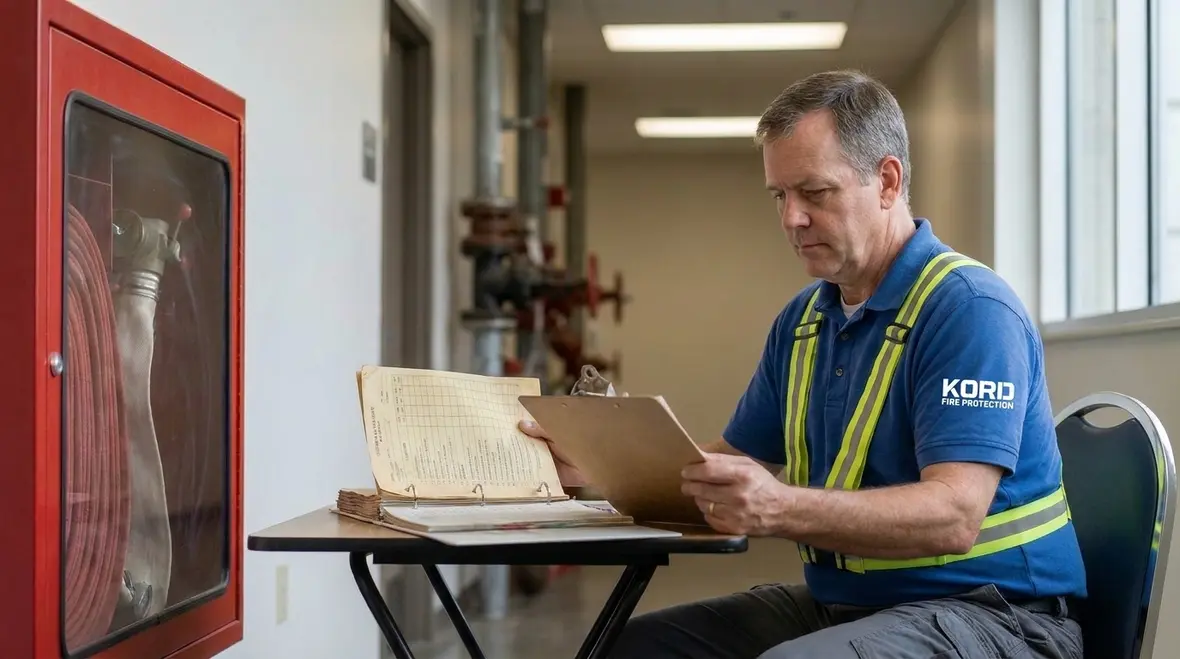
Maintenance is the part that saves everyone from future chaos
There is a reason good maintenance programs feel a little boring. Boring is excellent. Boring means components are serviced before they become dramatic, valves stay functional, deficiencies are tracked properly, and teams are not forced into emergency decisions with too little time and too much pressure. In fire protection, boring usually means competent, and competent is exactly the vibe you want from your water supply infrastructure.
Well-managed maintenance also makes budgeting less painful. Instead of reacting to large failures, facilities can phase corrective work sensibly and align it with other building activities. That creates a more stable program and fewer ugly surprises for operations, finance, and anyone else who gets nervous when the phrase “urgent remediation” appears in an email subject line.
Where records and documentation fit into compliance
Even the best work fails compliance expectations if records do not show it. NFPA 25 frameworks rely on accurate documentation to prove that inspection and testing occurred and that results were reviewed. Therefore, facilities should maintain clear reports, include dates and findings, and keep a trackable history of adjustments.
Additionally, documentation supports audits, insurance reviews, and internal governance. It helps safety officers, facilities managers, and operations leaders understand trends, not just isolated outcomes. When a system shows repeated minor issues, that pattern points to root causes such as installation wear, water quality effects, or valve aging.
So, the paper trail becomes more than paperwork. It becomes a living map of performance. And when that map exists, decisions get easier, because the team can justify improvements with evidence.
Good documentation protects more than compliance status
Clear records help facilities coordinate across departments, contractors, and future service windows. They reduce guesswork, preserve institutional memory, and make handovers cleaner when personnel change. That matters because systems tend to outlast job titles, and nothing slows maintenance planning quite like discovering the most important service history now lives in someone’s old inbox from three years ago.
How Kord Fire Protection becomes a vital partner
Many facilities try to manage this work with a patchwork approach. One contractor does the inspection, another handles minor repairs, and then someone scrambles to gather paperwork near audit time. That is not a strategy; it is a scavenger hunt with stakes.
Kord Fire Protection can become a vital partner by coordinating a consistent program around the private fire service main. Instead of leaving compliance to chance, Kord helps facilities align inspection, testing, and maintenance with operational schedules and real site needs across industrial, retail, and commercial locations.
As a result, facilities spend less time tracking down information and more time improving readiness. Kord also supports the practical side of compliance, including advising on what needs attention now versus what can be planned. Furthermore, Kord’s approach helps teams avoid last minute surprises during busy shutdown windows.
And if someone asks, “Is this really necessary?” the calm answer is yes. Fire protection systems do not care about convenience. They care about performance.
Planning for Australia sites with different risks and layouts
Australia’s facility landscape varies widely. A distribution centre runs differently than a retail hub. A plant with heavy equipment faces different risks than a service facility with long internal travel paths. Therefore, the private fire service main program should reflect the way the site operates.
To plan well, teams should consider access for inspection, the location of valves and test connections, and the impact of operational downtime. For example, a facility may schedule testing during off peak hours. Meanwhile, maintenance may occur during planned shutdown windows to reduce disruption.
Next, teams should consider how changes at the site affect the fire service main. Equipment additions, layout shifts, and new storage arrangements can change usage patterns and access. So, the program should adapt over time rather than remain frozen in a binder.
Ultimately, a well managed program helps ensure that when conditions change, fire protection readiness does not.
System checks at a glance
To keep operations grounded, facilities often need a clear view of what to check and how it connects to readiness. Below is a practical breakdown of common focus areas during private fire service main inspection NFPA 25 work, shown in two columns for quick coordination.
| Inspection and condition focus | Testing and maintenance focus |
Verify accessibility and protection of main components Look for corrosion, damage, and signs of leaks Confirm valve areas stay secure and unobstructed | Confirm operational performance of valves and connections Validate flow related performance under test conditions Repair, adjust, or replace parts to restore reliability |
FAQ about private fire service main inspection and upkeep
Next steps: build a compliant fire main program with Kord
A compliant system does not happen by accident. It happens through scheduled inspection, realistic testing, disciplined maintenance, and accurate records. Kord Fire Protection helps industrial, retail, and commercial facilities across Australia keep the private fire service main ready for real emergencies, not just inspection day.
Reach out to Kord Fire Protection to review the current program, plan next service windows, and strengthen performance with clear documentation. When the system is managed well, the result is not just better compliance. It is better confidence, better readiness, and a much lower chance of finding out the hard way that hope is not a water supply strategy.

Join Our Newsletter!
Get the latest fire safety tips delivered straight to your inbox From our Newsletter.