NFPA 25 Section 8.4 Fire Pump Report Documentation
Quick Answer: NFPA 25 section 8.4 requires fire pump reports and documentation that prove testing, maintenance, and readiness. Facilities should capture key readings, identify issues, show corrective actions, and keep records accessible for auditors and insurers. With kord fire protection, teams can turn paperwork into a clean, reliable compliance system that actually helps operations.
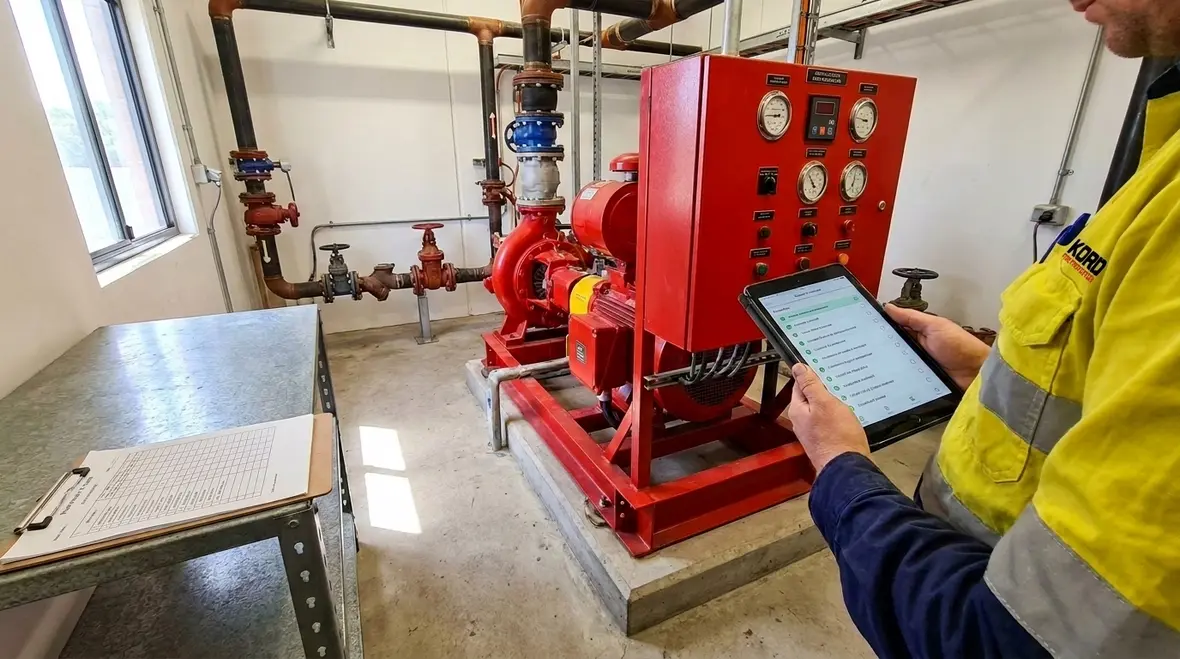
In facilities that also rely on broader fire sprinkler system service, the reporting process works best when pump documentation fits naturally into the larger maintenance picture. In Australia, facilities across industrial sites, retail centres, and commercial buildings rely on fire pumps that must perform when seconds matter. Under NFPA 25 § 8.4, the fire pump test report documentation needs to be more than a “we tested it” note. It must show what happened, when it happened, and what was done next. That is where strong reporting discipline pays off. ([kordfire.com](https://kordfire.com/fire-sprinkler-service/?utm_source=openai))
Now, the paperwork can feel like it was invented by someone who never had to find the last report before an inspection. But with the right process, records become a safety tool, not a headache. kord fire protection can partner with the fire pump service team to standardize documentation, reduce gaps, and keep records audit friendly, so the job stays calm, controlled, and compliant.
Why NFPA 25 § 8.4 expects more than a checklist
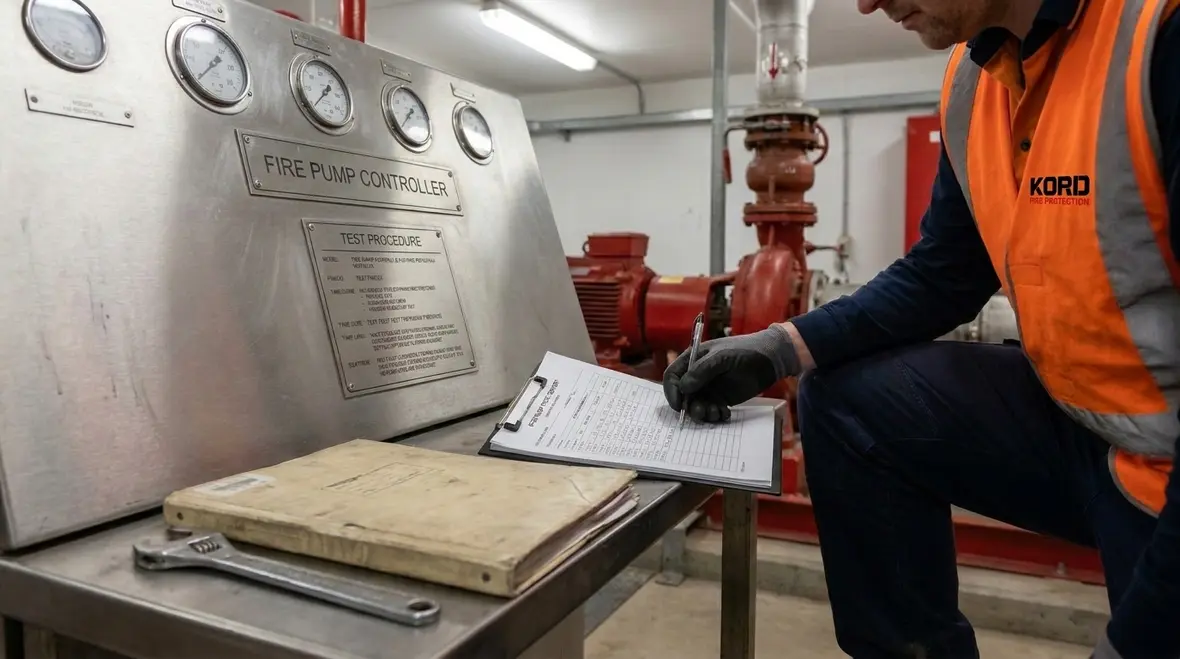
NFPA 25 sets a clear expectation: records must support accountability and verify that the fire pump system functions as required. Section 8.4 focuses on reports and documentation practices, meaning the data should be traceable and meaningful, not vague. When teams document properly, they can link test results to pump performance trends, identify recurring issues, and confirm that corrective actions worked. Kord Fire’s NFPA 25 overview also stresses detailed maintenance records as part of the owner’s responsibility for water-based fire protection systems. ([kordfire.com](https://kordfire.com/nfpa-25-overview-complete-water-based-fire-protection-systems-maintenance-breakdown/?utm_source=openai))
Most importantly, good NFPA 25 fire pump test report documentation helps the facility prove readiness. If an insurer, regulator, or internal safety audit asks for evidence, the facility should be able to locate it quickly, interpret it easily, and trust it. If the report is incomplete, unreadable, or missing key details, the system does not “feel tested.” It simply feels like a mystery.
Documentation should tell the whole story
A strong report does not just confirm that a test occurred. It shows the equipment identity, operating conditions, observed results, exceptions, and what happened after any problem showed up. That is what makes the record useful months later when someone needs answers fast, not archaeology skills.
What to include in fire pump reports for real compliance
To meet the intent of NFPA 25 § 8.4, the report should capture the critical information that ties tests to system health. While formats vary by site, the content should stay consistent and complete.
- Identification details: asset location, pump designation, controller identification, and system type
- Test context: date, time, test method, and conditions that affect results
- Observed performance data: pressure readings, flow data where applicable, and stability during operation
- Valve and system status: position of suction and discharge valves, water supply conditions, and any changes made
- Controls and alarms: results of controller functions, alarms, interlocks, and status checks
- Motor and power checks: confirmation of starter operation, abnormal observations, and any readings taken
- Defects and deviations: clear notes on any out of tolerance findings or abnormal behaviour
- Corrective actions: what was repaired, adjusted, or replaced, plus the retest outcome if performed
- Verification: who performed the work and who reviewed it
In many facilities, the weak point is not the technician’s effort. It is the handoff. Data gets scattered across phone photos, spare spreadsheets, and half completed notes. Then, when someone finally assembles the report, key details get lost. Strong documentation discipline prevents that. And yes, it also prevents the classic “Can you resend that PDF from last quarter?” email that sounds like it was written during a storm.
Use one format so every report speaks the same language
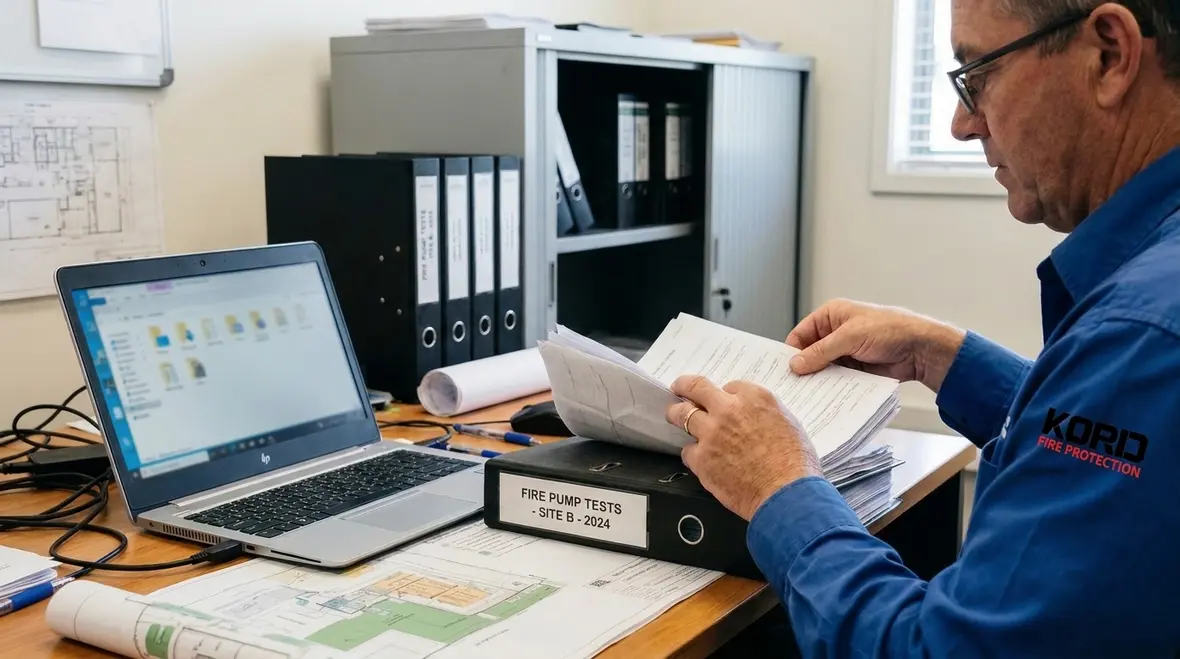
Templates matter because they reduce interpretation. When every technician uses the same sequence of fields and the same naming convention, reviewers can spot missing information quickly and compare results over time without playing detective.
How to standardize documentation across industrial, retail, and commercial sites
Facilities in Australia face different pressures. Industrial sites may have shutdown windows and strict maintenance tracking. Retail centres often need coordination around public access and tenancy operations. Commercial buildings may handle multiple systems under one asset framework. Despite these differences, the best practice is standard structure and consistent data fields.
First, teams should use the same report layout for each pump and controller type. Next, they should train technicians to fill required fields on site, while memory is fresh and equipment is in front of them. Then, they should enforce review steps before the report goes out.
kord fire protection helps by acting as a vital partner with the service and job workflow. Rather than treating documentation as an afterthought, it supports a repeatable system that aligns technicians, supervisors, and facility stakeholders. As a result, the facility receives reports that are easy to file, easy to interpret, and ready for compliance checks. Kord Fire presents itself as a full-service fire protection company offering fire pumps alongside broader compliance-focused service support. ([kordfire.com](https://kordfire.com/about-fire-protection/?utm_source=openai))
To make this practical, teams can use a dual column process once during report setup to map “what to record” to “how to verify it.” For example:
- Left column: required report items
- Right column: evidence source, such as controller logs, meter readings, or test results captured during commissioning
This approach reduces rework and helps ensure the report tells the full story, not just the highlights.
Where technicians often miss the details that auditors care about
Even strong fire pump teams sometimes stumble in predictable areas. Because people are busy, they document what they remember, not what standards expect. And because fire pump work can move in steps, details can get lost between those steps.
Common gaps include inconsistent pump identification, missing controller status notes, unclear mention of any deviations, and incomplete corrective action descriptions. Another frequent issue is failure to show the outcome of any repairs or adjustments. If a defect appears and then gets corrected later, the facility still needs evidence that performance returned to acceptable conditions.
Also, teams sometimes log test dates but do not connect reports to the specific equipment configuration at that time. If valves, wiring, or control settings changed, the report should reflect that. Otherwise, someone later reviewing the file has to guess, which defeats the entire purpose of documentation.
When kord fire protection partners on service, it helps drive consistency in what gets captured and how it gets reviewed. That means fewer missing pieces and fewer follow up questions that eat into maintenance schedules.
Auditors usually care about clarity as much as data
A report can contain technically correct numbers and still create problems if the notes are vague. Short, specific descriptions of what changed, what was repaired, and what was verified afterward make the difference between a clean file and a future headache.
Best practices for report handling, storage, and retrieval
Documentation works only if the facility can retrieve it quickly. Therefore, best practices must cover how records are stored, who can access them, and how they stay organized over time. A report that exists but can’t be found is like a fire extinguisher that sits behind a stack of pallets.
Facilities should adopt a clear filing structure. For example, they can store documents by site location, then by asset ID, then by date. They should also label file names in a consistent way so staff can search without guessing.
Next, they should define ownership. Who receives the final report? Who reviews it? Who files it? Then they should train relevant staff so the system does not depend on one hero who “always knows where it is.”
Finally, they should keep version control. If a report gets updated, the facility should track what changed. That protects the integrity of the record and prevents confusion during internal audits.
With coordinated support from kord fire protection, facilities can build a documentation habit that matches how real businesses run in Australia. Busy sites need simple systems, not complex ones that slow everyone down.
How kord fire protection supports the documentation process end to end
Fire pump service is not just mechanical work. It is also record building. When documentation is done right, it supports compliance now and helps reduce risk later.
kord fire protection can become a vital partner by supporting the service job with a structured documentation approach that includes clear data capture expectations, report review discipline, and alignment between technicians and facility stakeholders. Additionally, it helps keep reporting consistent across multiple locations, which matters for chains of retail and multi site commercial portfolios.
As a result, the facility benefits in three ways: fewer compliance surprises, faster retrieval when questions arise, and better visibility into pump performance over time. And yes, better visibility also means fewer meetings about “why the last report was hard to read.” Nobody loves those meetings. They are the business casual equivalent of being called to the principal’s office, except with more spreadsheets.
For readers who want broader context on recordkeeping across water-based systems, Kord Fire’s NFPA 25 overview and maintenance breakdown is a natural companion resource. It explains the wider standard and reinforces why owners should keep detailed maintenance records that are easy to access and review. ([kordfire.com](https://kordfire.com/nfpa-25-overview-complete-water-based-fire-protection-systems-maintenance-breakdown/?utm_source=openai))
FAQ
Conclusion
NFPA 25 § 8.4 fire pump reports demand clarity, traceability, and follow through. When facilities document tests with full readings, deviations, and corrective actions, they protect people and simplify audits.
For Australian industrial, retail, and commercial sites, kord fire protection can help standardize and strengthen the documentation process alongside the service team. If the records need to be tighter, reach out to kord fire protection and get a system that stays ready.

Join Our Newsletter!
Get the latest fire safety tips delivered straight to your inbox From our Newsletter.