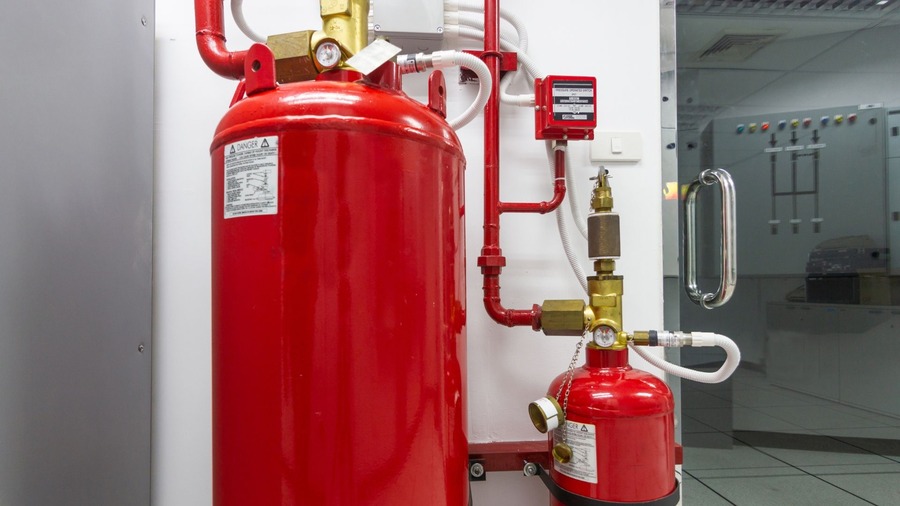
NFPA 25 § 5.2 Commercial Fire Sprinkler Inspection Checklist
Quick Answer: NFPA 25 § 5.2 outlines how professionals inspect sprinkler systems to keep them reliable when it matters most. A solid commercial fire sprinkler inspection checklist NFPA 25 approach verifies key components, testing, and operational conditions. Kord Fire Protection can support facilities by providing organized inspections, clear documentation, and practical next steps.
In commercial properties, industrial facilities, retail environments, and mixed use buildings, a sprinkler system should perform like a calm professional, not like a greased-up stunt double. That is exactly why NFPA 25 § 5.2 matters. It lays out an inspection method that helps confirm the system stays ready to protect people, property, and the bottom line. For facilities that need coordinated support, wet sprinkler system inspection services can help keep the process structured and useful from the first walk-through to the final report. ([kordfire.com](https://kordfire.com/wet-sprinkler-system-inspection-by-kord-fire-protection/?utm_source=openai))
Within the first part of any serious inspection conversation, the foundation becomes clear: NFPA 25 inspections use a structured approach, and the commercial fire sprinkler inspection checklist NFPA 25 helps teams align on what to check, how to record results, and what to correct before issues become expensive emergencies. Kord Fire Protection can become a vital partner with this service job, because the challenge is rarely just inspecting. The real challenge is maintaining consistent standards across sites, trades, and timelines. For a broader standards context, Kord also explains the bigger picture in its NFPA 25 overview. ([kordfire.com](https://kordfire.com/nfpa-25-overview-complete-water-based-fire-protection-systems-maintenance-breakdown/?utm_source=openai))
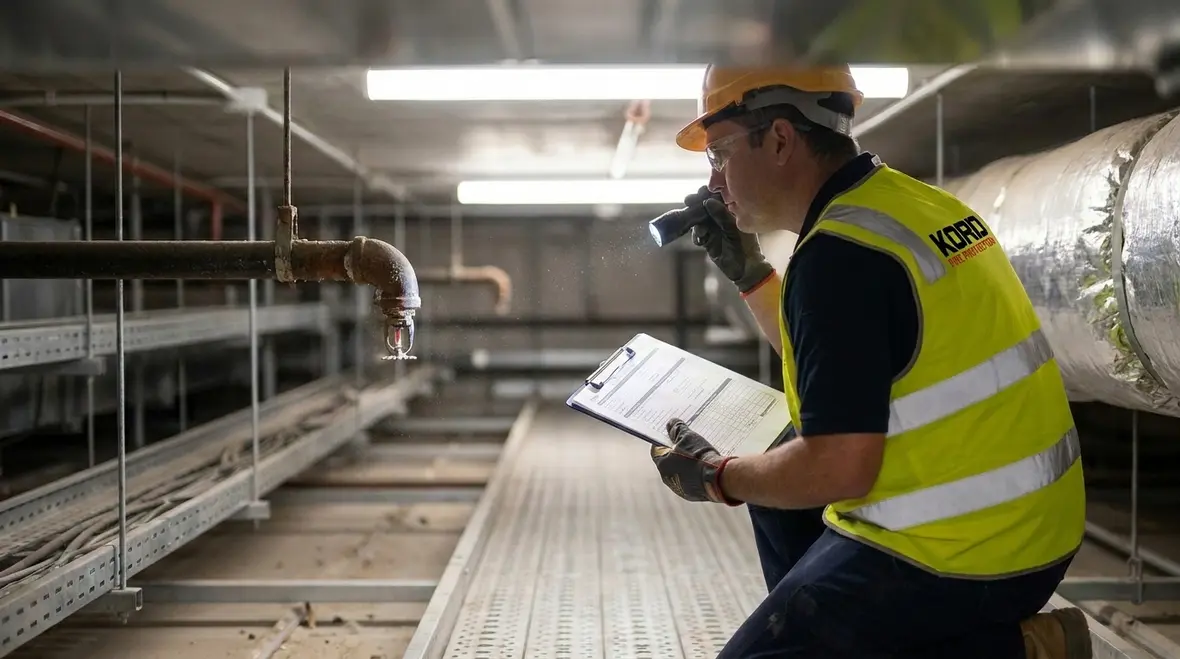
NFPA 25 § 5.2 requirements for a sprinkler system
NFPA 25 § 5.2 focuses on the sprinkler system inspection process and the discipline behind it. In practice, that means inspectors verify system components and operating conditions through visual checks, functional checks where required, and careful documentation. Then they flag problems that could reduce performance in a real fire. Kord’s overview of NFPA 25 describes the standard as the baseline for inspection, testing, and maintenance of water-based fire protection systems, which supports the role of a structured inspection checklist in day to day facility management. ([kordfire.com](https://kordfire.com/nfpa-25-overview-complete-water-based-fire-protection-systems-maintenance-breakdown/?utm_source=openai))
To put it simply, the sprinkler system cannot rely on hope. It needs evidence. A facility also does not want a last minute surprise during a routine audit, after a tenant change, or during an insurance review. When teams follow organized inspection methods, they reduce that risk and build confidence across operations. Kord’s service pages consistently emphasize inspection readiness, clear scheduling, and compliance support as practical outcomes of routine fire protection work. ([kordfire.com](https://kordfire.com/full-fire-protection-services/?utm_source=openai))
Why the checklist matters more than memory
A checklist keeps inspections repeatable. It turns tribal knowledge into a process that can survive staff changes, contractor turnover, and the occasional facility manager who inherited three buildings and one very tired clipboard. Instead of relying on memory, the inspection team follows a sequence that helps nothing important slip past just because the week got busy.
Commercial fire sprinkler inspection checklist NFPA 25 flow, from pre check to close out
A strong inspection job follows a clear sequence. First, the inspector confirms scope, access, and system identification. Then the team reviews previous reports so it knows what has changed since the last visit. After that, it performs the checks, records findings, and supports corrective actions with practical recommendations. Kord’s wet sprinkler inspection page frames this same value clearly by describing an inspection as a step by step process that explains what happens, why it matters, and how each component protects people and property. ([kordfire.com](https://kordfire.com/wet-sprinkler-system-inspection-by-kord-fire-protection/?utm_source=openai))
That flow matters because sprinkler systems live in the real world. They sit above ceilings, through plant upgrades, and around new racks that were definitely not there last month. The inspection team also has to coordinate with maintenance staff, building managers, and contractors so the checks do not get rushed or skipped. When that coordination is weak, even a technically good checklist becomes less useful because access, timing, and follow-through all start wobbling at the same time.
Close out is where the inspection earns its keep. Findings need to be turned into actions, priorities, and documentation that people can actually use. Otherwise the report becomes one more file sitting quietly in an inbox, full of truth and absolutely no momentum.
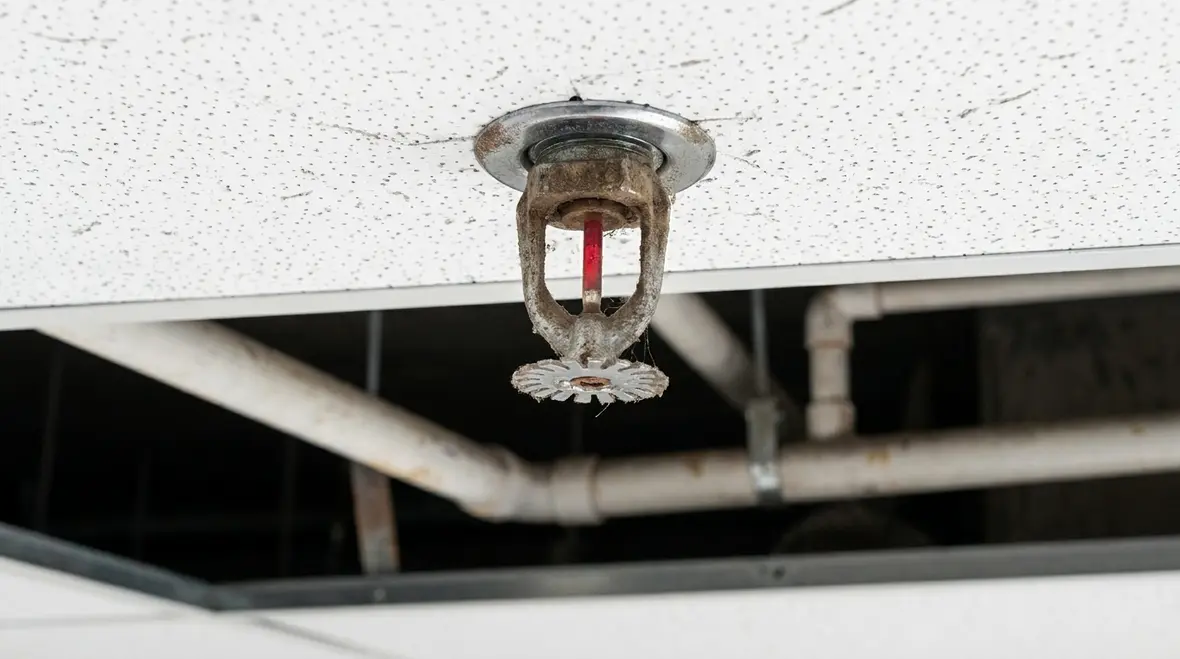
What teams verify during sprinkler head and obstruction checks
Inspections under NFPA 25 typically include verifying sprinklers and their surroundings. Inspectors look for conditions that can block water flow or delay operation. For example, they check for physical damage, corrosion, improper spacing, missing escutcheons, paint overspray, and modifications that could affect discharge patterns. Those kinds of field conditions align with Kord’s inspection-focused articles, which repeatedly point to ceiling changes, environmental buildup, and real-world site alterations as sources of sprinkler deficiencies. ([kordfire.com](https://kordfire.com/fire-suppression-deficiencies-found-in-inspections-by-kord/?utm_source=openai))
Obstructions deserve extra attention. Boxes, shelving, insulation, cable trays, and creative storage habits can interfere with spray distribution. If a sprinkler is partially hidden, the system may still activate, but the water delivery could miss the fire’s early spread. And early spread is where fires win or lose. That is why the inspection checklist has to cover not only the hardware overhead, but also the way people are actually using the space underneath it.
Teams also note whether the area still matches the original design intent. When facilities reconfigure retail floors, production lines, or warehouse zones, the sprinkler layout often stays the same while the environment changes around it. The inspection becomes the reality check between the drawings and the daily operation. It is the moment where someone politely asks, “Did we redesign the hazard without telling the sprinkler system?”
Common red flags around sprinkler heads
Paint overspray that may interfere with proper operation
Corrosion or buildup that suggests long term environmental stress
Storage or fixtures placed too close to discharge patterns
Damage from lifts, stock movement, or renovation activity
Layout changes that no longer reflect the protected hazard
Alarm valves, gauges, and water flow indicators that must make sense
Beyond the sprinklers themselves, inspectors confirm that the system can detect flow and transfer signals as designed. They check alarm valves, associated trim, gauges, and water flow indicators. They verify that the devices appear in good condition and that readings fall within expected ranges. Related Kord content on sprinkler electrical controls and automation also reinforces the importance of logic, supervision, and signal clarity for dependable system response. ([kordfire.com](https://kordfire.com/commercial-sprinkler-electrical-controls-and-logic/?utm_source=openai))
If something is off, the inspection report should explain what it found and what it means. Abnormal gauge readings might suggest contamination, trapped air, drifting pressure conditions, or maintenance gaps. Valve position issues can slow response or complicate activation. A good report does not just say something looks odd. It gives the site team enough context to understand whether the issue is cosmetic, operational, or urgent.
This is where calm professionalism saves money. When teams catch issues early, repairs get planned. When teams miss them, repairs become emergency work, and emergency work always costs more. It is like paying for express shipping because someone lost the receipt. It feels dramatic. It is rarely wise.
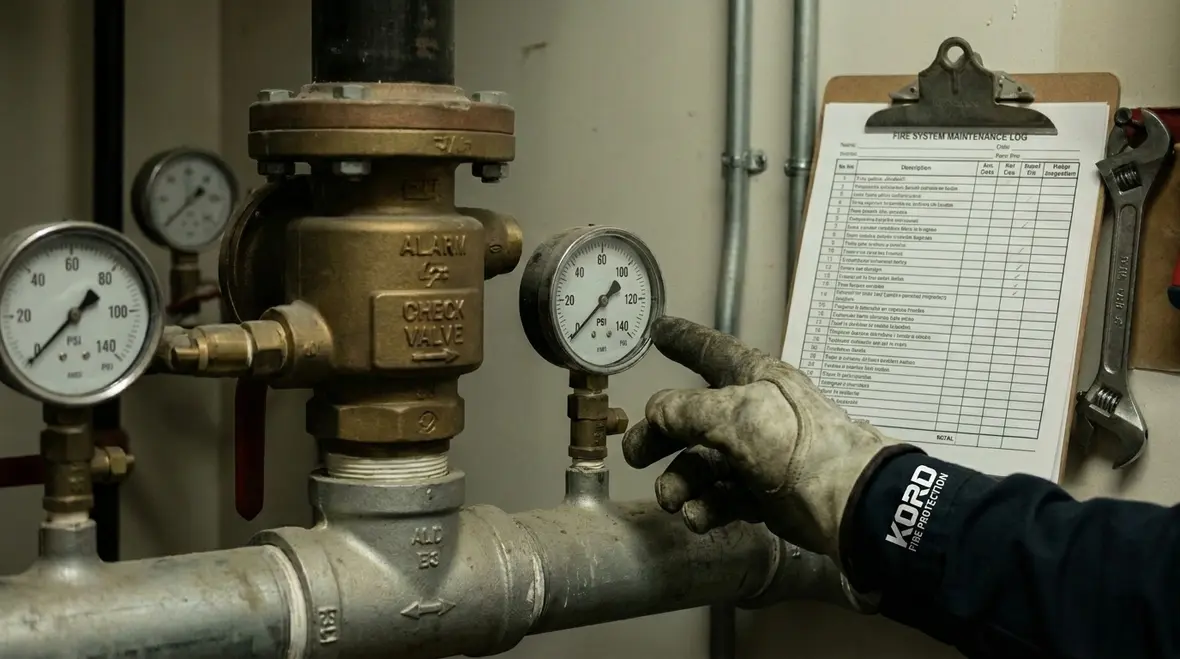
Hydraulic and system condition checks for reliable performance
Inspection also connects to performance. Inspectors consider the overall system condition, including readiness of components that affect flow and pressure. They evaluate whether the system appears to remain in serviceable condition after changes in the building. Kord’s NFPA 25 overview notes that the standard covers sprinklers, valves, fire service mains, fire pumps, tanks, and common components, which supports a broad system condition mindset rather than a narrow component-only view. ([kordfire.com](https://kordfire.com/nfpa-25-overview-complete-water-based-fire-protection-systems-maintenance-breakdown/?utm_source=openai))
Common drivers of findings include ceiling renovations, new partition walls, increased storage density, rerouted services, and plant expansions. Even when nobody technically “touches the sprinkler system,” work around it can still alter the environment the sprinklers are supposed to protect. That is why an inspection has to look past the hardware and into what the hazard environment looks like today.
Kord Fire Protection also supports facilities by helping teams track patterns across inspections. Recent Kord content on automated monitoring and remote reliability makes a practical point: trends tell a more honest story than a single note on a single day. When the same type of finding repeats in the same kind of area, the better response may be a process fix, staff training, or a scheduling improvement, not just another bandage on the symptom. ([kordfire.com](https://kordfire.com/commercial-fire-sprinkler-automation-with-automated-monitoring/?utm_source=openai))
Clear documentation, reporting, and how Kord Fire Protection helps
A sprinkler inspection is only half the job. The other half is making sure the results are usable. Effective documentation includes what was inspected, what was observed, what needs corrective action, and what timelines should apply. It should also support stakeholders who do not live in the world of fire systems every day. Kord’s full fire protection services page highlights inspection, service, readiness, and seamless scheduling as part of that bigger support role. ([kordfire.com](https://kordfire.com/full-fire-protection-services/?utm_source=openai))
Kord Fire Protection can become a vital partner with this service job by bringing structure and continuity. Facilities often manage multiple sites, shifting priorities, and different contractors. It is easy for standards to drift when each visit runs on different assumptions. An organized partner helps keep inspections aligned, reporting consistent, and follow-up actions clear. If the site also wants to understand how repeated issues are identified in the field, Kord’s article on fire suppression deficiencies found in inspections adds helpful context. ([kordfire.com](https://kordfire.com/fire-suppression-deficiencies-found-in-inspections-by-kord/?utm_source=openai))
And yes, paperwork can feel like a villain in a superhero movie. But in this story, good documentation is the sidekick that stops the villain before it causes damage. It supports audits, helps insurance and compliance conversations, and makes internal maintenance decisions much easier.
Dual column: Typical findings and practical next actions
Potential finding during inspection
Sprinkler damage, paint overspray, or missing components
Obstructions near sprinklers or changed storage layout
Valve trim issues, abnormal gauge readings, or poor device condition
Evidence of construction impact, ceiling changes, or rerouted services
Practical next action
Replace or clean and reinstate correct condition, then verify surrounding work will not reoccur
Remove the obstruction, adjust storage practices, and confirm coverage still aligns with the hazard
Schedule corrective maintenance, then reinspect the affected area after work is completed
Confirm layout impact, update records, and assess whether added inspection or design review is needed
Featured snippet FAQ for sprinkler inspections in commercial buildings
When teams want to stay ahead, they schedule the inspection like it matters
Commercial buildings need sprinkler systems that perform with confidence, not guesswork. A well-run NFPA 25 § 5.2 inspection process protects occupants and supports compliance with clear records. Kord Fire Protection can assist as a dependable partner for sites that need consistency across industrial, retail, and facility environments. Their service pages emphasize full coverage, inspection readiness, and coordinated support for sprinkler-related work. ([kordfire.com](https://kordfire.com/full-fire-protection-services/?utm_source=openai))
When teams stay ahead of deficiencies, they gain more than a tidy report. They gain planning time, budget control, and fewer unpleasant surprises. Reach out to arrange an inspection aligned to your site schedule, and get a practical action plan you can actually use. Because in fire protection, boring reliability is the real hero, and that hero deserves a calendar invite.

Join Our Newsletter!
Get the latest fire safety tips delivered straight to your inbox From our Newsletter.