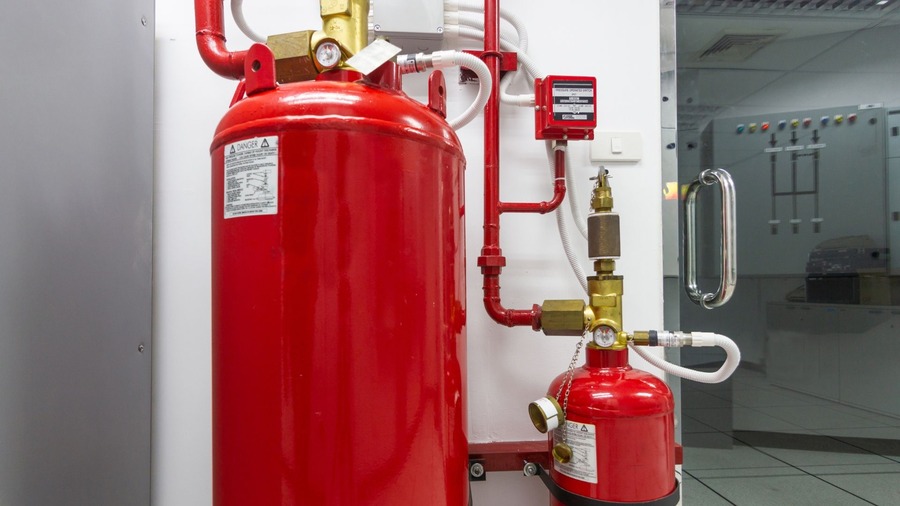
NFPA 25 Sections 5.1 to 5.5 Inspection Testing Maintenance Actions
Quick Answer
NFPA 25, Sections 5.1 through 5.5, sets the rules for inspecting, testing, and maintaining sprinkler systems, plus what actions to take when problems appear. In Australia’s industrial and commercial settings, kord fire protection helps facilities stay compliant, reduce downtime, and protect people and assets with dependable service. Teams that need broader support can also explore full fire protection services for coordinated inspection, repair, testing, and readiness planning across active sites.
NFPA 25 §§ 5.1 to 5.5: What the rules demand
NFPA 25 sprinkler system inspection, testing, maintenance and action requirements create a clear path from routine checks to corrective steps. In other words, the standard does not just ask for paperwork. It expects a living program that catches issues early, documents outcomes, and triggers repairs when the system cannot perform as intended. For facilities across Australia, this matters even more because downtime costs real money, and “we’ll look at it later” usually turns into “why is everything wet?”
kord fire protection supports organizations that operate in industrial, retail, and commercial environments where asset protection and operational continuity matter. The goal is simple: keep systems ready, keep audits calm, and keep teams from treating sprinkler maintenance like an optional DLC. For additional background, readers can also review this NFPA 25 overview and maintenance breakdown, which pairs well with the section-by-section focus here.
Inspection routines that prove the system is ready
Visibility, access, and condition matter more than good intentions
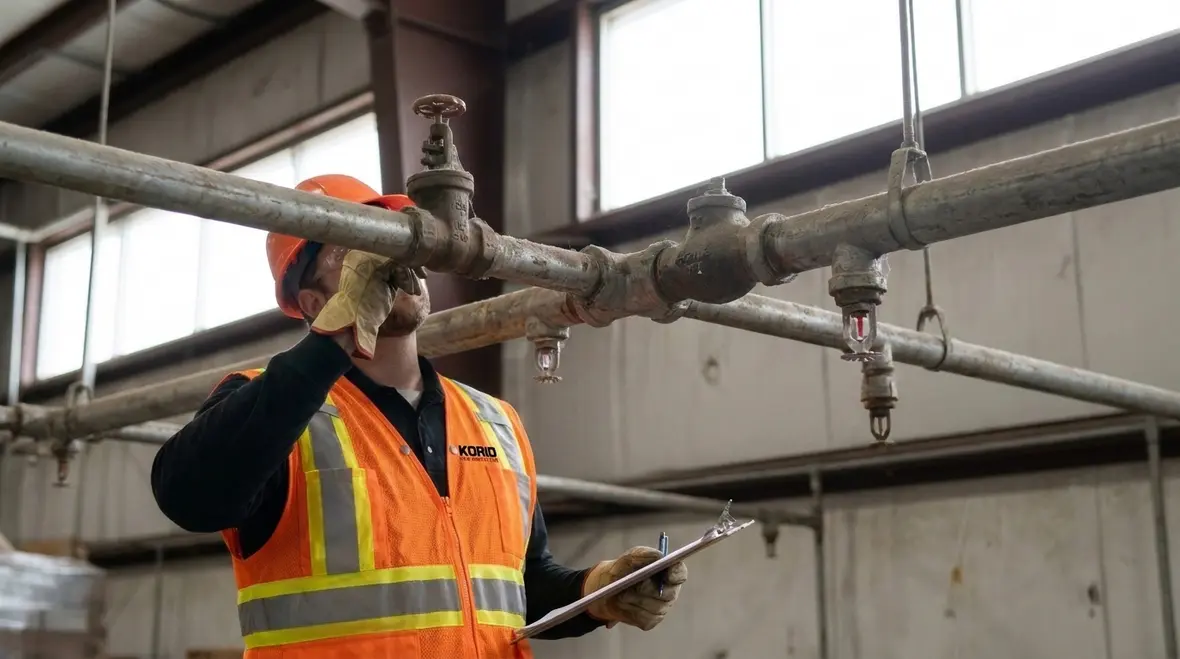
NFPA 25 Sections 5.1 to 5.5 begin with inspection expectations, and the standard focuses on ensuring equipment stays in reliable condition. Facilities must check that sprinkler components remain unobstructed, visible where required, and free from damage. In practice, this means coordinating inspections around warehouses, plant rooms, ceilings, racks, mezzanines, and storefront areas.
To make this work, kord fire protection builds inspection programs that match real site operations. For example, a distribution centre might need staged access so inspectors can reach sprinkler pipes without shutting down pick lines. Meanwhile, retail fit-outs can change fast, and ceilings get modified during refurbishments. As a result, inspections must keep pace with the environment instead of lagging behind it.
Additionally, facilities should track recurring issues. If the same area shows recurring obstruction or minor damage, the inspection program should respond with targeted attention and better controls. That is how compliance turns into prevention. A site that notices repeat faults early is far less likely to discover them during an emergency, which is an awfully dramatic time to learn a valve or head has been ignored.
Inspection is where site reality meets code expectations
This is also where communication becomes part of compliance. Operations teams, facilities managers, contractors, and safety personnel need to share the same picture of what is changing on site. New storage layouts, added cable trays, temporary partitions, and renovation staging can all affect sprinkler performance or accessibility. If no one tells the inspection team, the site may drift out of readiness while still assuming everything is fine. That assumption has betrayed many confident people.
Testing that finds weakness before it becomes a headline
Testing confirms performance, not just existence
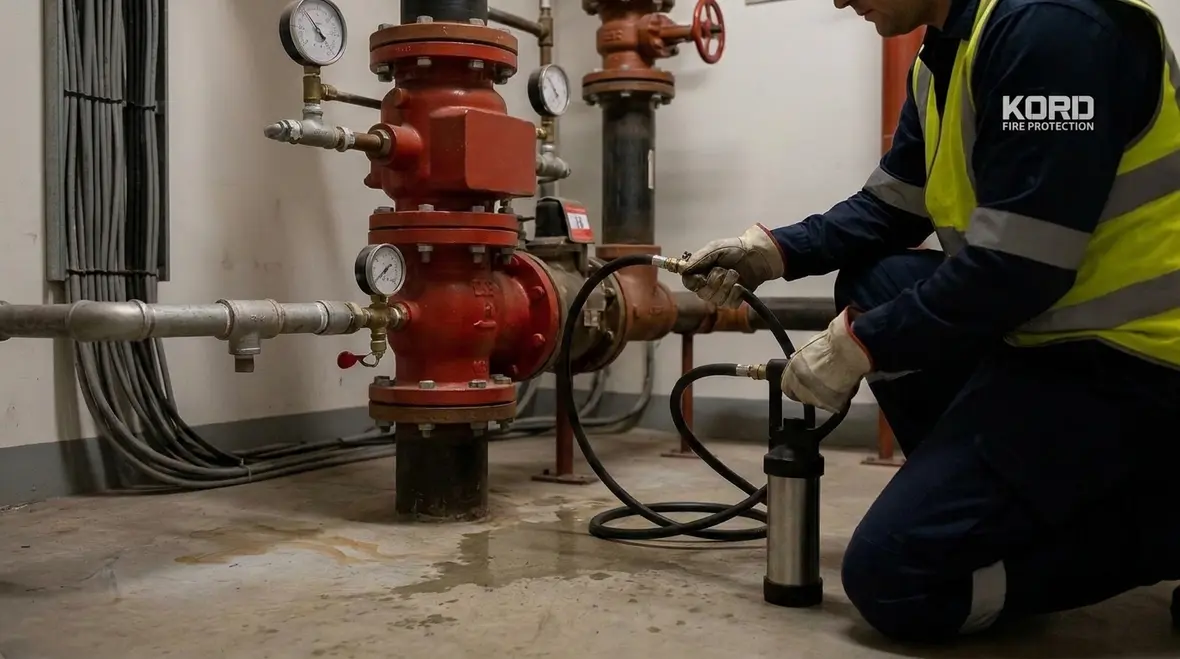
Testing requirements in NFPA 25 aim to confirm system performance rather than simply confirm that parts exist. Over time, valves can stick, gauges can drift, water supplies can change, and system pressures can behave differently than expected.
In a commercial or industrial setting, testing must also respect operations. Teams often share spaces with production schedules, busy trading hours, or high-traffic logistics. Therefore, well-planned testing uses careful timing, clear communication, and procedures that reduce disruption. It is not just about passing an inspection. It is about proving the system can do its job when it matters.
kord fire protection helps facilities prepare for testing by aligning documentation, access, and maintenance history. When the right people know the plan in advance, testing becomes a controlled process instead of a last-minute scramble that makes everyone look like they are hunting for a missing fire extinguisher in a horror movie.
Good testing plans reduce friction across the whole facility
That planning matters because testing rarely happens in a vacuum. Security may need to manage access, management may need outage notice, tenancy teams may need communication, and maintenance teams may need follow-up windows for repairs. When those pieces are aligned, the test does what it is supposed to do: reveal the truth about system condition without creating unnecessary chaos. That is a much better outcome than making half the building wonder why alarms are sounding and why someone suddenly has a clipboard and a thousand-yard stare.
Maintenance obligations: keep parts in spec, keep operations moving
Maintenance is the bridge between findings and reliability
NFPA 25’s maintenance expectations cover keeping components in proper working order. That includes addressing issues found during inspection, ensuring valves and water-flow devices operate as intended, and maintaining records that show the system receives proper care.
Maintenance also includes responding to changes on site. For facilities across Australia, ceiling work, cable trays, sprinkler alterations, and rack expansions can affect sprinkler layouts. Even minor changes can create new obstructions or alter conditions around heads and piping. Consequently, maintenance cannot be isolated from facility management and construction coordination.
When kord fire protection manages maintenance activities, the focus stays on stability. Corrective actions get scheduled with awareness of production and customer flow. Moreover, the right documentation gets captured so internal teams and auditors can see the “what, when, and why” without turning compliance into interpretive dance.
Action requirements when conditions fail expectations
Deficiencies need a response, not a bookmark
NFPA 25 includes action requirements that kick in when inspection or test results show the system does not meet required conditions. This is where many facilities feel the pressure. The standard expects prompt handling of deficiencies, because a sprinkler system that cannot perform fully turns an incident into a much bigger problem.
Action typically includes identifying the deficiency, determining its impact, and restoring the system to an acceptable state. In many sites, that means coordinating repairs quickly, verifying performance after repairs, and updating the system record so the facility can prove the issue has been corrected.
kord fire protection acts as a practical partner here. They help facilities triage findings and plan corrective steps in a way that supports continuity. Instead of vague promises, the process turns into a clear pathway: find the issue, fix the issue, test the fix, and document the outcome. That is how organizations stay confident while keeping the operation steady.
Documentation and audits: turn compliance into a business asset
Clear records make audits faster and decisions better
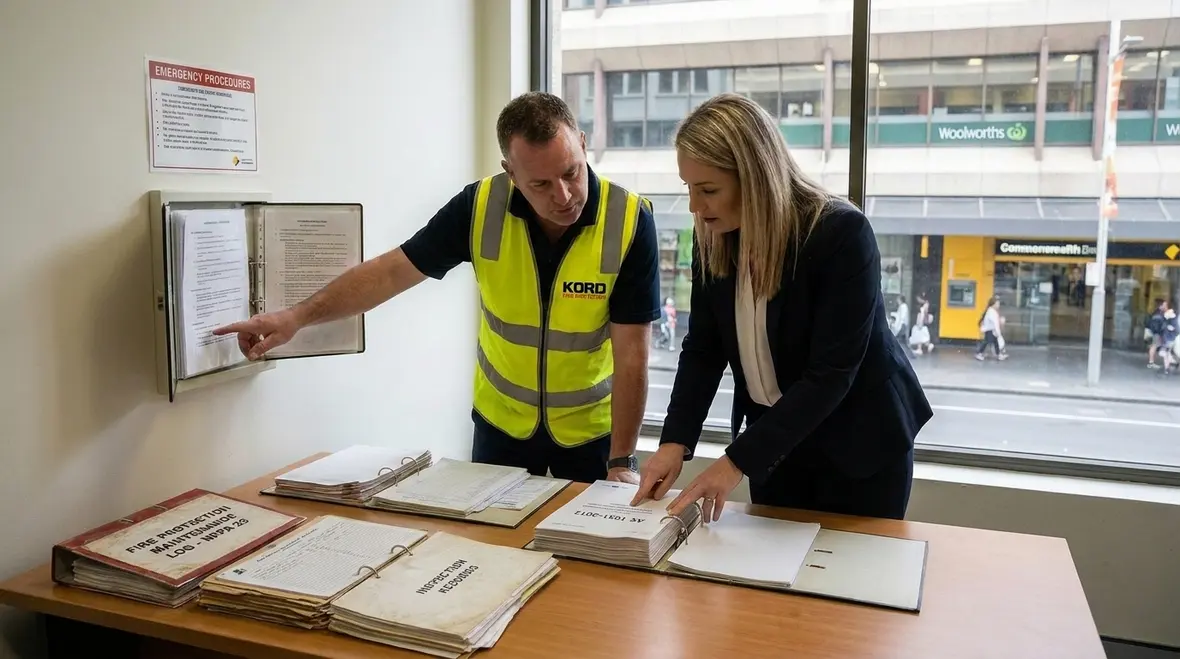
Inspections, testing, and maintenance only matter when records tell the story. NFPA 25 expects facilities to maintain documentation that reflects the system’s condition, the work performed, and any corrective actions taken. In audits, clarity wins. A neatly maintained record reduces friction, speeds review, and prevents repeated follow-up questions.
For facilities in Australia, audits often involve multiple stakeholders such as site leadership, facilities management, insurers, and safety teams. Therefore, documentation needs to connect to operational realities. It should show that the facility executed sprinkler system inspection testing maintenance activities on schedule, captured results accurately, and responded to deficiencies with evidence.
kord fire protection can help standardize record-keeping so facilities spend less time assembling binders and more time running their business. After all, no one wants compliance to feel like a scavenger hunt. And if someone has ever opened a shared folder named “FINAL final reports use this one” and found six versions, they already know why document discipline matters.
Building a compliant program across industrial and retail sites
The execution changes by site, but the discipline stays the same
Different facilities face different risk patterns. Industrial sites often have obstructions from equipment and process changes. Retail sites often face frequent fit-outs and ceiling modifications. Commercial sites have shared building systems and multiple tenants. Across these environments, NFPA 25 requirements still apply, but the execution must match the way the site operates.
Below is a dual-column example of how a facility can structure a practical program. This supports planning and keeps the routine from becoming chaos.
| Program Element | How kord fire protection helps |
|---|---|
| Inspection scheduling aligned to site access | Coordinates work windows so production and customer flow stay stable |
| Testing with clear disruption planning | Plans pressure checks and performance validation with accurate documentation |
| Maintenance that reacts to site change | Tracks sprinkler system inspection testing maintenance history and updates procedures |
| Corrective actions with verification | Repairs deficiencies, verifies performance, and documents completion |
| Audit-ready reporting | Organizes evidence so internal teams and auditors review faster |
FAQ: NFPA 25 inspection, testing, maintenance and actions
Final word: choose a partner that keeps the system ready
NFPA 25 §§ 5.1 to 5.5 expect more than occasional checks. They demand inspection, testing, maintenance, and clear action when conditions fail. For industrial, retail, and commercial facilities across Australia, kord fire protection helps teams stay compliant, reduce downtime, and prove system readiness with strong documentation.
Reach out to kord fire protection and build a program that runs smoothly long after the paperwork is filed. The best compliance program is the one that keeps the system ready before anyone needs it, not the one that looks impressive only after someone starts asking difficult questions.

Join Our Newsletter!
Get the latest fire safety tips delivered straight to your inbox From our Newsletter.