
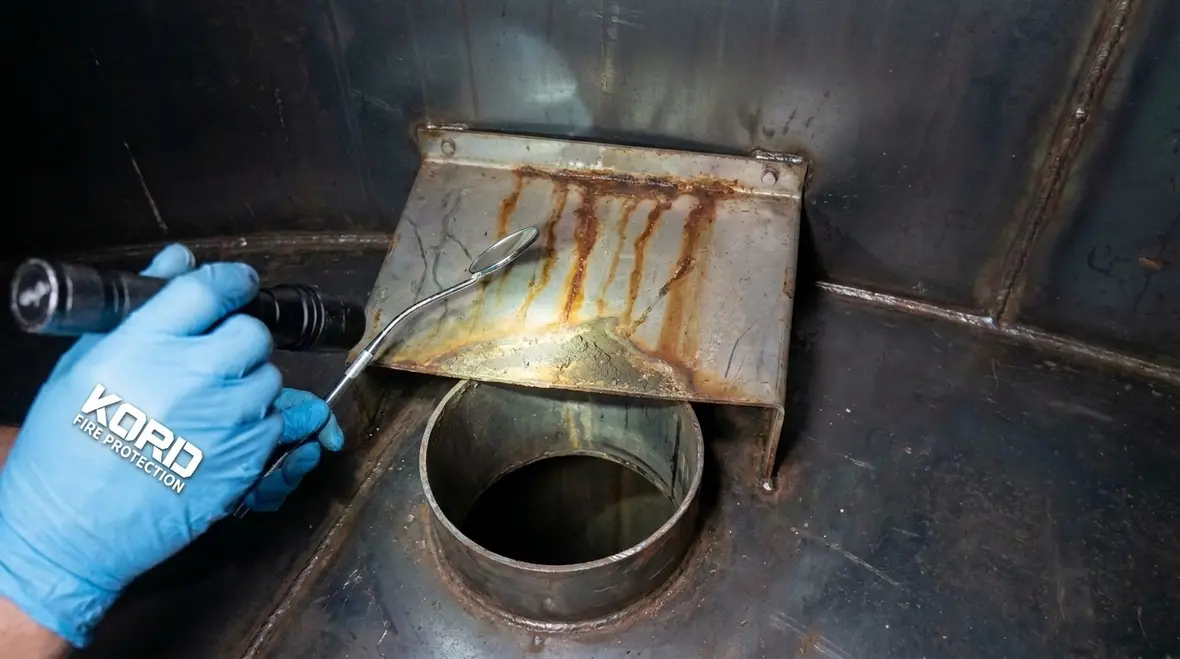
NFPA 22 Section 17.11: Anti-Vortex Plate Inspection for Water Tanks
Quick Answer
NFPA 22 Section 17.11 requires periodic inspection of anti-vortex plates to confirm they remain correctly positioned, unobstructed, and in sound condition. Proper inspection helps prevent vortex formation, protects pump performance, and reduces the risk of water supply failures during fire flow.
If your team is also tightening up pump-side reliability and documentation, see fire pump inspection, testing, and maintenance guidance for a practical companion to tank compliance.
Why anti-vortex plate inspection matters for NFPA 22 water tanks
Anti-vortex plate inspection water tanks NFPA 22 requirements exist to address a common, high consequence failure mode: air entrainment from vortex formation at the tank suction during high flow. Even when tank capacity and pump curves look acceptable on paper, improper plate condition or placement can degrade suction performance, reduce effective water delivery, and create unstable pump operation under fire demand.
Commercial and industrial facilities often run multiple water systems in parallel, including sprinkler supply, standpipe systems, process water loops, and fire pumps tied to emergency power. That operational complexity increases the likelihood of intermittent maintenance gaps, construction impacts, and post modification misalignment. Anti-vortex plates provide a mechanical barrier that stabilizes flow into the suction region. NFPA 22 Section 17.11 focuses on verifying that barrier remains functional and compliant.
What NFPA 22 Section 17.11 expects during inspection
Section 17.11 centers on inspection of the anti-vortex plate components associated with water tanks that supply fire protection systems. Inspectors evaluate both condition and installation integrity. The practical goal is simple: ensure the anti-vortex plate continues to perform its intended flow control function without obstruction, damage, or drift from design.
Common inspection targets
- Correct positioning: The plate must remain in its required location relative to the tank suction opening and internal flow path.
- Physical condition: Plates must not be warped, cracked, corroded through, or otherwise compromised.
- Attachment integrity: Brackets, hangers, welds, bolts, or supports must remain secure and not loosen over time.
- Obstruction check: The plate face and immediate region must not be blocked by debris, scale, sediment, biological growth, or construction residue.
- Clearance and alignment: The spacing that controls vortex suppression must not be altered by repairs or internal modifications.
Operational reality: what triggers inspection findings
In the field, inspection failures often show up during or after conditions like roof or hatch work, tank liner repairs, suction piping changes, pump maintenance, or water supply interruptions that disturb sediment. Facilities that cycle systems for non fire uses can also increase internal turbulence and sediment migration, indirectly affecting the area around the anti-vortex plate.
Inspection procedure: how crews verify anti vortex performance condition
Effective inspection blends documentation discipline with hands on verification. The inspection team should treat each tank as a controlled, repeatable process, especially in commercial, industrial, and retail environments where multiple stakeholders request rapid turnaround.
Step 1: Prepare the tank safely and control access
- Confirm tank access permits, confined space requirements, and ventilation controls if applicable.
- Establish lockout and control measures for any associated pumps or valves.
- Verify lighting and visibility for internal plate surfaces and suction interface areas.
Step 2: Confirm plate location and alignment
Crews compare observed plate placement against installed configuration using design drawings, prior inspection photos, or manufacturer submittals. They focus on whether the plate has shifted due to physical impacts, thermal effects, or loosened supports. Even minor misalignment can reduce vortex suppression effectiveness.
Step 3: Assess damage, corrosion, and structural integrity
Inspectors check plate faces, edges, and supports for deformation or loss of material. Corrosion under coatings, weld cracking, or thinning around attachment points often precedes full failure. The inspection should identify whether corrective action needs fabrication repair, replacement, or engineering evaluation.
Step 4: Remove and evaluate obstructions
Debris and sediment layers can create a hidden obstruction that does not look significant from the hatch opening. Crews must physically verify clear flow paths in the plate region. They should also evaluate whether the same sediment source appears elsewhere in the tank, which may indicate a maintenance or water quality issue beyond a single plate.
Step 5: Verify suction interface conditions
Anti vortex plate performance depends on the suction region configuration. Inspectors should verify that the suction opening and nearby piping interfaces have not changed due to rework, gasket replacement, internal baffle modifications, or cover modifications.
Step 6: Document findings in a compliance usable format
Documentation typically includes date, tank ID, access method, observed plate condition, obstruction details, photo evidence, measurements if taken, and recommended corrective actions. Facilities that operate under multiple compliance regimes benefit from consistent reporting practices that reduce rework during audits.
Common failure points seen during anti vortex plate inspections
Anti vortex plate inspections tend to uncover issues that appear minor but drive major system performance consequences. The following failure points recur across commercial and industrial tank installations:
Loosened or corroded supports
Supports can corrode at contact points or loosen from vibration over time. A plate that sags or shifts can stop suppressing vortex formation and can worsen suction instability during fire flow.
Sediment buildup and biological growth
Silt, scale, and biological growth accumulate in low velocity zones. When buildup occurs near the plate, the effective barrier function changes and can increase air entrainment risk.
Construction debris after modifications
Internal work, roof hatch replacement, or suction piping repairs can leave residue. Even if debris remains small, it can interfere with plate performance by altering the flow profile at the suction inlet.
Plate warping or coating failure
Thermal cycling and corrosion can warp plates or damage protective coatings. Inspectors must recognize early deformation and coating breakdown around edges and attachment points, not only obvious holes or major cracks.
Incorrect replacement during maintenance
Facilities sometimes replace components with similar looking parts that do not match required geometry or clearance. This error often surfaces during the first inspection cycle after a project or pump system upgrade.
How to manage compliance in commercial facilities: a practical maintenance strategy
Most compliance problems do not stem from a lack of awareness. They stem from fragmented responsibilities, delayed access to tanks, inconsistent documentation, and difficulty coordinating corrective work during occupied operating hours. A practical strategy focuses on reducing variability and ensuring repeatable outcomes.
Create an inspection and corrective action workflow
- Schedule access windows that align with facility operations and safety requirements.
- Standardize inspection documentation with photo capture points and clear pass fail criteria.
- Track corrective actions with clear ownership, timelines, and verification steps after repair.
Integrate tank inspection with broader NFPA 22 water tank compliance
Anti vortex plate inspection should not be treated in isolation. Other water tank compliance elements affect reliability, including overall water supply integrity, conditions that contribute to sediment, and system readiness. For additional context on how NFPA 22 regulates fire protection water tanks, review: how NFPA 22 regulates fire protection water tanks.
Use Kord Fire Protection for ongoing testing, maintenance, and documentation
Kord Fire Protection supports commercial and industrial facilities by providing inspection planning, on site verification, and compliance documentation that withstands audit scrutiny. For managers who need consistent results across multiple sites, Kord Fire Protection helps coordinate corrective recommendations and provides a clear maintenance pathway so anti vortex plate inspection water tanks NFPA 22 requirements remain met over time, not just at inspection.
For more suction-side context, review anti-vortex plate specification and installation guidance to connect inspection findings back to proper configuration and performance expectations.
Frequently Asked Questions
Next step: schedule your inspection and close compliance gaps
Commercial facilities should not wait for an audit or an incident. Kord Fire Protection can plan access, perform anti-vortex plate inspection water tanks NFPA 22 focused verification, and produce compliance grade documentation with corrective action recommendations. Contact Kord Fire Protection to schedule a tank inspection, confirm repeatable maintenance controls, and reduce the risk of suction performance issues during fire demand.

Join Our Newsletter!
Get the latest fire safety tips delivered straight to your inbox From our Newsletter.



