
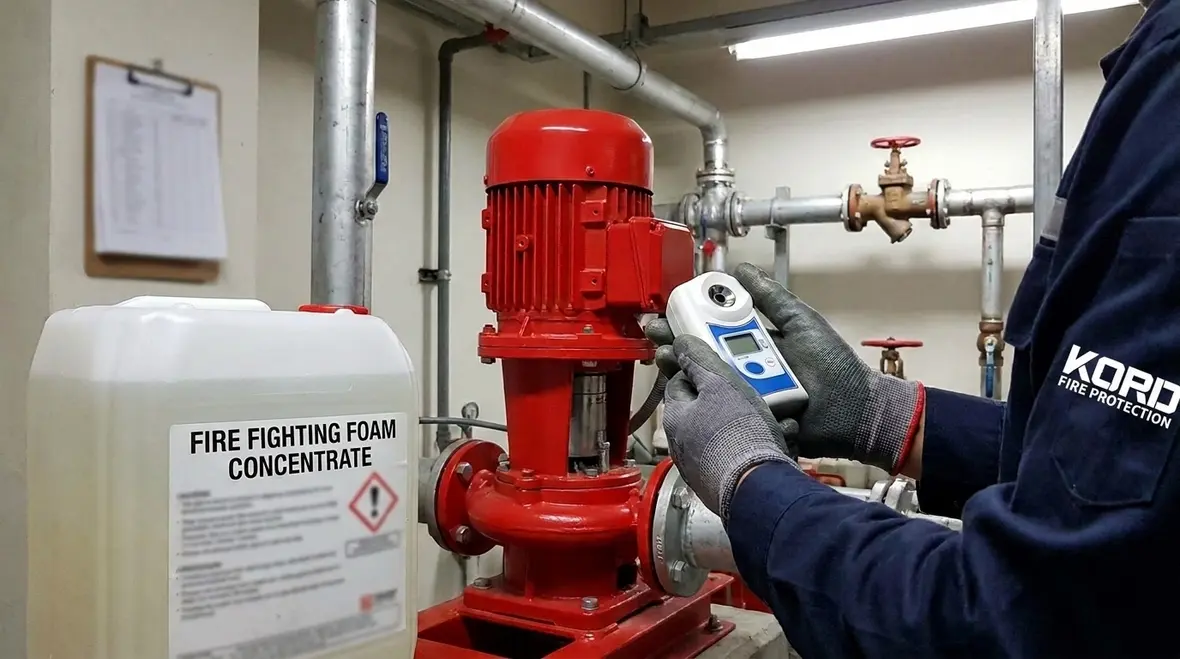
NFPA 18A Section 1.3: Which Products and Operations Fall Under the Water Additive Standard
Quick Answer
NFPA 18A applies to water additive systems used in fire extinguishing and related operations where additives alter the water’s fire performance. In practice, the standard covers specific additive types and concentrations rather than every water treatment product used on site. Facilities must confirm product classification and operating conditions to comply.
The practical compliance question for facilities is straightforward: which water additives are covered by NFPA 18A and which ones are not. NFPA 18A Section 1.3 defines the scope by identifying the product categories and operations that fall under the water additive standard. For commercial, industrial, and retail facilities, the difference between an “ordinary water additive” and a “fire extinguishing water additive” drives design control, installation requirements, inspections, and recurring maintenance.
Because misuse or misclassification can lead to system underperformance, NFPA 18A compliance is not only a documentation exercise. It affects how pumps draw additives, how proportioning equipment is verified, how concentration is maintained, and how inspection programs detect drift, contamination, or improper substitution.
If your team is already tightening inspection routines, it also helps to review a broader inspection, testing, and maintenance approach for fire protection systems so additive performance does not get treated like a mysterious side quest during compliance season.
What NFPA 18A Section 1.3 Is Trying to Control
NFPA 18A Section 1.3 is written to ensure that only water additives intended for fire extinguishing performance are treated as governed products. The standard focuses on additive formulations and deployment methods that change the water’s behavior during extinguishment, including surface interaction, heat absorption characteristics, or foam and wetting behavior depending on the design basis.
For onsite compliance, the scope hinges on three practical factors:
- Intended use: The additive must be used as part of a fire extinguishing system or operation governed by the standard, not merely as a facility maintenance chemical.
- System configuration: The additive must be proportioned or otherwise introduced in a controlled way that affects extinguishing performance.
- Concentration control: Many governed additive formulations require strict concentration windows, and operating outside them can impair agent performance.
Facilities that treat extinguisher or suppression water as “general purpose treated water” often miss this boundary. A typical commercial risk is substituting a multi use cleaner, scale remover, or corrosion inhibitor without confirming whether the system expects a specific water additive chemistry.
Which Water Additives Are Covered by NFPA 18A?
In the real world, the most common misunderstanding is assuming “any additive in water” is covered. NFPA 18A is narrower. The standard focuses on additives engineered to improve fire extinguishing performance and deployed through systems designed for that purpose.
When operators talk about governed concentration targets, documentation often references additive dosing ranges in the order of 0.5% to 1.0% for certain approved additive products and system designs. That concentration range matters because it drives proportioning setpoints, acceptance testing, and routine verification. If the installed additive does not match the system’s required concentration basis, the facility can drift into noncompliance even if the system “still flows water.”
Operationally, NFPA 18A covered products typically include:
- Proportioning controlled fire extinguishing water additives used to meet an established design performance objective.
- Manufacturers’ approved additive formulations when they are used as fire system components within governed concentration limits such as 0.5%-1.0%.
- Additives used in foam or wetting related fire performance roles when introduced to the extinguishing water through approved mechanisms.
Key takeaway for facilities: if the additive is introduced to change fire response, and the system design depends on that change, which water additives are covered by NFPA 18A is determined by the additive’s classification for fire performance and by the dosing and control method.
Operations That Trigger the Standard: Where Compliance Fails
Section 1.3 does not only cover products. It also covers operations. Many compliance failures begin during normal day to day facility actions that seem unrelated to firefighting.
1) Additive introduction that is not part of the fire system
Common example: facility staff treat suppression water reservoirs with corrosion inhibitors or prevent scaling, then later the fire system draws from the same water source. If the additive is not the approved fire extinguishing additive, the system can end up with altered chemistry that affects extinguishing performance. That is a scope and performance problem, not simply a housekeeping issue.
2) Proportioning equipment setpoint drift
Many governed systems rely on proportioners, suction lines, injectors, or similar mechanisms to meter additive into water. Over time, failure points include suction hose degradation, clogged strainers, worn metering parts, air entrainment, and incorrect replenishment practices. Any change that shifts the additive concentration away from the expected band, often referenced around 0.5% to 1.0%, undermines compliance and system reliability.
3) Cross substitution during reorders
Purchasing substitutions are a major risk. A vendor may provide a different concentration, different chemistry, or a “compatible” product that seems reasonable for corrosion control but does not match the fire additive design basis. Even small formulation changes can impact foam quality, wetting performance, or thermal interaction.
Facilities reduce this risk by controlling the chain from approved product list to receiving inspection to proportioner verification and documented concentration testing.
How to Verify Coverage and Concentration in a Commercial Facility
Verification requires both document review and field measurement. A compliance program should confirm that the installed additive is the approved fire extinguishing additive for the specific system, and that concentration remains within the required range such as 0.5%-1.0% when that is the system basis.
Step 1: Confirm the system’s design basis and dosing method
- Identify the suppression application covered by NFPA 18A and the role of the additive in extinguishing performance.
- Verify whether the system uses a proportioner, injector, or batch mixing approach.
- Locate the approved additive specification and the expected concentration window.
Step 2: Confirm product identity at receiving
- Check product labeling, concentration rating, and supplier documentation.
- Match the additive brand and formulation to the fire system’s approved list.
- Record lot numbers and storage conditions that can influence performance.
Step 3: Verify concentration through testing, not assumptions
Concentration verification typically requires field or laboratory testing methods consistent with system requirements. A strong inspection program includes periodic measurement and documented trending to catch gradual drift caused by dilution errors, evaporation, refilling practices, or clogged dosing components.
Step 4: Inspect additive delivery mechanisms
Proportioning and delivery equipment should be inspected for the common failure points that lead to concentration drift:
- Strainers and filters that accumulate debris
- Vacuum or suction line integrity issues
- Air leaks that create inconsistent injection rates
- Check valves that stick or fail to seal
- Calibration and setpoint verification
Facilities that combine this approach with a robust service schedule typically prevent surprises during inspections. For more guidance on managing code requirements and practical compliance planning, see Kord Fire Protection’s NFPA codes and guidelines solutions.
Commercial Compliance and Maintenance: What Auditors Commonly Look For
On inspection day, auditors expect proof that the additive is covered under the standard, installed correctly, and maintained to the required performance basis. The operational evidence usually includes records of product control, testing, and maintenance actions.
High value audit items include:
- Approved product documentation showing the additive used matches the system design and concentration basis, often referenced around 0.5%-1.0%.
- Concentration test results with dates, method references, and any corrective actions.
- Proportioning equipment inspection logs including calibration checks and component condition.
- Change control records documenting any additive substitutions, system modifications, or water source changes.
- Staff training records showing who can replenish additives and how they are verified.
Common “gotchas” that lead to findings include missing concentration logs, evidence of additive substitution without documented approval, and proportioners found with blocked filters or failed injection components.
Kord Fire Protection supports commercial facilities with ongoing inspection, testing, and maintenance programs that align system performance with NFPA expectations. This reduces operational downtime and limits compliance exposure created by delayed corrective action.
Frequently Asked Questions
Call to Action
To confirm which water additives are covered by NFPA 18A for your exact system, facilities should validate product identity, dosing method, and concentration verification procedures before issues appear during inspections. Kord Fire Protection can help with compliance driven inspection, testing, and maintenance that protects extinguishing performance and documentation integrity. Schedule an assessment to review additive scope, proportioning controls, and your ongoing service plan.

Join Our Newsletter!
Get the latest fire safety tips delivered straight to your inbox From our Newsletter.



