
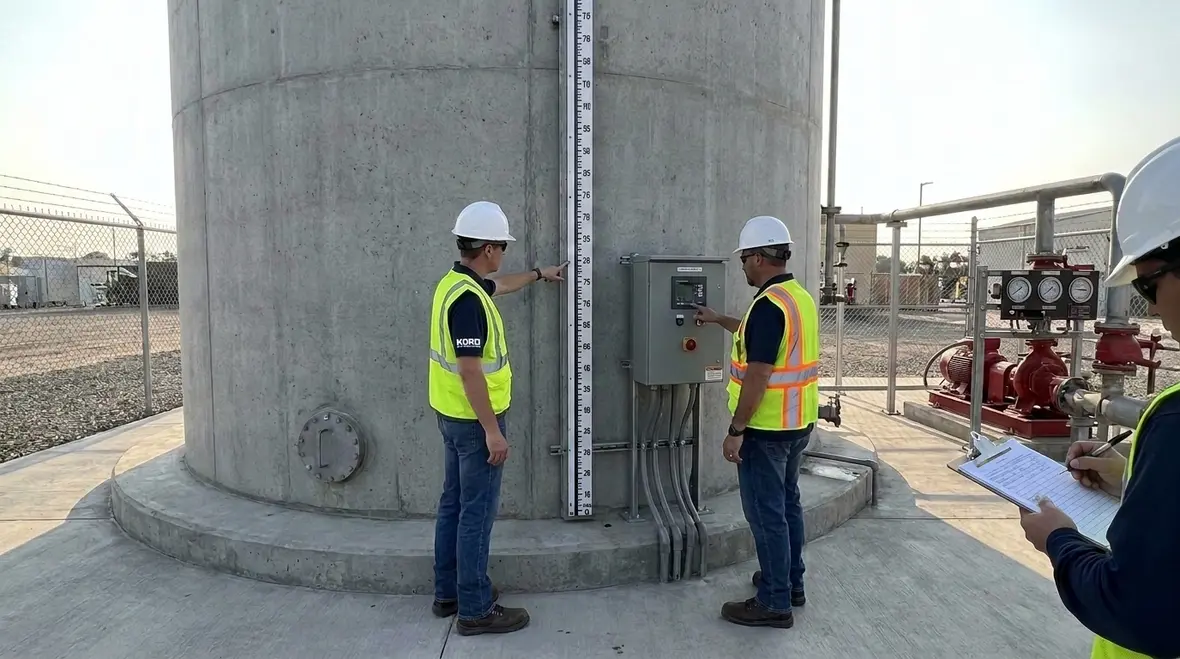
NFPA 22 Section 17.7: Acceptance Testing for Concrete Water Tanks
Quick Answer: NFPA 22 Section 17.7 requires documented acceptance testing for concrete water tanks before the system is placed into service. The process verifies water supply quality, mechanical readiness, structural integrity where applicable, and that the tank performs within the design intent for the fire protection system.
Why “acceptance testing” matters before the first alarm
Concrete water tank acceptance testing requirements directly protect reliability. In commercial and industrial facilities, the tank is not just storage. It supports system hydraulics, pump suction conditions, and operational response during fire scenarios. When tanks are constructed, modified, or relocated, acceptance testing verifies that the water supply and interfaces meet the rules that govern fire protection performance.
Facilities in retail, warehousing, healthcare, and manufacturing often face the same reality: building occupancy cannot wait for extended rework. Acceptance testing compresses timelines by establishing objective pass and fail criteria early, reducing the risk that deficiencies remain hidden until commissioning or seasonal inspections.
Facilities coordinating tank readiness with broader water based system performance can also benefit from fire pump inspection and testing services that help verify the equipment downstream of the tank is prepared to respond without hesitation.
Where NFPA 22 Section 17.7 fits in the tank lifecycle
Acceptance testing under NFPA 22 occurs after construction and before the system is released for operational use. Section 17.7 applies to concrete water tanks supplying fire protection water, typically for sprinkler systems, standpipes, or other connected fire protection components. The goal is to confirm the tank is ready to deliver required water quantity and quality at the required time.
Because concrete tanks integrate with fills, drains, overflows, strainers, level control devices, and sometimes associated controls, acceptance testing also validates that all interfaces function as intended. This includes ensuring that tank accessory components do not create restrictions or failure conditions that later compromise water delivery.
To understand how NFPA 22 regulates fire protection water tanks and what other sections typically influence acceptance outcomes, review: How NFPA 22 regulates fire protection water tanks.
Concrete water tank acceptance testing requirements: what inspectors typically verify
While exact acceptance test items depend on the tank design and connected fire protection system, NFPA 22 Section 17.7 acceptance testing commonly focuses on verifiable operational performance and system interfaces. Compliance teams should plan testing with clear observation points, measurable parameters, and documented results.
1) Mechanical readiness and water path functionality
-
Fill and overflow behavior: Inspect fills, overflow outlets, and any weir or discharge arrangement for proper operation and to prevent unintended draw or air entrainment into connected suction lines.
-
Drain and strainer conditions: Confirm that drains and strainers are installed correctly and that accessible components remain serviceable for future maintenance.
-
Level control response: Verify that level control devices actuate pumps or alarms within the acceptance criteria required for system continuity and safe operating ranges.
2) Water supply performance and system interface checks
-
Effective available water: Validate that usable volume aligns with design and does not get reduced by obstructions, incorrect invert elevations, or inaccessible dead zones.
-
Suction reliability: Ensure the tank geometry and connected suction arrangement do not introduce persistent air traps or vortex conditions that can degrade pump performance.
-
Operational timing: Confirm that when demands occur, the tank and connected equipment transition predictably without prolonged delay.
3) Construction acceptance and condition verification
Concrete tanks must meet workmanship and integrity expectations because structural and lining issues can directly affect long term serviceability and water quality stability. Acceptance testing typically coordinates with construction closeout documentation and inspections to ensure that the tank does not show signs of cracking patterns, leakage pathways, or component misalignment that can later become noncompliant or unsafe.
Common failure points that derail acceptance tests
Commercial facilities often invest in the tank and the associated fire pump room equipment, but acceptance failures frequently originate at the interfaces and operational controls. Anticipating these issues reduces rework cost and minimizes schedule impact.
-
Level control miscalibration: Improper setpoints cause premature pump cycling, delayed response, or alarm conditions that do not match the required operating sequence.
-
Incorrect elevations and submerged restrictions: Small installation errors can reduce effective water availability or change suction conditions enough to disrupt pump performance.
-
Disconnected or obstructed accessories: Partially blocked strainers, incorrect drain valve positions, or misrouted overflow discharge create conditions that acceptance teams cannot verify during commissioning.
-
Air entrainment risks: Improper venting, suction design, or fill discharge geometry can introduce air into suction, degrading pressure and flow during demand.
-
Maintenance access not aligned to reality: If components cannot be inspected or serviced safely, facilities later struggle to meet ongoing inspection and testing expectations.
How facilities can prepare for compliant acceptance testing
Preparation drives success. Owners, engineers, and contractors benefit when acceptance testing is treated as a structured commissioning activity rather than an afterthought.
Build a test plan with measurable checkpoints
-
Define acceptance objectives: Link each test step to the connected system requirements and the tank’s role in meeting fire flow performance.
-
Schedule access windows: Coordinate pump room access, tank inspection openings, and any lockout requirements so tests complete in a single mobilization.
-
Confirm documentation: Assemble submittals, as built drawings, equipment cut sheets, and calibration certificates for sensors and controllers.
Document results like it will be reviewed under scrutiny
Acceptance testing documentation should be clear and traceable. The facility typically needs records that show what was tested, when it was tested, how it was measured, who performed it, and what was observed. This matters for internal audits, insurance reviews, and annual or periodic inspection readiness.
Plan for ongoing maintenance after acceptance
Acceptance is the start of compliance, not the finish. Concrete tanks require ongoing attention to ensure water supply reliability. Level devices, valves, strainers, and drains must remain functional. Water quality and operational cleanliness can affect system performance over time.
Kord Fire Protection supports commercial facilities with practical compliance execution, including coordinated testing, maintenance planning, and documentation support aligned with NFPA 22 expectations for water tanks and connected fire protection equipment. This helps facilities reduce the chance that a future impairment becomes a last minute compliance issue.
NFPA 22 acceptance testing and operational readiness: what to expect on site
On a typical acceptance test day, crews focus on verified operational performance and observable conditions. The procedure often includes controlled checks of fill behavior, level control response, and any connected alarms or pump start conditions, while maintaining safety practices for confined spaces and working near water and electrical equipment.
Commercial settings add complexity: production schedules, required life safety continuity, and tenant coordination. A structured plan reduces disruption while ensuring that the concrete water tank acceptance testing requirements are met with verifiable evidence.
Frequently Asked Questions
Call to action
Ensure your project meets concrete water tank acceptance testing requirements with a structured plan, measurable checkpoints, and documented results aligned to NFPA 22 Section 17.7. Contact Kord Fire Protection to support acceptance testing, compliance documentation, and ongoing maintenance planning for commercial fire protection water supplies. Early coordination reduces schedule risk, improves inspection readiness, and keeps the tank system dependable when it matters most.

Join Our Newsletter!
Get the latest fire safety tips delivered straight to your inbox From our Newsletter.



