NFPA 2001 Section 7.7: Occupant Safety During Clean Agent Discharge – What You Must Know
Quick Answer: NFPA 2001 Section 7.7 explains how to protect people when a clean agent system discharges. It requires clear warnings, safe evacuation, and proper system design so occupants can exit before exposure becomes a problem. For industrial, retail, commercial, and facility sites, this is not just compliance. It is life safety with a very practical edge.
In modern NFPA 2001 occupant protection clean agent fire extinguishing systems, the main goal is simple: put out the fire fast while keeping people safe. That balance matters in data rooms, control rooms, warehouses, retail back areas, and critical plant spaces where people may still be present. Section 7.7 sets the rules for occupant safety during discharge, and it does so with one clear message. A clean agent system should protect the room without turning the room into a hazard. Easy to say, of course. Much harder to do well without the right design and testing.
If your team is already evaluating a broader fire suppression service strategy, this section belongs near the top of the discussion because occupant safety has to be built into the room, the controls, and the evacuation plan from day one. It is far easier to design for safe discharge now than to discover later that the alarm is too quiet, the exit route is awkward, or the room layout changed and nobody told the system.
What Section 7.7 Means for Occupant Safety
NFPA 2001 Section 7.7 focuses on the human side of a discharge event. The system must allow occupants enough time to hear the alarm, understand the warning, and leave the area safely. In practice, that means the fire protection plan must account for alarms, pre discharge alerts, door access, and escape routes. After all, the clean agent is there to save the assets, not create a surprise scene worthy of a disaster movie.
This point becomes even more important in spaces that stay active throughout the day. Operators may be focused on screens, forklifts may be moving nearby, and contractors may be working in areas they do not know well. A warning signal that looks obvious on paper can become much less obvious in a loud or busy room. That is why Section 7.7 should be read as an operational requirement, not just a design checkbox.
Why warning time matters more than people think
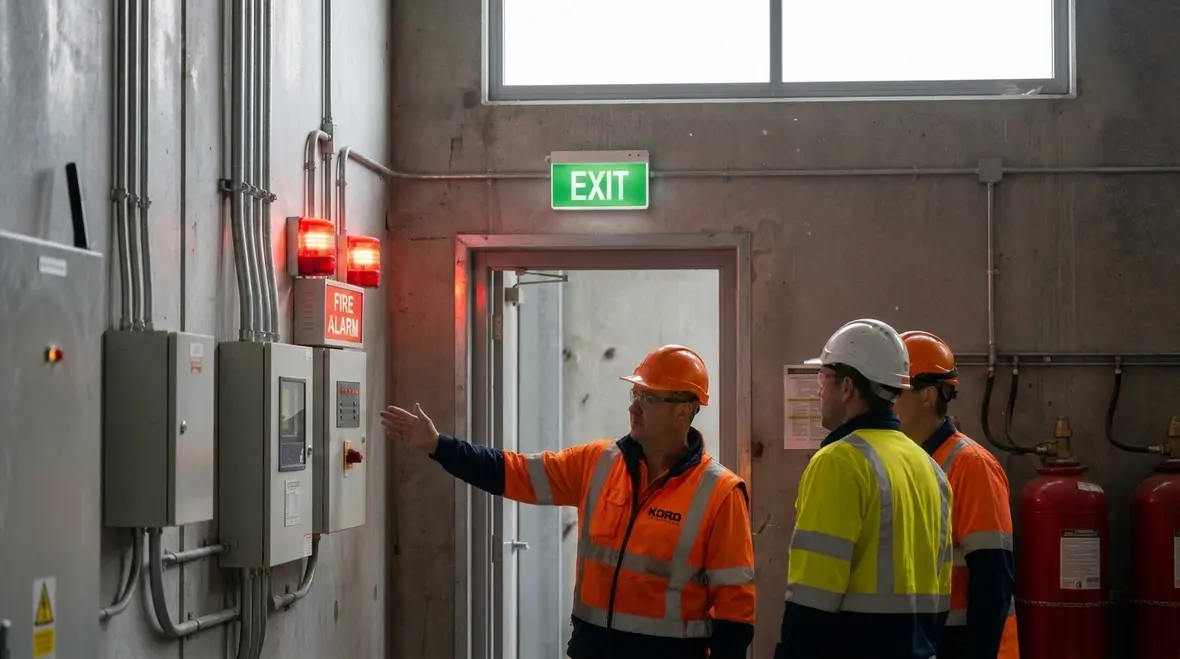
A few seconds can make the difference between an orderly exit and total confusion. People need enough time to register what the signal means, stop what they are doing, and move toward the correct exit. That sounds simple until someone is in hearing protection, another person is in a back corner, and a visitor is trying to decide whether the alarm is real or just another building noise. Good systems remove that guesswork.
How the Clean Agent Discharge Works in Real Life
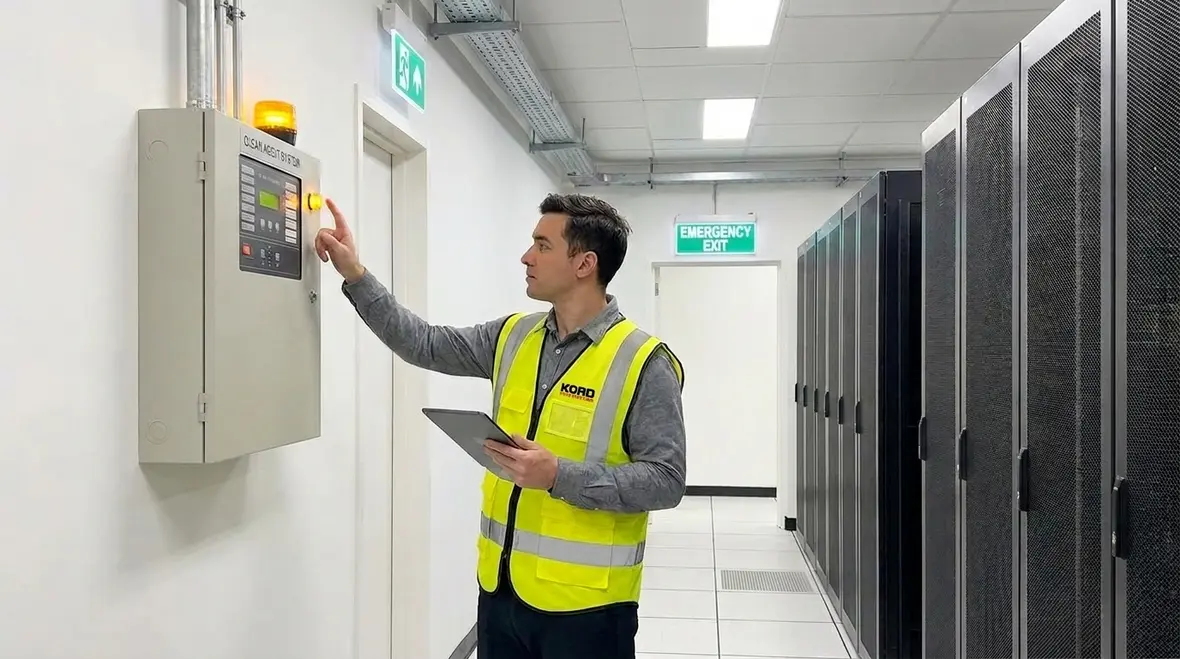
Before discharge, the system usually gives an audible and visual warning. Then, it releases the agent into the protected space and reduces oxygen or interrupts the fire process, depending on the agent type. Since the discharge can happen quickly, the warning stage is where occupant safety begins.
During this process, the design must keep escape routes clear and make the warning devices easy to notice. In addition, the system must work with the building layout, not against it. A cluttered room, blocked exit, or weak alarm tone can slow evacuation. And slow evacuation is the kind of delay nobody wants when the clock is already ticking.
It also helps to remember that discharge day is never announced in advance. Nobody gets a calendar invite that says, “Please panic efficiently at 2:14 p.m.” The room has to communicate clearly the moment the sequence begins. Horns, strobes, abort controls where appropriate, signage, and door access all need to support one decision: leave the space quickly and calmly.
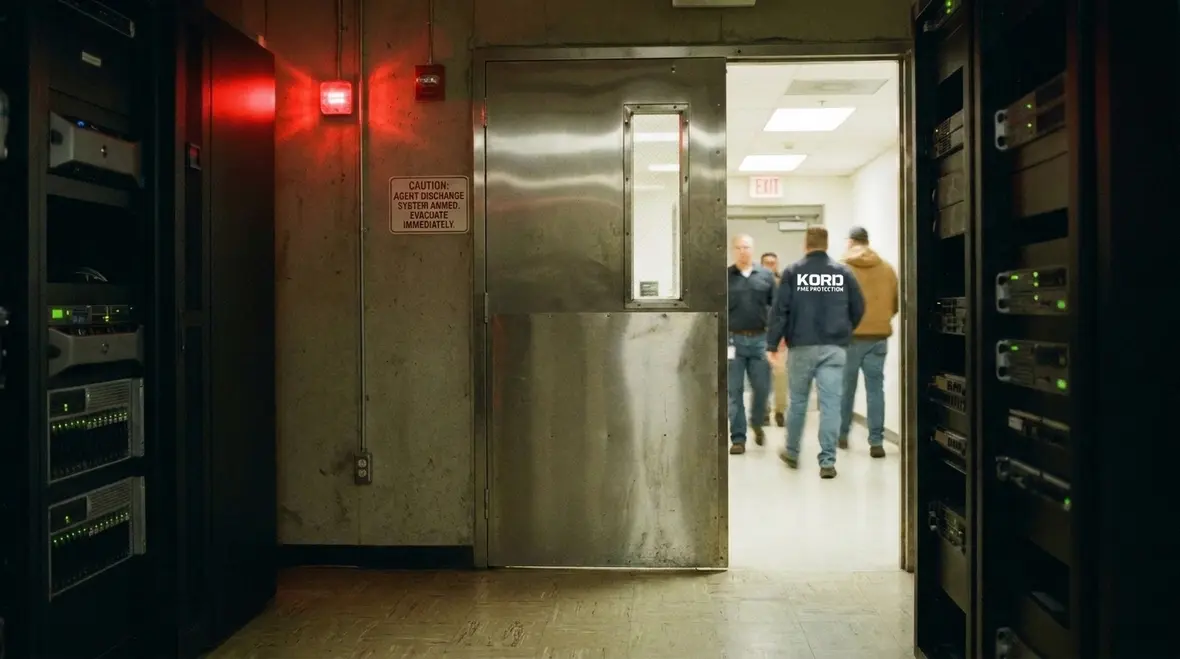
What can go wrong during a real event
Most evacuation problems are not dramatic engineering failures. They are ordinary building issues that pile up over time. Someone stacks materials near an exit. A remodeled wall changes the path of travel. A strobe gets hidden from one angle. Staff turnover means new people never learned what the pre discharge alarm means. The system may still be technically installed, but the safety outcome gets weaker one small compromise at a time.
What a Facility Must Put in Place
A site that uses clean agent protection must build several safety layers into the design:
- Early warning alarms so occupants know something is happening
- Clear exit paths so people can leave without confusion
- Reliable system controls that trigger discharge only after the right sequence
- Proper signage so staff and visitors know what to do
- Regular testing and inspection to keep the system ready
These steps help make NFPA 2001 occupant protection clean agent fire extinguishing systems safe to use in active workplaces. Just as important, they reduce panic. People do better when they know the drill. Nobody needs a “hold my coffee and run” moment in a control room.
A strong program also ties those features together instead of treating them like separate chores. The alarm should lead naturally to the exit path. The signage should reinforce the procedure. The inspection record should confirm that controls, detection, and notification still match the room as it exists today, not as it looked three renovations ago.
The role of training and familiarity
Even well designed systems benefit from simple, repeated staff training. People should know what the pre discharge signal sounds like, where the exits are, who to notify after evacuation, and when not to re enter. A polished system with untrained occupants is a bit like buying a great parachute and forgetting the jumping lesson. The equipment matters, but so does the person using the information.
Why the Design Must Match the Space
The right clean agent system depends on the room, the people in it, and the type of risk present. For example, a telecommunications room needs different planning than a production control space. Likewise, warehouses, commercial sites, and industrial facilities often have different occupancy patterns, access points, and fire loads.
That is why the design must include occupancy load, room tightness, shutdown controls, and time needed for evacuation. If the system releases too soon, people may still be inside. If it releases too late, the fire may spread. So, the design has to land in that narrow middle ground where safety and suppression both work.
This is also where room performance matters. If the enclosure does not hold agent concentration as intended, the system may not perform the way the design expects. That is one reason the broader conversation often overlaps with NFPA 2001 guidelines for clean agent fire suppression systems, especially when teams are trying to connect discharge safety, enclosure integrity, and ongoing compliance into one coherent plan.
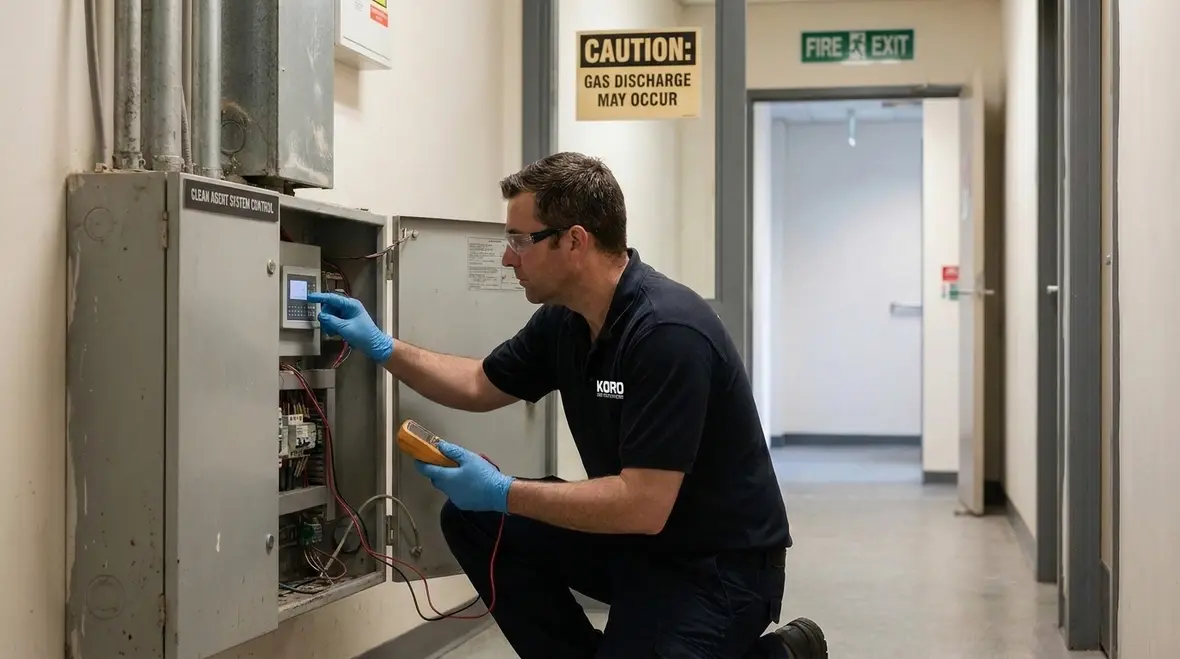
How Kord Fire Protection Adds Real Value
Kord Fire Protection can become a vital partner by helping facilities turn code requirements into practical, working protection. Rather than treating NFPA 2001 as a paper exercise, Kord Fire Protection can assess the site, review hazards, and help design a system that protects both people and operations.
For industrial, retail, commercial, and facility teams, that support can include system planning, installation guidance, testing, inspections, and ongoing maintenance. In addition, Kord Fire Protection can help teams understand how to train staff, reduce confusion during an alarm, and keep the system compliant over time. That matters, because compliance is not a trophy on the wall. It is a living process, and the walls do not file the paperwork for anyone.
| Facility Need | Kord Fire Protection Support |
|---|---|
| Safe occupant evacuation | System design that aligns alarms, exits, and discharge timing |
| Code compliance | Practical guidance for NFPA 2001 occupant protection clean agent fire extinguishing requirements |
| Business continuity | Protection planning that helps reduce downtime and asset loss |
| Long term reliability | Inspection, testing, maintenance, and adjustment when rooms or operations change |
That practical support is especially useful in spaces where protection cannot interrupt operations any longer than necessary. Data rooms, control spaces, archives, electrical rooms, and specialty occupancies all benefit when the fire protection partner understands both the code side and the real life side. On paper, every room looks tidy. In reality, rooms collect equipment, urgency, and human habits.
What Sites Should Check Now
Many sites already use clean agent systems, yet some have never reviewed whether the occupant safety features still fit the current layout. That is where trouble likes to hide. A renovated control room, a moved doorway, or a new storage setup can weaken a once strong design.
Therefore, site leaders should check alarm audibility, signage visibility, exit access, and maintenance records. They should also confirm that staff know what the pre discharge warning means. A clean agent system works best when people do not treat the alarm like background music.
A simple review checklist
- Walk the room and confirm all exits are accessible
- Test whether alarms are both heard and seen from all occupied positions
- Review signage for clarity, placement, and visibility
- Confirm recent changes to equipment or layout were evaluated
- Verify inspection and maintenance records are current
- Refresh staff awareness so the warning means action, not confusion
FAQ
Final Takeaway for Facility Teams
NFPA 2001 Section 7.7 is not just a rulebook line. It is the safety net that keeps clean agent systems useful in real workplaces. The smartest move is to pair strong design with real site knowledge and ongoing care. When the warning, the layout, and the discharge sequence all support a clean exit, the system does what it is supposed to do without adding new risk.
Kord Fire Protection can help make that happen through practical planning, compliant installation support, inspections, and maintenance that stays connected to how the room is actually used. That way, the system protects assets, supports staff, and keeps the building ready when it matters most. Which is a much better ending than everyone standing around asking why the alarm sounded weird.

Join Our Newsletter!
Get the latest fire safety tips delivered straight to your inbox From our Newsletter.